


This article was automatically translated from the original Turkish version.
+2 More
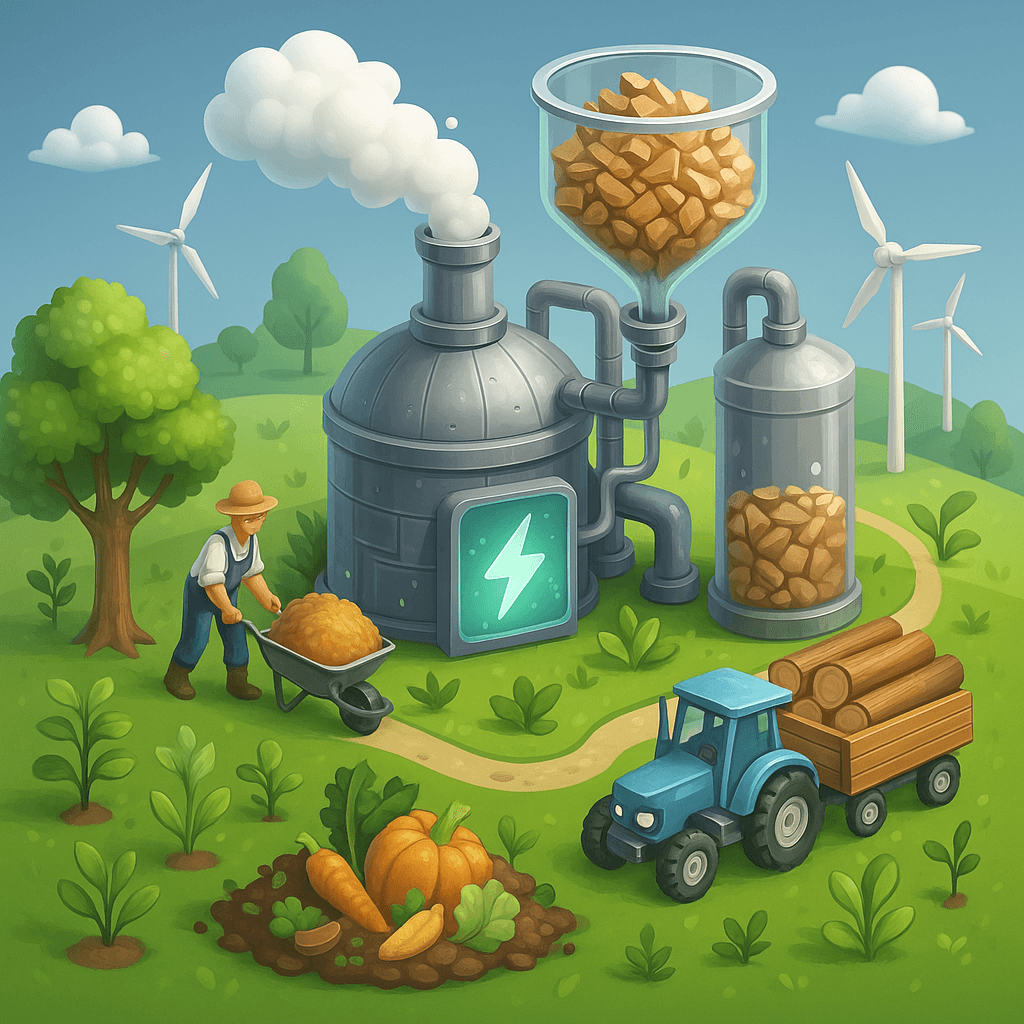
Generated with artificial intelligence.
Biomass Energy
Definition(s) | Energy produced from biological materials derived from living or recently living organisms | ||||||||
|---|---|---|---|---|---|---|---|---|---|
Energy Type | Renewable Energy | ||||||||
Basic Principle | Conversion of solar energy stored through photosynthesis into chemical energy | ||||||||
Primary Resources | Agricultural wastes, forest products, animal wastes, energy crops, organic urban wastes | ||||||||
Production Methods | Combustion, gasification, pyrolysis, fermentation, anaerobic digestion | ||||||||
Main Products | Electricity, heat, biogas, biodiesel, bioethanol | ||||||||
Biomass energy is a renewable energy form obtained by converting the chemical energy content of organic, biologically degradable materials directly or indirectly into heat, electricity, or fuel energy. Biomass encompasses organic materials of plant or animal origin that store solar energy through photosynthesis. Due to their carbon content, these materials are combustible and can be utilized in sustainable energy production without disrupting environmental balance, as they participate in a short-term carbon cycle.
Biomass sources are organic materials derived from various sectors. The general classification by source type is as follows:
This group includes by-products from agricultural production processes such as straw from cereals like wheat, barley, and maize; cotton linters; hazelnut shells; and sunflower residues. In countries like Türkiye with agriculture-based economies, these sources are available in significant quantities. According to a TÜBA report, agricultural biomass constitutes 70% of total biomass potential.
Woody wastes generated during timber production and forest cleaning—including sawdust, bark, and branch residues—fall into this category. Non-wood products can also be considered within this scope. More than 40% of Türkiye’s forest resources are suitable for biomass use.
Animal manure, particularly in regions with intensive livestock farming, is valuable for biogas production. Slaughterhouse waste and dairy industry by-products are also included in this category.
Domestic organic waste (food scraps, garden waste), textile and paper waste, sewage sludge, and food industry residues are used as biomass sources. Recycling these wastes not only generates energy but also supports waste management.
High-yield, fast-growing plants such as rapeseed, sorghum, sugarcane, and maize are cultivated specifically for biofuel production. However, according to the TÜBA report, their cultivation must be carefully planned, as it may compete with agricultural land used for food production.
The conversion of biomass into energy is carried out using different technologies depending on the physical and chemical properties of the material:
Thermochemical conversion transforms biomass into energy through high temperatures and controlled oxygen environments. The most common method, combustion, directly oxidizes biomass to produce heat and electricity. This method typically achieves an efficiency of 20–35%, with low moisture content in the biomass (below approximately 50%) being critical for optimal performance. In gasification, biomass is processed at temperatures of 800–1000 °C under limited oxygen or steam, producing synthesis gas (syngas) composed of carbon monoxide, hydrogen, and methane. This gas can be used for electricity generation or as a feedstock for advanced biofuel synthesis. Pyrolysis, another method, occurs in an oxygen-free environment at 400–600 °C and converts biomass into liquid (bio-oil), gaseous, and solid (biochar) products. Bio-oil obtained through fast pyrolysis can be refined into biodiesel or biomethane.
Fermentation is a biochemical process that converts sugar- or starch-based feedstocks into bioethanol using microorganisms. This method is widely applied in the utilization of sugar beet, maize, and other starchy crops. Anaerobic digestion breaks down biomass under oxygen-free conditions via methanogenic bacteria to produce biogas. The process involves four stages: hydrolysis, acidogenesis, acetogenesis, and methanogenesis. The resulting biogas contains high levels of methane and can be used for electricity and heat generation or upgraded to biomethane. The residual digestate can be utilized as a nutrient-rich fertilizer. In Türkiye, applications targeting the anaerobic digestion of animal waste are increasing, supported by production potential estimated at approximately 1.8 Mtoe annually.
Pelletizing and briquetting compress low-moisture, finely fragmented biomass under high pressure to produce solid fuels with high energy density. These physical methods offer advantages in transportation, storage, and combustion efficiency, providing an economical fuel alternative in modern biomass boilers and stoves. Studies also show that agricultural residues can be processed through hydrothermal pretreatment followed by pelletizing to yield high-quality products.
Bioethanol is an alcohol produced through microbial fermentation of plant materials rich in sugar or starch, such as maize, wheat, and sugar beet. It is commonly blended with gasoline at ratios of 2–5% as a fuel additive. In Türkiye, sugar beet, maize, and wheat are the primary feedstocks.
Biodiesel consists of fatty acid methyl esters produced by the transesterification of vegetable oils (e.g., sunflower, soybean, rapeseed) or animal fats. Its key advantages include low sulfur content, high lubricity, and cleaner combustion compared to fossil diesel fuels.
Biogas is a gas mixture containing 55–80% methane and carbon dioxide, produced by the anaerobic decomposition of organic waste by methanogenic microorganisms. Sources include agricultural residues, manure, food industry waste, and sewage sludge. It can be used for electricity and heat generation via combustion or engines. After removal of contaminants such as CO₂, H₂S, and moisture, biogas can be compressed into biomethane and injected into natural gas grids or used as vehicle fuel.
Türkiye’s annual exploitable biomass potential is estimated at approximately 30 million tons of oil equivalent (toe). About 70% of this potential comes from agricultural and animal wastes, 20% from forest residues, and the remainder from urban and industrial wastes. As of 2023, Türkiye’s installed biomass-based power capacity stands at approximately 2,000 MW and is on an upward trend. Türkiye’s 2035 targets include increasing biomass energy both in terms of installed capacity and technological diversity.
Biomass energy exhibits a relatively carbon-neutral profile compared to fossil fuels due to its short carbon cycle: the carbon absorbed by living organisms through photosynthesis is returned to the atmosphere during energy conversion, enabling long-term reductions in net greenhouse gas emissions. Econometric analyses conducted in Türkiye show that biomass energy consumption reduces environmental pollution in both the short and long term.
Additionally, converting agricultural, animal, and urban wastes into biomass for energy production reduces waste volumes and prevents environmental contamination by avoiding uncontrolled disposal. However, risks must be managed in biomass production: unplanned production and operation can harm biodiversity, deplete water resources, and compete with agricultural land for food crops.
If fuel quality and filtration systems are inadequate in biomass combustion facilities, pollutants such as particulate matter (PM) and NOₓ may be emitted. For instance, the absence of sufficient NOₓ or particulate filters in some biomass plants can negatively affect air quality—a concern documented in global power plant reports.
In Türkiye, biomass energy reduces dependence on energy imports by utilizing domestic resources and enhances energy supply security. Furthermore, the growth of the biomass sector increases employment opportunities, particularly in rural areas, and supports ancillary industries such as agricultural capital processes, logistics, pellet production, and technology manufacturing.
Econometric analyses indicate that biomass energy consumption positively influences economic growth in Türkiye and can contribute to reducing ecological footprints over the long term. However, economic growth and technological advancement may lead to environmental degradation if not balanced by sustainability policies.
However, establishing biomass systems requires high initial investment costs. The logistics of biomass collection, transportation, and processing—especially in rural areas with weak infrastructure—constitute a significant cost component. Therefore, cost-effective system designs, centralized collection hubs, and appropriate logistics strategies are critical.
Alma, Hakkı. “Biyokütle Enerjisi ve Türkiye’nin Potansiyeli.” TÜBA Biyokütle Enerjisi Raporları. Accessed July 21, 2025. Accessed Adresi.
Kapluhan, Erol. “ENERJİ COĞRAFYASI AÇISINDAN BİR İNCELEME: BİYOKÜTLE ENERJİSİNİN DÜNYADAKİ VE TÜRKİYE’DEKİ KULLANIM DURUMU”. Marmara Coğrafya Dergisi, no. 30 (December 2014). Accessed July 21, 2025. Accessed Adresi.
Ministry of Energy and Natural Resources of the Republic of Türkiye. "Biyokütle." Ministry of Energy and Natural Resources of the Republic of Türkiye. Accessed July 21, 2025. Accessed Adresi.
Ministry of Environment, Urbanization and Climate Change. "3rd Biomass Energy Workshop."Edirne Çevre and Urbanization Provincial Directorate, 2020. Accessed July 21, 2025. Accessed Adresi.
Çelik, H. İ. M., & Kocar, G. (2023). "Bioenergy Focused Smart Specialisation Potential in İzmir Within the Scope of Tackling Climate Change." *Kent Akademisi*, 16(2), 727-748. Accessed Adresi.
İ. Üçgül and G. Akgül. “Biyokütle Teknolojisi”. Yekarum. Accessed July 21, 2025. Accessed Adresi.

Generated with artificial intelligence.
Biomass Energy
Definition(s) | Energy produced from biological materials derived from living or recently living organisms | ||||||||
|---|---|---|---|---|---|---|---|---|---|
Energy Type | Renewable Energy | ||||||||
Basic Principle | Conversion of solar energy stored through photosynthesis into chemical energy | ||||||||
Primary Resources | Agricultural wastes, forest products, animal wastes, energy crops, organic urban wastes | ||||||||
Production Methods | Combustion, gasification, pyrolysis, fermentation, anaerobic digestion | ||||||||
Main Products | Electricity, heat, biogas, biodiesel, bioethanol | ||||||||
Biomass Sources and Classification
Agricultural Biomass
Forest Biomass
Animal Wastes
Urban and Industrial Organic Wastes
Energy Crops
Energy Conversion Technologies
Thermochemical Methods
Biochemical Methods
Physical Methods
Energy Products Derived from Biomass
Bioethanol
Biodiesel
Biogas
Status and Potential in Türkiye
Environmental Impacts
Economic Impacts