

This article was automatically translated from the original Turkish version.
+3 More
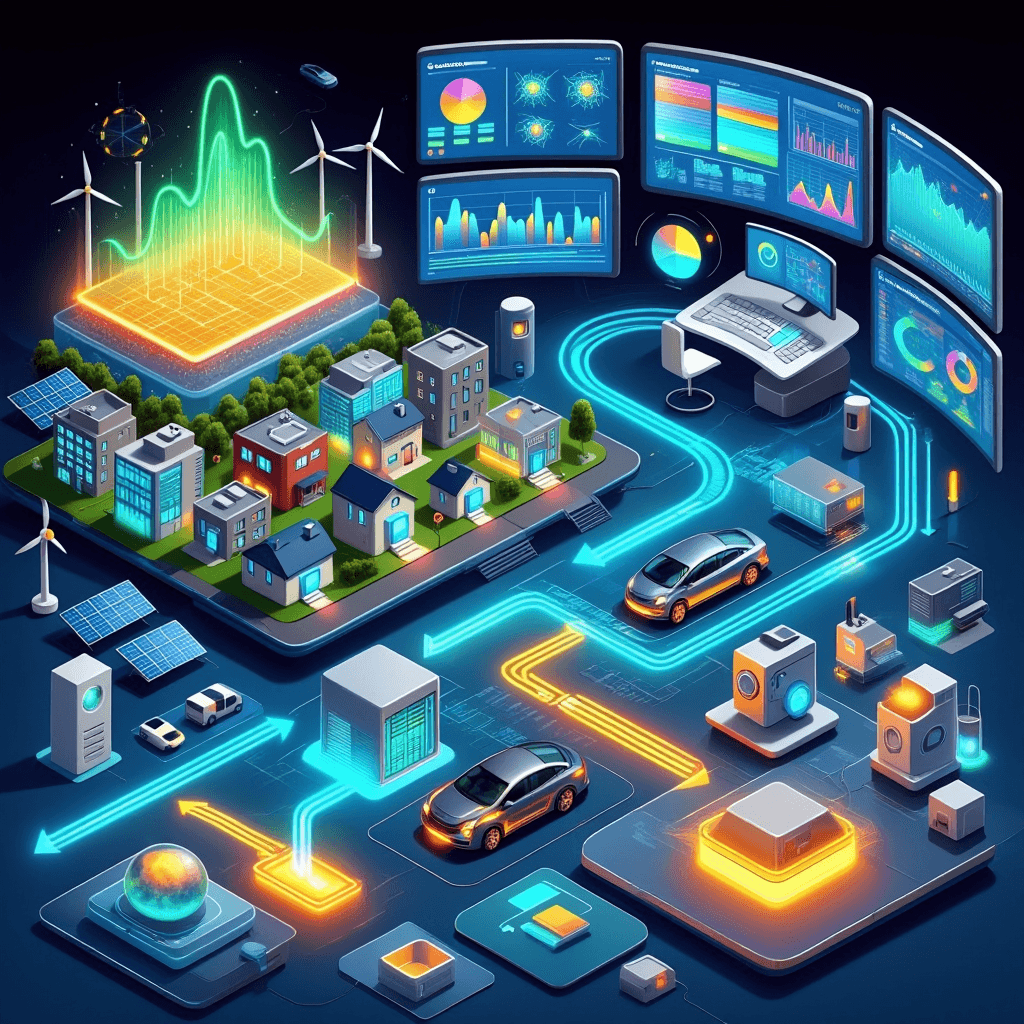
Energy Demand Management (Generated with Artificial Intelligence)
Main Objective | Optimize energy consumption, increase efficiency, and ensure grid stability. | ||||||||
|---|---|---|---|---|---|---|---|---|---|
Basic Methods | Demand Response, Load Shifting, Energy Efficiency, Smart Grids. | ||||||||
Program Types | Price-based (time-of-use) and incentive-based (interruptible load) programs. | ||||||||
Technological Tools | Smart Meters, Artificial Intelligence, IoT, Energy Storage Systems. | ||||||||
Regulatory Body in Türkiye | Energy Market Regulatory Authority (EPDK), Türkiye Electricity Transmission Corporation (TEİAŞ). | ||||||||
Key Benefits | Cost Savings, Reduction of Carbon Emissions, Energy Supply Security. | ||||||||
Energy Demand Management (EDM), or Demand-Side Management (DSM), is a comprehensive set of strategies aimed at improving energy efficiency, balancing demand, and ensuring the sustainability of energy systems. This approach seeks to promote more efficient and effective use of energy resources, resulting in cost savings and environmental benefits at both individual and societal levels. By controlling when and how much energy is consumed, EDM particularly reduces load on the grid during peak demand periods and enhances supply security. Energy Demand Management encompasses planning, implementation, and monitoring activities that influence consumer energy usage patterns and is recognized as an indispensable component of modern energy systems.
Energy Demand Management (EDM) is a comprehensive set of strategies and methods applied to sustainably balance energy supply and demand. This approach enables the electricity grid to operate more efficiently, flexibly, and reliably by managing the timing, intensity, and duration of energy consumption. It contributes to reducing investments required on the supply side and promotes more effective resource utilization. Additionally, EDM is a vital tool for lowering costs in energy systems, minimizing environmental impacts, and facilitating the more efficient integration of renewable energy sources.
Demand response is a component of EDM that enables electricity consumers to flexibly adjust their consumption patterns in response to external signals. These signals may take the form of price changes, alerts during periods of high demand, or direct incentive mechanisms. Under demand response, consumers reduce their usage during peak periods when grid load is highest and shift consumption to times of lower demand. This prevents excessive grid loading, maintains supply security, and avoids the activation of costly and environmentally harmful backup generation facilities.
Load management consists of technical applications designed to regulate the temporal distribution of energy demand. These techniques aim not only to reduce consumption but also to shift it to more suitable time periods, ensuring balanced grid operation.
In this method, electricity usage is deliberately reduced during the busiest hours of the day, such as in the evening. This prevents the electricity system from being subjected to sudden and high spikes in demand. Peak clipping targets short-term but intense increases in consumption and is typically integrated with demand response programs. As a result, the need for peak generation capacity is reduced, lowering the overall system cost.
The load shifting strategy is based on postponing consumption from high-demand periods to times of lower demand. Although total consumption remains unchanged, this temporal shift provides economic and technical advantages for both consumers and system operators. Examples include scheduling industrial processes to operate during nighttime tariffs and charging electric vehicles overnight.
This technique aims to achieve a permanent reduction in the load curve. It involves direct reduction of consumption rather than merely postponing it. The use of high-efficiency systems, enabling processes to operate with less energy, and restructuring user behavior in this direction form the core elements of strategic conservation. This approach is critical for long-term demand reduction and environmental sustainability.
Energy efficiency programs offer a range of technological and behavioral solutions to enable consumers to obtain the same level of service using less energy. These programs have a broad application scope covering residential, commercial, and industrial users. Applications under this category include high-efficiency LED lighting systems, smart building automation, modern heating, ventilation, and air conditioning (HVAC) systems, waste heat recovery units, and reducing energy intensity in production processes. By lowering energy demand, these programs reduce consumer costs and environmental impacts. Additionally, they serve as an important tool for enhancing system flexibility to accommodate the variable generation profiles of renewable energy sources.
Energy Demand Management Programs are planned and systematic initiatives designed to enhance the efficiency and flexibility of energy systems. These programs include various methods aimed at changing consumer energy usage patterns to ensure electricity supply-demand balance. Implementation is typically led by public authorities, energy service providers, or major private sector actors. The primary function of these programs is to reduce grid load during periods of high electricity demand and support supply security. Approaches developed for this purpose are classified into two main categories based on the motivational mechanisms that influence consumer behavior: price-based programs and incentive-based programs.
Price-based programs aim to guide consumer decisions based on economic rationality by offering different electricity prices during different time periods. These programs encourage consumers to shift their load to off-peak hours by increasing prices during periods of high demand. Applications are structured in two main formats depending on pricing flexibility:
In static pricing systems, electricity prices are fixed according to predefined time periods within the day. Typically, three main periods are defined: daytime (medium demand), peak hours (highest demand), and nighttime (low demand). This structure enables consumers to reduce their energy costs by shifting consumption to lower-priced periods.
Dynamic pricing models offer flexible tariffs in which electricity prices change over short time intervals based on market conditions or grid status. Key applications include:
Incentive-based programs reward participants with direct financial incentives for reducing their energy consumption during specific time periods determined by the system operator. The fundamental approach in these programs is to leverage the flexibility of demand-side resources to support the grid. Consumers commit to reducing demand under predefined conditions and receive financial benefits proportional to the amount of reduction achieved.
This application primarily targets large industrial users with high electricity consumption. Participants enter agreements to reduce or temporarily shut down their load upon notification from the distribution company during periods of system overload. In return for this load reduction, they receive discounted tariffs, direct payments, or other incentives. These programs not only enhance the flexibility of the energy system but also improve its ability to respond rapidly to system failures or supply shortages.
Technological advancements have significantly enhanced the effectiveness and scale of Energy Demand Management. Smart grids are at the center of this transformation.
Smart Grids: Smart grids are modern electrical infrastructures that enable two-way communication and data flow between energy generation, transmission, and consumption. Using advanced sensors, smart meters, automation, and data analytics tools, they manage supply-demand balance in real time. These systems facilitate the implementation of demand response programs and support the integration of renewable energy sources into the grid.
Smart Meters and Data Analytics: Smart meters such as Automatic Meter Reading Systems (AMRS) provide real-time consumption data to both consumers and energy providers. These data help consumers gain awareness of their energy usage patterns and enable utilities to improve demand forecasting and manage the grid more efficiently.

Energy Demand Management (Generated by Artificial Intelligence)
Artificial Intelligence (AI) and Internet of Things (IoT): IoT-based smart devices and AI-supported energy management systems are elevating energy management in buildings and industrial facilities to a higher level. These technologies monitor energy consumption in real time, detect anomalies, send proactive alerts, and provide data-driven optimization recommendations. AI algorithms analyze numerous variables such as weather conditions, market prices, and production schedules to forecast energy consumption and costs, and automatically schedule energy-intensive processes during the most optimal times.
Distributed Energy Resources and Storage: Behind-the-meter assets such as rooftop solar panels, electric vehicles, and battery storage systems are transforming consumers into producers. Energy Demand Management coordinates the use, storage, or sale of energy generated by these distributed resources, providing economic benefits to consumers while enhancing grid flexibility.
Energy Demand Management (EDM) is a multidimensional application with significant contributions at both micro levels for individual consumers and macro levels for national energy systems. By enabling more flexible and efficient regulation of electricity consumption based on time and conditions, this approach enhances the sustainability of energy systems and positively influences consumer behavior.
Energy Demand Management can be applied across all energy consumer groups, primarily industry, commerce, and residential sectors. Each sector can contribute to the system through different technical solutions and control mechanisms:
Energy-intensive industrial facilities can achieve significant savings by integrating into demand response and load management programs. Production processes can be rescheduled to operate during hours with lower energy costs, resulting in both cost advantages and reduced grid load. Moreover, large industrial users are key actors that directly enhance system flexibility through interruptible load programs.
Commercial structures such as large shopping malls, hotels, and office buildings can make their consumption more flexible through scheduling of HVAC (heating, ventilation, and air conditioning) systems and lighting automation. Such applications are strategically important during summer and winter months when cooling and heating demands are highest.
Household users can actively participate in EDM programs through technologies such as smart meters, time-programmed appliances, programmable thermostats, and electric vehicle charging systems. Data published by the International Energy Agency (IEA) indicate that demand response potential is particularly high in the residential sector. This highlights the significant impact individual consumer behavior can have on the overall system.
Energy Demand Management offers numerous advantages at both individual and system levels:
EDM also makes significant contributions to environmental sustainability:
Energy Demand Management is a strategic tool for ensuring the stable and secure operation of electricity transmission and distribution infrastructure:
In Türkiye, Energy Demand Management (EDM) has become increasingly critical due to rising electricity demand, the need for supply security, and sustainable development goals. Both regulatory frameworks and market-based practices are evolving to encourage active participation of demand-side actors in the energy system. Particularly in terms of energy efficiency, grid stability, and cost reduction, EDM is regarded as a strategic tool.
The legal foundation for EDM applications in Türkiye was established by the Energy Efficiency Law No. 5627, which came into effect in 2007. This law defines a framework for enhancing energy use efficiency, promoting energy savings, and encouraging efficiency-based practices across various sectors, especially industry. Under this framework:
The primary regulatory body in this area is the Directorate of Energy Efficiency and Environment under the Ministry of Energy and Natural Resources. Additionally, organizations such as the Association of Electricity Distribution Services (ELDER) and the Energy Market Regulatory Authority (EPDK) play roles in sectoral coordination and regulation.
With the liberalization of the electricity market, Türkiye has developed various models under the Electricity Market Balancing and Settlement Mechanism (DUY) that incorporate demand-side participation. Market structures such as the day-ahead market and balancing power market hold potential to influence consumer behavior through dynamic price signals.
Additionally, interruptible load agreements and voluntary load reduction initiatives are pilot mechanisms that can be activated for large electricity consumers to support grid flexibility. These applications are based on contracts between grid operators (TEİAŞ) and users. Electric vehicles, distributed energy systems, and microgrids are emerging as new technological developments supporting demand-side management in Türkiye. The widespread deployment of smart meters facilitates consumer participation in price-based EDM programs in residential and commercial sectors.
The development of EDM applications in Türkiye faces certain structural challenges. These include:
Nevertheless, policy documents such as the National Energy Efficiency Action Plan (2017–2023) outline strategic goals for expanding EDM and support this process through investment incentive mechanisms.
Albadi, M.H., and E.F. El-Saadany. “A Summary of Demand Response in Electricity Markets.” *Electric Power Systems Research* 78, no. 11 (2008): 1989–1996. Accessed August 4, 2025. https://doi.org/10.1016/j.epsr.2008.04.002.
Chang, Zihan, Yang Zhang, and Wenbo Chen. “Electricity Price Prediction Based on Hybrid Model of Adam Optimized LSTM Neural Network and Wavelet Transform.” *Energy* 187 (2019): 115804. Accessed August 4, 2025. https://doi.org/10.1016/j.energy.2019.07.134.
Ministry of Energy and Natural Resources of the Republic of Türkiye. "Ulusal Enerji Verimliliği Eylem Planı." Accessed August 4, 2025. https://enerji.gov.tr/bilgi-merkezi-enerji-verimliligi-ulusal-enerji-verimliligi-eylem-plani.
Oğuz, Eray, İbrahim Gürsu Tekdemir, and Uğur S. Selamoğulları. “Talep Tarafı Yönetimine Katkı Sağlamak Amacıyla Yük Tiplerinin Kullanım Oranlarının Tahmin Edilmesi.” *Gedik Üniversitesi Dergisi* (2024): 48–59. Accessed August 4, 2025. https://doi.org/10.61150/gedikyay.250304.
Palensky, P., and D. Dietrich. “Demand Side Management: Demand Response, Intelligent Energy Systems, and Smart Loads.” *IEEE Transactions on Industrial Informatics* 7, no. 3 (August 2011): 381–388. Accessed August 4, 2025. https://doi.org/10.1109/TII.2011.2158841.
Siano, Pierluigi. “Demand Response and Smart Grids—A Survey.” *Renewable and Sustainable Energy Reviews* 30 (2014): 461–478. Accessed August 4, 2025. https://doi.org/10.1016/j.rser.2013.10.022.
Strbac, Goran. “Demand Side Management: Benefits and Challenges.” *Energy Policy* 36, no. 12 (2008): 4419–4426. Accessed August 4, 2025. https://doi.org/10.1016/j.enpol.2008.09.030.

Energy Demand Management (Generated with Artificial Intelligence)
Main Objective | Optimize energy consumption, increase efficiency, and ensure grid stability. | ||||||||
|---|---|---|---|---|---|---|---|---|---|
Basic Methods | Demand Response, Load Shifting, Energy Efficiency, Smart Grids. | ||||||||
Program Types | Price-based (time-of-use) and incentive-based (interruptible load) programs. | ||||||||
Technological Tools | Smart Meters, Artificial Intelligence, IoT, Energy Storage Systems. | ||||||||
Regulatory Body in Türkiye | Energy Market Regulatory Authority (EPDK), Türkiye Electricity Transmission Corporation (TEİAŞ). | ||||||||
Key Benefits | Cost Savings, Reduction of Carbon Emissions, Energy Supply Security. | ||||||||
No Discussion Added Yet
Start discussion for "Energy Demand Management" article
Core Concepts and Strategies
Demand Response
Load Management Techniques
Peak Clipping
Load Shifting
Strategic Energy Conservation
Energy Efficiency Programs
Energy Demand Management Programs
Price-Based Programs
Static Pricing (Time-of-Use Tariff)
Dynamic Pricing
Incentive-Based Programs
Interruptible Load Programs
The Role of Technology and Smart Grids
Application Areas and Benefits
Sectoral Applications
Industrial Sector
Commercial Sector
Residential Sector
Economic Benefits
Environmental Benefits
Grid Reliability and Stability
Energy Demand Management in Türkiye
Legal Framework and Institutional Structure
Market Practices and Demand Response Mechanisms
Challenges and Development Areas