


This article was automatically translated from the original Turkish version.
+2 More
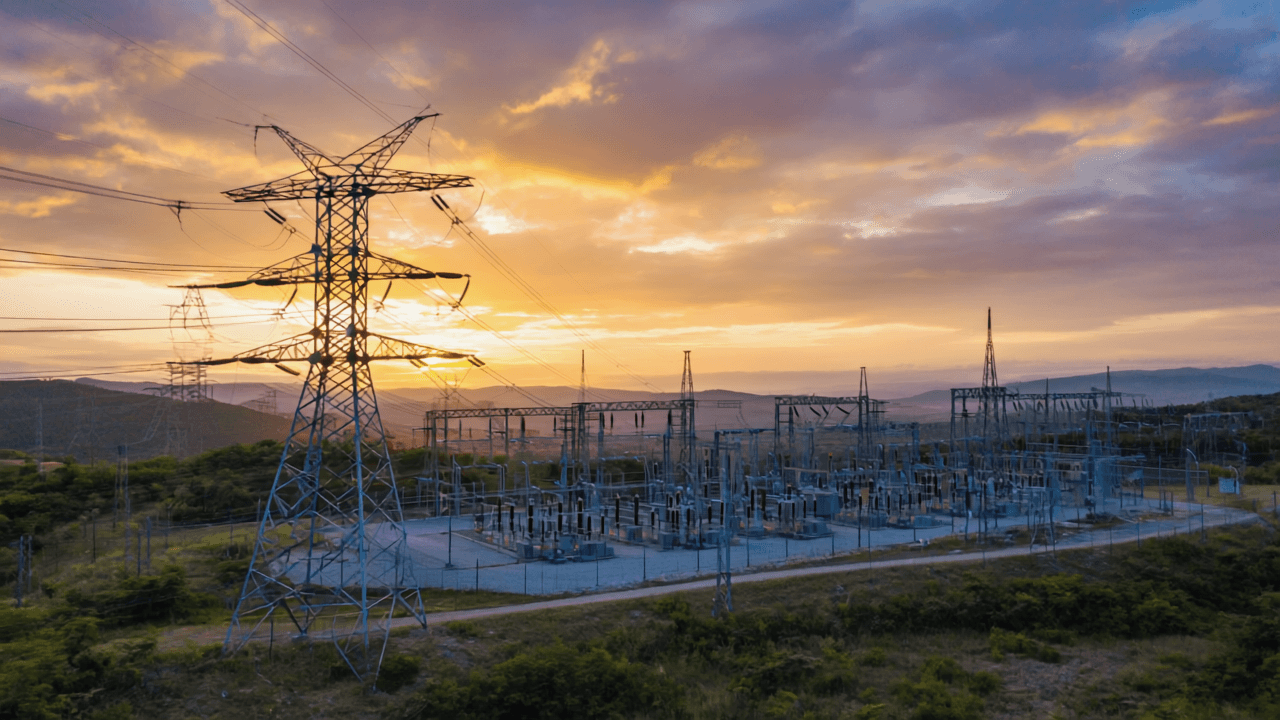
Electrical Grid (Generated with Artificial Intelligence)
Definition(s) | Integrated network that transports electricity from production plants to consumers. | ||||||||
|---|---|---|---|---|---|---|---|---|---|
Component(s) | Production Distribution Transmission | ||||||||
Transmission Voltage | High and Extra High Voltage | ||||||||
Distribution Voltage | Medium and Low Voltage | ||||||||
Modernization | Smart Grids, Energy Storage | ||||||||
Future Vision | Super Grids, Microgrids | ||||||||
The electrical grid is a complex and integrated network system designed to deliver electrical energy from power generation plants to end users. This system encompasses power plants that generate electricity, transmission lines that carry the generated energy over long distances, and distribution lines that deliver the energy to final consumers. Power plants are typically located in remote areas away from populated regions, often near primary energy sources such as hydropower, geothermal, nuclear, or solar energy. Therefore, the efficient and safe transportation of generated electricity to demand centers constitutes the fundamental function of the grid infrastructure.
An electrical grid fundamentally consists of three main sections: generation, transmission, and distribution. These sections work in coordination to ensure the uninterrupted and stable flow of energy from source to consumer.
This is the initial stage where electricity is produced. Mechanical, chemical, or nuclear energy is converted into electrical energy in various facilities such as hydropower, thermal, nuclear, wind, and solar power plants.
The voltage of electricity generated at power plants is increased using power transformers and fed into the transmission grid. High voltage enables the transportation of energy over long distances with minimal losses. The transmission grid comprises high-voltage lines, supporting towers, transformer substations (transformers), and other switching equipment. This infrastructure delivers electricity to distribution centers located near major urban and industrial areas.
The high-voltage electricity carried by transmission lines is stepped down to medium and low voltage levels through transformers at distribution centers. The distribution grid includes the lines and equipment that deliver this energy to end users such as residential homes, commercial establishments, and industrial facilities. The primary objective of distribution networks is to provide users with stable voltage and frequency. Voltage fluctuations can reduce the efficiency or shorten the lifespan of electrical devices; therefore, voltage regulation within the grid is critical.
Electrical grids are classified differently based on the voltage levels used and their distribution architectures.
Electrical grids are divided into four categories according to the magnitude of voltage they carry:
Distribution grids are designed using various topologies to ensure the safe and efficient delivery of electrical energy from production points to end users. These designs are determined based on criteria such as energy continuity, system reliability, maintenance ease, and cost. Distribution grids are generally classified into four fundamental structures:
In this type of grid, energy flows from a single source and branches out to end users. It is the simplest and most economical structure, commonly found in small settlements and rural areas. However, in the event of any fault, consumers at the end of the line lose power entirely.
Energy reaches the consumer via two paths forming a loop. Even if a fault occurs at one point, power can still be supplied from the opposite direction. This configuration provides higher continuity and reliability and is preferred in moderately dense populated areas.
This grid includes multiple energy sources and distribution paths. It is used in large cities and industrial zones where very high continuity is required. It offers high security and flexibility but comes with higher costs.
Similar to the radial grid, distribution is carried out through branches extending from a main line. However, in this structure, some branches have multiple exit points. It is more complex than the radial system but still considered economical.
These classifications are shaped according to the geographical and demographic structure of the area to be served and its energy demand.
Traditional electrical grids face new challenges due to increasing energy demand and the growing adoption of renewable energy sources. To overcome these challenges, grids must be modernized using digital technologies. At the heart of this modernization are smart grids and energy storage solutions.
Smart grids are dynamic systems that integrate traditional electrical infrastructure with two-way communication and automation technologies, enabling real-time monitoring and management of electricity generation, transmission, and consumption. Key features include two-way communication, automation, integration of distributed generation, energy storage, and demand-side management. Smart grids enhance energy efficiency, enable seamless integration of renewable sources, strengthen grid reliability by enabling faster fault detection and repair, and facilitate the development of new services such as electric vehicle charging.
Energy storage refers to technologies that store excess electricity when production exceeds demand and reintroduce it into the system when demand rises. The importance of storage systems has increased significantly with the widespread adoption of variable renewable sources such as solar and wind. Major storage technologies include batteries (lithium-ion, sodium-ion, etc.), pumped hydroelectric storage, compressed air energy storage, and thermal energy storage. These systems help maintain grid balance, respond to sudden load changes, and provide backup power during emergencies.
As the energy transition accelerates, there is a growing need to rethink existing grid infrastructure at both centralized and local levels. In this context, the concepts of super grids and microgrids are emerging as foundational elements of future energy systems.
A super grid is a large-scale electricity transmission system vision that integrates regions across continents or multiple countries, typically using high-voltage direct current (HVDC) lines. This structure enables regional balancing of renewable energy sources generated in different geographic areas. For example, energy sharing between sun-rich southern regions and wind-rich northern regions optimizes supply-demand balance.
Super grid plans developed for the European continent have a broad scope that includes Türkiye, the Middle East, and North Africa. This aims to enhance energy security, ensure resource diversification, and achieve carbon neutrality goals. However, super grids also bring challenges such as massive infrastructure investments, political alignment, and international cooperation.
A microgrid is a small-scale energy system serving a specific area, typically composed of local generation, storage, and consumption units. This system can operate connected to the central grid or independently (islanded mode) when needed. Microgrids offer advantages in terms of energy supply continuity, reliability during disasters, and local utilization of renewable resources. They are increasingly being deployed in campuses, hospitals, military facilities, and isolated communities. They operate by integrating advanced control systems, energy storage technologies (e.g., batteries), and local generation units (e.g., solar panels, biogas systems).
Super grids enable global energy flow and optimization, while microgrids provide local energy independence and flexibility. The two approaches are not contradictory but complementary strategies. Future hybrid energy systems will be shaped by the intelligent integration of centralized large-scale grids and local microgrids. This structure, supported by digitalization and AI-assisted energy management systems, will enable more flexible, sustainable, and resilient energy infrastructure.
Cengage Learning. Power System Analysis and Design. 6. baskı. J. Duncan Glover, Mulukutla S. Sarma and Thomas J. Overbye. Boston: Cengage Learning, 2016. Accessed July 7, 2025.
Elgerd, Olle I. Electric Energy Systems Theory: An Introduction. 2. baskı. New York: McGraw-Hill, 1982. Accessed July 7, 2025.
Grainger, John J., and William D. Stevenson. Power System Analysis. New York: McGraw-Hill, 1994. Accessed July 7, 2025.
International Energy Agency (IEA). *Smart Grids Technology Roadmap*. Paris: IEA, 2011. Accessed July 7, 2025. https://iea.blob.core.windows.net/assets/fe14d871-ebcb-47d3-8582-b3a6be3662ba/smartgrids_roadmap.pdf
International Renewable Energy Agency (IRENA). *Innovation Landscape for a Renewable-Powered Future: Solutions to Integrate Variable Renewables*. Abu Dhabi: IRENA, 2019. Accessed July 7, 2025. https://efficiencyforaccess.org/wp-content/uploads/IRENA-Innovation-Landscape-Report-2019P.pdf
Kundur, Prabha. Power System Stability and Control. New York: McGraw-Hill Education, 1994. Accessed July 7, 2025.
Lahiri, Indrabati. "'Süper şebeke', Avrupa'nın elektrik sorunlarını çözebilir mi?" *Euronews*, May 11, 2025. Accessed July 7, 2025. https://tr.euronews.com/green/2025/05/11/super-sebeke-avrupanin-elektrik-sorunlarini-cozebilir-mi

Electrical Grid (Generated with Artificial Intelligence)
Definition(s) | Integrated network that transports electricity from production plants to consumers. | ||||||||
|---|---|---|---|---|---|---|---|---|---|
Component(s) | Production Distribution Transmission | ||||||||
Transmission Voltage | High and Extra High Voltage | ||||||||
Distribution Voltage | Medium and Low Voltage | ||||||||
Modernization | Smart Grids, Energy Storage | ||||||||
Future Vision | Super Grids, Microgrids | ||||||||
Structure and Components of the Electrical Grid
Generation
Transmission
Distribution
Types of Grids
Classification by Voltage Levels
Classification by Distribution Architecture
Radial Grid
Ring (Loop) Grid
Interconnected Grid
Tree Structure
Modernization of Grids: Smart Grids and Storage
Smart Grids
Energy Storage Solutions
Future Grids: Super Grid and Microgrid Visions
Super Grid
Microgrid