



What Is Solar Energy?
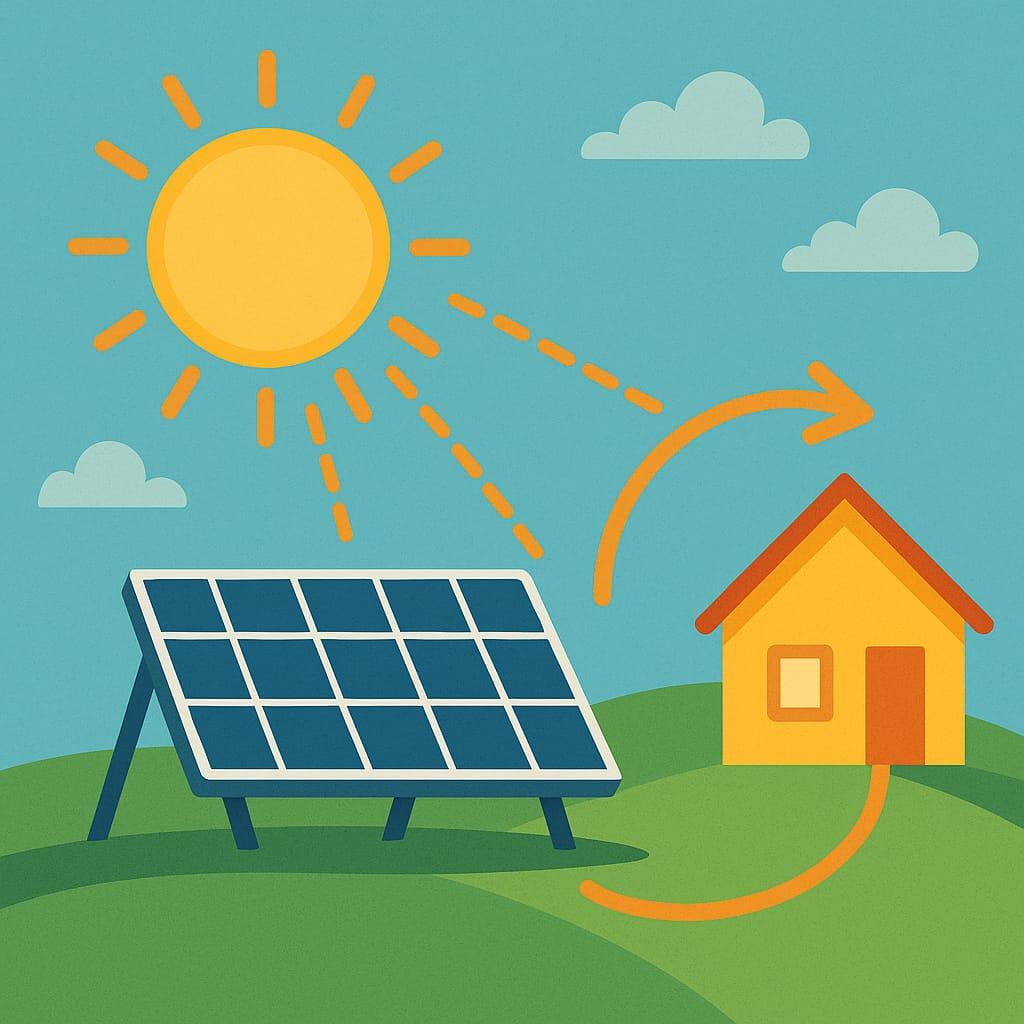
Solar energy is a natural and renewable energy source obtained from the light and heat emitted by the Sun. This energy can be converted into electricity or heat through specialized systems and used in daily life.

(Generated by Artificial Intelligence.)
What Is the Source of Solar Energy?
Solar energy is produced by fusion reactions occurring within the Sun. In these reactions, hydrogen atoms combine to form helium atoms, releasing a tremendous amount of energy. This energy radiates into space as light and heat and reaches Earth.
How Does Solar Energy Reach Earth?
The energy generated in the Sun travels through the vacuum of space as light rays and reaches Earth in approximately eight minutes. After passing through the atmosphere, this energy arrives at the Earth’s surface where it is collected and utilized by humans.
How Is Solar Energy Collected?
Solar panels (photovoltaic panels) capture sunlight and convert it into electrical energy. These panels can be installed on rooftops of homes, schools, or farmland. Some systems use solar energy solely for heating purposes.
How Is Solar Energy Used in Electricity Generation?
Systems that convert sunlight into electrical energy are called solar power plants. These plants generate electricity on small or large scales. The produced electricity can be used in homes, factories, and schools.

(Generated by Artificial Intelligence.)
How Is Water Heated Using Solar Energy?
Some solar panels are designed exclusively for heating water. In these systems, black-colored pipes absorb sunlight and heat the water inside. This hot water can then be used in households.
Why Is Solar Energy Important?
Solar energy is environmentally friendly. It does not harm nature like fossil fuels and does not emit toxic gases. Since it is renewable, it is inexhaustible and economically viable in the long term.
Where Is Solar Energy Used?
- Providing electricity and hot water in homes
- Powering irrigation systems in agricultural fields
- Heating greenhouses
- Charging batteries of electric vehicles
- Supplying energy to satellites
Limitations of Solar Energy
Solar energy systems operate efficiently only during sunny conditions. Energy production decreases at night or on cloudy days. Therefore, excess energy generated is stored in batteries for later use.
New Technologies Related to Solar Energy
Scientists are working to develop thinner, cheaper, and more efficient solar panels. In fact, some building windows are already being designed to function like solar panels.