


This article was automatically translated from the original Turkish version.
+3 More
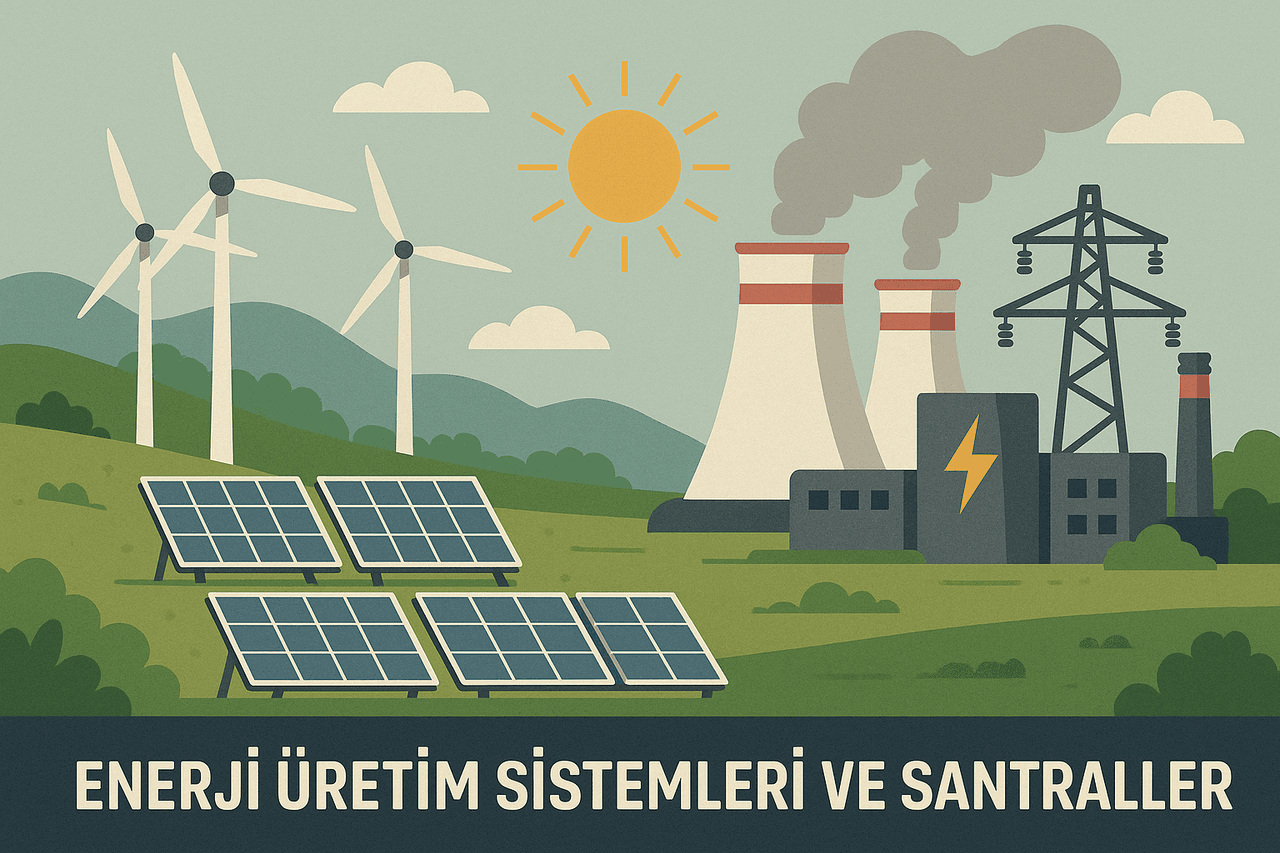
Generated with artificial intelligence.
Energy Production Plants
Definition(s) | Industrial facilities that generate electrical energy using various primary energy sources. | ||||||||
|---|---|---|---|---|---|---|---|---|---|
Main Type(s) | Thermal (Fossil Fuel Biomass). Geothermal Solar Wind Renewable (Hydroelectric Nuclear) | ||||||||
Purpose(s) | To meet increasing energy demands and ensure the stability of the national electricity grid. | ||||||||
Largest Producer in Türkiye (Installed Capacity) | Electricity Generation Inc. (EÜAŞ) | ||||||||
Related Technologies | SCADA, RTU, Turbines, Generators, Energy Storage Systems, Waste Heat Boilers. | ||||||||
Energy Production Systems and Power Plants are industrial facilities that generate electrical energy using various primary energy sources. These systems are established to meet the growing energy demands worldwide and convert different types of energy such as fossil fuels nuclear energy and renewable resources into electricity. Electricity generation is a fundamental requirement for the sustainability of economic and social activities in modern societies. Power plants are classified into different types based on their design technology and primary energy source and each type has distinct environmental impacts operational costs and efficiency levels.
Power plants are primarily divided into two main categories based on their primary energy source: thermal and renewable energy plants. Each category includes various technologies and subcategories.
Thermal power plants operate on the principle of using steam generated by heating a fluid to rotate a turbine. The heat source is typically fossil fuels such as coal lignite or natural gas or nuclear reactions. These plants play a crucial role as base load plants due to their ability to provide continuous and reliable energy.
These plants generate electricity with high efficiency by using both a gas turbine and a steam turbine. The hot exhaust gases produced by burning natural gas in the gas turbine are directed to a waste heat boiler to produce steam which then drives a steam turbine. Major examples in Türkiye include the Bandırma I and II NGCC plants the Kentsa NGCC plant and the Bilgin Samsun Natural Gas Combined Cycle Power Plant.
Heat generated by burning coal or lignite is used to boil water and produce steam which drives steam turbines to generate electricity. Lignite holds a significant place among Türkiye’s domestic resources. The Tufanbeyli Lignite Power Plant in Adana is an example of this type.
Nuclear power plants generate electricity by using heat released from controlled nuclear fission reactions of radioactive elements such as uranium. A major advantage is that they do not emit greenhouse gases like fossil fuel plants. The Akkuyu Nuclear Power Plant project is the most significant investment in this field in Türkiye.
Renewable energy power plants generate energy using sources that are continuously available or naturally replenished in nature. These include water wind solar geothermal heat and biomass. These plants are strategically important due to their low environmental impact and contribution to energy independence.
These facilities generate electricity by harnessing the kinetic energy of flowing rivers or the potential energy of water stored in reservoirs. Water rotates turbines and this mechanical energy is converted into electricity via generators. They are categorized into reservoir-based (dammed) and river-type (canal-type) systems. Türkiye has a rich hydroelectric potential due to its geographical structure. Numerous large and small-scale HPPs operate including the Arkun Dam and HPP Kandil HPP Köprü HPP and Tatar Dam and HPP.
These plants convert the kinetic energy of wind into electrical energy using wind turbines. Although investment costs are high operational expenses are low. Türkiye has numerous WEPs concentrated especially in the Aegean and Marmara regions. Examples include the Balıkesir WEP Erciyes WEP Gökçedağ Wind Power Plant and Soma WEP. The Gökçedağ Plant holds a Gold Standard certification due to its sensitivity to ecological and social balance.
These systems directly convert sunlight into electrical energy. Türkiye has a high solar energy potential with an average annual solar irradiation of 2741【1】 hours. SEPs are primarily based on two technologies:
These systems use silicon-based panels that convert sunlight directly into electricity through the photovoltaic effect. They can be installed as grid-connected (On-Grid) or off-grid systems. On-Grid systems allow excess electricity generated to be sold back to the grid.
These systems use mirrors or lenses to focus sunlight over a large area onto a single point to produce a high-temperature fluid. The steam generated from this fluid drives turbines in a manner similar to conventional thermal power plants. Solar energy investments in Türkiye are rapidly increasing and plants such as the Bandırma SEP and Karabük SEP are operational.
These facilities generate electricity using heat from hot water or steam heated by magma beneath the Earth’s crust. Türkiye is a country rich in geothermal resources. Zorlu Energy is one of Türkiye’s largest investors in this field. The Kızıldere 1 2 and 3 plants in Denizli and the Alaşehir 1 plant in Manisa constitute a significant portion of Türkiye’s total installed geothermal capacity. Particularly the 165 MW Kızıldere 3【2】 plant is one of Türkiye’s largest and among the world’s few major geothermal power plants.
These plants generate energy by burning or processing organic materials such as agricultural forestry animal waste and municipal solid waste. Technologies used include biogas systems that produce methane gas through anaerobic digestion of waste gasification systems that convert solid waste into gas and plasma technologies that melt waste at extremely high temperatures.
Electricity generation in Türkiye is carried out by both public and private sector companies. According to the Energy Atlas data as of 2024 the state-owned Elektrik Üretim A.Ş. (EÜAŞ) ranks first in terms of installed capacity followed by private sector companies such as Cengiz Enerji Enerjisa Enerji Üretim A.Ş. and Enka Enerji.
Modern power plants employ various advanced technologies and control systems to ensure efficient safe and continuous operation.
SCADA (Supervisory Control and Data Acquisition) systems collect real-time data from all plant units (turbines generators switchyards etc.) and enable centralized monitoring control and rapid response to faults. These systems enhance operational efficiency and minimize human error.
It is a legal requirement for licensed power plants in Türkiye to be connected to the National Load Dispatch Center SCADA system operated by Türkiye Elektrik İletim A.Ş. (TEİAŞ). This connection is established through RTU (Remote Terminal Unit) panels that transmit data from the plant to the central system and communication equipment such as SDH PDH and industrial routers that ensure uninterrupted communication between the panels and the center. This system is critical for balancing electricity supply and demand across the country.
Energy storage systems play a vital role in integrating wind and solar power plants whose generation depends on weather conditions. These systems store excess energy typically in large batteries during periods of high production and feed it back into the grid during periods of low generation or increased demand. This ensures grid stability and enables more efficient use of renewable sources. Battery Management Systems (BMS) control the efficient and safe operation of these storage units.
Modern power plants rely on innovative equipment that forms their core. These include gas and steam turbines that convert energy boilers and waste heat recovery boilers that generate heat generators that convert mechanical energy into electricity heat exchangers that regulate fluid temperatures air-cooled condensers that convert steam back into water pumps fans and piping systems that transport fluids.
Elektrovar Mühendislik. "Elektrik Üretim Sistemleri." Accessed July 1, 2025. Accessed Adresi.
Energy Atlas. "Elektrik Üretim Firmaları Üretim, Kurulu Güç ve Santral Bilgileri." Accessed July 1, 2025. Accessed Adresi.
Enerjisa Üretim. "Enerji Üretimi." Accessed July 1, 2025. Accessed Adresi.
Oral, Burcu Gediz, and Tuğba Arpazlı Fazlılar. "Yenilenebilir enerji yatırımlarının finansmanında kamu-özel sektör işbirlikleri: rüzgâr enerjisi santralleri örneği." Optimum Ekonomi ve Yönetim Bilimleri Dergisi 3, no. 1 (2016). Accessed Adresi.
Semtrio. “Temiz ve Yenilenebilir Enerji Üretmek: Güneş Enerji Santralleri.” Accessed July 1, 2025. Accessed Adresi.
Ünver, Ümit, Hilal Bilgin, and Alpaslan Güven. "Pompaj Depolamali Hidroelektrik Sistemler." *Mühendis ve Makina* 56, no. 663 (2015): 57-64. Accessed Adresi.
[1]
[2]
Enerji Atlası, "Kızıldere 3 Jeotermal Enerji Santrali." Erişim Tarihi: 9 Temmuz 2025.. Erişim Adresi.

Generated with artificial intelligence.
Energy Production Plants
Definition(s) | Industrial facilities that generate electrical energy using various primary energy sources. | ||||||||
|---|---|---|---|---|---|---|---|---|---|
Main Type(s) | Thermal (Fossil Fuel Biomass). Geothermal Solar Wind Renewable (Hydroelectric Nuclear) | ||||||||
Purpose(s) | To meet increasing energy demands and ensure the stability of the national electricity grid. | ||||||||
Largest Producer in Türkiye (Installed Capacity) | Electricity Generation Inc. (EÜAŞ) | ||||||||
Related Technologies | SCADA, RTU, Turbines, Generators, Energy Storage Systems, Waste Heat Boilers. | ||||||||
No Discussion Added Yet
Start discussion for "Energy Production Systems and Plants" article
Types of Power Plants
Thermal Power Plants
Natural Gas Combined Cycle Power Plants (NGCC)
Coal and Lignite Power Plants
Nuclear Power Plants
Renewable Energy Power Plants
Hydroelectric Power Plants (HPP)
Wind Energy Power Plants (WEP)
Solar Energy Power Plants (SEP)
Photovoltaic (PV) Systems
Concentrated Solar Power (Solar Thermal) Systems
Geothermal Energy Power Plants (GEP)
Biomass Energy Power Plants (BEP)
Electricity Generation and Installed Capacity in Türkiye
Technologies and Systems Used in Power Plants
SCADA and Automation Systems
TEİAŞ Communication and RTU Systems
Energy Storage Systems
Key Plant Equipment