This article was automatically translated from the original Turkish version.
+2 More
Solution | Renewable energy, Reforestation, Energy conservation | ||||||||
|---|---|---|---|---|---|---|---|---|---|
Causes | Fossil fuel use, Deforestation, Industrialization | ||||||||
Effect | Disruption of natural balance, Global warming, Climate change | ||||||||
Greenhouse Gases | Carbon dioxide (CO₂), Methane (CH₄), Water vapor (H₂O), Nitrogen oxides (N₂O) | ||||||||
The greenhouse effect is the process by which certain gases in Earth’s atmosphere trap energy from the Sun, maintaining the planet’s temperature at a balanced level. When sunlight reaches Earth’s surface, it warms the land. As the surface heats up, it re-radiates this heat back into the atmosphere as infrared radiation. Greenhouse gases in the atmosphere absorb a portion of this radiation and re-emit it back toward Earth, thereby preserving heat. Thanks to this natural process, Earth remains within a temperature range suitable for life, avoiding extremes of excessive cold or heat.

Image generated with AI assistance.
Various gases in the atmosphere play a role in the greenhouse effect. The most significant are carbon dioxide (CO₂), methane (CH₄), water vapor (H₂O), and nitrous oxide (N₂O). These gases allow sunlight to reach Earth but trap a portion of the heat energy radiated back from the surface, preventing it from escaping into space. Water vapor contributes the most to the natural greenhouse effect, but increases in CO₂ and methane due to human activities are disrupting the natural balance. Thus, while greenhouse gases regulate Earth’s temperature, their excessive concentrations can lead to global warming.
Carbon Dioxide (CO₂): Emitted from burning fossil fuels, deforestation, and industrial activities. Its effect is long-lasting.
Methane (CH₄): Released through human activities such as agriculture, livestock farming, and waste management. Its heat-trapping capacity is about 20 times greater than that of CO₂.
Water Vapor: The most powerful natural greenhouse gas. However, its concentration in the atmosphere is dependent on temperature.
Nitrous Oxide (N₂O): Released into the atmosphere through agricultural fertilizers and industrial processes.
Ozone (O₃): Plays a protective role in the stratosphere but acts as a pollutant in the troposphere.
Solar energy reaches Earth in the form of short-wavelength radiation and is absorbed by the surface. The Earth then re-radiates this energy as long-wavelength infrared radiation. Greenhouse gases absorb a portion of this heat and re-emit it back toward Earth, trapping warmth. This process regulates Earth’s natural climate.
Human-caused emissions of greenhouse gases intensify the natural greenhouse effect, leading to a rise in Earth’s average temperature. This phenomenon is known as the enhanced greenhouse effect. The primary contributors include:
Increased use of fossil fuels since the Industrial Revolution, deforestation and loss of green areas, and agricultural and livestock activities.
Short-wavelength radiation from the Sun reaches Earth’s surface and is converted into heat. This heat is then re-radiated from the surface as long-wavelength infrared radiation back into the atmosphere. Greenhouse gases in the atmosphere absorb a portion of this energy and re-emit it back toward Earth, keeping the planet’s average temperature around 15°C, which makes life possible. Without these gases, Earth’s surface would be far too cold to support life. However, excessive increases in greenhouse gas concentrations disrupt this natural balance and cause the planet to overheat.

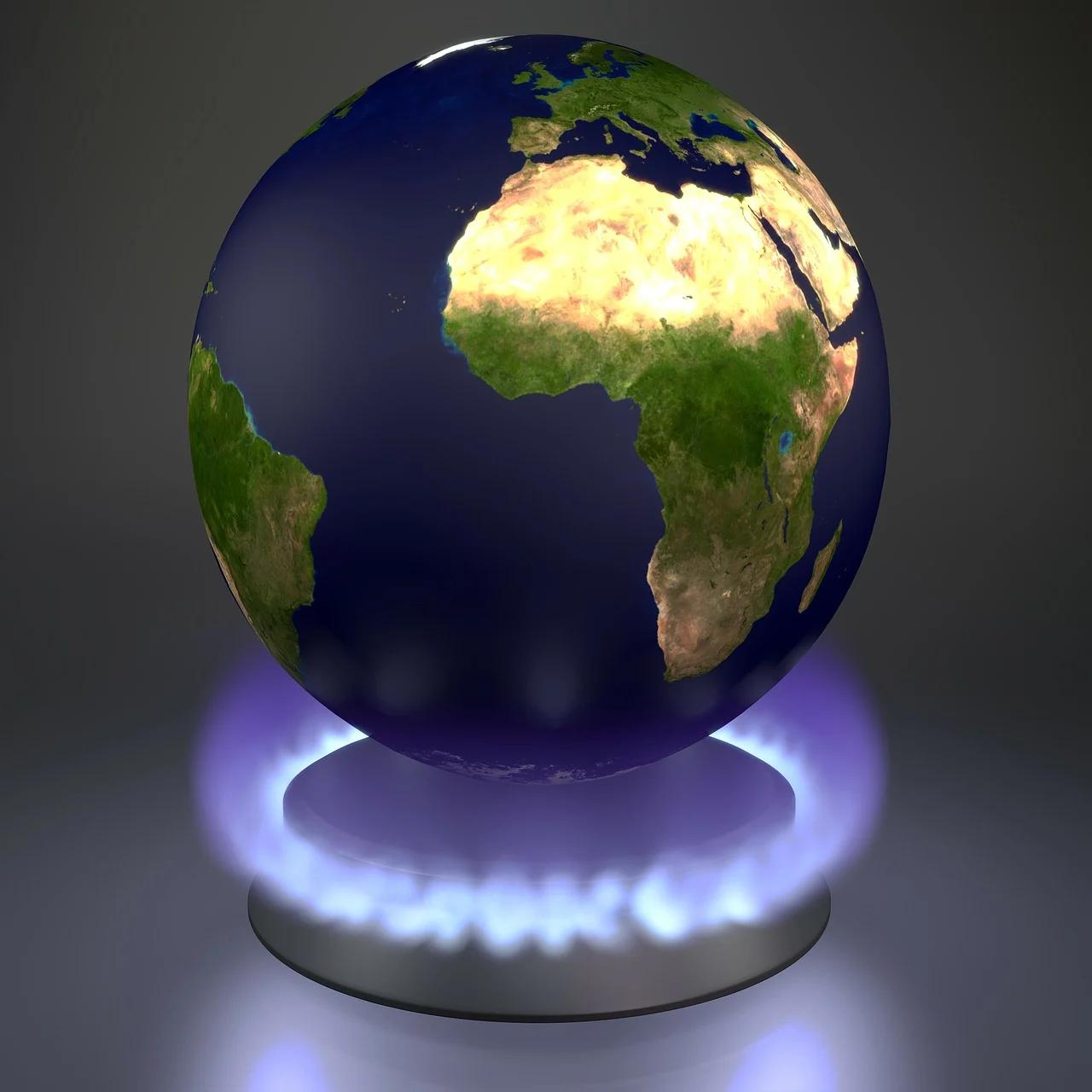
Greenhouse Effect (Pixabay)
Over the past century, human activities—particularly the use of fossil fuels, destruction of forests, and industrialization—have significantly increased the concentration of greenhouse gases in the atmosphere. This has intensified the natural greenhouse effect, causing Earth’s average temperature to rise, a phenomenon known as global warming. Global warming brings serious environmental consequences including melting glaciers, rising sea levels, extreme weather events, and ecosystem damage. Human-induced greenhouse gas emissions are rapidly and uncontrollably altering the climate system.

Image generated with AI assistance.
Since the Industrial Revolution, fossil fuel use, deforestation, and industrial activities have increased atmospheric CO₂ levels by more than 50 percent. Methane concentrations have nearly doubled. These changes excessively amplify the natural greenhouse effect, triggering global warming known as the enhanced greenhouse effect.
As greenhouse gas levels rise, Earth’s climate is changing, leading to numerous adverse effects. Environmental impacts include melting glaciers, rising sea levels, and increased flood risks in certain regions. Additionally, droughts, heatwaves, intense storms, and shifts in precipitation patterns are becoming more frequent. These changes threaten the habitats of many species and reduce biodiversity. Human health is also affected, as rising temperatures facilitate the spread of certain diseases.

Greenhouse Effect (Pixabay)
Several measures can be taken to control the greenhouse effect and slow global warming. Fossil fuel use must be reduced, and greater reliance should be placed on renewable energy sources such as solar, wind, and hydropower. Protecting forests and expanding reforestation efforts help reduce atmospheric CO₂. Energy efficiency must be improved and unnecessary energy consumption avoided. Individuals and communities can contribute by increasing environmental awareness and reducing greenhouse gas emissions. These actions represent vital steps in combating climate change.
Bilim Genç. "Sera Etkisi Nedir?" TÜBİTAK. Accessed August 1, 2025. https://bilimgenc.tubitak.gov.tr/makale/sera-etkisi-nedir.
Climate Change Presidency. "İklim Değişikliği Hakkında Sık Sorulan Sorular." Accessed August 1, 2025. https://iklim.gov.tr/sss/iklim-degisikligi.
Climate Kids – NASA. "What Is the Greenhouse Effect?" Accessed August 1, 2025. https://climatekids.nasa.gov/greenhouse-effect/.
Erdoğan, Sibel. Küresel Isınma: Gezegenimiz Ne Kadar Isındı? Bartın Üniversitesi. Accessed August 1, 2025. https://cdn.bartin.edu.tr/insaat/f0524f5c-98df-4ccf-8f50-40fb70f6b6dc/kuresel-isinma-gezegenimiz-ne-kadar-isindi.pdf.
Hava Kalitesi İzleme Merkezi. "Küresel Isınma ve Sera Etkisi." İstanbul Büyükşehir Belediyesi. Accessed August 1, 2025. https://havakalitesi.ibb.gov.tr/Icerik/bilgi/kuresel-isinma-sera-etkisi.
NIWA – National Institute of Water and Atmospheric Research. “What Is the Greenhouse Effect?” Accessed August 1, 2025. https://niwa.co.nz/atmosphere/what-greenhouse-effect.
What's Your Impact. "Enhanced Greenhouse Effect." Accessed August 1, 2025. https://whatsyourimpact.org/enhanced-greenhouse-effect.

Solution | Renewable energy, Reforestation, Energy conservation | ||||||||
|---|---|---|---|---|---|---|---|---|---|
Causes | Fossil fuel use, Deforestation, Industrialization | ||||||||
Effect | Disruption of natural balance, Global warming, Climate change | ||||||||
Greenhouse Gases | Carbon dioxide (CO₂), Methane (CH₄), Water vapor (H₂O), Nitrogen oxides (N₂O) | ||||||||
Greenhouse Gases and Their Role
Key Greenhouse Gases and Their Characteristics
Energy Balance and Atmospheric Interaction
Enhanced (Anthropogenic) Greenhouse Effect
How the Greenhouse Effect Works
Global Warming and Human Impact
Human Impact and the Enhanced Greenhouse Effect
Consequences of the Greenhouse Effect
Ways to Reduce the Greenhouse Effect