

This article was automatically translated from the original Turkish version.
+3 More
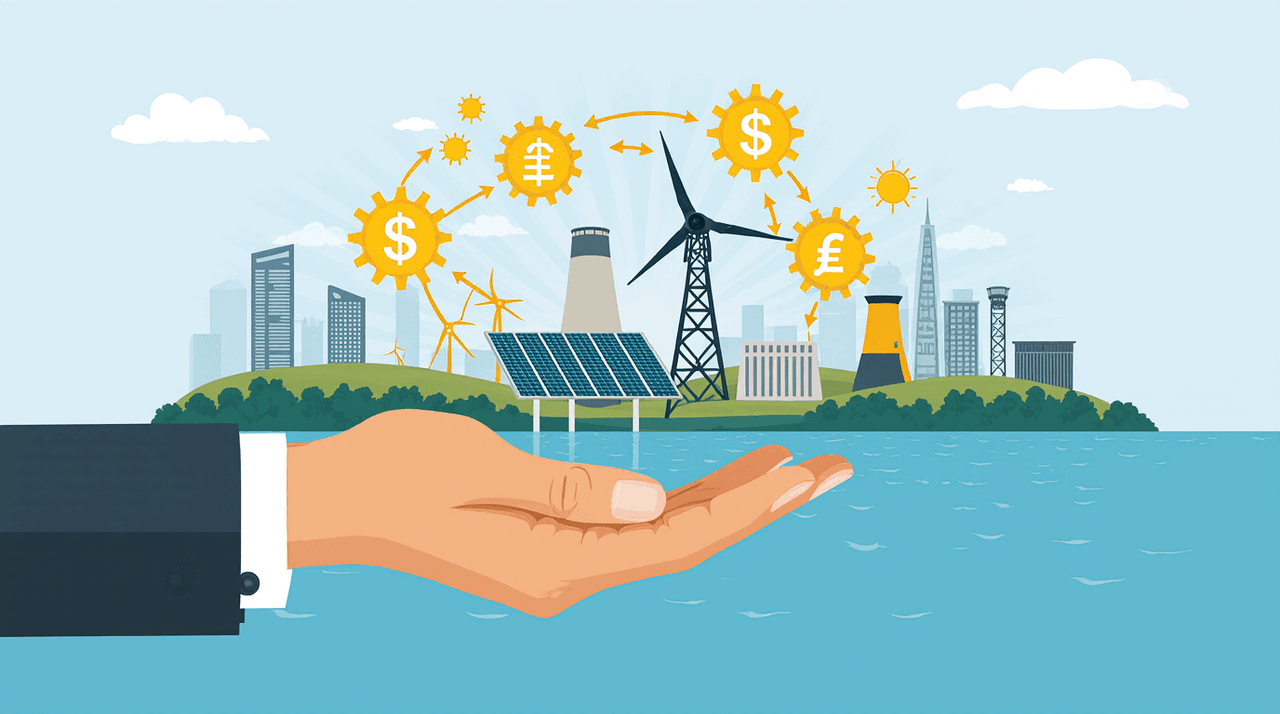
Energy Incentives in Türkiye (Generated by Artificial Intelligence.)
Purpose(s) | Increase the use of renewable energy and reduce carbon emissions. strengthen energy supply security ensure energy efficiency | ||||||||
|---|---|---|---|---|---|---|---|---|---|
Main Incentivized Areas | Solar (GES), Wind (RES), Hydroelectric (HES), Geothermal (JES), Bioenergy, Cogeneration, Energy Efficiency. | ||||||||
Competent Institutions | Ministry of Industry and Technology, Ministry of Energy and Natural Resources, KOSGEB, TKDK, Ministry of Agriculture and Forestry, TTGV, TÜBİTAK. | ||||||||
Basic Mechanism | Investment Incentive Certificate (General, Regional, Priority, Strategic). | ||||||||
Support Elements | VAT Exemption, Customs Duty Exemption, Tax Deduction, SGK Premium Support, Interest/Profit Share Support, Grant, Allocation of Investment Location. | ||||||||
Special Programs | VAP (Efficiency Enhancement Project), KKYDP (Rural Development), IPARD (TKDK), TurSEFF. | ||||||||
Energy incentives are financial, administrative, and technical support mechanisms provided by states or competent authorities to investors, businesses, and individuals to achieve strategic economic and environmental objectives in the energy sector. The primary function of these incentives is to reduce financial and bureaucratic barriers to energy investments, accelerate sectoral development, and ensure long-term energy security for society.
The main objectives of energy incentives include promoting the wider use of renewable energy sources, increasing energy efficiency, gradually reducing fossil fuel consumption, and supporting environmental sustainability. Such policies also play a crucial role in combating climate change, limiting greenhouse gas emissions, and promoting the dissemination of clean energy technologies.
In Türkiye, energy incentives have been shaped according to strategic priorities such as strengthening energy supply security, reducing external dependence, developing energy production based on domestic and national resources, and limiting carbon emissions. The support provided under this framework enables investment projects to be implemented at lower costs and enhances the economic viability of investments in the energy sector.
Incentives can be delivered in various forms, including direct financial grants, tax exemptions and reductions, low-interest credit facilities, state-guaranteed purchase of generated electricity for a specified period, and allocation of investment sites. In some cases, special programs are also introduced to support research and development activities, encourage technology transfer, and attract international investors to the sector. Within this context, energy incentives are regarded not merely as economic tools but as strategic mechanisms that facilitate the implementation of long-term energy policies and align with environmental goals.
In Türkiye, incentives for energy investments are primarily coordinated by the Ministry of Industry and Technology and the Ministry of Energy and Natural Resources, and are implemented under various laws, regulations, and presidential decrees. These regulations are designed to strengthen the country’s energy supply security, increase the use of domestic and renewable resources, reduce external dependence, and support environmental sustainability.
The core of the system is the Investment Incentive System managed by the Ministry of Industry and Technology. This system offers different support mechanisms depending on the type, scale, technology used, and geographical location of the investment. When it comes to energy investments, incentives are generally evaluated under four main categories:
This system applies to energy investments that meet certain criteria and do not fall under other special incentive categories. Licensed hydropower plants (HPPs) and geothermal energy plants (GEPs) are primarily assessed under this framework. Key support elements include value-added tax (VAT) exemptions and customs duty exemptions, which directly reduce investment costs.
Under this system, Türkiye is divided into six regions based on socio-economic development levels, with investments in less developed regions receiving higher levels of support. In the energy sector, license-free solar energy plants (SEPs) and wind energy plants (WEPs) are prioritized under this system. Support includes tax reductions, employer contributions to insurance premiums, and allocation of investment sites.
This category focuses on investments of strategic importance to the national economy with high technological and value-added potential. In the energy sector, projects aimed at improving energy efficiency, waste heat-to-electricity generation (cogeneration), and manufacturing of renewable energy equipment are evaluated under this category. These incentives involve conditions distinct from general or regional support schemes.
Strategic investments aim to promote domestic production of products heavily reliant on imports and to support large-scale, advanced technology projects. In the energy sector, nuclear power plant investments serve as an example of this category. Comprehensive incentive mechanisms such as tax reductions, insurance premium support, and interest or profit-sharing support are activated for such investments.
These four main categories define the structural framework of Türkiye’s energy incentive system and determine the eligibility conditions for both domestic and foreign investors in energy projects. Moreover, the system is regarded not only as an economic instrument but also as a policy tool aligned with environmental sustainability and technological transformation objectives.
To benefit from state support in Türkiye’s energy sector, the fundamental step is obtaining an Investment Incentive Certificate (IIC) through the Electronic Incentive Application and Foreign Capital Information System (E-TUYS) administered by the Ministry of Industry and Technology, prior to commencing investment expenditures. This certificate determines the scope of evaluation for the investment, the extent to which investors can benefit from support elements, and the framework of the incentives provided. The IIC contributes to securing the legal framework of the investment and plays a regulatory role in the implementation of state support.
The main support elements offered under the IIC in the energy sector can be summarized as follows:
Under the IIC, VAT is not levied on investment machinery and equipment procured domestically or internationally. This practice reduces initial investment costs and facilitates faster implementation of projects.
Customs duty exemption is granted for machinery and equipment imported from abroad under the IIC. This support significantly reduces the financial burden on investors, particularly for high-cost technological equipment used in energy plants.
A specified percentage of investment expenditures can be deducted from the investor’s corporate or income tax liability. This percentage is known as the Investment Contribution Rate (ICR) and varies according to the region of investment, the strategic importance of the sector, and the type of incentive system. For energy investments, this rate typically ranges between 30% and 50%, with entrepreneurs investing in less developed regions benefiting from higher tax advantages.
The employer’s share of insurance premiums for newly created employment under the investment is covered by the state for a specified period. This period varies between 6 and 10 years depending on the geographical region of the investment. This measure reduces labor costs for investors while promoting regional employment.
A portion of the interest or profit-sharing on loans used under the IIC may be covered by the state. This support reduces investors’ financing costs and eases capital burdens. However, this type of support is not applicable to certain investments such as self-consumption solar energy plants (SEPs) and wind energy plants (WEPs).
Providing investment sites on state-owned land under suitable conditions is a significant advantage for energy investments. This practice enables investors to save on land acquisition costs and facilitates investments in strategic areas. These support elements contribute to enhancing the economic sustainability of energy investments. Due to these processes, the approach is not limited to merely supporting investments; it is also regarded as a policy instrument aligned with Türkiye’s long-term strategic goals of strengthening energy supply security, increasing the use of renewable energy sources, and reducing carbon emissions.
A key component of Türkiye’s energy policy is the promotion of domestic and renewable energy sources and the economic incentivization of investments in this field. Accordingly, specialized incentive mechanisms have been developed for different energy types, with detailed support models tailored to the nature and purpose of the investment.
Solar energy is one of the fastest-growing renewable energy sources in Türkiye and is among the priority areas for state support. SEP investments are generally incentivized under two main models: license-free self-consumption projects and licensed or commercial projects.
Plants established by industrial facilities and other businesses to meet their own electricity needs are assessed under this category. Such investments are considered under “Prioritized Investments” and benefit from the support levels of Region 4 regardless of their location. If the investment is located in Region 4, 5, or 6, the more favorable regional support applicable to that region is applied.
To benefit from these incentives, certain conditions must be met:
Licensed investments aimed at selling electricity commercially to the grid are assessed under “Targeted Investments.” The local production requirement also applies here, but these investments receive more limited support compared to self-consumption projects. For example, they cannot benefit from certain regional support elements such as tax reductions or interest support.
Wind energy investments are supported under a system similar to that for solar energy. License-free WEPs established by industrial enterprises for self-consumption are evaluated under “Prioritized Investments” and benefit from Region 4 incentives. The local production requirement is also critical here: blades and towers of wind turbines must be manufactured domestically. Furthermore, starting January 1, 2026, applications will require that generators also be locally produced.
Hydroelectric and geothermal energy plant investments are generally supported under the General Investment Incentive System. Under this framework, investors receive basic financial advantages such as VAT exemptions and customs duty exemptions.
Biogas and bioenergy investments are similarly supported, particularly facilities producing energy from biomass and waste. Additionally, cogeneration plants that generate electricity from waste heat recovery in industrial facilities are evaluated under “Prioritized Investments” due to their contribution to energy efficiency and benefit from more comprehensive regional support. Through this structure, renewable energy investments in Türkiye are maintained as a priority, promoting local production, enhancing energy supply security, and supporting environmental sustainability.

Wind Energy Plant (Generated by Artificial Intelligence)
In Türkiye, energy investment incentives are not limited to the Investment Incentive System. Various public institutions also implement specialized support programs for the energy sector using national budgets or international funds. These programs vary across areas such as energy efficiency, promotion of renewable energy sources, expanding energy access in rural areas, and developing innovative energy technologies.
The Ministry of Energy and Natural Resources operates two key support programs focused on energy efficiency and carbon reduction:
The Directorate General of Small and Medium Enterprises Development and Support (KOSGEB) provides support to SMEs to reduce energy costs and enhance sustainable production capacity. Support covers expenses such as energy audits, replacement of inefficient electric motors, and hiring energy managers.
Energy incentives are integrated with agricultural and rural development policies:
Investors can also access support through national foundations and international financing programs in addition to direct public institutions:
The process for benefiting from energy incentives varies depending on the specific program. However, generally, applications for support based on the Investment Incentive Certificate must be submitted through the E-TUYS system before commencing investment expenditures. For SEP and WEP projects, investors must complete legal procedures with the Energy Market Regulatory Authority (EPDK), Türkiye Electricity Transmission Corporation (TEİAŞ), or relevant distribution companies. The following documents are typically required during the application process:
Due to the complexity of these procedures, many investors prefer to work with engineering, procurement, and construction (EPC) firms and incentive consulting companies to minimize application and permitting risks and accelerate the process.
Gümüş Demir, D., and M. Canbaz. “Türkiye’de 2001–2020 Yılları Arasında Devlet Teşviklerinin Yenilenebilir Enerji Sektörü Üzerine Etkisinin Değerlendirilmesi.” *Türk Kamu Yönetimi Dergisi* 2, no. 2 (2022). Accessed August 22, 2025. https://tujpa.com/index.php/journal/article/view/29
Samancı, Muhammed. “Yenilenebilir Enerji Yatırımlarının Arttırılmasına Yönelik Vergisel Teşvikler: Türkiye ve Seçilmiş Bazı Ülkeler Arasında Karşılaştırma.” *Türkiye Siyaset Bilimi Dergisi* 3, no. 1 (2020): 55–69. Accessed August 22, 2025. https://iibfdergi.bozok.edu.tr/upload/pdf/tam-metin-28nn.pdf
Yıldırım, Hasan Hüseyin. “Yenilenebilir Enerji Yatırımlarındaki Teşviklerin Yatırım Performansları Üzerine Etkisi.” *Finans Ekonomi ve Sosyal Araştırmalar Dergisi* 4 (September 30, 2019): 330–45. doi:10.29106/fesa.605785. Accessed August 22, 2025. https://doi.org/10.29106/fesa.605785
Yılmaz, Olcay, and Hakan Hotunluoğlu. “Yenilenebilir Enerjiye Yönelik Teşvikler ve Türkiye.” *Adnan Menderes Üniversitesi Sosyal Bilimler Enstitüsü Dergisi* 2, no. 2 (March 2015): 74–97. doi:10.30803/adusobed.188787. Accessed August 22, 2025. https://doi.org/10.30803/adusobed.188787
Çelikkaya, Ali. “Yenilenebilir Enerjinin Teşvikine Yönelik Uluslararası Kamu Politikaları Üzerine Bir İnceleme.” *Maliye Dergisi* 172 (January–June 2017): 52–84. Accessed August 22, 2025. https://ms.hmb.gov.tr/uploads/2019/09/172-04.pdf

Energy Incentives in Türkiye (Generated by Artificial Intelligence.)
Purpose(s) | Increase the use of renewable energy and reduce carbon emissions. strengthen energy supply security ensure energy efficiency | ||||||||
|---|---|---|---|---|---|---|---|---|---|
Main Incentivized Areas | Solar (GES), Wind (RES), Hydroelectric (HES), Geothermal (JES), Bioenergy, Cogeneration, Energy Efficiency. | ||||||||
Competent Institutions | Ministry of Industry and Technology, Ministry of Energy and Natural Resources, KOSGEB, TKDK, Ministry of Agriculture and Forestry, TTGV, TÜBİTAK. | ||||||||
Basic Mechanism | Investment Incentive Certificate (General, Regional, Priority, Strategic). | ||||||||
Support Elements | VAT Exemption, Customs Duty Exemption, Tax Deduction, SGK Premium Support, Interest/Profit Share Support, Grant, Allocation of Investment Location. | ||||||||
Special Programs | VAP (Efficiency Enhancement Project), KKYDP (Rural Development), IPARD (TKDK), TurSEFF. | ||||||||
No Discussion Added Yet
Start discussion for "Energy Incentives in Türkiye" article
General Framework of the Energy Incentive System in Türkiye
General Investment Incentive System
Regional Investment Incentive System
Prioritized Investment Incentives
Strategic Investment Incentives
Investment Incentive Certificate and Supported Elements
Value-Added Tax (VAT) Exemption
Customs Duty Exemption
Tax Reduction and Investment Contribution Rate (ICR)
Employer’s Insurance Premium Support
Interest or Profit-Sharing Support
Investment Site Allocation
Incentives by Renewable Energy Source
Solar Energy Plant (SEP) Incentives
License-Free Self-Consumption SEPs
Licensed or Commercial SEPs
Wind Energy Plant (WEP) Incentives
Hydroelectric (HPP), Geothermal (GEP), and Bioenergy Incentives
Corporate Support Programs and Special Incentives
Ministry of Energy and Natural Resources Support
KOSGEB Support
Agriculture and Rural Area-Focused Support (TKDK and KKYDP)
Other Financing and Support Mechanisms
Application Processes and General Conditions