



Neon Element
Neon is a noble gas located in group 18 of the periodic table. This gas, with an atomic number of 10, is colorless and odorless at room temperature.
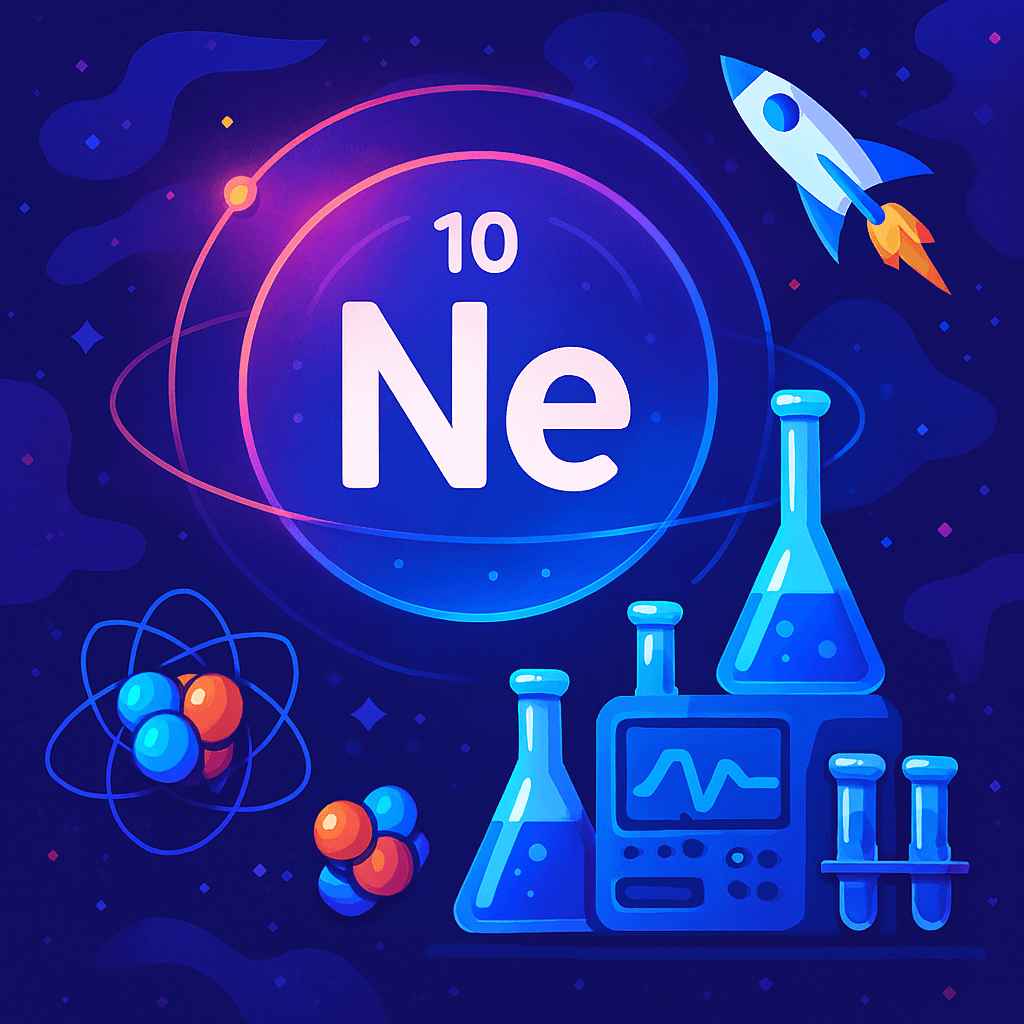
Representative Image of the Neon Element (Generated by Artificial Intelligence)
What is it used for?
Neon produces a bright light when electricity passes through glass tubes. For this reason, it is most commonly used in advertising signs and illuminated displays. When electrified, neon typically emits a red-orange light; this vivid color is highly noticeable at night. It is also used in scientific tubes and certain lighting applications.
Properties
Chemistry: Like other noble gases, neon reacts very little. This makes it an “inert” gas, meaning it does not readily undergo chemical reactions. As a result, it is a safe and durable material for lighting.
Appearance: It is colorless and odorless; thus invisible to the naked eye but glows under special conditions.
Where is it found in nature?: Neon exists in only trace amounts in the atmosphere. The element is trapped in the air and within rocks, so it must be separated from air using specialized methods.
Coolant: Liquid neon is used as an important coolant.
Representative Image of Neon (Generated by Artificial Intelligence)
📦 Time Travel: How Was It Discovered?
In 1898, British chemists William Ramsay and Morris W. Travers discovered the element neon while examining gases in the air. The name “neon” comes from the Greek word neos, meaning “new.” This discovery helped advance our understanding of how to separate elements.
Where Can You See It?
In street signs and advertisements, laboratory test tubes, refrigerants, diving apparatuses, lightning rods, and lasers.

Neon (Generated by Artificial Intelligence)