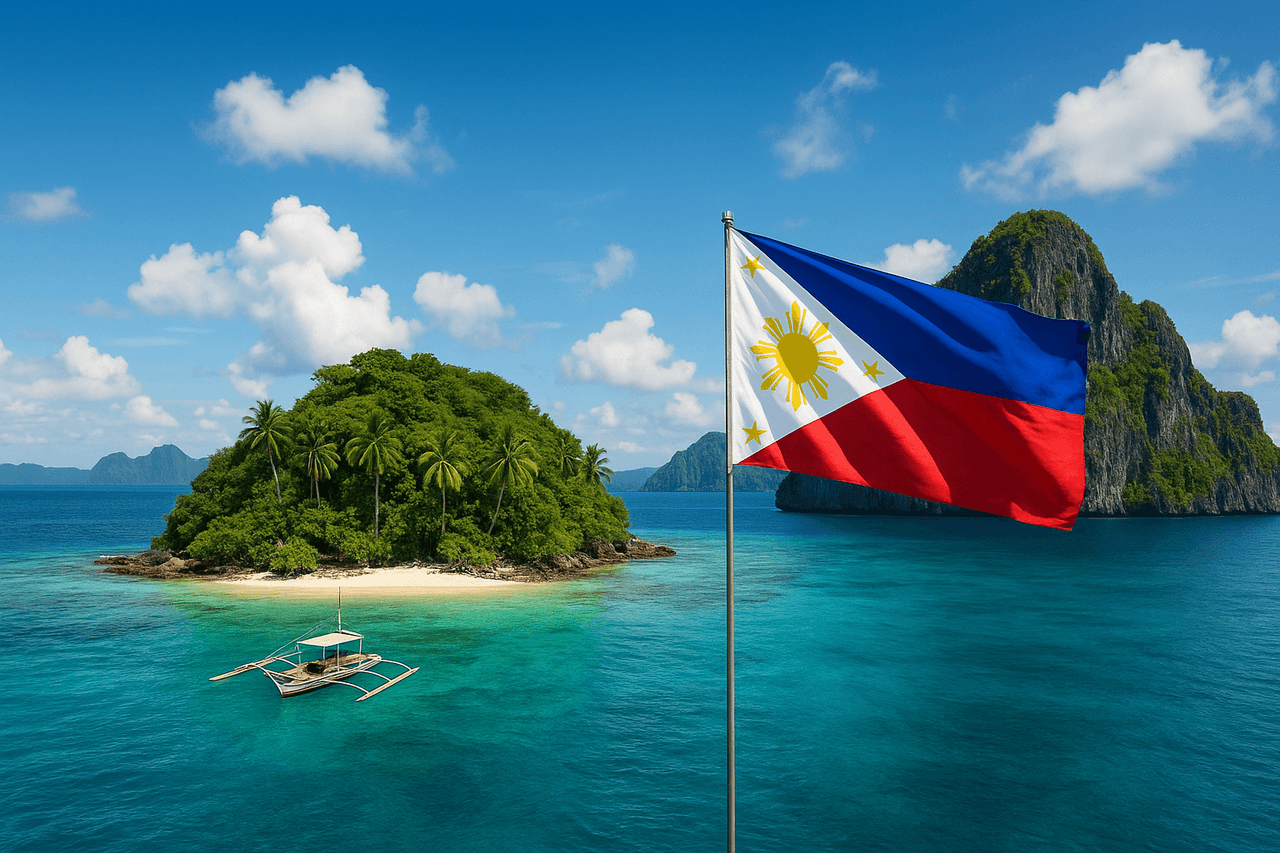




Philippines
The Philippines is an archipelago consisting of 7,641 islands located in Southeast Asia in the Pacific Ocean. The country is situated south of Taiwan, east of Malaysia, east of Vietnam, and west of Palau and the Mariana Islands. Geographically, it lies in the southeastern part of the Asian continent and is surrounded by sea.
Capital and Major Cities
The capital of the Philippines is Manila. Manila serves as the center of the country’s economic, political, social and cultural activities and is located on the island of Luzon at the mouth of the Pasig River. The metropolitan area of Manila, known as Metro Manila, is also the most densely populated region in the country. Other major cities in the Philippines include Quezon City, Davao City and Cebu City.

(Generated by Artificial Intelligence) Rizal Park, Manila
Philippine Culture
Philippine culture is rich in historical heritage and diversity. Traditional musical instruments of the Philippines include the kulintang (a set of gongs), the agung (a large gong), the tambuli (a brass horn), and the bandurria (a stringed instrument). These instruments are part of the cultural expressions of the Philippines’ various ethnic groups.

(Generated by Artificial Intelligence) Kulintang
Language and Flag
The official language of the Philippines is Filipino (Tagalog), and English is also widely used. More than 170 local languages and dialects are spoken in the country. The Philippine flag consists of two horizontal bands of equal size, blue and red. On the left side, a white triangle contains a golden eight-pointed star and a sun. The eight points of the star represent the eight provinces that waged the struggle for independence.

(Generated by Artificial Intelligence)
Philippine Cuisine
As an island nation, seafood plays a significant role in Philippine cuisine. Fish, shrimp and crab are commonly consumed. These foods are rich in protein and healthy fats.
One of the most well-known dishes is “Adobo,” in which meats such as chicken or fish are cooked with vinegar and soy sauce. “Sinigang” is a sour soup renowned for its distinctive tangy flavor. Philippine meals are typically shared, reinforcing family and community bonds.

(Generated by Artificial Intelligence) Adobo
History and Modern Development
The Philippines declared its independence from Spain on June 12, 1898. However, it gained full independence from the United States of America in 1946. On July 4, 1946, the United States of America officially recognized the independence of the Philippines.
Natural and Historical Attractions
The Philippines is renowned for its natural beauty. Some of its important sites listed on the UNESCO World Heritage List include:
- Puerto Princesa Subterranean River National Park: This park is home to the world’s longest underground river and is noted for its rich biodiversity.
- Tubbataha Reefs Natural Park: A popular destination for divers, this reef is famous for its abundant marine life.
- Historic City of Vigan: Known for its architecture from the Spanish colonial period, this city is an important example of the Philippines’ cultural heritage.

(Generated by Artificial Intelligence) Puerto Princesa Subterranean River
Brotherhood with Türkiye
Diplomatic relations between the Philippines and Türkiye were established on June 13, 1949. Both countries show mutual respect for each other’s cultural heritage and organize cultural events in each other’s nations. For example, festivals promoting Turkish culture are held in the Philippines, while events showcasing Philippine culture are held in Türkiye.