




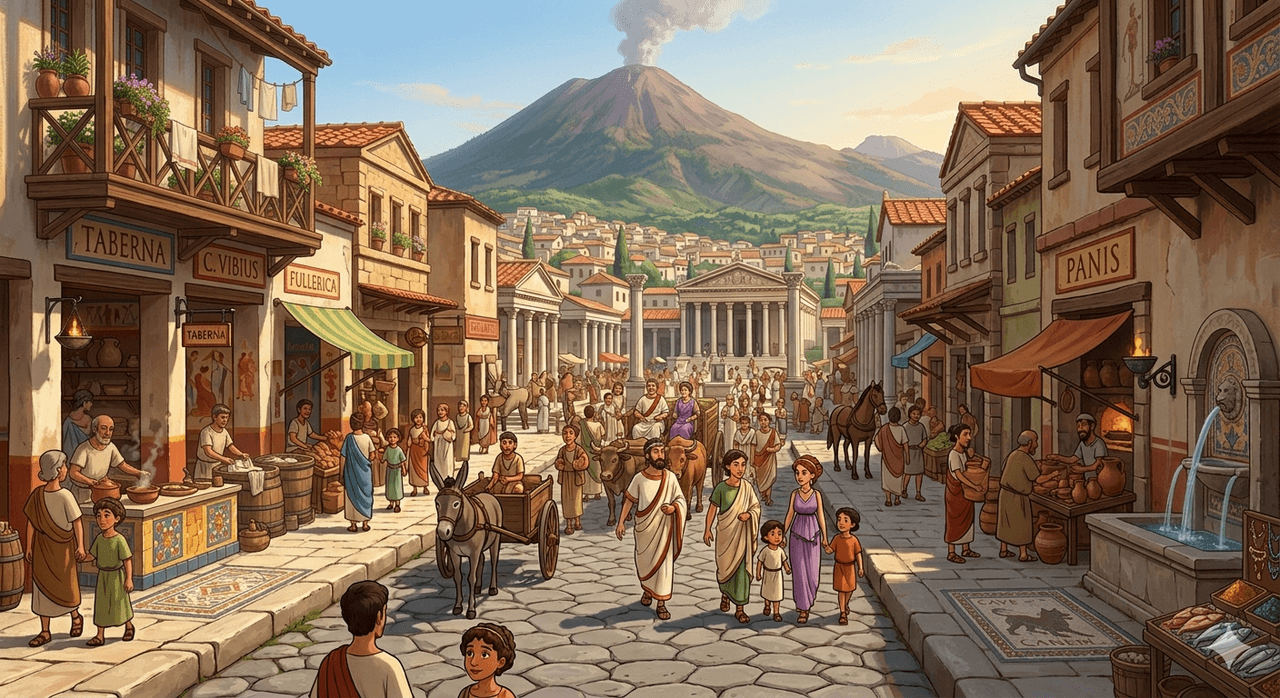
Pompeii
Pompeii is an ancient Roman city located in southern Italy, near the modern city of Naples. Around 2000 years ago, it was one of the most important trade and port cities of the Roman Empire. The city was built on a hill 40 meters above sea level, and thanks to the Sarno River flowing beside it, goods could be shipped by boat to all destinations.
The Great Eruption: Mount Vesuvius
In 79 AD, while the people of Pompeii went about their daily routines, the nearby Mount Vesuvius suddenly erupted. In fact, a major earthquake had occurred 17 years earlier, and people were still repairing their homes. Ash and stones spewing from the mountain covered the city like a blanket.
Pompeii remained forgotten for nearly 1700 years beneath meters of volcanic ash. This layer protected the city from the destructive effects of time and preserved it almost like a “time capsule” until the present day. Let us take a look at how people lived during that era.
Daily Life and Homes in Pompeii
In ancient Pompeii, streets followed a grid pattern resembling a chessboard. Houses were typically single-story and appeared very quiet from the outside. At the center of each house was an open-air courtyard called the Atrium, where rainwater collected and where the family gathered.
In the homes of the wealthy, there were magnificent gardens known as Peristyle, surrounded by columns. These gardens featured statues and fountains, and grand banquets were held there in the evenings.
Ancient “Fast Food”: Taverns and Bakeries
Life in Pompeii was lively, and people greatly enjoyed eating out.
- Thermopolium and Popina: These were ancient snack bars or “fast food” restaurants. In these shops, L-shaped marble counters held large storage jars called dolia, in which hot meals were kept.
- Bakeries: There were many bakeries in the city. Archaeologists even found petrified loaves of bread that had been placed in ovens 2000 years ago but remained there due to the eruption.
- Garum: The favorite sauce of the Pompeians was Garum, a fish-based condiment, which they added to nearly every dish.
Entertainment and Games
The city had a massive amphitheater capable of holding 20,000 people. This is the oldest known amphitheater in the Roman world, where gladiator fights took place. In addition, there were theaters and large public baths with hot water pools where everyone could bathe.
How Was Pompeii Discovered?
Pompeii was accidentally rediscovered during excavations in the 18th century. An expert named Giuseppe Fiorelli developed a special method of pouring plaster into voids left by decomposed bodies in the ash, revealing the shapes of the people who lived there. Thanks to this, we now have a clearer understanding of what happened on that terrible day.
Time Travel
Time in Pompeii stopped on August 24, 79 AD. This date falls within one of the most powerful periods of the Roman Empire.