



Processor
Computers contain a crucial component that manages all tasks and performs calculations. This component is called the processor. The processor is the central unit that enables the computer to carry out the tasks assigned to it. Just as our brain tells our body what to do, the processor instructs the other parts of the computer on what actions to take.
What Does the Processor Resemble?
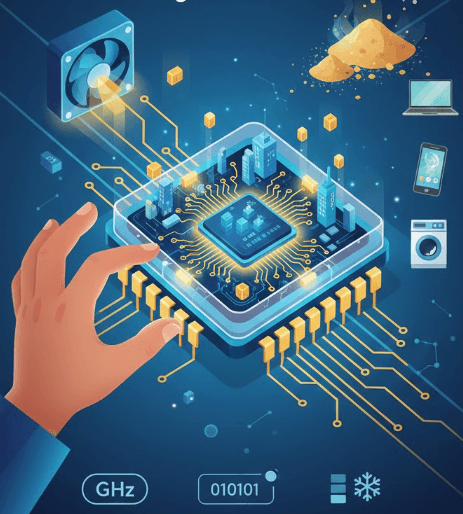
Processors appear from the outside as small, square-shaped pieces covered in metal. However, inside this tiny component are millions, even billions, of tiny electrical switches. These switches are called transistors. They are so small that they cannot be seen with the naked eye. The processor completes complex mathematical operations at incredible speeds by opening and closing these switches billions of times per second.

Processor Image (Generated by Artificial Intelligence)
How Does the Processor Work?
When performing a task, the processor follows three fundamental steps:
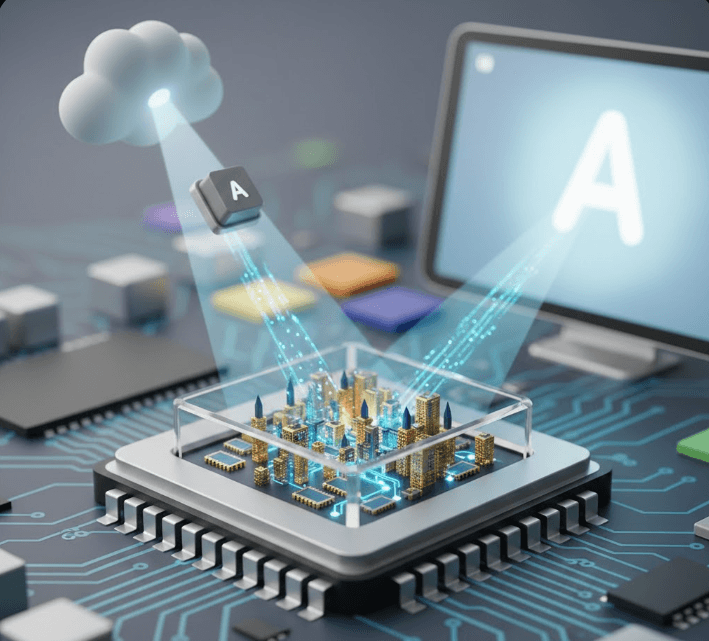
- Receives Information: When you press a key on the keyboard or move the mouse, this information is sent to the processor.
- Processes Information: The processor understands what the incoming information means—for example, that the letter "A" was pressed.
- Performs the Task: After processing the information, the processor sends the result to the screen, allowing us to see the letter "A".
All these complex processes repeat thousands of times before you even blink your eye.
How Does the Processor Transport Information?
Inside the processor, information moves like cars on roads. However, these roads are extremely narrow, and instead of cars, electrical signals are used. The processor uses these signals to communicate with other parts of the computer—the screen, keyboard, or speakers. This communication is so fast that we do not even notice when the computer "thinks" after we press a button. Everything happens through tiny electrical clicks occurring at the speed of light.

How the Processor Transports Information (Generated by Artificial Intelligence)
Why Do Processors Heat Up?
While operating, billions of tiny switches inside the processor constantly open and close. During this movement, some energy is converted into heat. This is similar to how our body warms up when running very fast. Metal heat sinks and fans inside computers remove this heat from the processor to keep it cool. If the processor becomes too hot, it slows down to protect itself; therefore, it is very important for computers to operate in a cool environment.