



Şanlıurfa Ulu Cami
Şanlıurfa Ulu Cami. This mosque is not merely a place of worship but also a living historical record bearing traces of different civilizations and faiths.
Architectural Features
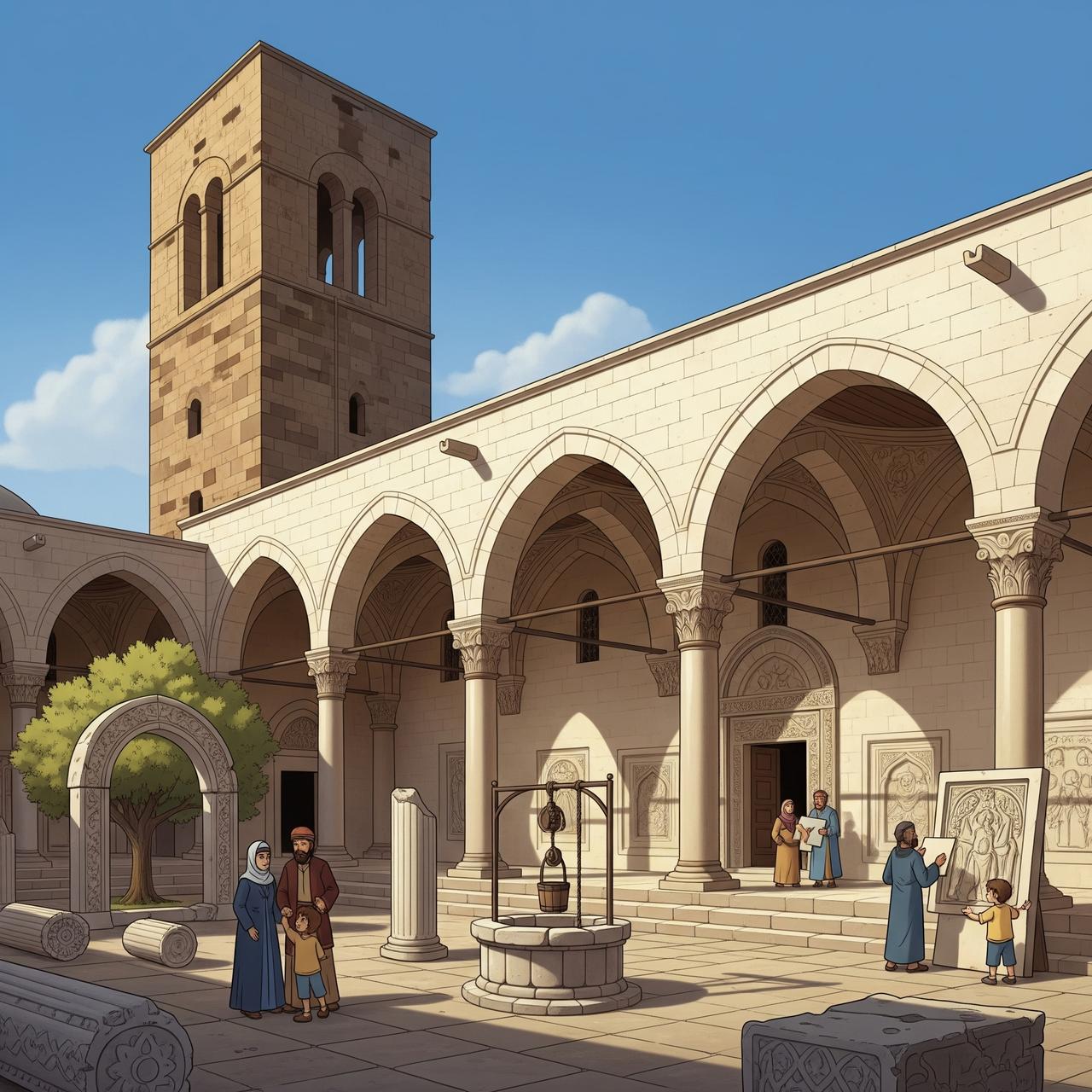
One of the most striking features of the mosque located in the center of Şanlıurfa is its large courtyard surrounded by fourteen pointed arches. Architectural experts note that this type of arch was used for the first time in Anatolia at this site.
While walking through the mosque’s courtyard, you can see columns and column capitals from various historical periods. These are remnants of an earlier structure that once stood on this site: a church.
The Mystery of the Red Church and the Minaret
Historians believe that this site was originally a synagogue, a place of worship for Jews. Approximately 1600 years ago (in 435 AD), the structure was converted into a church by Bishop Rabula. Due to the red marble columns inside, the building became known as the Red Church.
The mosque’s minaret also has a fascinating history. This minaret was originally the belfry of the Red Church. Over time, it was repurposed as the mosque’s minaret and during the Republican era, a clock was added to its top, making it the city’s first and only clock tower.
Construction of the Ulu Cami
The present Ulu Cami was built approximately 850 years ago (between 1170 and 1175) by a local principality known as the Zengids. Although there is no inscribed tablet providing an exact construction date, architectural features and contemporary documents confirm that the mosque was built during the Zengid period. Since its construction, the mosque has undergone numerous restorations and has reached its current form.