




Scythians
The First Turkish Warriors in History
Who Were the Scythians?
The Scythians, also known as the Saka, are among the earliest known Turkic communities. They are renowned for their bravery as warriors and their free-spirited way of life. They were highly skilled in shooting arrows from horseback and deeply loved both nature and independence.
Where and When Did They Live?
The Scythians lived from the 8th century BCE in the regions north of the Black Sea, around the Caspian Sea, and across the steppes of Central Asia. Their traces are found in territories that today comprise countries such as Russia, Ukraine, Kazakhstan, and Turkmenistan. They are among the earliest peoples in Turkish history.
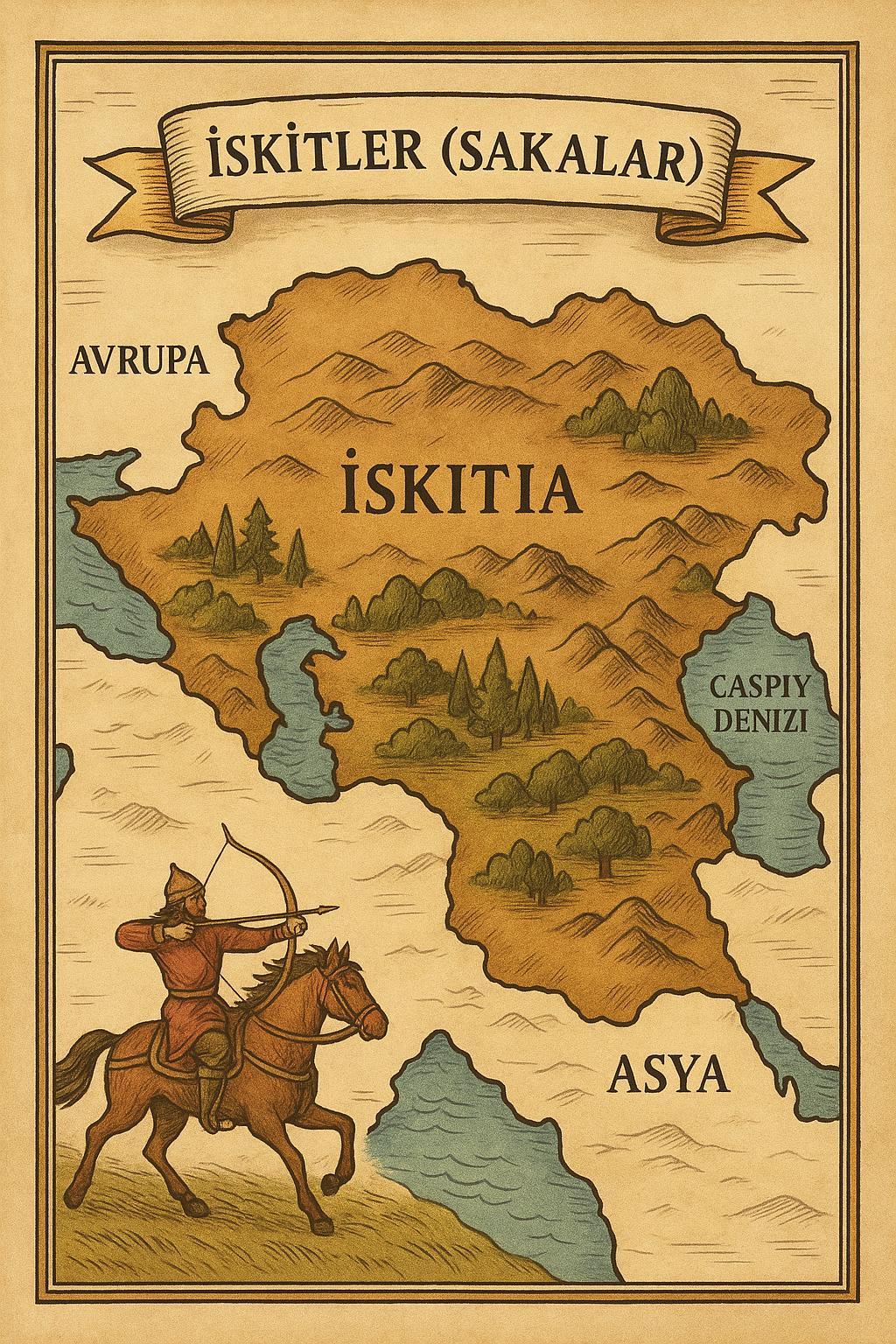
(Generated by artificial intelligence.)
How Did They Live?
The Scythians led a nomadic lifestyle. They lived in large tents (yurts) and raised animals such as horses, sheep, and cattle. They moved in search of pastures and lived in harmony with nature. Their clothing was simple but functional; they wore garments made of leather and adorned themselves with metal ornaments.
Scythian Women
Scythian women were just as brave and warlike as men. It is known that some Scythian women could shoot arrows, ride horses, and participate in battles. These women were called “Amazons.” This demonstrates how highly women were valued in Scythian society.
Art and Artifacts
The Scythians developed an artistic style known as the animal style. Their objects made of gold and bronze featured depictions of animals such as lions, deer, and eagles. Today, these artifacts are displayed in museums.
A Warrior People
The Scythians were excellent horsemen, skilled archers, and masterful warriors. They launched sudden raids against their enemies using lightly armored units. This style of warfare served as a model for later Turkic communities.
References:
- Özdamarlar, Metin. İlk Türk Devletleri. İstanbul: Timaş Yayınları, 2019.
- TDV İslam Ansiklopedisi, “İskitler” entry.
- Türk Tarih Kurumu Yayınları. Sakalar ve Bozkır Kültürü.
- Arkeoloji Dergisi. Special issue on Saka Art and the Animal Style.