




Umami
Umami is a taste that makes our mouths feel “delicious”! It is the fifth basic taste, discovered after sweet, salty, sour, and bitter. In Japanese, it means “delicious taste”.
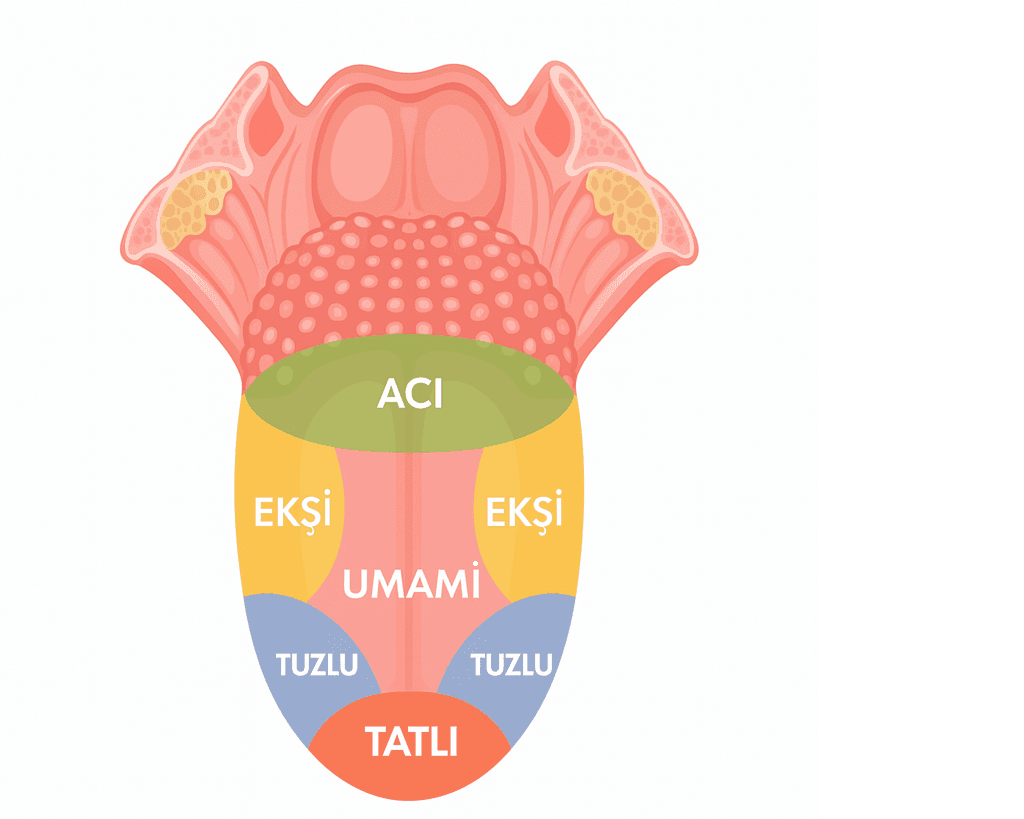
Taste Buds (generated by artificial intelligence).
How Was It Discovered?
In 1908, Japanese scientist Kikunae Ikeda investigated why a certain soup tasted so delicious. He found a special compound in this seaweed-based soup: glutamate! This compound was responsible for the umami taste.
Where Is It Found?
Umami occurs naturally in certain foods:
- Tomatoes 🍅
- Cheese 🧀
- Mushrooms 🍄
- Meat broth 🍖
- Soy sauce 🍶
- Dried fish 🐟
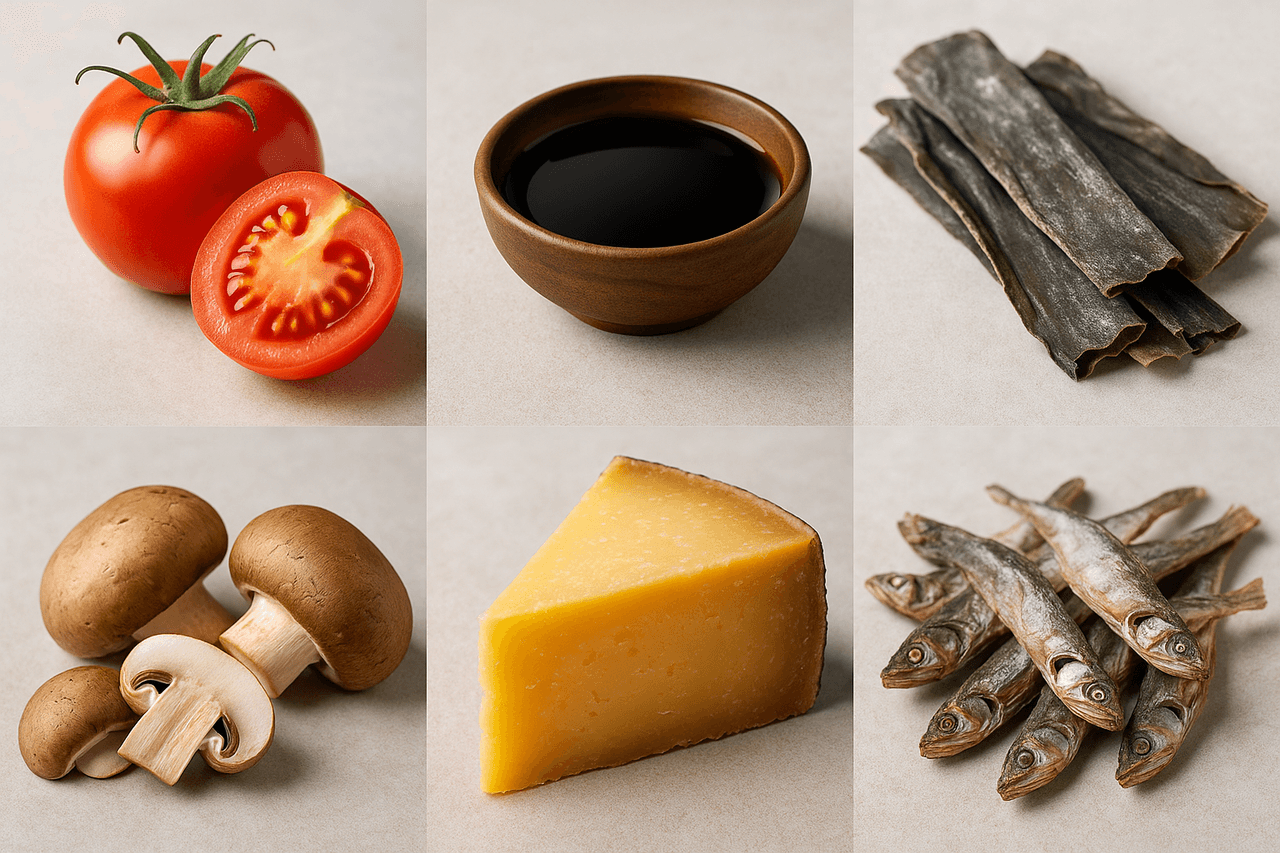
Common Sources (generated by artificial intelligence).
How Does Our Tongue Detect Umami?
Our tongue has special “taste buds” that recognize compounds like glutamate and send a signal to the brain: “this is very delicious”.
What Is Its Function for Our Body?
Umami is not only delicious but also:
- Increases saliva production (making food easier to swallow).
- Facilitates digestion.
- Provides more flavor with less salt.
Umami in Our Daily Lives
Some foods naturally contain umami. However, food manufacturers sometimes enhance this taste with an additive called monosodium glutamate (MSG). Scientists state that when used in appropriate amounts, this substance is harmless.