


This article was automatically translated from the original Turkish version.
+1 More
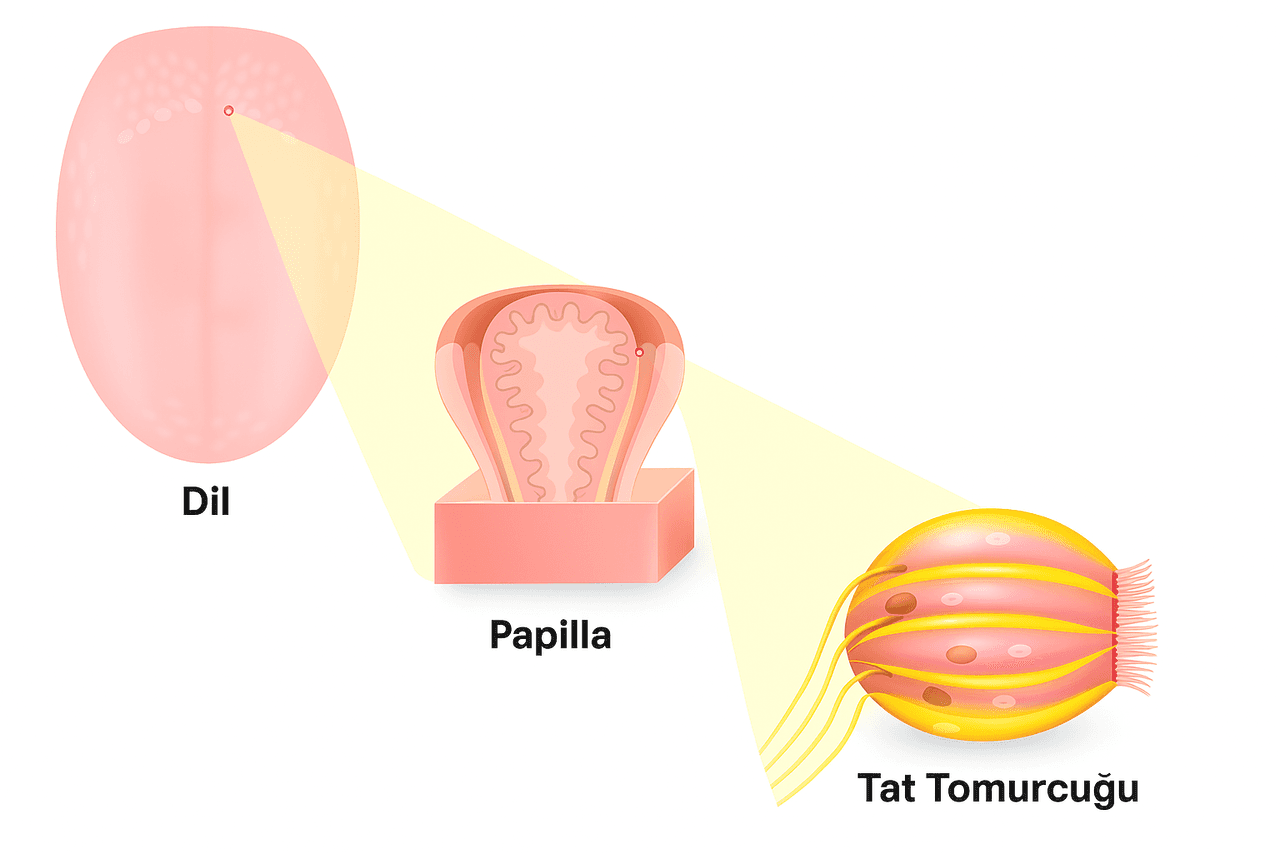
Generated by artificial intelligence.
Tat Tomurcuğu
Structure(s) | Composed of specialized taste cells found in epithelial tissue | ||||||||
|---|---|---|---|---|---|---|---|---|---|
Location | Primarily the tongue and larynx pharynx as well as the palate | ||||||||
Number of Cells | Each taste bud contains approximately 50 to 100 taste cells | ||||||||
Basic Tastes | Sweet, Salty, Sour, Bitter, Umami | ||||||||
Neural Transmission | To the brainstem via cranial nerves (particularly the 7th, 9th, and 10th nerves) | ||||||||
Renewal Period | Approximately 10 to 14 days | ||||||||
Taste buds (Eng. taste bud) are microscopic structures composed of specialized epithelial cells responsible for detecting taste. The sensory cells within these structures recognize chemical substances ingested in the mouth and convert them into neural signals. Taste buds are distributed primarily on the tongue but also occur in smaller numbers on the soft palate, epiglottis, and larynx—structures of the upper respiratory and swallowing region. Each taste bud contains multiple cell types with distinct functions, and these cells are regularly renewed at specific intervals.
Taste Bud (generated by artificial intelligence)
Each taste bud consists of approximately 50 to 100 taste cells. These cells have a relatively short lifespan and are renewed on average every 10 to 14 days. Four main cell types have been identified in the structure of taste buds:
At the apex of each taste bud is a taste pore, which connects the internal environment to the external oral cavity. Taste molecules enter through this pore to interact with the sensory cells.
The majority of taste buds are located within structures on the tongue called papillae. These papillae are classified into three main groups:
Taste buds are also present in smaller numbers in the palate, pharynx, and larynx. Sensory signals from these regions are transmitted via nerve fibers to the gustatory centers in the brainstem.
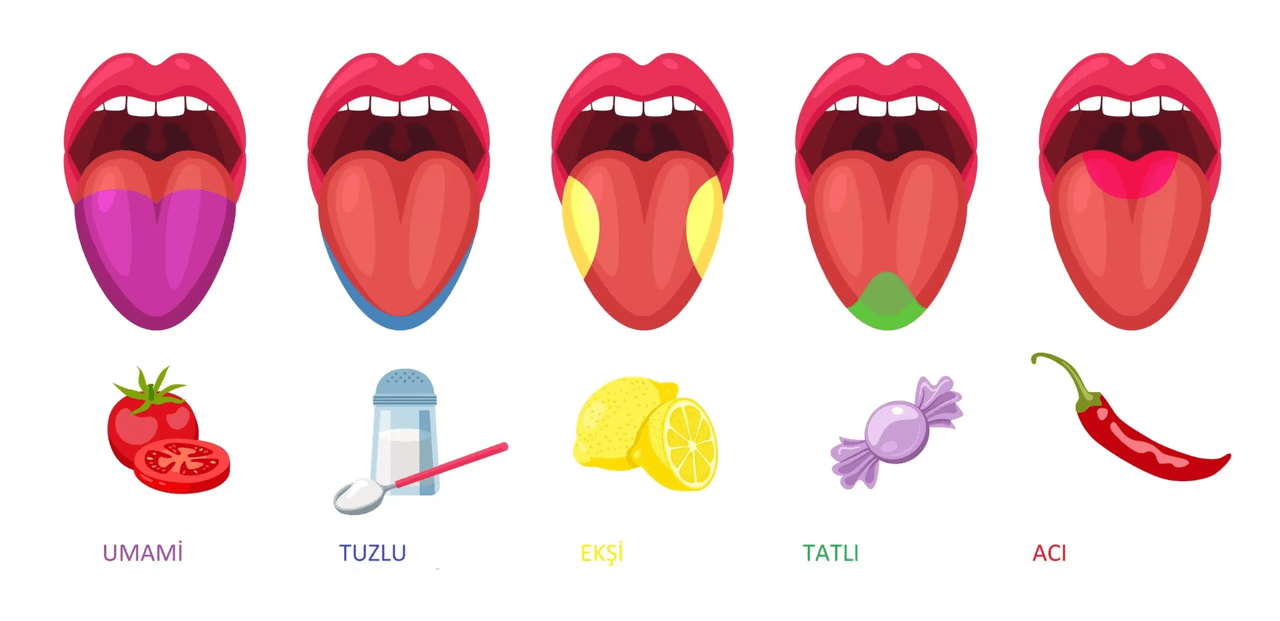
Taste buds can distinguish five primary taste categories: sweet, salty, sour, bitter, and umami (detection of amino acids such as glutamate). Taste molecules bind to specific receptors on the cells, triggering signaling through ion channels or second messenger systems. This activation is converted into neural impulses and transmitted to gustatory centers in the brain. Saliva plays a critical role in taste perception by facilitating the dissolution and transport of taste molecules to the taste buds. Additionally, the senses of smell and touch serve as auxiliary senses that modulate taste perception.
The structure and number of taste buds can change with age. As individuals grow older, the rate of taste bud renewal declines, which may lead to a reduction in taste sensitivity. Similarly, certain medications, radiation therapy, viral infections, and neurological disorders can impair taste function. Because taste buds are continuously regenerated by stem cells, they are considered relatively dynamic structures. However, they remain highly sensitive to external factors and systemic diseases.
Taste buds are an important subject of research in disciplines such as neuroscience, nutrition, and pharmacology. Studies on the mechanism of taste perception have revealed that taste receptors are not confined to the mouth but are also present in other parts of the digestive system, including the stomach and intestines. This finding suggests that taste receptors play regulatory roles in digestion. Furthermore, clinical conditions such as dysgeusia (distorted taste), hypogeusia (reduced taste sensitivity), and ageusia (complete loss of taste) are recognized as health issues that can significantly affect food intake, particularly in older adults.
EBSCO. "Taste Bud." EBSCO. Accessed July 15, 2025. Accessed Adresi.
NIH. "Anatomy, Head and Neck, Tongue Taste Buds." National Center for Biotechnology Information. Accessed July 15, 2025. Accessed Adresi.
Science.org. "How Do Our Tastebuds Work?" Australian Academy of Science. Accessed July 15, 2025. Accessed Adresi.
TÜBİTAK Bilim Genç. "Yiyeceklerin Tadını Nasıl Alıyoruz?" TÜBİTAK. Accessed July 15, 2025. Accessed Adresi.
TÜBİTAK Bilim Genç. “Tat Tomurcukları Nerededir?” TÜBİTAK. Accessed July 15, 2025. Accessed Adresi.

Generated by artificial intelligence.
Tat Tomurcuğu
Structure(s) | Composed of specialized taste cells found in epithelial tissue | ||||||||
|---|---|---|---|---|---|---|---|---|---|
Location | Primarily the tongue and larynx pharynx as well as the palate | ||||||||
Number of Cells | Each taste bud contains approximately 50 to 100 taste cells | ||||||||
Basic Tastes | Sweet, Salty, Sour, Bitter, Umami | ||||||||
Neural Transmission | To the brainstem via cranial nerves (particularly the 7th, 9th, and 10th nerves) | ||||||||
Renewal Period | Approximately 10 to 14 days | ||||||||
Microscopic Structure and Cell Types
Anatomical Location and Distribution
Process of Taste Perception
Age-Related Changes and Renewal
Research and Clinical Significance