



What Is a Hydroelectric Power Plant?
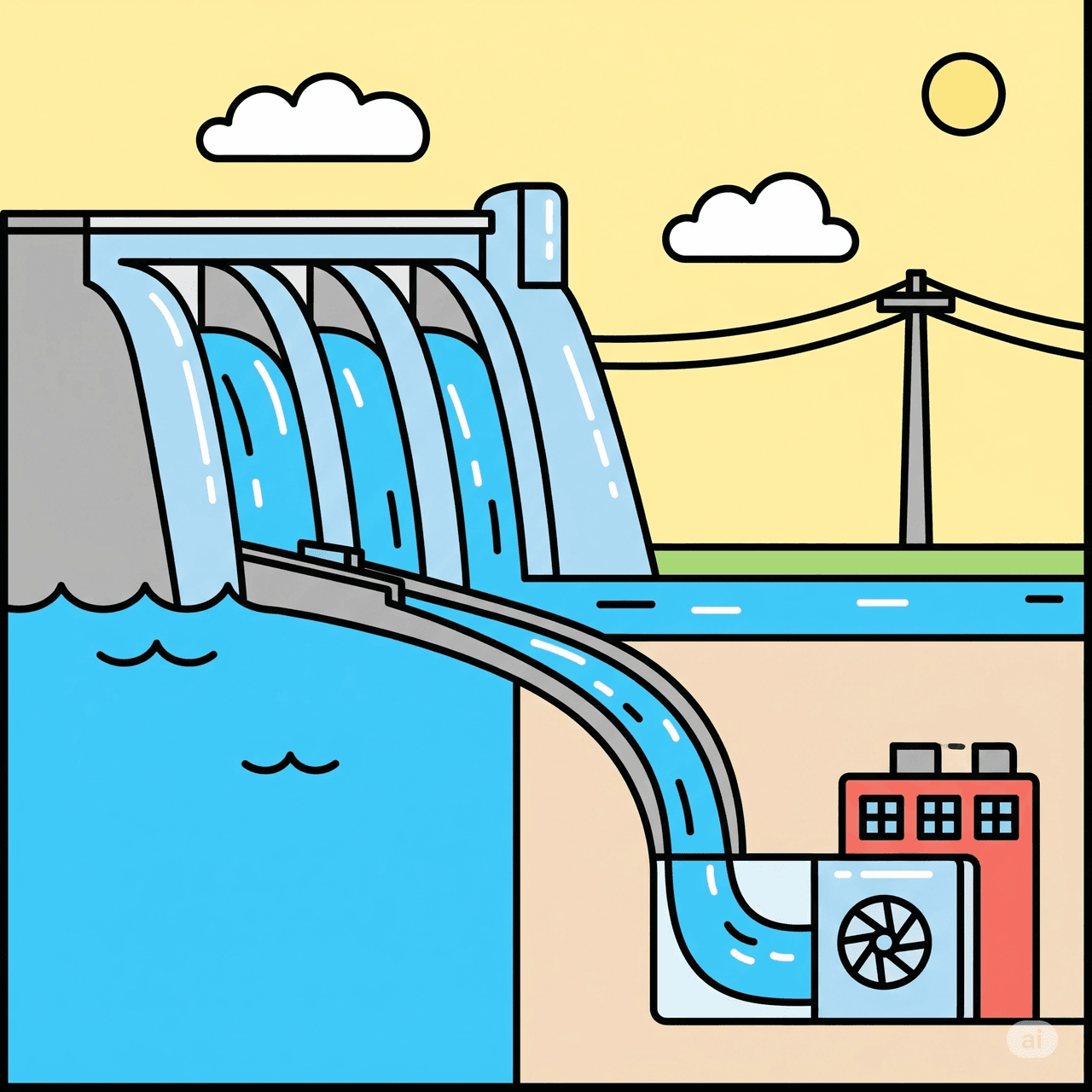
A hydroelectric power plant is an energy center that generates electricity by harnessing the power of water. In these plants, the kinetic energy of flowing water is converted into electrical energy. Machines operate and electricity is produced as water falls from a height or flows continuously. This type of energy is called "hydroelectric energy."

(Generated by Artificial Intelligence.)
How Does It Work?
Power plants are typically built next to dams. Water from the dam is released from a height and flows through large pipes to turbines. The force of the water causes the turbines to spin. Generators connected to the turbines convert this motion into electrical energy. This electricity is then used in homes, schools, and cities.
Why Is It Important?
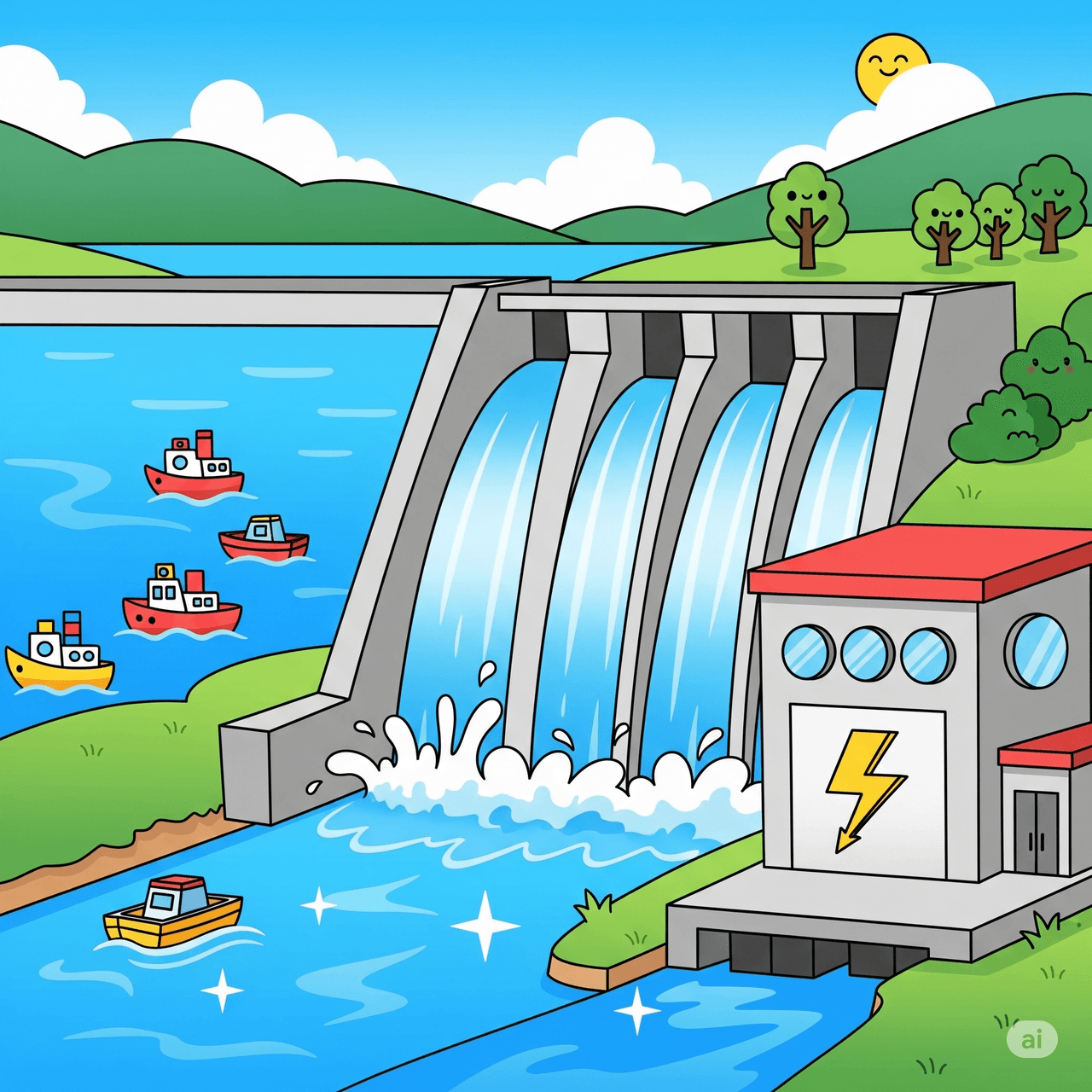
Hydroelectric energy is clean. It does not release harmful gases into the environment. Additionally, due to the water cycle, it is continuously renewable. Just as sunlight does not run out, water is replenished through rain and snow. Therefore, hydroelectric power plants generate energy without harming the environment.

(Generated by Artificial Intelligence.)
Where Is It Used?
Hydroelectric power plants are constructed where rivers flow strongly or where water can be released from a significant height. Many dams in Türkiye feature this system. Globally, large hydroelectric power plants provide electricity to millions of people.
What Can We Learn?
Hydroelectric power plants demonstrate how electricity is generated from the power of water. These systems teach children how energy can be obtained from natural resources. They also help us understand the importance of protecting the environment through clean energy.