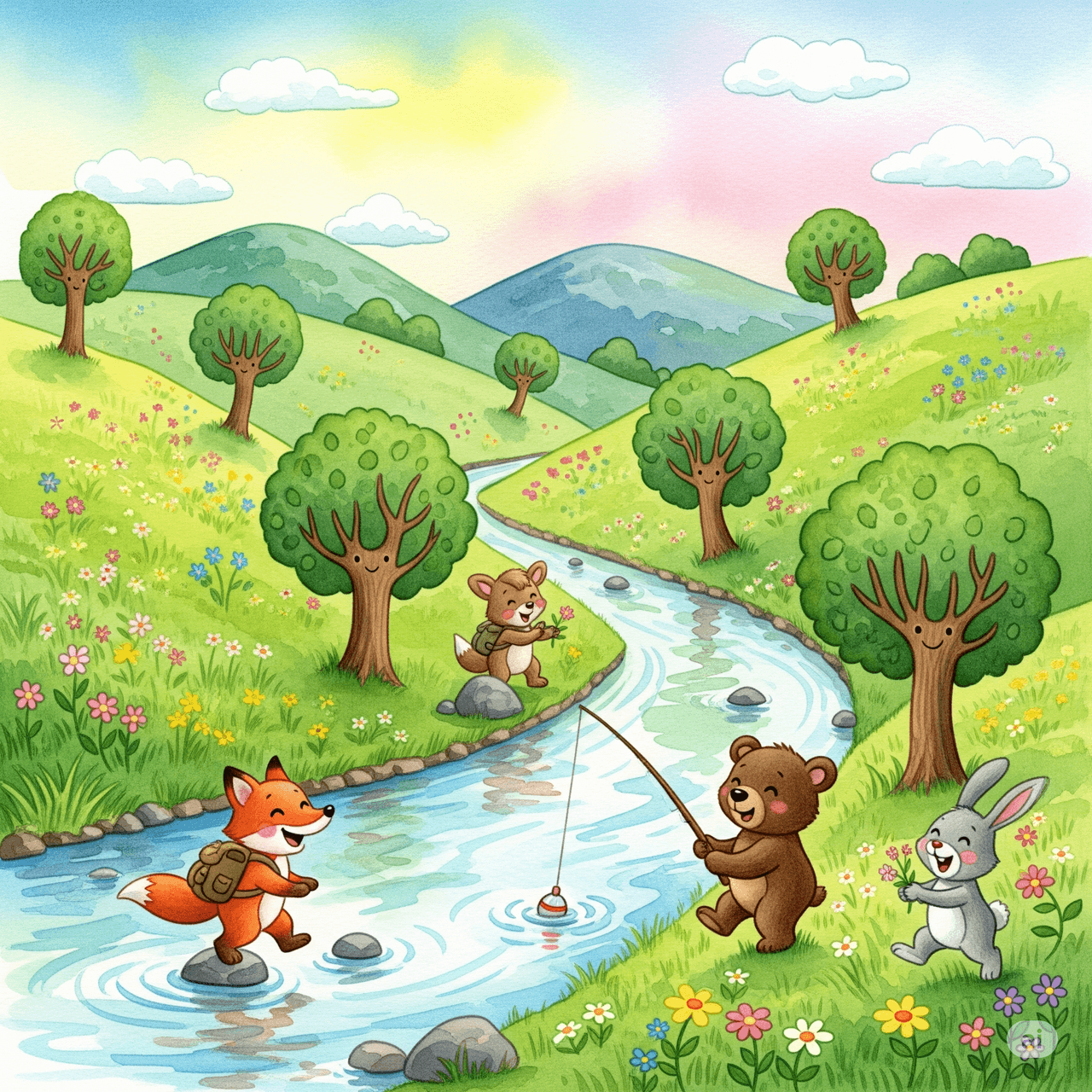




What is a Valley?
A valley is a natural, elongated, and depressed area typically found between mountains or hills. Valleys are formed by the erosion of the Earth’s surface by rivers or glaciers. These eroded valleys play a significant role in shaping the Earth’s topography.

(Generated with Artificial Intelligence.)
How Are Valleys Formed?
Valleys are primarily formed by the erosion of the Earth’s surface by rivers or glaciers. In river valleys, rivers gradually erode the soil and rocks along their course, creating long and deep depressions known as valleys. In glacial valleys, large and heavy masses of ice move slowly, eroding the soil and rock beneath them, resulting in wide valleys with a U-shaped cross-section.
Types of Valleys
Valleys are classified into various types based on their shape and formation process. Notch valleys are deep and narrow valleys typically formed by young rivers; they have steep slopes and a V-shaped cross-section. Canyon valleys are narrow and deep valleys that cut transversely through mountains or hills, featuring very steep slopes. Canyon valleys are very deep with steep walls and commonly occur in rocky areas. Floodplain valleys are older and broader valleys with gentler slopes and wider bases.

(Generated with Artificial Intelligence.)
The Importance of Valleys
Valleys play a vital role in nature by facilitating the flow of water resources. They also serve as essential habitats for plants and animals. Humans can practice agriculture and establish settlements in valleys. Additionally, valleys offer beautiful and attractive areas for hiking and tourism.