



What is a River?
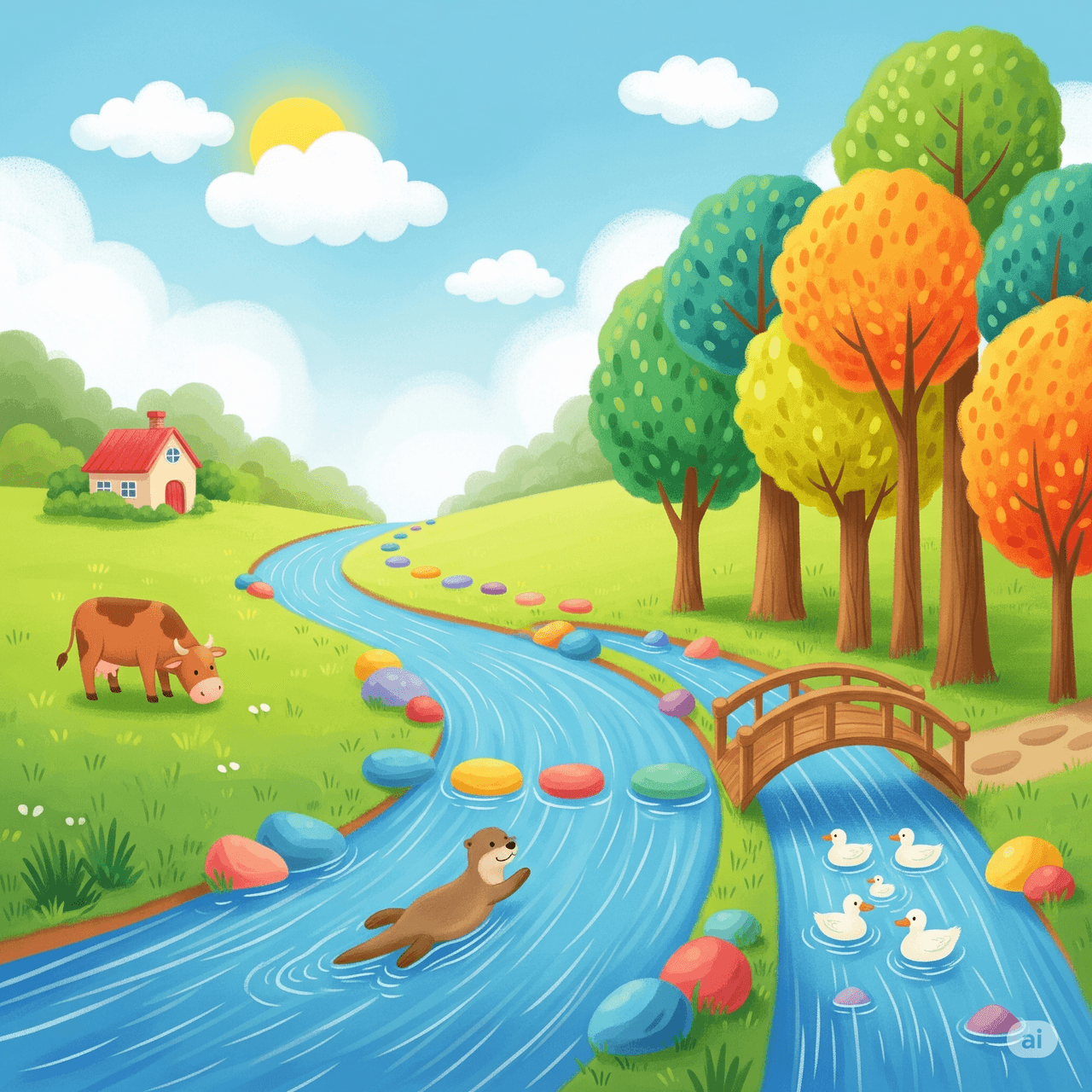
A river is a natural watercourse fed by rainfall, snowmelt, or spring waters; it flows continuously within a defined channel and typically reaches seas, lakes, or other rivers.
(Generated by Artificial Intelligence.)
Key Characteristics
Rivers originate at a point known as the "source." As they flow, they gather smaller tributaries such as streams and brooks, increasing in volume and discharge. Ultimately, they empty into a sea, lake, or other body of water at a point called the "mouth."
Parts of a River
A river consists of three main parts: the source, the channel, and the mouth. The source is where the river begins, typically located in the high elevations of mountains. From there, the river flows along a natural pathway called the channel, which it has carved into the Earth’s surface. Finally, it reaches the mouth, the point where it ends and merges with a sea, lake, or another body of water.
Importance of Rivers
Humans utilize rivers for various purposes including drinking water supply, agricultural irrigation, and energy production. Rivers are also of great ecological importance, supporting diverse plant and animal life; many fish species and water birds depend on river ecosystems. Throughout history, rivers have played a decisive role in the establishment of cities and villages, significantly influencing the location of human settlements.

(Generated by Artificial Intelligence.)
Major Rivers of the World
Some of the world’s most significant rivers are located across different continents and are distinguished by unique features. The Nile River in Africa is known as the longest river on Earth. The Amazon River in South America is the largest river by volume of water discharged. The Euphrates and Tigris rivers, which originate in Türkiye and extend into the Middle East, have played a crucial role in the development of Mesopotamian civilizations throughout history.
Some Rivers of Türkiye
Türkiye is home to many important rivers. The Kızılırmak is the longest river that flows entirely within Türkiye’s borders. The Yeşilırmak, Sakarya, and Büyük Menderes are among the country’s other major rivers and hold great significance for both agriculture and human settlement.
Quick Facts
Rivers are dynamic freshwater sources vital to the survival of living organisms. They play a critical role not only in water supply but also in maintaining ecosystem continuity. Throughout history, humans have settled near rivers due to access to water and fertile land, leading to the rise of many civilizations in these areas.