



What is an Atom?
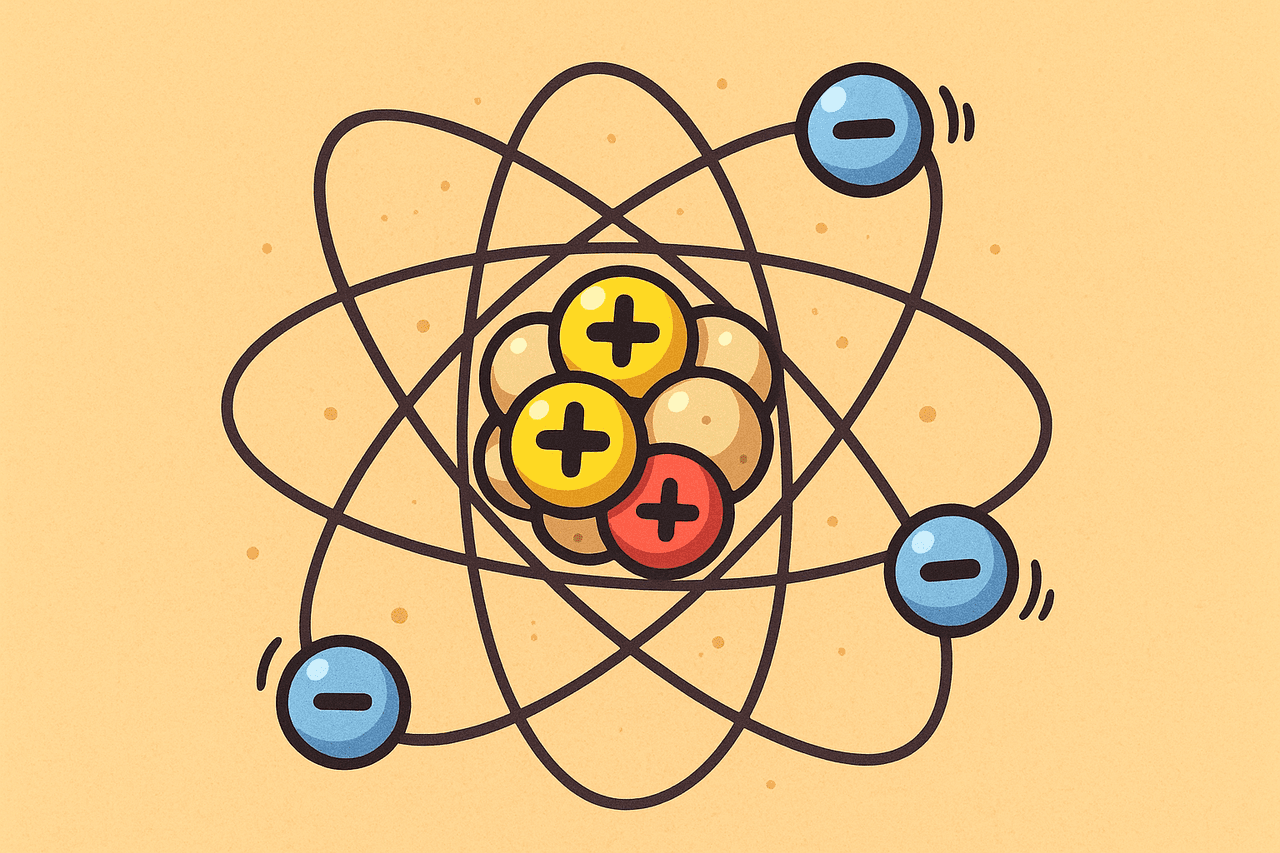
Atom is the smallest unit of matter. Everything we see around us — rocks, plants, animals, and even ourselves — is composed of countless atoms. Atoms are so small that even a single grain of sand contains trillions of them.
An atom consists of two main parts: the nucleus and the electron cloud surrounding it. The nucleus contains protons (positively charged particles) and neutrons (neutral particles). Electrons (negatively charged particles) move rapidly around the nucleus.
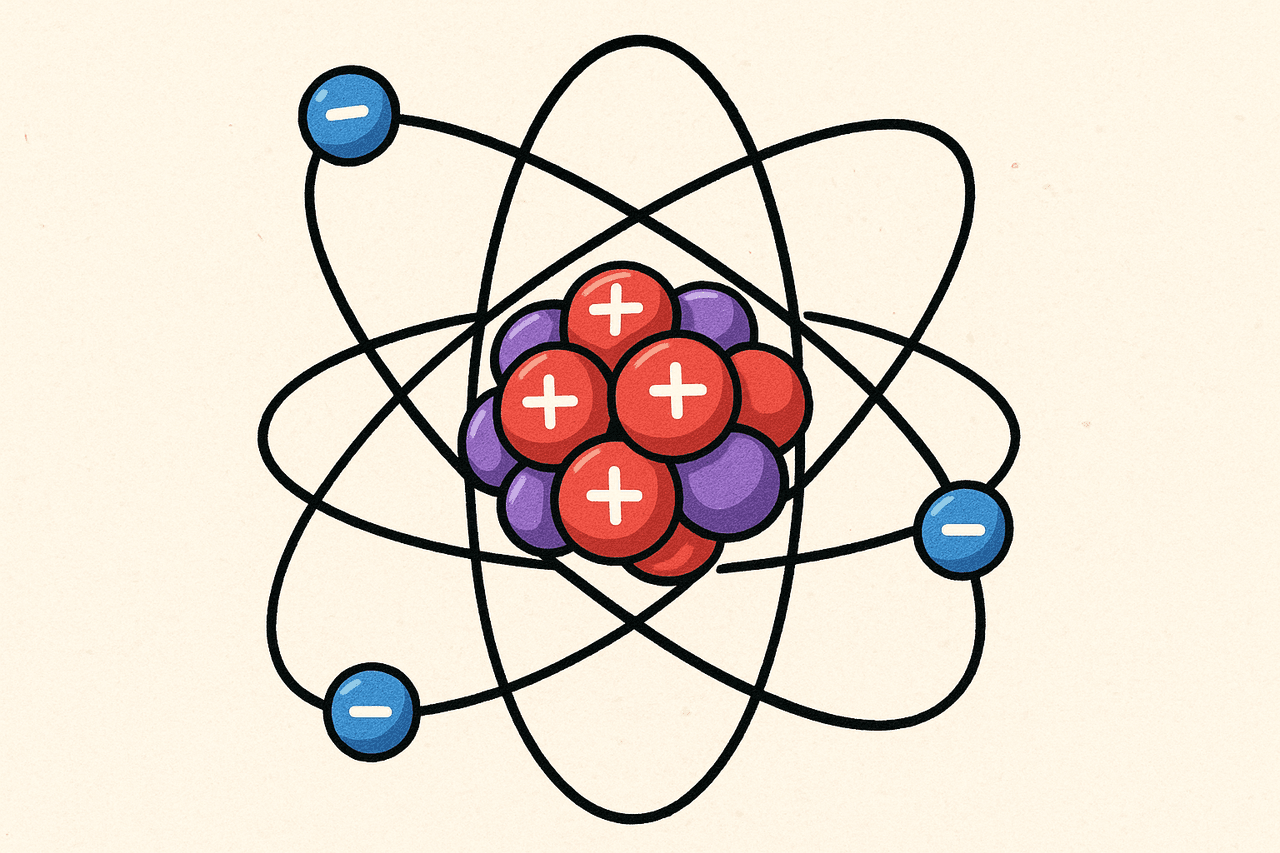
Generated by Artificial Intelligence.
Structure of the Atom
Nucleus
The nucleus is the center of the atom and contains nearly all of its mass. The number of protons determines which element the atom belongs to. For example, an atom with one proton is hydrogen, while an atom with six protons is the element carbon.
Shells
Electrons are found in regions called “shells” around the nucleus. Modern science states that the exact position of an electron cannot be determined. Instead, there are regions where the probability of finding an electron is highest. These regions are called the electron cloud.
Properties of the Atom
- Atomic Number: Equal to the number of protons. It defines the identity of the atom.
- Mass Number: The sum of the number of protons and neutrons.
- Ions: If an atom gains an electron, it becomes negatively charged; if it loses an electron, it becomes positively charged.
- Isotopes: Atoms with the same number of protons but different numbers of neutrons. Some isotopes are unstable and may be radioactive.

Generated by Artificial Intelligence.
Atomic Models
Over time, scientists have developed different models to understand the structure of the atom:
- Democritus (400 BCE): Proposed that matter is composed of indivisible particles.
- Dalton (1803): Described atoms as small, indivisible, spherical particles.
- Thomson (1897): Discovered the electron and envisioned the atom as a “plum pudding.”
- Rutherford (1908): Discovered the nucleus and compared the atom to a “miniature solar system.”
- Bohr (1913): Proposed that electrons move in fixed orbits around the nucleus.
- Modern Atomic Theory (1926): States that electrons have wave-like properties and exist only within regions of probability.

Chronological History of the Atom (Generated by Artificial Intelligence).
Time Travel
Approximately 2,500 years ago, the Greek philosopher Democritus named the smallest particle of matter “atom.” At that time, this idea was merely a hypothesis. Today, we know that even within the atom lie smaller particles.