




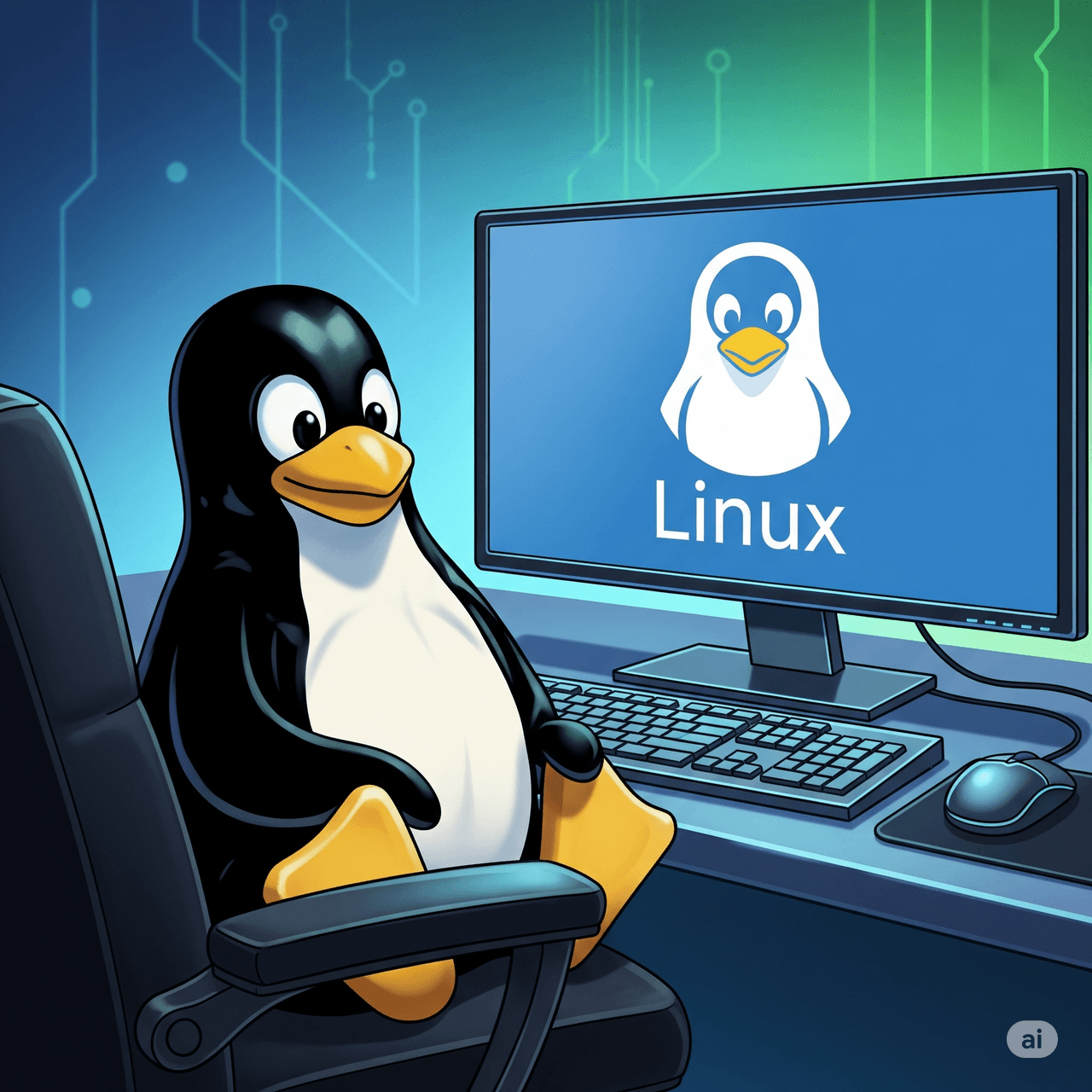
What is Linux?
Linux is an operating system that runs computers. Systems like Linux are required to turn on a computer, run files, and use applications. Unlike other systems, Linux is free and available to everyone. Additionally, programmers can modify and improve this system as they wish. For this reason, it is loved and used by millions around the world. Large servers, robots, and even some phones operate on Linux.

(Generated by artificial intelligence.)
How Does Linux Work?
A computer consists of many components: a keyboard, screen, printer, and more. Linux ensures these components function properly. Small software programs that manage these components are called “drivers.” Linux communicates with devices through these drivers. In other words, Linux acts like a conductor managing an orchestra inside the computer, telling each part when and what to do. This allows computers to operate silently and flawlessly.
Why Is Linux Important?
Linux is a secure and stable system. It minimizes errors and works carefully to prevent system crashes. It protects data, processes tasks quickly, and allows multiple users to access the computer simultaneously. Moreover, Linux is highly suitable for software developers because it is open source. This means anyone, including children, can view and learn from the code. Linux is an ideal starting point for anyone with a curious and learning-oriented mind.

(Generated by artificial intelligence.)
How Does Memory Work in Linux?
Data in computers is stored in memory. Linux handles writing information to memory with great care. It uses special methods to ensure data is not lost in persistent memory. These methods enhance the system’s security. Some newer computers use very fast and specialized memory. Linux is continuously updated to keep pace with this new technology, ensuring data is processed and protected quickly.
Linux and Time-Efficient Systems
Many tasks occur simultaneously on a computer. Linux ensures these operations proceed without interfering with each other by using intelligent systems such as the “read-copy-update” method. This allows the computer to continue working without slowing down. As a result, one user can view information while another modifies it. These systems are especially useful in large systems and servers, enabling a computer to handle multiple tasks at once.
Who Uses Linux?
Linux is not only for professors or engineers. Curious children, student computer clubs, and anyone interested in technology can use Linux. Moreover, many schools teach Linux systems. Anyone who wants to try something different on their computer can install Linux. For anyone who loves learning new things, Linux is an enjoyable and educational