




What is the Mesosphere?
The upper layer of the atmosphere!
The mesosphere is one of Earth’s atmospheric layers. It lies above the troposphere and stratosphere and encompasses the region before the thermosphere.
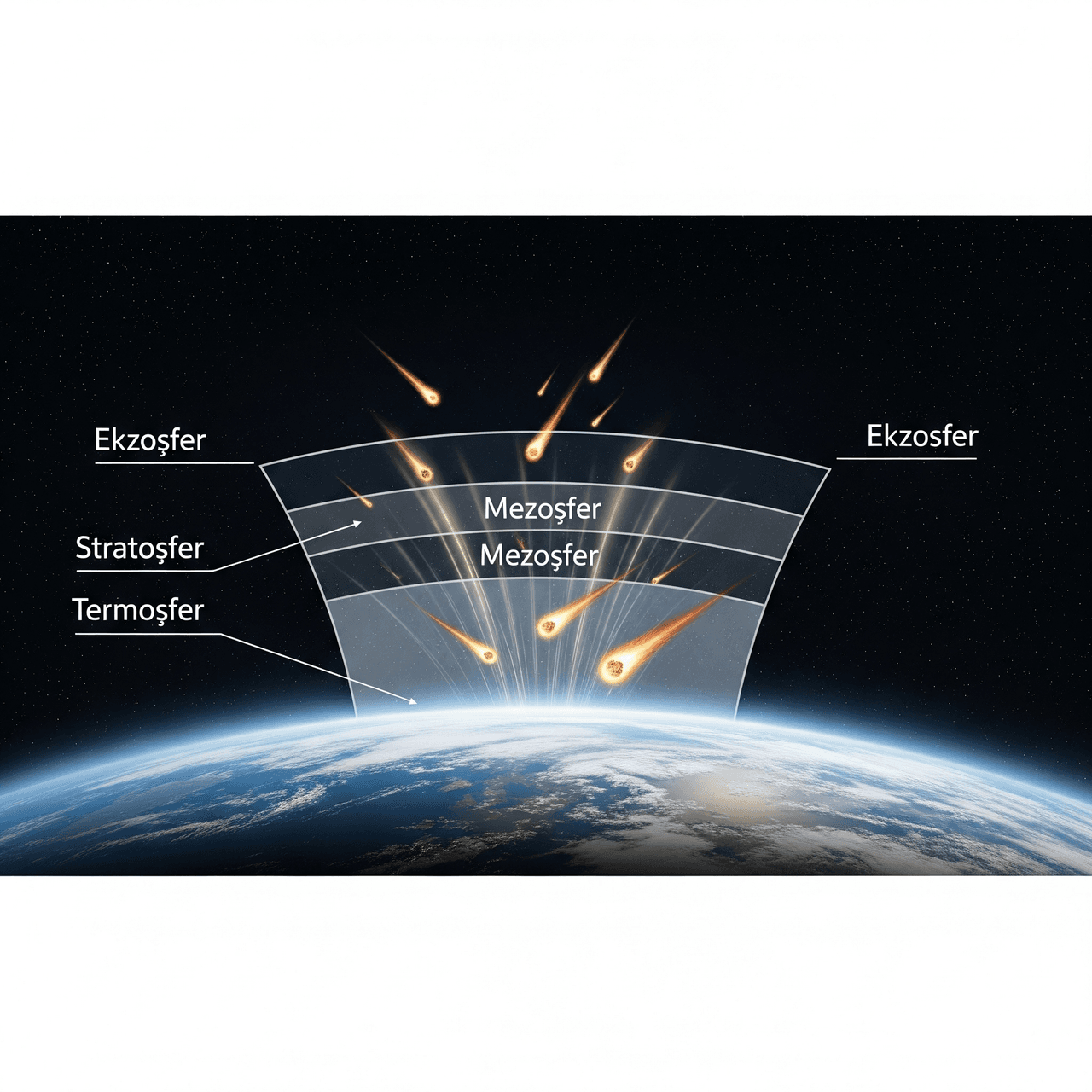
(Generated by Artificial Intelligence.)
Where Does It Begin and How Far Does It Extend?
The mesosphere begins at approximately 50 kilometers in altitude and extends up to 85–90 kilometers. This layer is a high-altitude region of the atmosphere that is relatively thin and cool.
What Happens in the Mesosphere?
-Polar Mesospheric Clouds (Noctilucent Clouds): Ice crystal clouds that form at high altitudes and are visible in the night sky during summer nights.
-Wind and Electrical Interactions: Winds in the mesosphere are strong and influence air movement in conjunction with ionic electrical effects.
-Atmospheric Tides and Wave Motions: Annual and seasonal variations affect the air layers within this layer.
What Are Its Characteristics?
Air density is very low, so temperatures can become extremely cold. Sound cannot travel through it, and aircraft cannot reach it. Mysterious and rarely seen transient clouds form in this layer.

(Generated by Artificial Intelligence.)
Why Is the Mesosphere Important?
The mesosphere is a critical region in the atmosphere where meteors burn up and disintegrate, helping to regulate energy distribution. Studying the winds and ionic effects in this layer helps scientists gain insights into atmospheric phenomena and space physics.
What Are Scientists Doing?
Scientists use radar and satellite data to understand clouds, winds, and electrical events in the mesosphere. Atmospheric wave models are employed to study past and future climate changes.


