




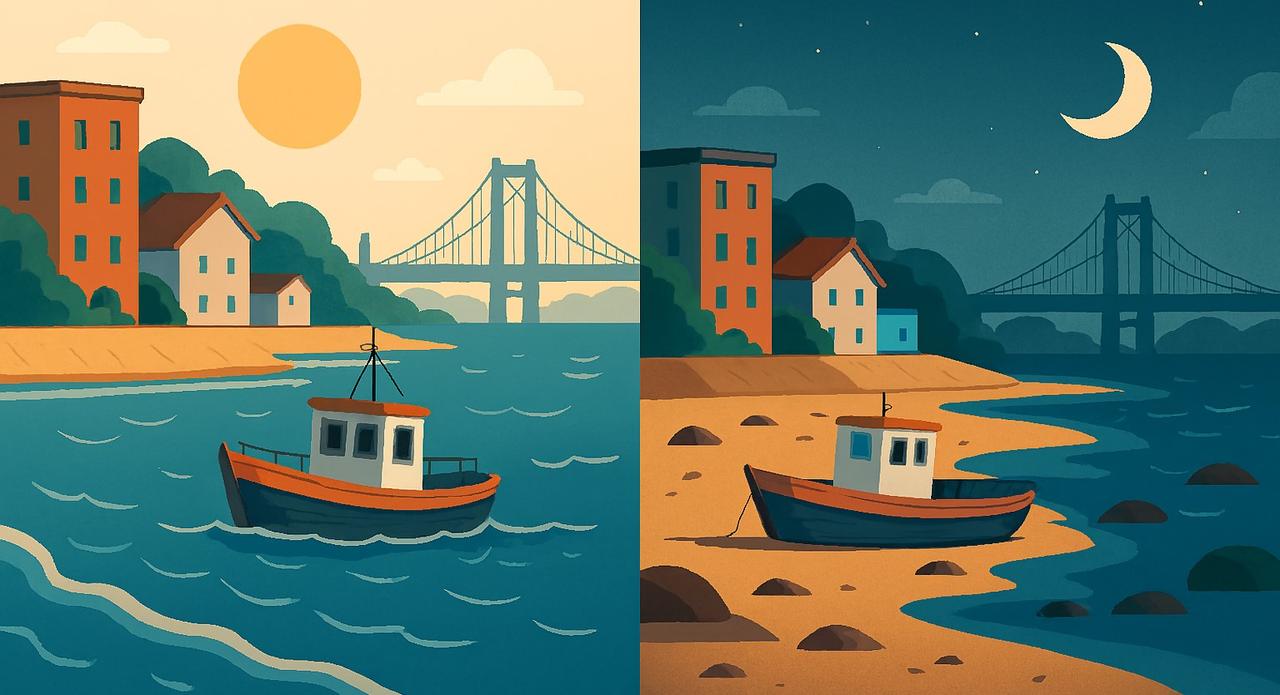
What Is Tidal?
Tides are the regular rise and fall of sea level at specific time intervals. This natural phenomenon is caused by the gravitational pull of the Moon and the Sun on Earth. Tides affect the lives of marine organisms living along coastlines, human activities related to the sea, and even energy production.

(Generated by artificial intelligence.)
Primary Cause of Tides
Because the Moon is much closer to Earth than the Sun, it exerts a stronger pull on the ocean waters. On the side of Earth facing the Moon, sea level rises as water moves toward the Moon’s gravitational pull. On the opposite side of Earth, water also bulges due to the planet’s rotational motion. As a result, high tide occurs simultaneously in two regions. In the areas between these two zones, water recedes to low tide levels.
The Sun’s Contribution
The Sun, though not as strong as the Moon, still exerts a significant gravitational influence on tides. When the Moon and the Sun align in the same direction, their gravitational forces combine, increasing the tidal range. When they are at right angles to each other, their gravitational forces partially cancel each other out, reducing the tidal range. Without the Sun’s influence, the tidal range would be smaller than it is today.
Spring Tides
Spring tides occur when the Moon and the Sun align in the same direction relative to Earth. During this alignment, their gravitational forces combine, causing sea levels to rise significantly higher than normal. This phenomenon occurs during the new moon and full moon phases, when the difference between high and low tide is greatest. Along coastlines, this difference can reach several meters.
Neap Tides
Neap tides occur when the Moon and the Sun are at right angles to each other relative to Earth. In this configuration, the gravitational forces of the two celestial bodies partially offset each other. As a result, the change in sea level is minimized. This phenomenon occurs during the first quarter and last quarter phases of the Moon.

(Generated by artificial intelligence.)
Daily Tidal Cycle
Because Earth rotates on its axis, tides repeat daily. Along most coastlines, there are typically two high tides and two low tides each day. This cycle is highly regular due to Earth’s rotational speed and the Moon’s motion. However, the timing of tides does not occur at the same time each day; it is delayed by approximately 50 minutes each day.
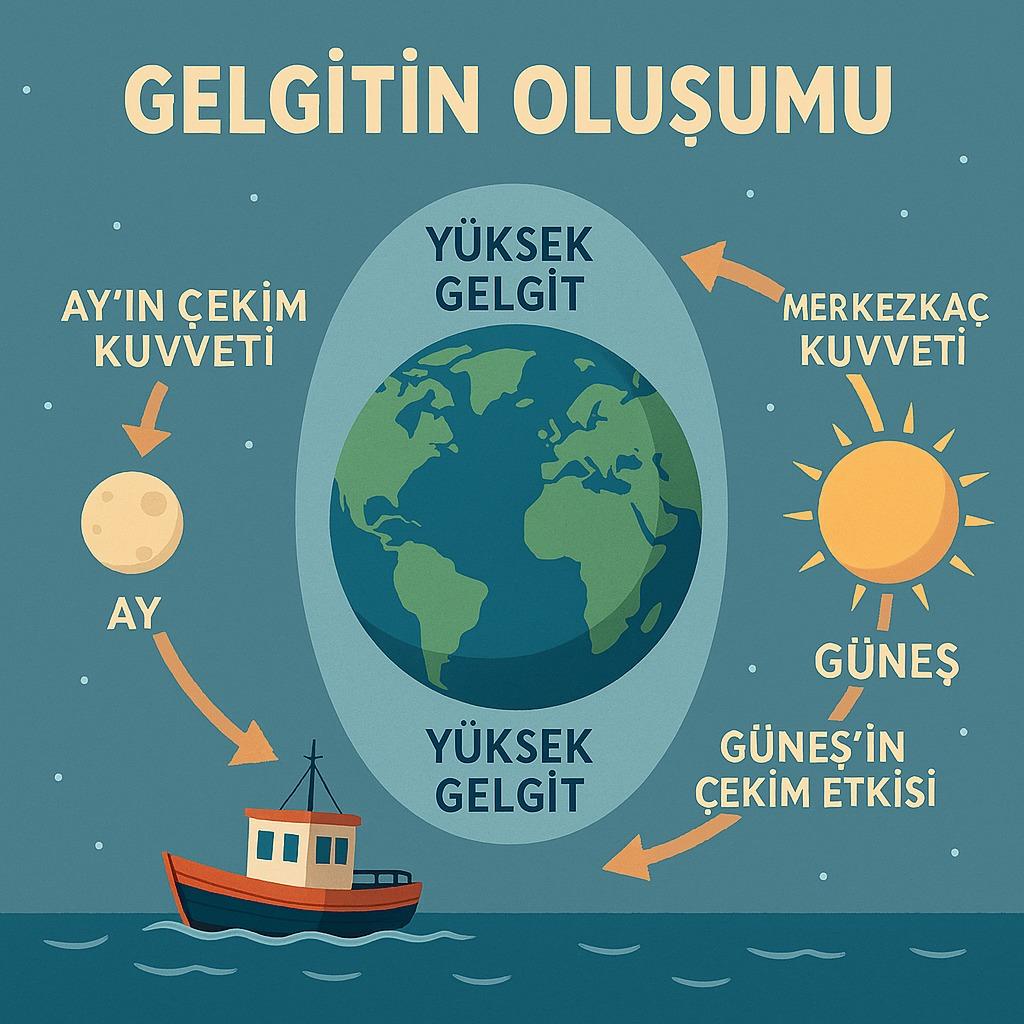
(Generated by artificial intelligence.)
Impact of Tides on Fishing
Fishers plan their fishing activities according to tidal times. During high tide, fish gather closer to the shore, making fishing easier. Some fish species specifically choose tidal periods to lay their eggs.
Impact of Tides on Transportation
Ship entry and exit times at ports are scheduled according to tidal conditions. During low tide, shallow harbor entrances can be hazardous, so high tide is preferred. Throughout history, sailors have planned their voyages based on tidal information.
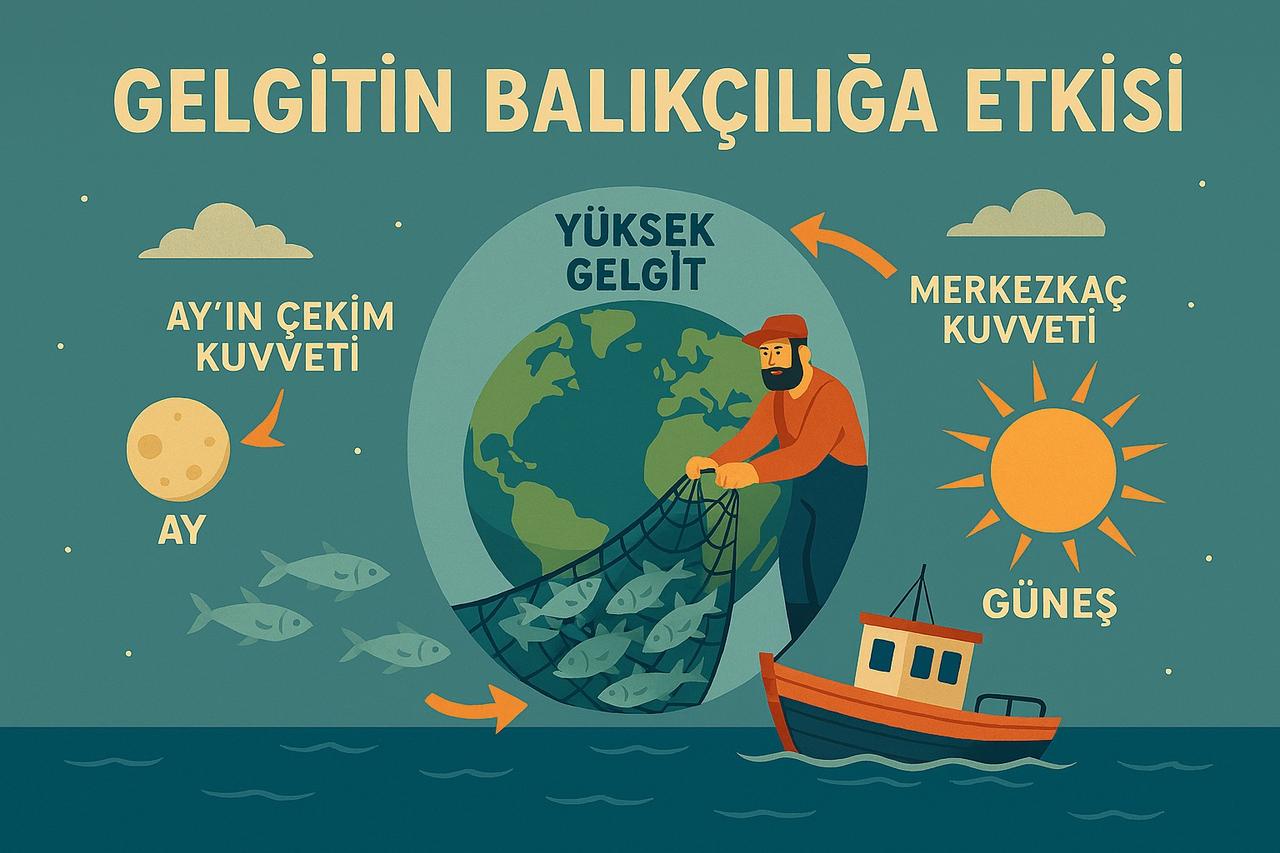
(Generated by artificial intelligence.)
Tidal Energy
In some coastal regions, electricity can be generated from tidal movements. Tidal barrages convert the kinetic energy of rising and falling water into electricity using turbines. This method is one of the clean and renewable sources of energy.
Highest Tides in the World
Canada’s Bay of Fundy has the highest tidal range in the world. Here, the difference in sea level can reach up to 16 meters. This extreme difference is caused by the narrow and elongated shape of the bay, which concentrates the water.
Adaptation of Coastal Organisms
Many organisms living in coastal areas adjust their life cycles to the tidal rhythm. Species such as mussels and starfish survive low tide by clinging to exposed rocks. When high tide arrives, feeding and reproductive activities begin.

(Generated by artificial intelligence.)