


This article was automatically translated from the original Turkish version.
The phases of the Moon describe the regular changes in the portion of the Moon’s surface illuminated by the Sun as seen from Earth. These changes arise from the Moon’s orbital motion around Earth and the geometric configuration of the Sun-Earth-Moon system. The Moon is tidally locked to Earth, meaning its rotational period around its own axis is equal to its orbital period around Earth, and thus the same side of the Moon always faces Earth. However, despite this fixed orientation, the angle at which sunlight strikes the Moon’s surface continuously changes, causing different portions of the Moon to appear illuminated or dark from Earth. These periodic changes are known as the lunar phases.
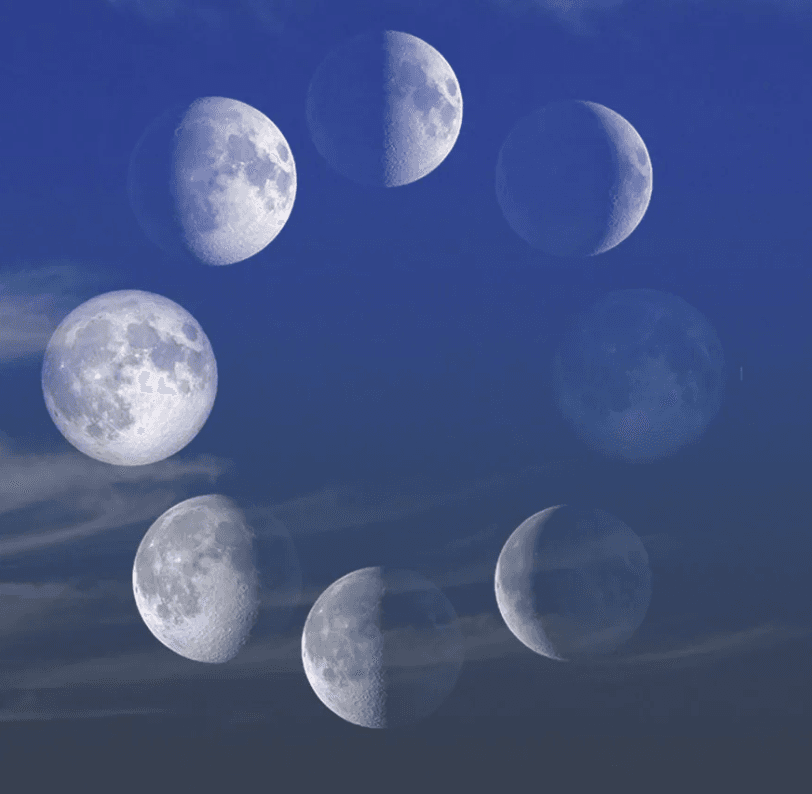
Lunar phases (NASA)
Formation of Lunar Phases
The phases of the Moon are observed over its synodic period—the approximately 29.5-day cycle during which it returns to the same phase, such as full moon. During this cycle, the Moon assumes different illumination states depending on its relative position between the Earth and the Sun. The extent of the Moon’s visible surface that is illuminated is determined by this positional alignment. The phases are defined according to the proportion of the Moon’s illuminated surface as seen from the observer’s viewpoint.
The lunar cycle is divided into four primary phases, defined by the angular difference between the Moon’s ecliptic longitude and the Sun’s ecliptic longitude:
This phase occurs when the Moon lies between Earth and the Sun. Sunlight illuminates the far side of the Moon, making it invisible from Earth. During this phase, the Moon is aligned with the Sun in the sky and is typically visible only during daylight hours.
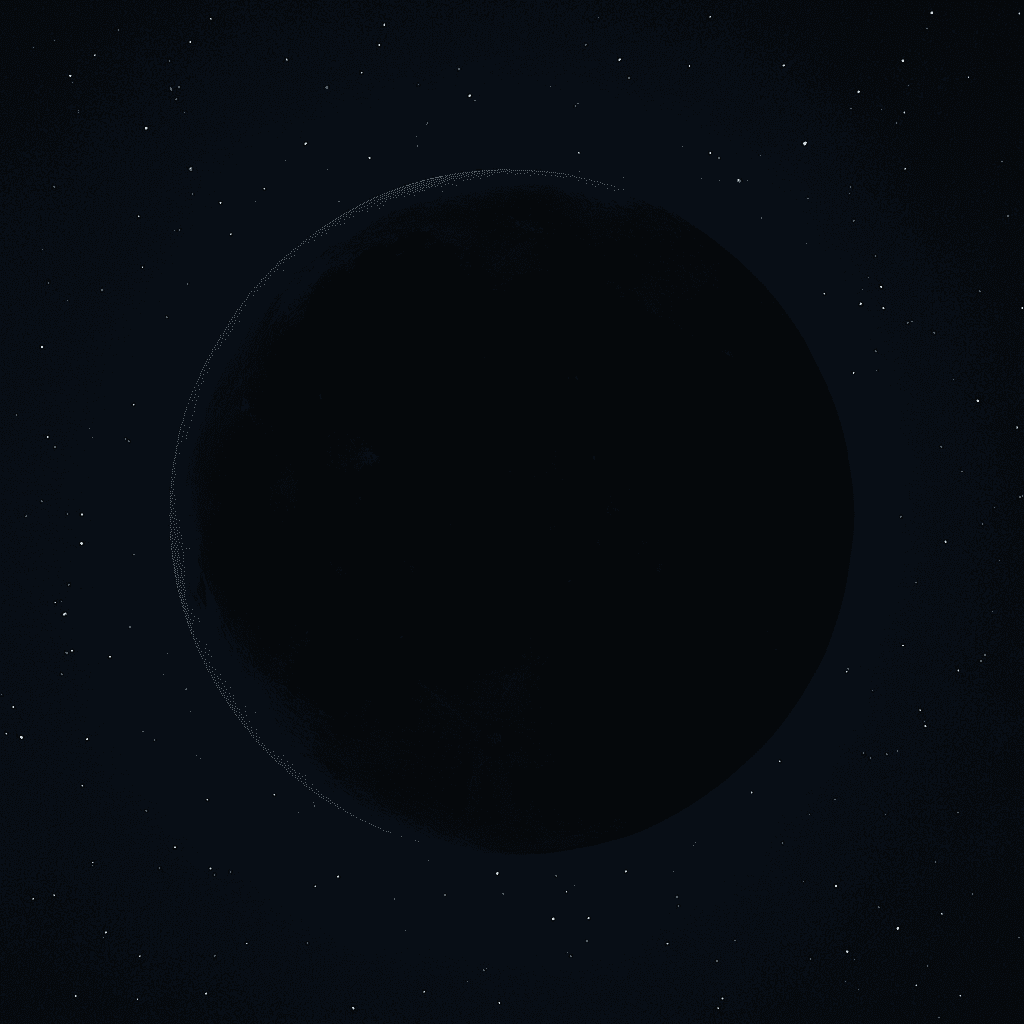
New moon generated by artificial intelligence
As the Moon progresses in its orbit, it forms an approximate 90° angle with respect to the Sun and Earth. During this phase, half of the Moon’s visible surface appears illuminated—the right half as seen from Earth—while the other half remains dark. The appearance resembles a semicircle.
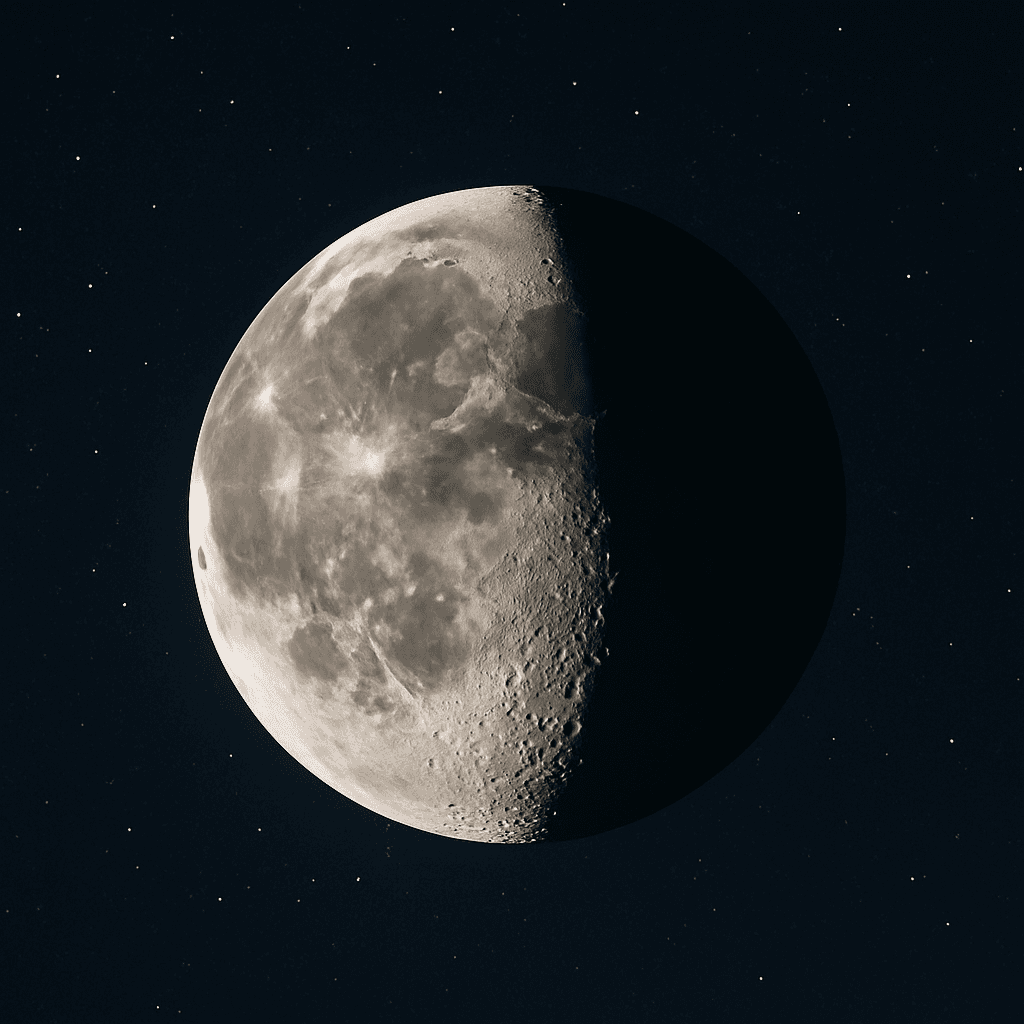
First quarter phase generated by artificial intelligence
This phase occurs when the Moon is positioned directly opposite the Sun relative to Earth. Sunlight fully illuminates the side of the Moon facing Earth. This is the phase in which the entire lunar surface appears brightest and most clearly visible.
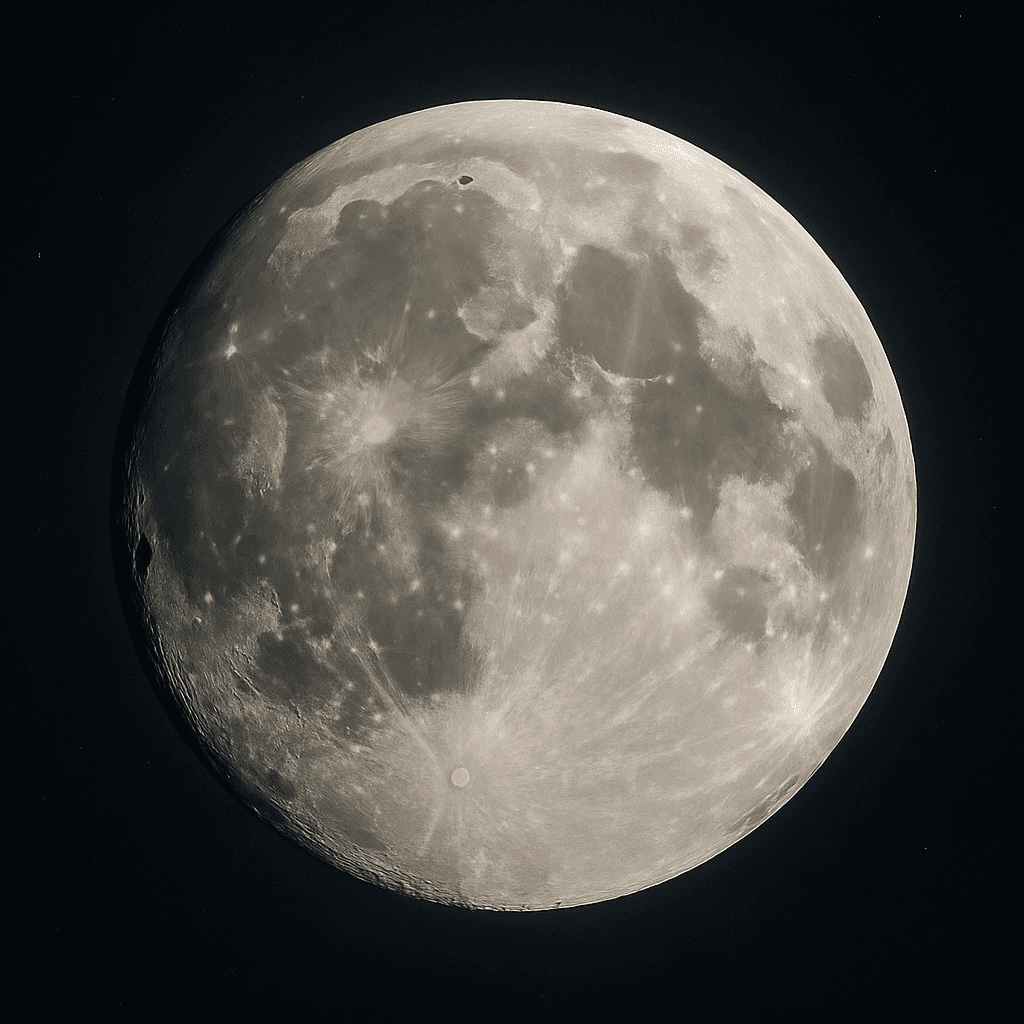
Full moon generated by artificial intelligence
This phase is observed when the Moon has advanced 270° along its orbit. From Earth, the left half of the Moon’s visible surface appears illuminated. This phase marks the beginning of the Moon’s return toward the new moon phase.
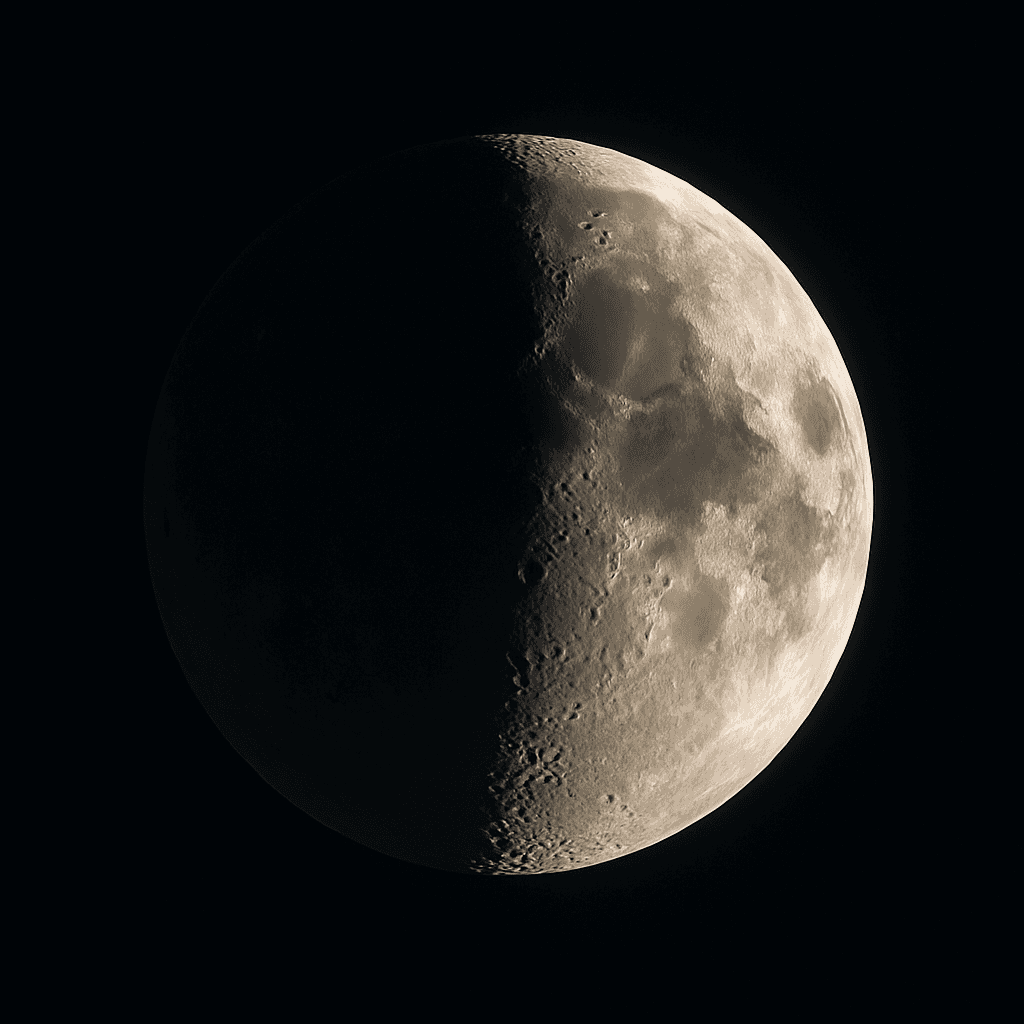
Last quarter phase generated by artificial intelligence
Between the primary phases are four minor phases in which the Moon’s appearance is described as crescent or gibbous. These phases represent transitional periods during which the illuminated portion of the Moon’s surface increases or decreases:
Immediately following the new moon, this phase reveals a thin, arc-shaped sliver of illuminated surface. The illuminated area gradually expands. The Moon is visible in the western sky shortly after sunset.
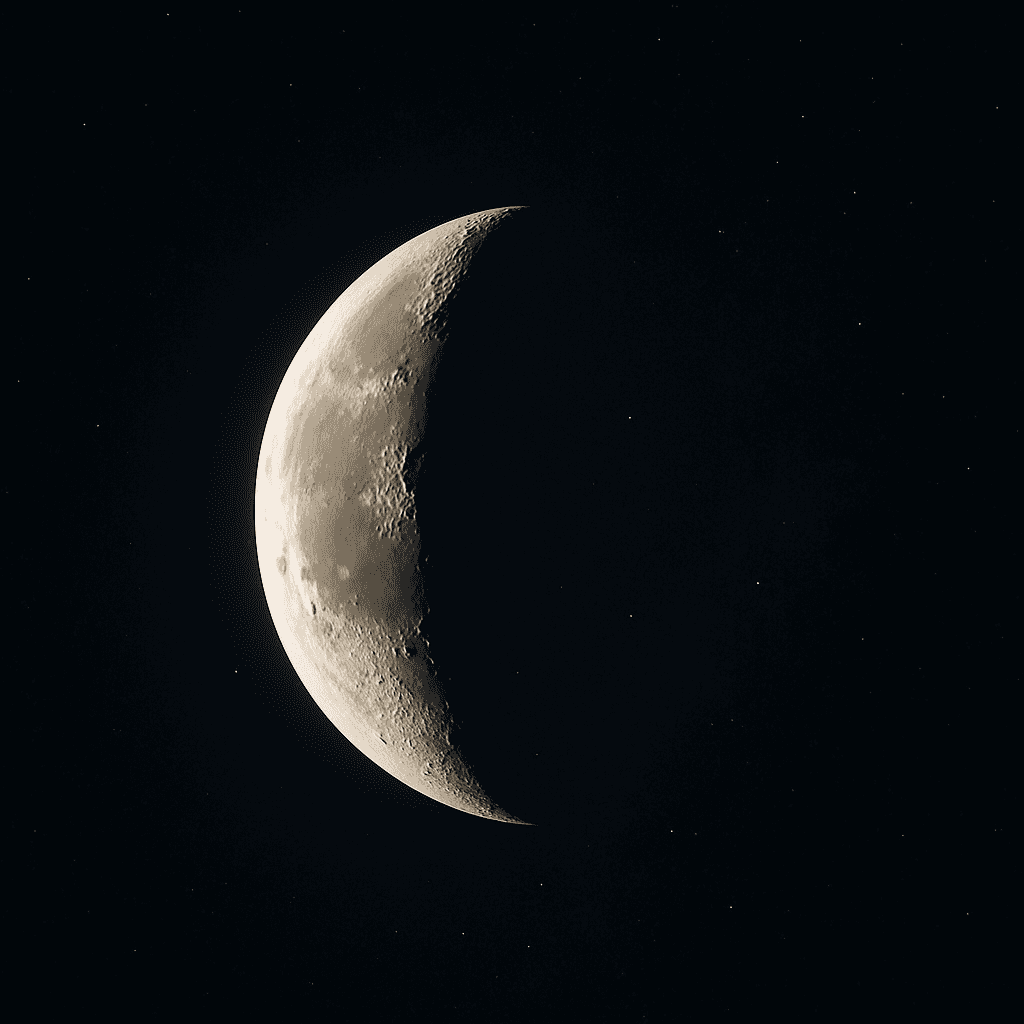
Waxing crescent phase generated by artificial intelligence
This phase occurs between the first quarter and the full moon. Most of the Moon’s visible surface is illuminated, but not all. As the Moon approaches full moon, its brightness increases.
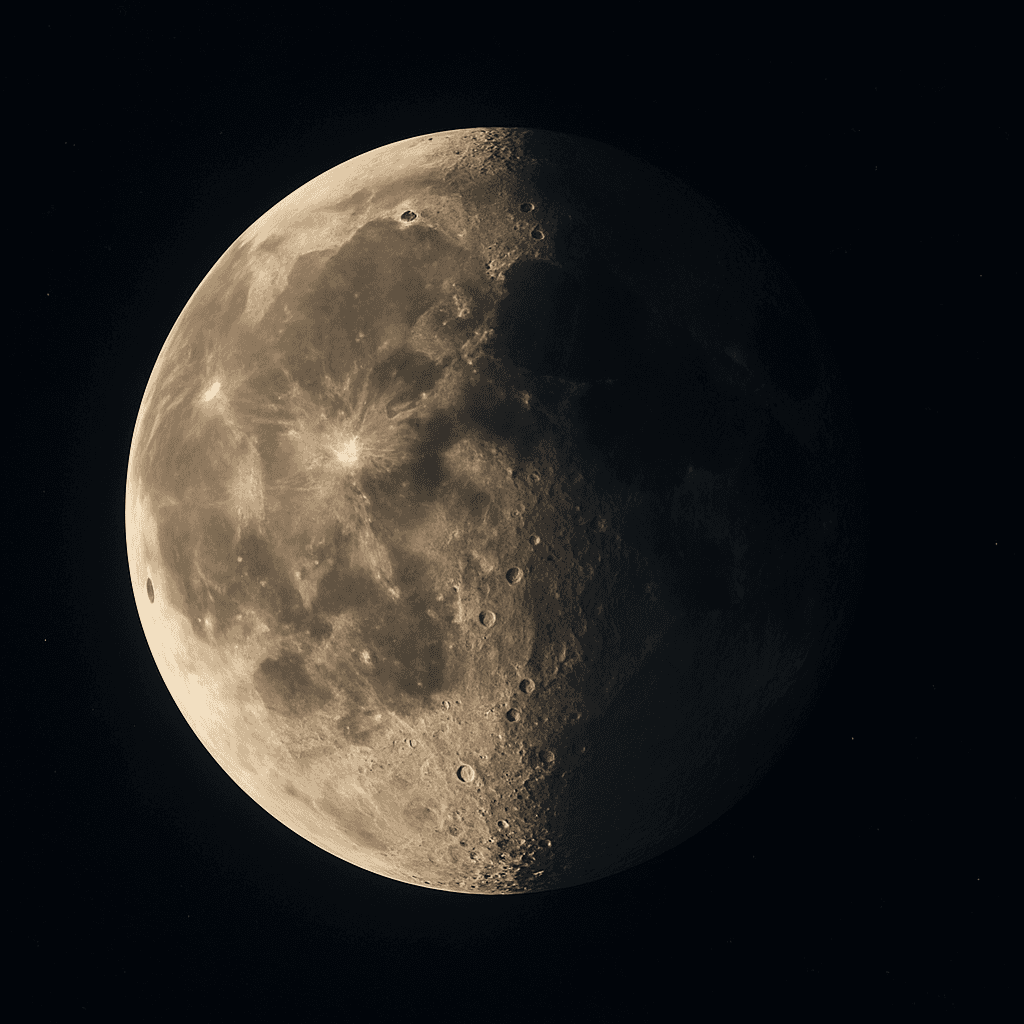
Waxing gibbous phase generated by artificial intelligence
This phase begins after the full moon. Most of the Moon’s surface remains illuminated, but the illuminated area begins to shrink. This phase is visible during the late night and early morning hours.
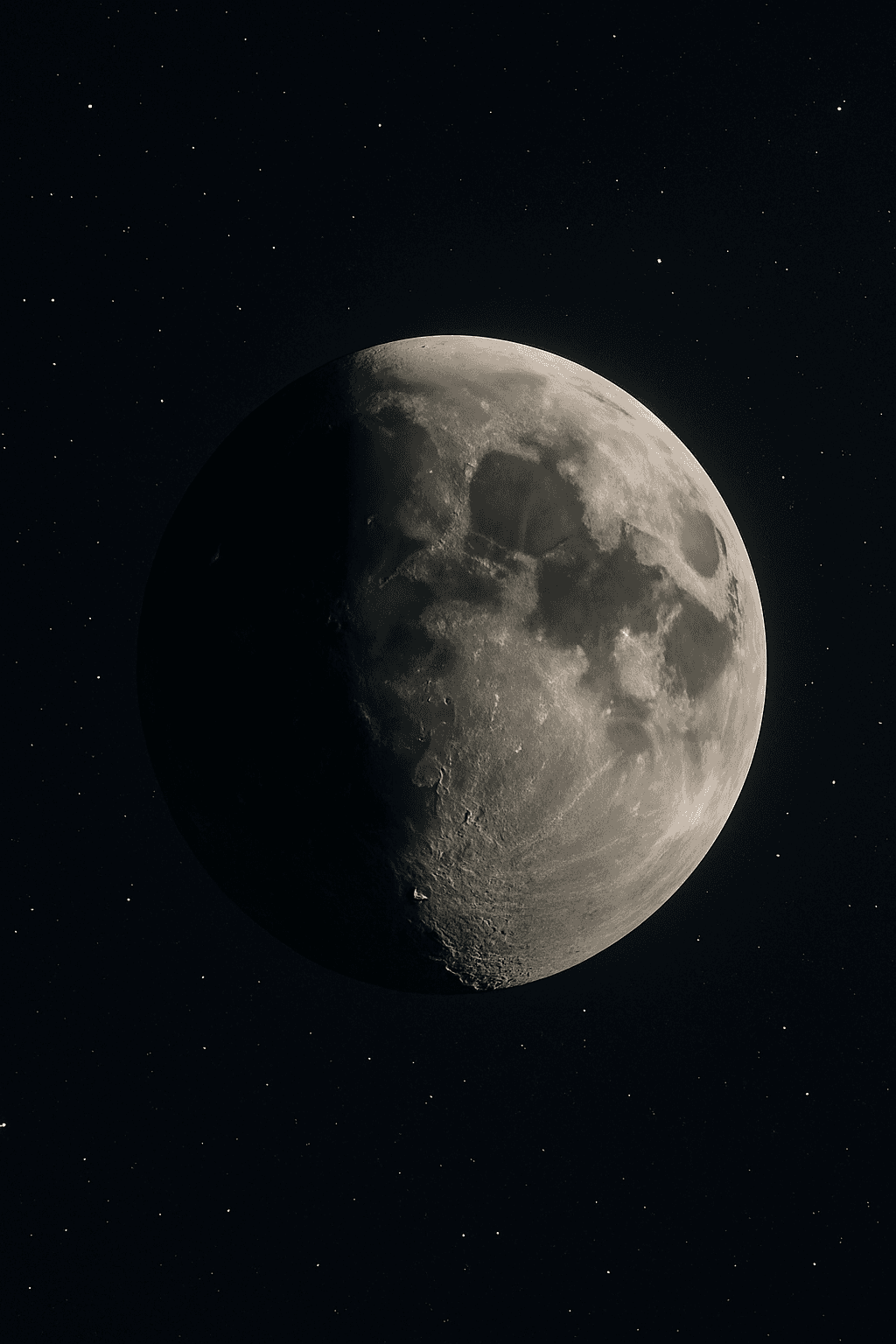
Waning gibbous phase generated by artificial intelligence
After the last quarter phase, the illuminated portion of the Moon gradually thins and resumes a crescent shape. This phase is observed near the eastern horizon just before sunrise and represents the final stage before the return to new moon.
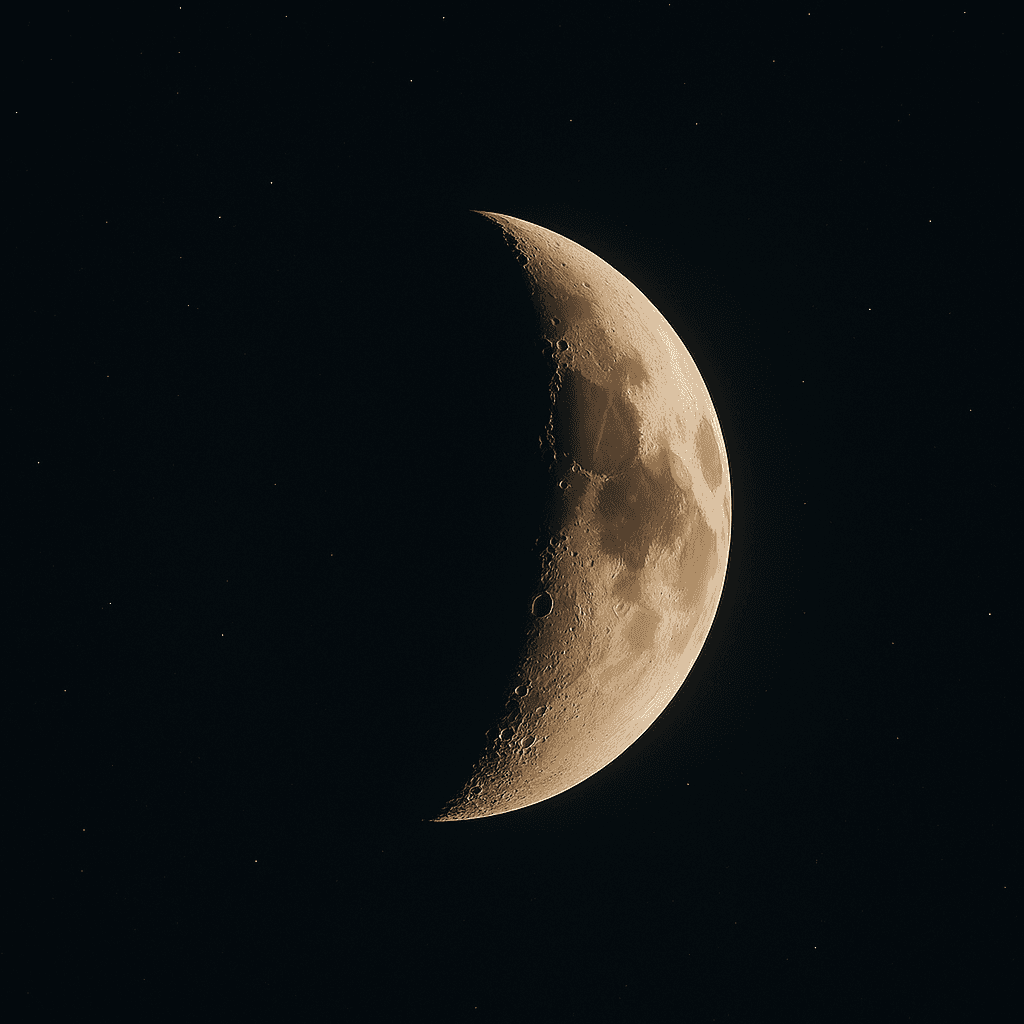
Waning crescent phase generated by artificial intelligence
The phases of the Moon can be observed at different times of the day depending on the observer’s location on Earth. These variations arise from the observer’s geographic position and local time zone. The precise timing of each phase is determined by astronomical calculations and is typically expressed in geocentric terms.
The lunar phases hold significant importance not only astronomically but also culturally, calendrically, and religiously. For example, the Islamic calendar is entirely based on the lunar cycle, and the sighting of the new moon determines the beginning of sacred months such as Ramadan. Some traditional societies, such as Hawaiian culture, have developed a system of 30 distinct phases, assigning a unique phase to each day of the lunar month.
EarthSky. "Understanding the Moon Phases." EarthSky Communications, Inc. Updated March 2024. Accessed April 22, 2025. https://earthsky.org/moon-phases/understanding-lunar-phases/.
McClure, Bruce. “Moon Phases in Order.” EarthSky. September 2, 2023. Accessed April 22, 2025. https://earthsky.org/moon-phases/moon-phases-in-order/.
NASA. "Moon Phases." *NASA Solar System Exploration.* Last updated: January 25, 2024. Accessed April 22, 2025. https://solarsystem.nasa.gov/moons/earths-moon/lunar-phases-and-eclipses/.
Royal Museums Greenwich. "What Are the Phases of the Moon?" Royal Observatory Greenwich. Accessed April 22, 2025. https://www.rmg.co.uk/stories/topics/phases-moon.
Time and Date. "Moon Phases Explained." Time and Date AS. Accessed April 22, 2025. https://www.timeanddate.com/astronomy/moon/phases.html.
United States Naval Observatory. "Phases of the Moon." USNO Astronomical Applications Department. Accessed April 22, 2025. https://aa.usno.navy.mil/data/MoonPhases.

Main Lunar Phases (Primary Phases)
New Moon
First Quarter
Full Moon
Last Quarter
Intermediate Lunar Phases (Secondary or Minor Phases)
Crescent Moon (Waxing Crescent)
Waxing Gibbous
Waning Gibbous
Crescent Moon (Waning Crescent)
Observation Times of Lunar Phases
Cultural Implications