



Why Are Certain Words Prohibited on Airplanes?
Why Are Certain Words Banned on Airplanes?
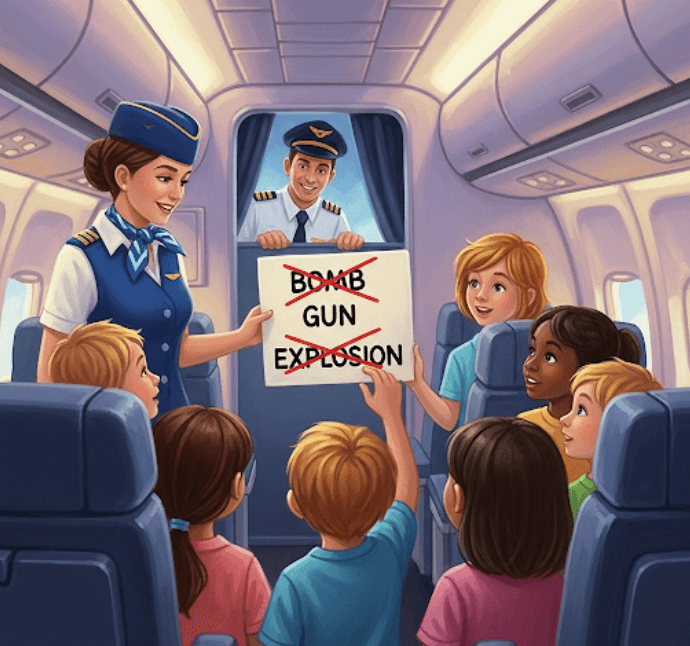
Have you ever wondered why using certain words during air travel can be risky? Airports and airplanes are places where thousands of people gather simultaneously, and security is of utmost importance. For this reason, some words may be misunderstood by security personnel or flight crew, potentially triggering panic.
Even if these words are spoken jokingly, they can activate security protocols. This can result in delays for you and other passengers, and even cause flight cancellations or delays.
(Generated by artificial intelligence.)
Which Words Should You Avoid?
The primary purpose of identifying “banned” or “sensitive” words in aviation is to prevent unnecessary alarms triggered by associations with terrorism, explosions, or violence. These words are typically listed alongside their English equivalents.
Here are some words to avoid using at airports and on flights:
- Bomba (Bomb): This is among the most critical words to avoid, as it directly refers to an explosive substance.
- Silah (Gun): Its association with dangerous weapons can trigger an alarm response.
- Patlama (Explosion): Describing a sudden and loud event, it can easily cause panic.
- Terörist (Terrorist): A highly sensitive term referring to someone who threatens security.
- Füze (Missile): A word that directly threatens aviation security.
- Kimyasal (Chemicals): When misunderstood, it may suggest the possibility of a biological or chemical attack.
In addition to these words, some countries may add additional terms to this list based on their own historical events or sensitivities. For example, in flights within the United States, any reference to the September 11 attacks can lead to serious consequences.
(Generated by artificial intelligence.)