


This article was automatically translated from the original Turkish version.
+1 More
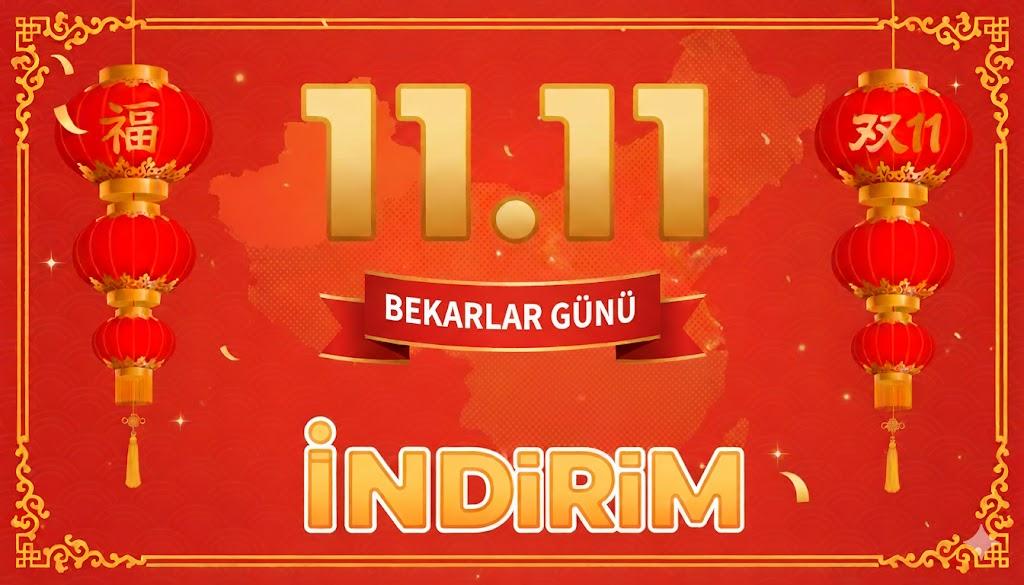
(Generated by Artificial Intelligence)
Official Name(s) | 11.11 Global Shopping Festival | ||||||||
|---|---|---|---|---|---|---|---|---|---|
Alternative Name | Singles' Day | ||||||||
Date(s) | Every year on November 11 | ||||||||
Commercial Founder | Taobao and Tmall Group, affiliated with Alibaba Group | ||||||||
11.11, officially known as the “11.11 Global Shopping Festival” (11.11 Global Shopping Festival), is an event initiated by the Chinese e-commerce company Alibaba Group and has become one of the world’s largest online shopping events. The festival is held annually on November 11. The choice of date was influenced by the visual resemblance of 11/11 to four single individuals. As a result, the event is also referred to as “Singles’ Day” and is internationally recognized as “Double 11.” The term “Double 11” serves as a conceptual abbreviation that emphasizes both the numerical form of the date (11.11) and the global commercial identity the event has acquired.
Before becoming a commercial shopping festival, Singles’ Day was first celebrated in 1993 by students at Nanjing University in China. This date predates Alibaba Group’s commercialization of the event by approximately sixteen years. Students viewed the day not as a symbol of deficiency but as an opportunity to celebrate individual freedom and independent lifestyles.
During this period, the primary purpose of the event was to offer an alternative form of individual identity in contrast to social norms. Singleness was framed as a personal choice and a marker of identity, giving rise to a social practice grounded in cultural meaning but not yet commercialized.
Over time, this form of celebration became intertwined with the behavior of self-gifting. Participants began marking the occasion by purchasing small gifts for themselves.
This cultural practice directly aligned with the commercial model developed by Alibaba in subsequent years. Thus, this social tradition rooted in individual consumption behavior merged with digital marketing strategies to form the cultural foundation of the 11.11 Global Shopping Festival.
Alibaba Group Logo (depositphotos)
Singles’ Day has established itself as a leading online shopping event worldwide in terms of sales volume and scope. Its international impact is evident in how it has surpassed digital sales figures of similar events such as Black Friday, Cyber Monday, and Amazon Prime Day in the United States.
In the 2020 11.11 Shopping Festival, total sales reached 75 billion US dollars. In the same year, online spending in the United States during the five-day period between Thanksgiving and Cyber Monday amounted to 28.49 billion dollars. These figures demonstrate the exceptionally high transaction volume generated by 11.11 in global e-commerce.【1】
Additionally, Chinese e-commerce platforms such as JD.com (JD) and Pinduoduo (PDD) have organized similar campaigns on November 11, demonstrating that 11.11 has evolved beyond being merely an Alibaba Group initiative into a widely adopted online shopping period across China’s e-commerce sector.
The transformation of Singles’ Day into an e-commerce festival was initiated by Alibaba Group in 2009 through its retail platforms Taobao and Tmall. From that year onward, November 11 was first recognized as a large-scale discount event and linked to year-round promotional campaigns.
Only 27 sellers participated in the first 11.11 event, with the goal of raising awareness about the advantages of online shopping. In its inaugural year, sales totaling 7.6 million US dollars (approximately 52 million Yuan) were achieved within 24 hours. The event grew rapidly, reaching 138 million dollars in sales in 2010 with the participation of 711 stores, creating a broad economic impact.【2】
Alibaba strategically positioned the event during a relatively quiet period in China’s retail calendar—between the Golden Week in October and the Chinese New Year. This timing provided retailers with an opportunity for inventory management and guided consumers to direct their spending toward this date. This strategy effectively anchored the event within an economically productive time frame.
Over time, Alibaba expanded the scope of the event beyond China’s national borders. The tenth anniversary in 2018 was celebrated with extensive media coverage, celebrity participation, and various live events. These efforts transformed 11.11 from a mere discount period into a globally recognized shopping festival, particularly prominent in Southeast Asia.
Initially a 24-hour shopping event, the format evolved in subsequent years. As of 2020, Alibaba extended the sales period to a total of 11 days. This adjustment aimed not only to increase total trade volume (GMV) but also to balance logistical and operational pressures.
The extension of the sales duration was implemented to mitigate risks of logistical bottlenecks and system overload caused by the high transaction volume concentrated in a single day. This change made the sales process more sustainable, improved the consumer experience, and enhanced operational efficiency. This transformation reflects the maturation of 11.11 and the need for sustainable growth in a competitive environment.
The 11.11 Global Shopping Festival has demonstrated steady growth since its inaugural sales volume of 7.6 million US dollars in 2009.【3】 The year 2014 marked a pivotal milestone in the event’s development. Alibaba Group’s initial public offering on the New York Stock Exchange and the festival’s achievement of 9 billion dollars in sales cemented 11.11’s global recognition. During this period, Singles’ Day sales surpassed the combined sales of Black Friday and Cyber Monday in the United States for the first time, rising to a leading position in the global e-commerce calendar. Sales volumes continued to break new records annually in the following years.
The year 2018, marking the event’s tenth anniversary, produced economically significant results. Gross merchandise volume (GMV) across Alibaba’s various platforms exceeded 30 billion US dollars within 24 hours. These sales were processed through Alipay, Alibaba’s own payment infrastructure, with the first billion-dollar transaction completed within the first minute after midnight.【4】
The 30 billion dollar sales volume achieved in 2018 also set a speed record in global e-commerce history. Amazon Prime Day’s total sales were surpassed within the first 60 seconds after the start of the 11.11 event. Furthermore, this amount was equivalent to approximately three times Germany’s gross domestic product for the same day. This demonstrates the high level of economic liquidity and demand generated by Singles’ Day within a short time frame.【5】
The extension of the event’s duration from 24 hours to 11 days in 2020 contributed to further financial growth. Alibaba recorded sales of 498.2 billion Yuan (approximately 75 billion US dollars) during the 2020 Singles’ Day event. This figure represents a significant increase compared to the previous year’s 268 billion Yuan.【6】 The extended duration ensured a more balanced distribution of sales, enabling total trade volume to reach record levels.
When compared with other global shopping periods, the scale of Singles’ Day reveals a clear distinction. 2020 data show that the sales volume of 11.11 surpassed the combined sales of Black Friday, Cyber Monday, and Amazon Prime Day in the United States. This solidifies 11.11’s position as the online shopping event with the highest trade volume worldwide.
As of 2024, the 11.11 Global Shopping Festival celebrated its sixteenth anniversary with record participation and high consumer engagement on Alibaba Group’s Taobao and Tmall platforms. The festival’s theme centered on the integration of artificial intelligence technologies, the rising spending power of younger generations, and the growing trend toward premium consumption.
Bo Liu, Vice Chairman of Alibaba Group and President of Tmall, stated that consumer participation in the 2024 11.11 event reached a historic level and that the company’s efforts to enhance user experience have established a new industry standard.
Approximately 300,000 brands participated in the event, with 589 surpassing 100 million RMB (approximately 13.8 million US dollars) in sales and 45 exceeding 1 billion RMB (approximately 138 million US dollars). Global brands such as Apple, Nike, and Xiaomi emerged as top performers in terms of sales volume.【7】
Alibaba’s 88VIP membership program reached over 42 million members during this period, with member spending rates increasing by more than 50 percent compared to the previous year.【8】
Taobao and Tmall Group (TTG) provided a total of 30 billion RMB (approximately 4.3 billion US dollars) in coupons and incentives to consumers and sellers during the event. Additionally, 13 billion RMB was allocated for seller support and marketing subsidies.【9】
Furthermore, Alibaba launched the beta version of Accio, an AI-powered business-to-business (B2B) search engine. This tool facilitates access for small and medium-sized enterprises worldwide to global suppliers through natural language search. Accio supports English, French, Spanish, Portuguese, and German languages and includes the “Accio Page” module, which presents product information objectively, and the “Accio Agent” module, which accelerates transactions.
The 2024 11.11 Global Shopping Festival concluded with broad participation and high transaction volumes, supported by Alibaba Group’s technological integrations and commercial incentives.
Alibaba Group. "Taobao and Tmall’s 11.11 Shopping Festival Records Robust Growth." Alibaba Group, Accessed November 5, 2025. https://www.alibabagroup.com/en-US/document-1792798062653997056
Alibaba Group. “Alibaba Gears Up for 2024 11.11 with Over $4 Billion in Consumer Perks and Merchant Support.” *Alizila*, October 14, 2024. Accessed November 5, 2025. https://www.alizila.com/alibaba-gears-up-2024-double-singles-day-11-4-billion-consumer-perks-merchant-support/
Alibaba Group. “Four Takeaways from Taobao and Tmall’s 11.11 Shopping Festival in 2024.” *Alizila*, November 13, 2024. Accessed November 5, 2025. https://www.alizila.com/four-takeaways-from-taobao-and-tmalls-11-11-shopping-festival-in-2024/
Berthiaume, Dan. “Alibaba Breaks ‘11.11’ Records, Pilots AI Search Engine for Businesses.” *Chain Store Age*, November 12, 2024. Accessed November 5, 2025. https://chainstoreage.com/alibaba-breaks-1111-records-pilots-ai-search-engine-businesses
CNBC. "Singles’ Day: Alibaba smashes records at world's largest online shopping event." CNBC, November 11, 2016. Accessed November 5, 2025. https://www.cnbc.com/2016/11/11/singles-day-news-alibaba-poised-to-smash-records-at-worlds-largest-online-shopping-event.html
Haas, Benjamin. "Chinese shoppers spend a record $25bn in Singles’ Day splurge." *The Guardian*, November 12, 2017. Accessed November 5, 2025. https://www.theguardian.com/world/2017/nov/12/chinese-shoppers-spend-a-record-25bn-in-singles-day-splurge
Liberto, Daniel. “Singles' Day: Definition, History, Statistics, and What Happens.” Investopedia, November 21, 2023. Accessed November 5, 2025. https://www.investopedia.com/terms/s/singles-day.asp
Rafapress. “Alibaba.” Depositphotos, March 28, 2024. Accessed November 5, 2025. https://depositphotos.com/tr/photos/alibaba.html?filter=all&qview=711319638
Reuters. "A look at Alibaba’s “Double 11” shopping day, the world’s largest online retail event." Accessed November 5, 2025. https://www.reuters.com/graphics/SINGLES-DAY-ALIBABA/0100B30E24T/
Reuters. "Alibaba reports record $9 billion Singles' Day sales." Reuters, November 11, 2014. Accessed November 5, 2025. https://www.reuters.com/article/alibaba-group-shopping-festival/update-3-alibaba-reports-record-9-bln-singles-day-sales-idUSL3N0T11GT20141111/
Reuters. "Alibaba's Singles' Day sales surge 60 percent to $14.3 billion." Reuters, November 11, 2015. Accessed November 4, 2025. https://www.reuters.com/article/us-alibaba-singles-day/alibabas-singles-day-sales-surge-60-percent-to-14-3-billion-idUSKCN0SZ34J20151112/
Time. "How China’s Single’s Day Holiday Sold Out." Time, November 11, 2014. Accessed November 5, 2025. https://time.com/3576381/china-singles-day-history/
Wade, Michael R., and Jialu Shan. “Alibaba’s Singles’ Day Report Card.” IMD – Research & Knowledge, November 2018. Accessed November 5, 2025. https://www.imd.org/research-knowledge/china/articles/alibabas-singles-day-report-card/
Xie, J., N. Yoon, and H. J. Choo. “How Online Shopping Festival Atmosphere Promotes Consumer Participation in China.” Fashion and Textiles 10, no. 1 (2023): 5. Accessed November 5, 2025. https://pmc.ncbi.nlm.nih.gov/articles/PMC9899135/
Yahoo Finance. "How Singles' Day Compares to Black Friday and Amazon Prime Day." Yahoo Finance, November 11, 2020. Accessed November 5, 2025. https://finance.yahoo.com/news/how-singles-day-compares-to-black-friday-and-amazon-prime-day-210545606.html
[1]
“How Singles’ Day Compares to Black Friday and Amazon Prime Day,” Yahoo Finance, erişim 5 Kasım 2025, https://finance.yahoo.com/news/how-singles-day-compares-to-black-friday-and-amazon-prime-day-210545606.html
[2]
Michael R. Wade ve Jialu Shan, “Alibaba’s Singles’ Day Report Card,” IMD – Research & Knowledge, Kasım 2018, erişim 5 Kasım 2025, https://www.imd.org/research-knowledge/china/articles/alibabas-singles-day-report-card/
[3]
Michael R. Wade ve Jialu Shan, “Alibaba’s Singles’ Day Report Card,” IMD – Research & Knowledge, Kasım 2018, erişim 5 Kasım 2025, https://www.imd.org/research-knowledge/china/articles/alibabas-singles-day-report-card/
[4]
Michael R. Wade ve Jialu Shan, “Alibaba’s Singles’ Day Report Card,” IMD – Research & Knowledge, Kasım 2018, erişim 5 Kasım 2025, https://www.imd.org/research-knowledge/china/articles/alibabas-singles-day-report-card/
[5]
Michael R. Wade ve Jialu Shan, “Alibaba’s Singles’ Day Report Card,” IMD – Research & Knowledge, Kasım 2018, erişim 5 Kasım 2025, https://www.imd.org/research-knowledge/china/articles/alibabas-singles-day-report-card/
[6]
“How Singles’ Day Compares to Black Friday and Amazon Prime Day,” Yahoo Finance, erişim 5 Kasım 2025, https://finance.yahoo.com/news/how-singles-day-compares-to-black-friday-and-amazon-prime-day-210545606.html
[7]
Dan Berthiaume, “Alibaba Breaks ‘11.11’ Records, Pilots AI Search Engine for Businesses,” Chain Store Age, 12 Kasım 2024, erişim 5 Kasım 2025, https://chainstoreage.com/alibaba-breaks-1111-records-pilots-ai-search-engine-businesses
[8]
Alibaba Group, “Four Takeaways from Taobao and Tmall’s 11.11 Shopping Festival in 2024,” Alizila, 13 Kasım 2024, erişim 5 Kasım 2025, https://www.alizila.com/four-takeaways-from-taobao-and-tmalls-11-11-shopping-festival-in-2024/
[9]
Alibaba Group, “Alibaba Gears Up for 2024 11.11 with Over $4 Billion in Consumer Perks and Merchant Support,” Alizila, 14 Ekim 2024, erişim 5 Kasım 2025, https://www.alizila.com/alibaba-gears-up-2024-double-singles-day-11-4-billion-consumer-perks-merchant-support/
.
(Generated by Artificial Intelligence)
Official Name(s) | 11.11 Global Shopping Festival | ||||||||
|---|---|---|---|---|---|---|---|---|---|
Alternative Name | Singles' Day | ||||||||
Date(s) | Every year on November 11 | ||||||||
Commercial Founder | Taobao and Tmall Group, affiliated with Alibaba Group | ||||||||
No Discussion Added Yet
Start discussion for "11.11 Global Shopping Festival" article
Historical and Cultural Origins
Global Scale and Market Dominance
Integration into Commerce and Alibaba’s Strategic Role
Financial Successes and Global Records
2024 Data and Recent Developments