

This article was automatically translated from the original Turkish version.
BRICS New Delhi Summit is the 18th BRICS Leaders Summit, held in New Delhi, the capital of India, on 12–13 September 2026, with the participation of state and government representatives from BRICS member countries. Hosted by Indian Prime Minister Narendra Modi, this marked India’s fourth time hosting the BRICS Summit. The summit was organized as a platform addressing international trade, economic cooperation, energy security, technology, artificial intelligence, payment systems, and global developments.
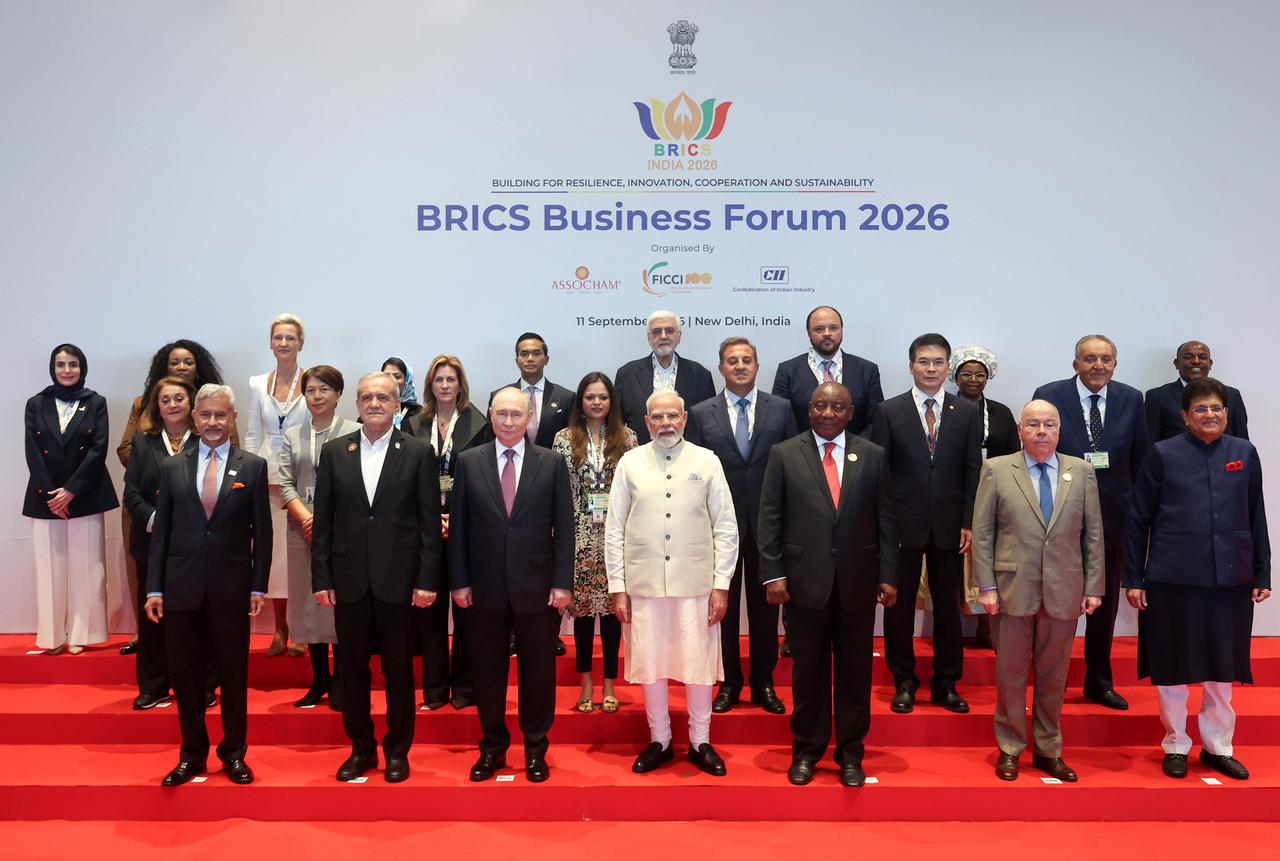
18. BRICS Zirvesi (11 Eylül, 2026) Anadolu Ajansı
The summit took place during a period marked by BRICS’s expanding membership and ongoing geopolitical tensions in the international system. The Russia-Ukraine War and attacks by the United States and Israel on Iran, and their impacts on energy, trade, and maritime transport, featured prominently on the agenda. Tariffs imposed or announced by the United States against certain BRICS countries also formed part of the economic agenda.
Leaders and senior representatives from BRICS countries, including Chinese President Xi Jinping, Russian President Vladimir Putin, Iranian President Masoud Pezeshkian, and South African President Cyril Ramaphosa, attended the summit in New Delhi. Egyptian President Abdel Fattah el-Sisi, Ethiopian Prime Minister Abiy Ahmed, and Indonesian President Prabowo Subianto also participated. The United Arab Emirates was represented by the Crown Prince of Abu Dhabi, while Brazil’s President Luiz Inácio Lula da Silva was represented by Foreign Minister Mauro Vieira.
During the summit, BRICS operated under its expanded structure comprising Brazil, China, Egypt, Ethiopia, India, Indonesia, Iran, Russia, Saudi Arabia, South Africa, and the United Arab Emirates. Belarus, Bolivia, Kazakhstan, Cuba, Malaysia, Nigeria, Thailand, Uganda, Uzbekistan, and Vietnam are recognized as partner countries of BRICS.
Senior officials from the World Health Organization and the World Trade Organization, along with United Nations Secretary-General António Guterres, were also present in New Delhi during the summit.
The economic agenda of the 2026 summit included international trade, finance, energy security, resilient supply chains, technology, and climate change. The development of cross-border payment systems among BRICS countries and the expansion of payment channels outside Western-dominated financial systems were key agenda items. Cooperation in the field of artificial intelligence was one of the central elements of the technology agenda.
Tariffs and non-tariff measures imposed on BRICS countries were also discussed. BRICS finance ministers and central bank governors had previously stated that unilateral tariffs and financial restrictions distort trade and are inconsistent with World Trade Organization rules, and they opposed such measures.
The summit occurred amid conflicts in the Middle East and Ukraine that significantly influenced the foreign policies and economic relations of BRICS countries. Developments in the Middle East, particularly the divergent positions of Iran and the United Arab Emirates, highlighted one of the key areas of disagreement within BRICS. At the meeting of BRICS foreign ministers in May 2026, no joint statement could be reached on Iran due to unresolved differences.
The impact of the Russia-Ukraine War on energy markets, maritime trade, and international sanctions also formed part of the geopolitical context of the summit. Russian President Putin stated during the BRICS Business Forum held before the summit that BRICS must develop a new global growth platform to counter sanctions and commercial restrictions.
One of the most notable diplomatic developments of the summit was Chinese President Xi Jinping’s visit to India. Xi arrived in New Delhi on 12 September for the BRICS Summit, marking his first visit to India since 2019. The visit took place during a period of normalization in Sino-Indian relations following clashes in the disputed Himalayan border region in 2020, which resulted in casualties on both sides.
A bilateral meeting between Xi and Indian Prime Minister Modi was planned as part of the summit. Prior to the visit, China emphasized the need to address bilateral relations from a strategic and long-term perspective, manage disagreements, and enhance cooperation between the two countries.
Prior to the summit, a bilateral meeting was held in New Delhi between Indian Prime Minister Modi and Russian President Putin. The discussions focused on strengthening economic and strategic ties between the two countries, as well as the impact of conflicts in Western Asia and the Black Sea region on maritime trade and the security of Indian seafarers.
India and Russia continue to pursue the goal of increasing their bilateral trade volume to 100 billion dollars by 2030. India is also among the largest buyers of Russian oil, alongside China. The New Delhi administration links its energy imports to the country’s need for secure, affordable, and stable energy sources.
BRICS originally consisted of Brazil, Russia, India, China, and South Africa. Through subsequent expansion, it has incorporated new members from the Middle East, Africa, and Southeast Asia. This expanded structure has increased the group’s share of global population, energy production, and the global economy. BRICS countries represent approximately half of the world’s population, about 40 percent of global output on a purchasing power parity basis, 44 percent of global oil production, and roughly one-quarter of world trade.【1】
One of the institutional pillars of economic cooperation within BRICS is the New Development Bank (NDB). The bank supports financing for infrastructure and development projects in member countries and other emerging economies. At the same time, the US dollar remains dominant in BRICS international trade, while efforts continue to promote trade in local currencies and develop alternative payment systems.
BRICS’s expansion has broadened its geographic and economic representation but has also highlighted differences in foreign policy priorities among member states. In particular, the contrasting positions of Iran and the United Arab Emirates regarding developments in the Middle East have been a major obstacle to formulating unified foreign policy statements within the organization in 2026.
BRICS is not a structure with a common currency, common customs tariff, or collective defense obligations. Member states continue to pursue independent foreign and security policies. The organization’s activities are primarily focused on economic cooperation, development financing, trade, reform of international institutions, and enhancing the representation of the Global South in global decision-making processes.
Al Jazeera. "BRICS summit opens in New Delhi amid wars, global tensions, tariffs." Accessed September 12, 2026.https://www.aljazeera.com/news/2026/9/12/brics-summit-opens-in-new-delhi-amid-wars-global-tensions-tariffs
Al Jazeera. "BRICS summit: Is the bloc truly challenging a Western-dominated world?" Accessed September 12, 2026.https://www.aljazeera.com/news/2026/9/11/bric-by-bric-has-brics-challenged-the-western-dominated-world
Anadolu Agency. “China’s Xi arrives in India for BRICS summit in 1st trip since 2019.” Accessed September 12, 2026.https://www.aa.com.tr/en/asia-pacific/china-s-xi-arrives-in-india-for-brics-summit-in-1st-trip-since-2019/4054928
Reuters. "China's Xi lands in Delhi for BRICS summit and talks with Modi." Accessed September 12, 2026.https://www.reuters.com/world/china/chinas-xi-lands-delhi-brics-summit-indian-tv-channels-report-2026-09-12/
Reuters. "Modi, Putin seek stronger ties as Russia calls for BRICS to counter West." Accessed September 12, 2026.https://www.reuters.com/business/aerospace-defense/modi-putin-hold-talks-new-delhi-trade-defence-2026-09-11/
[1]
Al Jazeera, “BRICS summit: Is the bloc truly challenging a Western-dominated world?” Erişim tarihi: 12 Eylül 2026, https://www.aljazeera.com/news/2026/9/11/bric-by-bric-has-brics-challenged-the-western-dominated-world

Participating Countries and Leaders
Agenda of the Summit
Geopolitical Tensions
Xi Jinping’s Visit to India
India-Russia Talks
BRICS Expansion and Economic Structure
Divergences Within BRICS