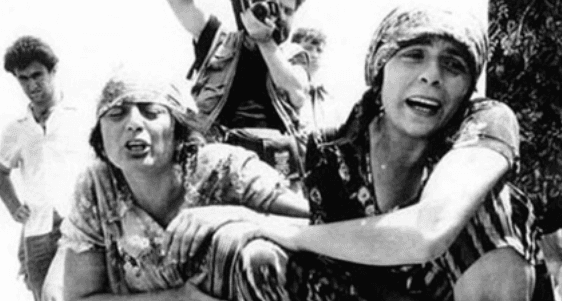


This article was automatically translated from the original Turkish version.
The 1944 Deportation of the Meskhetian Turks was a mass expulsion carried out by the Soviet Union on November 14–15, 1944, during which approximately 90,000 to 117,000 Meskhetian Turks living in the Ahıska region of Georgia were forcibly relocated to Kazakhstan, Kyrgyzstan, and Uzbekistan under the pretext of “security.”【1】
This deportation was one of the most extensive forced migration operations conducted by Stalin’s regime against ethnic minorities during World War II. It marked a historic rupture that profoundly affected the community’s demographic structure, cultural continuity, and identity. The deportation of the Meskhetian Turks is significant for initiating the transformation of Soviet nationality policy and launching a prolonged process of dispersal and struggle for rights among the Meskhetian Turks.
Documentary on the Meskhetian Deportation (YTB)
Meskhetian Turks are a Turkic-speaking and Muslim community that historically inhabited the southwestern region of Georgia, known today as Samtshe-Javakheti, around Adıgön, Ahıska, Ahılkelek, Aspinza, and Bogdanovka. The formation of their identity was shaped by the region’s historical events and the multiethnic character of the Caucasus. During the Soviet and post-Soviet periods, various states and researchers used different names to refer to the Meskhetian Turks, and their ethnic origin, identity, and historical continuity were occasionally subjects of political debate.
Before the 1944 deportation, Meskhetian Turks primarily identified themselves as “Turks” or “Caucasian Turks,” but the Soviet authorities recorded them under the category of “Azerbaijanis” in the 1939 census. Georgia, meanwhile, sometimes described them as “Muslim Georgians,” interpreting them as descendants of a historically Georgian population. Although the term “Meskhetian Turks” was officially adopted for international use during the 1998 Hague Negotiations, Georgia has never formally recognized this term. Nevertheless, a significant portion of the community continues to identify itself today as “Meskhetian Turk.”
The region inhabited by the Meskhetian Turks has historically been a crossroads of strategic routes and a theater of struggle among various states. Following the Treaty of Moscow on March 16, 1921, and the Treaty of Kars on October 13, 1921, the region came under Soviet control, placing the community directly under the influence of Soviet nationality policies and regional security strategies. This layered political structure of the region generated both local and imperial-level influences on the formation of Meskhetian Turk identity.
Documentary on the Meskhetian Deportation (TRT Avaz)
Historically, the Ahıska region, situated along strategic transit routes of the South Caucasus, was a site of administrative and military conflicts between the Ottoman Empire and Russian and Georgian political entities. The regional structure formed under Russian rule from the late 19th century underwent significant changes due to World War I and subsequent political transformations. As a result of the Treaty of Moscow signed on March 16, 1921, and the Treaty of Kars signed on October 13, 1921, Ahıska and its surroundings came under Soviet control. From that date onward, the region was directly affected by Soviet policies, border security strategies, and regional socioeconomic transformations.
The 1920s corresponded to the first phase of Soviet nationality policy, known as “korenizatsiya” (indigenization). During this period, the Soviet administration pursued a form of pluralism that strengthened local elites and supported the cultural institutions of various ethnic communities. The Meskhetian Turks largely preserved their regional culture, linguistic practices, and social organizations within this framework. However, although this process was ideologically grounded in the principle of “equality of Soviet nations,” a significant shift in direction emerged within the Soviet state apparatus from the mid-1930s.
In the 1930s, rising security concerns fundamentally transformed Stalin’s nationality policy. This transformation merged with deep-seated distrust toward communities living along the borders, leading to the establishment of a new centralized control mechanism centered on discourses of “political loyalty” and “national security.” The Ahıska region, bordering Turkey, was viewed in Soviet security doctrine as a sensitive frontier, and the Meskhetian Turks were defined as a population “with potential external connections.” Soviet reports claimed that this community could establish ties with Turkey and exhibit cross-border mobility; this narrative laid the political groundwork for the official justification of the subsequent deportation.
The Soviet Union’s redefined security outlook in these years had direct consequences for many non-Slavic groups, including the Crimean Tatars, Chechens, Ingush, and Karachay-Malkars. The core feature of this transformation was the tendency to evaluate ethnic identities as categories of threat to national security. In this context, the Ahıska region was classified as an ethnic and strategic “security risk.”
The 1939 Soviet census listing Meskhetian Turks under the “Azerbaijani” category reflected the interventionist stance of Soviet administrative policy toward ethnic identities in the region. This practice was a clear indication of the state’s attempt to redefine the community’s cultural identity within Soviet terminology. During the same period, the regional economy was reorganized along the lines of collectivization and the consolidation of agricultural production, significantly altering the community’s traditional way of life.
In the early 1940s, the pressure of World War II on Soviet domestic politics intensified suspicion toward communities living along the borders, and the political foundations for decisions determining the future of the Meskhetian Turks matured during this period. The deportation decision of 1944 was the final link in this long-term political transformation and security-centered approach.
From the late 1920s onward, the shift in Soviet nationality policy became one of the key determinants of the process leading to the 1944 Meskhetian deportation. Stalin’s regime, which reshaped the ideological framework of the system after Lenin, abandoned the korenizatsiya policy aimed at strengthening local identities and instead adopted a centralized, Russification, and security-oriented approach from the mid-1930s. This approach directly affected ethnic communities living along the borders and perceived by the Soviet regime as “questionably reliable.”
Stalin’s new policy framework intensified with the outbreak of World War II. The Soviet state’s security perception merged with the socialist ideological concept of the “internal enemy,” creating a basis for the reclassification of ethnic groups according to their loyalty to the state. The Ahıska region, sharing a border with Turkey, was viewed as a strategic frontline during this period, and the Meskhetian Turks were included among the groups distrusted by central authorities due to allegations of potential ties across the border.
During this period, not only the Meskhetian Turks but also the Crimean Tatars, Karachays, Chechens, Ingush, Kalmyks, and many other Muslim or non-Slavic communities became targets under similar justifications. The Soviet regime collectively questioned the loyalty of these peoples during wartime and assessed them as potential security risks. Stalin’s regime adopted the concept of “collective guilt,” which held that certain behaviors should be punished at the community level rather than individually; this idea formed the ideological background for the mass deportations carried out in the 1940s.
Another factor fueling political distrust was the Soviet central government’s view that the concentration of national minorities along the borders posed military and strategic risks. In this context, the demographic cohesion of the Turkish population in Ahıska was interpreted by Soviet officials as a “geopolitical risk”; its transformation into a security frontier played a decisive role in shaping decisions regarding the community’s future. The extraordinary conditions of war made these political concerns more visible and interventionist.
Reports and operational plans prepared by the Soviet People’s Commissariat for Internal Affairs (NKVD) before the 1944 deportation decision demonstrated that suspicion toward the Meskhetian Turks had become institutionalized policy. The preparatory process conducted between September and November 1944 was the most concrete manifestation of this policy approach.
The security-centered policy initiated in the 1930s laid the groundwork for the preparation of the 1944 deportation. In the period preceding the deportation, Soviet authorities carried out bureaucratic preparations such as population registration, household listing, and reporting by local units. These practices were consistent with standard NKVD procedures used in the deportation of various other populations during 1943–1944. Oral history studies and human rights analyses indicate that during this period, military presence increased in Meskhetian settlements, freedom of movement was effectively restricted, and the community was under intense state surveillance.
Another crucial element of the preparation phase was the military and logistical control of the Ahıska region. In the autumn of 1944, NKVD units were gradually deployed to the area, roads were placed under surveillance, and exits from the region were restricted. These measures fully mirrored the model used in other major Soviet deportations (Crimean Tatars, Chechen–Ingush, Karachay). It is known that local units were kept under strict discipline to ensure the operation’s secrecy.
The final stage of preparation involved establishing the necessary infrastructure. During this period, the NKVD determined the animal-drawn wagons, railway lines, and assembly points required for transporting the population to be deported.
The deportation operation was applied comprehensively across all districts inhabited by Meskhetian Turks—Adıgön, Ahılkelek, Ahıska, Aspinza, and Bogdanovka—in a manner that fundamentally altered the region’s demographic structure.【2】
On the morning the operation began, NKVD units launched sudden raids on villages, informing families to gather their belongings and proceed to designated assembly points within a short time. This procedure was entirely parallel to those used in the deportations of other communities in 1944, including the Crimean Tatars, Chechens, and Ingush. Families were often allowed to take only the most essential belongings; agricultural land, homes, and livestock were left behind.
The assembled population was transported under military escort to pre-designated assembly points and then loaded into enclosed wagons intended for animal transport. These wagons, as in other ethnic deportations, were unsuitable for human habitation, with severe deficiencies in heating, ventilation, and basic living necessities. Many families were separated during this process; the elderly and children suffered greatly due to the harsh conditions.【3】
The forced migration caravans embarked on a journey lasting weeks from Ahıska to Central Asia. Due to wartime strain on railway lines, shipments were frequently delayed or halted, making survival particularly difficult for the elderly, children, and the sick. Food supplies were severely limited, and the rations distributed were often insufficient and irregular. Access to water was possible only during brief stops at designated stations, which frequently failed to meet the needs of the overcrowded wagons.
A significant portion of the deported population perished during the journey due to the combined effects of extreme cold, disease, and lack of hygiene. Children and the elderly were the most vulnerable groups. The majority of those who died en route were hastily buried by family members at the stops along the way.
The majority of the deported were directed to Uzbekistan, Kazakhstan, and Kyrgyzstan. The dispersal of Meskhetian Turks across various regions of Central Asia was a typical application of the Soviet government’s demographic dilution strategy, preventing the community from reestablishing a majority presence in any single area. The journey often lasted weeks, and due to limited access to food and water, deaths were common among children and the elderly. This situation resembled the high mortality rates observed in other forced relocations of the era.
After the operation was completed, Soviet authorities rapidly repopulated the region, resettling different ethnic groups in the villages vacated by the Meskhetian Turks. Thus, the deportation had the character of a demographic intervention aimed at permanently altering the region’s ethnic composition.

The Deportation of the Meskhetian Turks (AA)
According to Soviet archival documents, the deportation of Turkish, Kurdish, and Hemshin communities living in Ahıska and its surroundings was presented as a necessary measure for state security. A document dated November 28, 1944, marked “Top Secret,” contains the following statements regarding these communities:
This narrative asserts that the deportation was justified not by the behavior of an ethnic community but by national security concerns. The same document states that border security was significantly strengthened before the evacuation:
The documents indicate that approximately 91,095 individuals were evacuated and dispatched to Kazakhstan, Kyrgyzstan, and Uzbekistan.【6】
A report dated December 14, 1944, provides the demographic distribution of the deported population:
A special legal regime was applied in the areas where the deported population was settled. A decree of the Council of People’s Commissars dated January 8, 1945, stated that the deportees would be punished under existing laws for violations of labor regulations and other unlawful activities, and those who left their resettlement areas would be considered fugitives.
Soviet correspondence explicitly states that a significant portion of the deported population arrived at their destinations without food or clothing. In a letter dated January 10, 1945, NKVD official Meyer of the Kazakh SSR wrote:
This statement reveals that the deported community was deprived of basic living conditions.
Soviet documents position the deportation of the Meskhetian Turks as part of the USSR’s broader policy of mass resettlement against other ethnic groups. Indeed, a 1946 report states:
This data demonstrates that the Ahıska deportation was not an isolated event but part of a comprehensive demographic engineering policy.
Although Soviet official documents attempted to legitimize the Ahıska deportation on security grounds, they clearly reveal that the evacuation was carried out under harsh conditions, that the deported communities were kept under strict administrative control through special resettlement regimes, and that there were serious deficiencies in meeting their basic needs.
Following the 1944 deportation, the Meskhetian Turks were dispersed across various regions of Central Asia under the Soviet Union’s “special settler” (spetsposelenets) status and forced to live under strict administrative surveillance. This status was a mechanism that severely restricted individuals’ legal and social rights, limited their freedom of movement, and imposed direct state control over daily life.
Under the special settlement regime, Meskhetian Turks were typically resettled in rural areas of Kazakhstan, Uzbekistan, and Kyrgyzstan within collective farms (kolkhozes) and state farms (sovkhozes), and continuously monitored by local administrative units known as komendatura. In this system, deportees were forbidden to leave their settlement units without permission. Every adult was required to sign in periodically at the komendatura. This practice served as a primary tool enabling the state to monitor the community’s daily movements and control potential “security risks.”
Conditions in the resettlement areas immediately after the deportation were extremely harsh. Meskhetian Turks were often placed in abandoned or derelict barracks, mud-brick dwellings, or temporary shelters provided by local populations; many struggled with housing shortages in the first years. Extreme cold during winter months, insufficient fuel, and inadequate infrastructure further worsened living conditions. Food supply became a major problem in the early years; despite compulsory labor obligations on collective farms, the rations distributed were insufficient to meet families’ basic nutritional needs.
Economic life was largely based on collective agricultural activities. Meskhetian Turks were viewed as an important labor force in the postwar reconstruction of the Soviet economy and contributed intensively to cotton farming, animal husbandry, construction, and irrigation projects. Nevertheless, they sometimes lacked control over their own production rights.
Education and cultural life were also affected by the restrictive nature of the special settlement status. Since instruction in schools was conducted in Russian and local languages, Meskhetian Turks were unable to receive education in their native language; the establishment of cultural institutions depended on approval processes controlled by the komendatura. This situation became a significant factor limiting the community’s cultural production capacity. Nevertheless, Meskhetian Turks continued to preserve their cultural identity through traditional family structures and religious practices.
Religious life was officially restricted; mosque construction and organized worship activities were subject to state permission. Nevertheless, it is known that religious rituals continued within homes or small community groups. These practices became an essential component of identity preservation under deportation conditions.
The “special settler” status, while severely restricting the social and legal rights of Meskhetian Turks, also fostered the strengthening of solidarity networks within the community. Joint production activities, family solidarity, and local organizational efforts played a crucial role in coping with the hardships of deportation.
This status continued until the period of liberalization following Stalin’s death and was formally abolished only in 1956 as a result of Nikita Khrushchev’s initiatives. However, as with other deported peoples, Meskhetian Turks were not granted the right to return to their homeland; the lifting of the status merely ended surveillance. Thus, the period from 1944 to 1956 remains etched in historical memory as the phase during which the community endured the most intense physical and social restrictions.
In 1956, Nikita Khrushchev’s initiation of the “de-Stalinization” process at the 20th Congress of the Communist Party of the Soviet Union led to the legal questioning of Stalin’s harsh practices and the official exoneration of many deported peoples from the charge of “collective guilt.” Within this framework, the special settlement regime was lifted for millions of “special settlers,” including the Meskhetian Turks, legally freeing them from the 12-year-long restrictions on movement and administrative surveillance. However, this legal change did not improve their most fundamental demand: the right to return to their homeland.
While the Soviet regime granted partial return rights to some groups such as the Crimean Tatars, Chechens, Ingush, and Karachays, it did not permit Meskhetian Turks to resettle within the borders of the Georgian SSR. This situation demonstrated the persistence of suspicion toward the community within Soviet nationality policy. The Georgian SSR government explicitly rejected the return, citing fears that repopulation would disrupt the region’s demographic balance and generate ethnic tensions; the Soviet central government supported this stance. Thus, the post-1956 period became institutionalized as one of de facto non-return.
Legal freedom brought some improvements to the social and economic life of Meskhetian Turks but did not eliminate the structural problems created during the deportation years. During this period, the community began establishing new living areas across various regions of Central Asia; dependence on the kolkhoz and sovkhoz systems gradually gave way to more independent forms of employment. Although access to educational institutions expanded, opportunities for Meskhetian Turks to develop their own language and cultural institutions remained limited due to the general framework of Soviet policy.
Another significant feature of the post-1956 period was the permanent nature of geographic dispersal. The community spread across different settlement units in Kazakhstan, Uzbekistan, Kyrgyzstan, and partially in the Russian Federation; this led to the fragmentation of family structures and internal social organization. Unlike during the deportation years, the expansion of freedom of movement encouraged younger generations to seek new employment and educational opportunities across the Soviet geography, accelerating internal migration dynamics within the community.
On the other hand, the denial of the right to return laid the groundwork for a new phase of political and social struggle for the Meskhetian Turks. Beginning in the 1960s, various petition campaigns, collective appeals, and rights advocacy initiatives emerged within the community; these efforts largely proved fruitless before the Georgian SSR and Moscow authorities. These demands were evaluated in Soviet archives as a “manageable but non-reversible issue”; this approach contributed to the long-term entrenchment of the Meskhetian Turks’ non-return status.
The violent incidents in the Fergana Valley of Uzbekistan in 1989, targeting the Meskhetian Turks, are considered one of the largest ruptures in the community’s history since the 1944 deportation. Occurring during the dissolution of the Soviet Union, amid growing economic hardship and social unrest, these events rapidly spread across a wide area as local tensions escalated into ethnic conflict. The attacks in Fergana disrupted the Meskhetian Turks’ decades-long efforts to establish roots in the region, and security concerns drove the community into a new mass migration.
Among the causes of the events were the uncertainties of the post-Soviet transition, economic hardship, and local competition dynamics. Rising unemployment, perceptions of unfair resource distribution, and the vacuum of political authority deepened the conflict environment. Meskhetian Turks had a significant presence in Fergana Valley in agriculture, animal husbandry, and small-scale trade; this made them a focal point of local competition amid economic hardship. Simultaneously, the rapid weakening of central Soviet authority made it difficult to contain the attacks, contributing to their swift escalation.
During the Fergana events, the homes, businesses, and property of Meskhetian Turks were targeted; a significant portion of the community was evacuated due to security fears. In the aftermath, Soviet authorities launched a large-scale evacuation program to control the spread of violence, relocating the majority of Meskhetian Turks from Fergana to various parts of the country. During this process, approximately 70,000 Meskhetian Turks experienced the second largest mass displacement of their history, following the 1944 deportation.
The evacuated members were largely directed to regions of the Russian Federation such as Rostov, Krasnodar, and Stavropol, as well as to rural areas of Azerbaijan and Ukraine. However, since this relocation was not based on a permanent and organized resettlement program, the community faced various adaptation challenges in their new settlements. For example, Meskhetian Turks in the Krasnodar Krai remained deprived of fundamental rights such as citizenship and property ownership for many years; this situation was documented in reports by human rights organizations.【10】
The 1989 Fergana events deepened the Meskhetian Turks’ process of dispersal throughout the 20th century and accelerated their spread across different regions of the Soviet geography. This event also led to the emergence of a new international dimension to the Meskhetian Turk issue; their legal status, displacement problems, and return demands entered the agendas of post-Soviet states and international organizations.
These developments diversified the community’s settlement geography in subsequent years, laying the foundation for a broad diaspora extending to many countries including Russia, Azerbaijan, Türkiye, Ukraine, and the United States.
The dissolution of the Soviet Union in 1991 marked the beginning of a new era for the Meskhetian Turks, but rather than resolving previous problems, this period further complicated their legal status. During this time, as post-Soviet states redefined their policies on identity, citizenship, and land, Meskhetian Turks were not recognized as “indigenous populations” in most of the countries where they lived; this deepened the discrimination they faced.
In countries such as Kazakhstan, Uzbekistan, and Kyrgyzstan, Meskhetian Turks formed relatively stable communities, but the effects of the Fergana events persisted for a long time, prompting some members to seek new settlement areas. Post-Soviet economic transformation, the collapse of the kolkhoz and sovkhoz systems, and shrinking labor markets accelerated internal and external migration among Meskhetian Turks, particularly among the younger generation.
The most severe human rights violations in the post-Soviet period occurred in the Krasnodar Krai of the Russian Federation. Due to the lack of official status, Meskhetian Turks were deprived for many years of fundamental rights such as citizenship, property ownership, legal employment, health insurance, pensions, education, and official marriage. International human rights organizations described this situation as “institutionalized discrimination”; systematic exclusionary practices by the Krasnodar authorities were documented in various reports. As a result, a significant portion of the community joined refugee resettlement programs in the United States during the 2000s.【11】
Azerbaijan became one of the primary destinations for Meskhetian Turks fleeing Fergana; the community concentrated in rural areas and established a new social organizational structure. Although the Azerbaijani government pursued relatively positive citizenship policies, economic difficulties and infrastructure problems persisted for many years.
Ukraine provided significant settlement opportunities for Meskhetian Turks, particularly in regions such as Donetsk, Kharkiv, and Dnipropetrovsk; however, the conflict environment after 2014 forced this community to migrate again. This situation caused Meskhetian Turks to enter another cycle of security-based displacement in the post-Soviet period.
From the 2000s onward, Meskhetian Turks also launched a broader migration movement toward Türkiye, the United States, and European countries. In the United States, significant settlements emerged in states such as Colorado, Pennsylvania, Idaho, and Kentucky; in Türkiye, the community established new living areas in cities such as Kars, Erzincan, Bitlis, and Bursa through extended family networks. This process led the Meskhetian Turks to achieve their widest geographic dispersal to date.
Another important dimension of the post-Soviet period is the internationalization of the community’s identity struggle. International organizations such as the Council of Europe, OSCE, and UNHCR have raised the human rights violations and return demands of the Meskhetian Turks in various reports and negotiations. Nevertheless, Georgia’s reluctance on the return issue and bureaucratic obstacles in practice have prevented the community’s most fundamental demand from being fulfilled for many years.
Since the 1944 deportation, the most fundamental demand of the Meskhetian Turks has been recognition of their right to return to their homeland, the Ahıska region. This demand became more visible after the special settlement regime was legally abolished in 1956, but due to the resistant stance of Soviet and Georgian authorities, it remained unanswered for many years. While significant portions of other deported peoples were granted the right to return, the exclusion of the Meskhetian Turks reinforced a perception of double standards within the community and strengthened the political nature of their struggle for return.
From 1956 onward, Meskhetian Turks submitted thousands of petitions to Soviet authorities expressing their desire to return to their homeland. However, the Georgian SSR government rejected these demands, citing fears that repopulation would disrupt the new demographic order in Ahıska and increase ethnic tensions. Party and state officials in Moscow supported Georgia’s position and continuously delayed the issue, turning the right to return into a matter entirely dependent on political will.
During this period, efforts to address return demands occasionally evolved into organized campaigns, but no concrete progress was achieved due to the general security approach of the Soviet system and instability in its ethnic policies. By the 1980s, despite being widely dispersed across the Soviet geography, Meskhetian Turks continued to carry the expectation of return as an essential component of their collective identity.
After the dissolution of the Soviet Union, Georgia became a critical actor regarding the Meskhetian Turks’ return demand. As the newly independent state prioritized the construction of national identity and the preservation of territorial integrity, the issue of Meskhetian return remained politically sensitive for a long time.
The internal war, political instability, and Abkhazia–South Ossetia crises of the early 1990s pushed the return issue to the background of the agenda. Although the Georgian government expressed general willingness regarding return during this period, it did not develop any institutional mechanism to implement it.
From the mid-1990s onward, the issue of Meskhetian return entered the agenda of international organizations. The Council of Europe evaluated the return of Meskhetian Turks as a key condition during Georgia’s accession process. When Georgia was admitted to the Council of Europe in 1999, it committed to developing and implementing a comprehensive program for the return of Meskhetian Turks.
This process established the Meskhetian issue within an international legal framework for the first time. The Council of Europe and OSCE prepared reports in subsequent years to monitor the implementation of the process, but Georgia’s progress remained very limited.
In line with its international commitments, the Georgian Parliament adopted the “Return Law” on June 2007. This law presented itself as a fundamental regulation granting Meskhetian Turks the right to apply for Georgian citizenship and resettle in the country. However, its implementation created serious legal and administrative problems:
International reports have noted that the law failed to fulfill its intended function. Only a limited number of the thousands of families who applied were able to complete the process.【12】
The United Nations High Commissioner for Refugees (UNHCR) has defined the return of Meskhetian Turks as a “protracted displacement case” and has called on Georgia to accelerate the process. The OSCE has emphasized the importance of resolving the Meskhetian issue from a regional security perspective, but these initiatives have not fundamentally changed Georgia’s political stance. The joint assessment of international mechanisms is that progress has been limited due to Georgia’s lack of political will and local resistance.
The migration of Meskhetian Turks to Türkiye has been a continuous but intermittent process since the first half of the 19th century, shaped by historical and political reasons. Following the Treaty of Edirne signed after the 1828–1829 Russo-Turkish War, which ceded Ahıska to Russia, a significant portion of the region’s Turkish population migrated to Anatolia, initiating the first major population movement along the Ahıska–Anatolia axis. These migrations continued in successive waves throughout the late 19th and early 20th centuries.
Although the majority of Meskhetian Turks were forcibly resettled in Central Asia after the 1944 deportation, Türkiye did not officially accept Meskhetians during this period. Nevertheless, the cultural and historical ties the community maintained with Türkiye kept the desire for migration alive. Even after the abolition of the special settlement regime in 1956, Georgia’s refusal to permit return prompted Meskhetian Turks to seek alternative settlement options, with Türkiye becoming a primary target of this search.
Türkiye’s formal process of accepting Meskhetian Turks was institutionalized by Law No. 3835 dated July 2, 1992. This regulation enabled Meskhetian Turks to be accepted into Türkiye under the status of “resettled migrants,” and from the 1990s onward, a significant portion of the community began settling in Türkiye. Settled Meskhetian families were primarily placed in cities such as Bursa, Istanbul, İzmir, Erzincan, and Antalya, and over time dispersed to other Turkish cities.
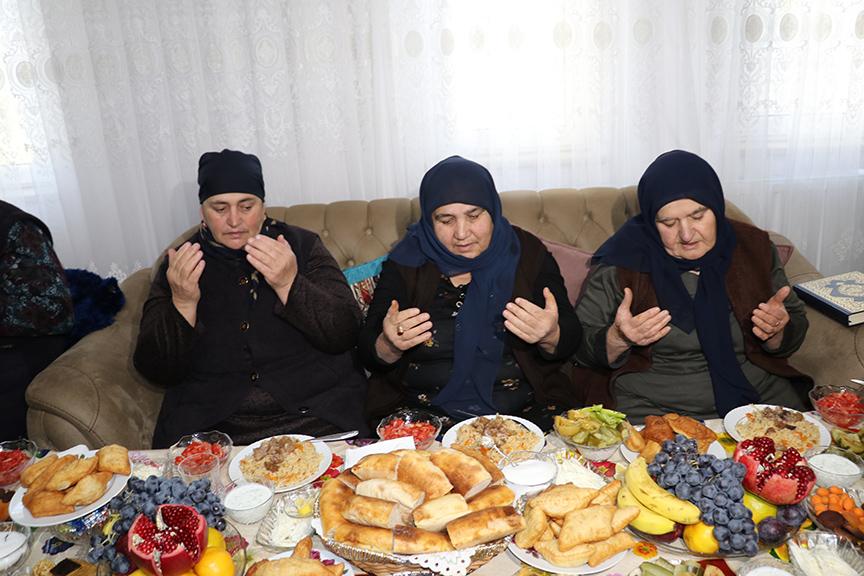
Meskhetian Turks Migrating to Türkiye (AA)
The 1989 Fergana events marked a critical turning point in Meskhetian migration to Türkiye. As a result of these events, approximately 90,000 Meskhetians who were forced to leave Uzbekistan sought refuge in Türkiye; Türkiye sought to manage this influx within a humanitarian and cultural framework. Meskhetian Turks who settled in Türkiye after the Fergana events quickly adapted due to strong family bonds and solidarity networks that helped preserve the community’s social structure.
In the 2000s, Türkiye continued to accept Meskhetians displaced for various reasons. Some members of the community who suffered human rights violations in the Krasnodar Krai also migrated to Türkiye; this process was addressed within the framework of bilateral relations and humanitarian responsibility. Since 2015, Türkiye has implemented more comprehensive resettlement programs for displaced Meskhetian communities, ensuring their concentration in specific cities and strengthening institutional support mechanisms.
Türkiye continues to welcome Meskhetian Turks seeking to migrate from various countries. Due to the war in Ukraine–Russia, Meskhetian Turks wishing to migrate to Türkiye began arriving in convoys in December 2015, following instructions from Turkish President Recep Tayyip Erdoğan. Some of the migrating families were settled in TOKİ housing units built specifically for them in the Üzümlü district of Erzincan. All belongings and needs of Meskhetian Turks who arrived from Ukraine with only personal items were provided by the Republic of Türkiye.

Housing Units Where Meskhetian Turks Were Settled (AA)
Today, Türkiye has become one of the countries with the largest concentration of Meskhetian Turks. Support has been provided to Meskhetians settled in Türkiye in areas such as citizenship, education, social services, and resettlement; Türkiye has served as an important safe haven for the continuity of Meskhetian culture.
On November 12, 2025, Ziyatdin İsmihanoğlu Kassanov, President of the World Association of Meskhetian Turks (DATÜB), and his delegation visited President Erdoğan. At this meeting, Erdoğan expressed the importance Türkiye attaches to the Meskhetian Turks with the following words:
"As you know, we temporarily settled 2,315 Meskhetian Turks seeking international protection from our country in Elazığ. We have resettled 703 of our brothers in the first phase of housing units built by TOKİ in Ahlat, Bitlis, and we are rapidly constructing the second phase. Earlier, in 2015, we resettled a total of 3,215 of our Meskhetian compatriots affected by the conflict in Ukraine in Erzincan Üzümlü and Bitlis Ahlat. To date, we have granted exceptional citizenship to approximately 170,000 Meskhetian Turks and long-term residence permits to more than 150,000 individuals. We will continue to support all our brothers in need in other countries through institutions such as TİKA and the Presidency of Turks Abroad. I want you to know that Türkiye is always with you. May our Lord strengthen our unity and togetherness forever."【13】

Visit of Ziyatdin İsmihanoğlu Kassanov to President Erdoğan (AA)
Although the 1944 deportation and subsequent forced displacements caused deep fractures in the cultural fabric of the Meskhetian Turks, the community has demonstrated remarkable resilience in preserving its identity. Despite their dispersion across different geographies, the most important factor sustaining Meskhetian Turk cultural continuity is the strong community relations based on extended family structures. The family has been the central institution for transmitting language, traditions, and historical memory from one generation to the next.
The language, as the fundamental pillar of cultural identity, has been preserved even under deportation conditions. Meskhetian Turkish, a dialect belonging to the Oghuz branch of Turkic languages, has evolved over the years through contact with Russian, Azerbaijani, Georgian, and other local languages. Nevertheless, the preservation of Turkish within family communication remains one of the most prominent indicators of cultural continuity.
A significant portion of traditional practices continued during the deportation years. Weddings, funerals, rituals, and seasonal celebrations functioned as social arenas reinforcing community identity. Despite official restrictions during the Soviet period, religious practices were often maintained within homes or small community groups; Quranic education and religious ceremonies survived informally. This demonstrates how deportation conditions strengthened identity preservation reflexes.
Social memory is one of the strongest elements sustaining Meskhetian identity. The 1944 deportation has been transmitted across generations as a collective trauma through family narratives, oral history, poetry, and laments. This memory has also shaped how the deported community members define their identities.
Diaspora processes have also played a vital role in the reproduction of cultural continuity. In new settlement areas such as the United States, Türkiye, the Russian Federation, Azerbaijan, and Ukraine, community centers, associations, and cultural organizations have preserved identity; wedding traditions, handicrafts, culinary culture, and oral literature have been adapted to new conditions. These institutions have become bridges connecting generations of Meskhetian Turks across different countries. Nevertheless, cultural continuity also involves some transformations due to modernization, urbanization, and multilingualism brought by the diaspora. Although language erosion and variation in cultural practices are observed among younger generations, the community exhibits remarkable stability in preserving the core elements of its identity. The memory of deportation and the sense of historical belonging continue to be fundamental factors strengthening intergenerational bonds.
One of the most renowned elements of Meskhetian Turk oral culture is the mâniler tradition, one of the clearest sources reflecting the social memory of the 1944 deportation and subsequent forced migrations. Due to limited written literary production and the community’s continuous mobility throughout history, mâniler have become both a vehicle of cultural transmission and a space for emotional expression.
The most frequently encountered emotion in mâniler is the longing for the homeland and the inner rupture caused by separation.
“On the other side of the mountains
By the banks of the rivers
Everyone is in their homeland
We are in sorrow for our homeland”【14】
These lines express the shared sense of deprivation experienced by the community in simple language.
The most prominent symbol in Meskhetian mâniler is the mountain motif. Mountains represent both the physical distance between Ahıska and exile and the political and social barriers to return:
“These are high mountains
Smoke binds their slopes
We have been exiled
Those who see this weep”【15】
Alongside the mountain motif, ship and bird imagery are central symbols of the deportation theme. The ship is often seen in mâniler as a vessel of hope to reach the homeland; sometimes it represents a messenger or a gateway to freedom. The bird is the purest expression of longing and the desire for freedom:
“In this homeland, the sheep are silent
But the birds sing
I wish I were a dove
Never leaving the memory of my homeland”【16】
Another notable feature in mâniler is the frequent mention of place names from Ahıska and Türkiye. These place names serve as memory markers that sustain the deported community’s sense of belonging. For example, names such as Adıgün, Osman Paşa, and Erzurum reflect both historical roots and attachment to the ancestral homeland. This usage reflects how Meskhetian Turks perceive themselves as both natives of Ahıska and cultural members of Türkiye.
When examining the thematic range of mâniler, it becomes evident that the deportation catastrophe has become a long-lasting shared emotion and fate. Themes of lament, defiance against fate, grief of exile, hope, prayer, curses, and the will to endure form interwoven emotional layers in mâniler. Some mâniler carry the traces of past oppression, while others prominently express the hope of return:
“The white sheep come
They break through the mountains
If the gates of the homeland open
What will come to my home?”【17】
Ali, Muhammet. "Ahıska Türklerinin Geri Dönüş Problemi ve Gürcistan’ın Avrupa Konseyine Taahhütleri." *Ardahan Üniversitesi İktisadi ve İdari Bilimler Fakültesi Dergisi*, 2024, 6.2: 225–239. Accessed November 13, 2025. https://dergipark.org.tr/en/pub/aruiibfdergisi/issue/88646/1414022
Anadolu Ajansı. "Ahıska Türklerinin sürgün edilişinin 77. yılı." Accessed November 13, 2025. https://www.aa.com.tr/tr/dunya/ahiska-turklerinin-surgun-edilisinin-77-yili/2420338
Anadolu Ajansı. "Ahıska Türklerinin sürgün edilişinin 80. yılı." Accessed November 13, 2025. https://www.aa.com.tr/tr/dunya/ahiska-turklerinin-surgun-edilisinin-80-yili/3393801
Anadolu Ajansı. "Cumhurbaşkanı Erdoğan, Dünya Ahıskalı Türkler Birliği Heyeti'ni kabul etti." Accessed November 13, 2025. https://www.aa.com.tr/tr/gundem/cumhurbaskani-erdogan-dunya-ahiskali-turkler-birligi-heyetini-kabul-etti/3741697
Cengiz, Esra, and Şahin Köksal. Ahıska Türklerinin Geri Dönüş Mücadelesi: Yaşanan Sorunlar, Süreçteki Devletler ve Uluslararası Toplum. *Sakarya Üniversitesi Türk Akademi Dergisi*, 2024, 3.2: 89–102. Accessed November 13, 2025. https://dergipark.org.tr/en/pub/sautad/issue/89750/1590814
Keskin, Serhat, and Hazar Ege Gürsoy. "SOVYET VE SOVYET SONRASI DÖNEMDE AHISKA TÜRKLERİNİN KARŞILAŞTIKLARI İNSAN HAKLARI İHLALLERİ VE AYRIMCILIKLAR." *Uluslararası Suçlar ve Tarih*, 2017, 18: 13–46. Accessed November 13, 2025. https://dergipark.org.tr/en/pub/ustich/issue/44800/557248
Kolukırık, Suat. Sürgün, toplumsal hafıza ve kültürel göç: ABD’deki Ahıska Türkleri üzerine bir araştırma. *Bilig*, 2011, 59: 167–190. Accessed November 13, 2025. http://bilig.yesevi.edu.tr/yonetim/icerik/makaleler/2510-published.pdf
TRT Avaz YouTube Channel. "Ahıska Sürgünü (1. Bölüm)." Accessed November 13, 2025. https://www.youtube.com/watch?v=xMZ5Ne1Jris
Topal, Coşkun; Çahalov, Orhan; Maden, Nafiz. Son Bulmayan Ahıska Sürgünü: 1944 Ahıska Sürgünü Bir Ailenin Hayat Hikâyesi. Akademik Tarih ve Araştırmalar Dergisi, 2024, 7.11: 73-94. https://dergipark.org.tr/en/pub/ataddergi/issue/89557/1537896
Uravelli, Orhan. *Sovyet Resmî Belgelerinde Ahıska Sürgünü.* *Bizim Ahıska*, 2011, 16: 8–12. Accessed November 13, 2025. http://www.ahiska.org.tr/wp_pdf/sayi16/parcali/09_sayi16.pdf
YTB Youtube Channel. "Sürgünün 75. Yılında Ahıska Türkleri Belgeseli." Accessed November 13, 2025. https://www.youtube.com/watch?v=uHjDxo71Rk0
Çelik, Türkân. “Ahıska Mânilerinde Sürgünün İzleri.” *III. Uluslararası Genç Halkbilimciler Sempozyumu Bildirileri*, 47–56, 2017. Accessed November 13, 2025. https://www.academia.edu/download/105986610/III_Uluslararasi_Genc_Halkbilimciler_Sem.pdf#page=66
Şirin, Aslı. "Stalin'in Milliyetler Politikasının Bedeli Olarak Ahıska Sürgünü Ve Ahıskalılar'ın Sürgündeki Yaşamları." Avrasya Etüdleri, 2019, 56.2: 53–77. Accessed November 13, 2025. https://dergipark.org.tr/en/pub/avrasya/issue/50529/657238
[1]
Anadolu Ajansı. "Ahıska Türklerinin sürgün edilişinin 77. yılı." Son Erişim: 13.11.2025. https://www.aa.com.tr/tr/dunya/ahiska-turklerinin-surgun-edilisinin-77-yili/2420338
[2]
Serhat Keskin ve Hazar Ege Gürsoy, “Sovyet ve Sovyet Sonrası Dönemde Ahıska Türklerinin Karşılaştıkları İnsan Hakları İhlalleri ve Ayrımcılıklar,” Uluslararası Suçlar ve Tarih, sayı 18 (2017): 20. https://dergipark.org.tr/en/pub/ustich/issue/44800/557248
[3]
Coşkun Topal, Orhan Çahalov ve Nafiz Maden, “Son Bulmayan Ahıska Sürgünü: 1944 Ahıska Sürgünü Bir Ailenin Hayat Hikâyesi,” Akademik Tarih ve Araştırmalar Dergisi 11 (2024): 73–94. https://dergipark.org.tr/tr/pub/ataddergi/issue/89557/1537896
[4]
Orhan Uravelli, Sovyet Resmî Belgelerinde Ahıska Sürgünü, Bizim Ahıska, 2011. s. 8. http://www.ahiska.org.tr/wp_pdf/sayi16/parcali/09_sayi16.pdf
[5]
Uravelli, Sovyet Resmî Belgelerinde Ahıska Sürgünü, s. 8. http://www.ahiska.org.tr/wp_pdf/sayi16/parcali/09_sayi16.pdf
[6]
Uravelli, Sovyet Resmî Belgelerinde Ahıska Sürgünü, s. 8. http://www.ahiska.org.tr/wp_pdf/sayi16/parcali/09_sayi16.pdf
[7]
Uravelli, Sovyet Resmî Belgelerinde Ahıska Sürgünü, s. 9. http://www.ahiska.org.tr/wp_pdf/sayi16/parcali/09_sayi16.pdf
[8]
Uravelli, Sovyet Resmî Belgelerinde Ahıska Sürgünü, s. 10. http://www.ahiska.org.tr/wp_pdf/sayi16/parcali/09_sayi16.pdf
[9]
Uravelli, Sovyet Resmî Belgelerinde Ahıska Sürgünü, s. 11. http://www.ahiska.org.tr/wp_pdf/sayi16/parcali/09_sayi16.pdf
[10]
Serhat Keskin ve Hazar Ege Gürsoy, “Sovyet ve Sovyet Sonrası Dönemde Ahıska Türklerinin Karşılaştıkları İnsan Hakları İhlalleri ve Ayrımcılıklar,” s. 26-27. https://dergipark.org.tr/en/pub/ustich/issue/44800/557248
[11]
Serhat Keskin ve Hazar Ege Gürsoy, “Sovyet ve Sovyet Sonrası Dönemde Ahıska Türklerinin Karşılaştıkları İnsan Hakları İhlalleri ve Ayrımcılıklar,” s. 25-34. https://dergipark.org.tr/en/pub/ustich/issue/44800/557248
[12]
Serhat Keskin ve Hazar Ege Gürsoy, “Sovyet ve Sovyet Sonrası Dönemde Ahıska Türklerinin Karşılaştıkları İnsan Hakları İhlalleri ve Ayrımcılıklar,” s. 36-39. https://dergipark.org.tr/en/pub/ustich/issue/44800/557248
[13]
Anadolu Ajansı. "Cumhurbaşkanı Erdoğan, Dünya Ahıskalı Türkler Birliği Heyeti'ni kabul etti." Son Erişim: 13.11.2025. https://www.aa.com.tr/tr/gundem/cumhurbaskani-erdogan-dunya-ahiskali-turkler-birligi-heyetini-kabul-etti/3741697
[14]
Türkân Çelik, “Ahıska Mânilerinde Sürgünün İzleri,” III. Uluslararası Genç Halkbilimciler Sempozyumu Bildirileri, 2017, s. 52. https://www.academia.edu/download/105986610/III_Uluslararasi_Genc_Halkbilimciler_Sem.pdf#page=66
[15]
Çelik, “Ahıska Mânilerinde Sürgünün İzleri,” s. 53. https://www.academia.edu/download/105986610/III_Uluslararasi_Genc_Halkbilimciler_Sem.pdf#page=66
[16]
Çelik, “Ahıska Mânilerinde Sürgünün İzleri,” s. 54. https://www.academia.edu/download/105986610/III_Uluslararasi_Genc_Halkbilimciler_Sem.pdf#page=66
[17]
Çelik, “Ahıska Mânilerinde Sürgünün İzleri,” s. 54. https://www.academia.edu/download/105986610/III_Uluslararasi_Genc_Halkbilimciler_Sem.pdf#page=66

No Discussion Added Yet
Start discussion for "1944 Deportation of the Ahiska Turks" article
Meskhetian Turks
The Problem of Defining Meskhetian Turks
History of the Deportation
The Ahıska Region from 1921 to 1944
Soviet Nationality Policy Under Stalin and the Path to Deportation
Preparation Phase of the Deportation (September–November 1944)
Implementation of the Deportation Operation (November 14–18, 1944)
Meskhetian Deportation in Soviet Official Documents
Special Settlement Status and Camp Life (1944–1956)
Freedom After 1956
The 1989 Fergana Events and a New Phase of Dispersal
Post-Soviet Period
The Meskhetian Turks’ Struggle for Return
1956–1991: Fruitless Demands and Bureaucratic Obstacles
Post-1991: Georgia’s Stance and Initial Legal Measures
International Initiatives and the Council of Europe Process
The 2007 Return Law and Implementation Problems
UNHCR, OSCE, and Other International Mechanisms
Meskhetian Turks’ Migration to Türkiye
Cultural Continuity and Social Memory
Deportation in Meskhetian Mâniler