 Recently Added:
This article was automatically translated from the original Turkish version.
Antalya Diplomacy Forum 2026 (ADF2026) is the fifth annual meeting of the international diplomacy and dialogue platform organized by the Ministry of Foreign Affairs of the Republic of Türkiye under the patronage of President Recep Tayyip Erdoğan, taking place from 17 to 19 April 2026 at the NEST Congress and Fair Center in the Belek district of Antalya.
The forum is a high-level gathering that brings together political leaders, diplomats, ministers, opinion leaders, academics, business representatives, civil society organizations, and media professionals. Designed to facilitate the discussion of international challenges and the exchange of ideas, the platform unites regional and global actors from diplomacy, politics, and the business community.
The 2026 forum’s main theme has been set as “Navigating Uncertainty While Designing Tomorrow”. The theme focuses on managing global unpredictability arising from geopolitical tensions, shifting power balances, rising trade barriers, and pressures on multilateralism. Within this framework, it emphasizes the need to prepare for international developments by identifying risks and opportunities, developing strategies, and translating existing knowledge into concrete actions.
The Antalya Diplomacy Forum was launched in 2022 by Mevlüt Çavuşoğlu during his tenure as Minister of Foreign Affairs of the Republic of Türkiye. Since its inception, the forum has served as an initiative reflecting Türkiye’s role in international diplomacy as a mediator and facilitator of dialogue.
At the previous forum held in 2025 (ADF2025), participation included 21 heads of state and government from 155 countries, 47 foreign ministers, and a total of 61 ministers along with 15 representatives at the parliamentary level. Physical attendance exceeded 4,800 participants, online viewers surpassed 100,000, and the total audience reach reached 3.5 million.
The forum is organized by the Ministry of Foreign Affairs of the Republic of Türkiye and held under the patronage of President Recep Tayyip Erdoğan. The hosting responsibility is undertaken by Foreign Minister Hakan Fidan.
The forum will be held at the NEST Congress and Fair Center located in Antalya’s Belek Tourism Region. The center is situated 32 kilometers from Antalya Airport and 45 kilometers from the city center. The two-story facility comprises 15,000 square meters of indoor space and 5,000 square meters of outdoor space.
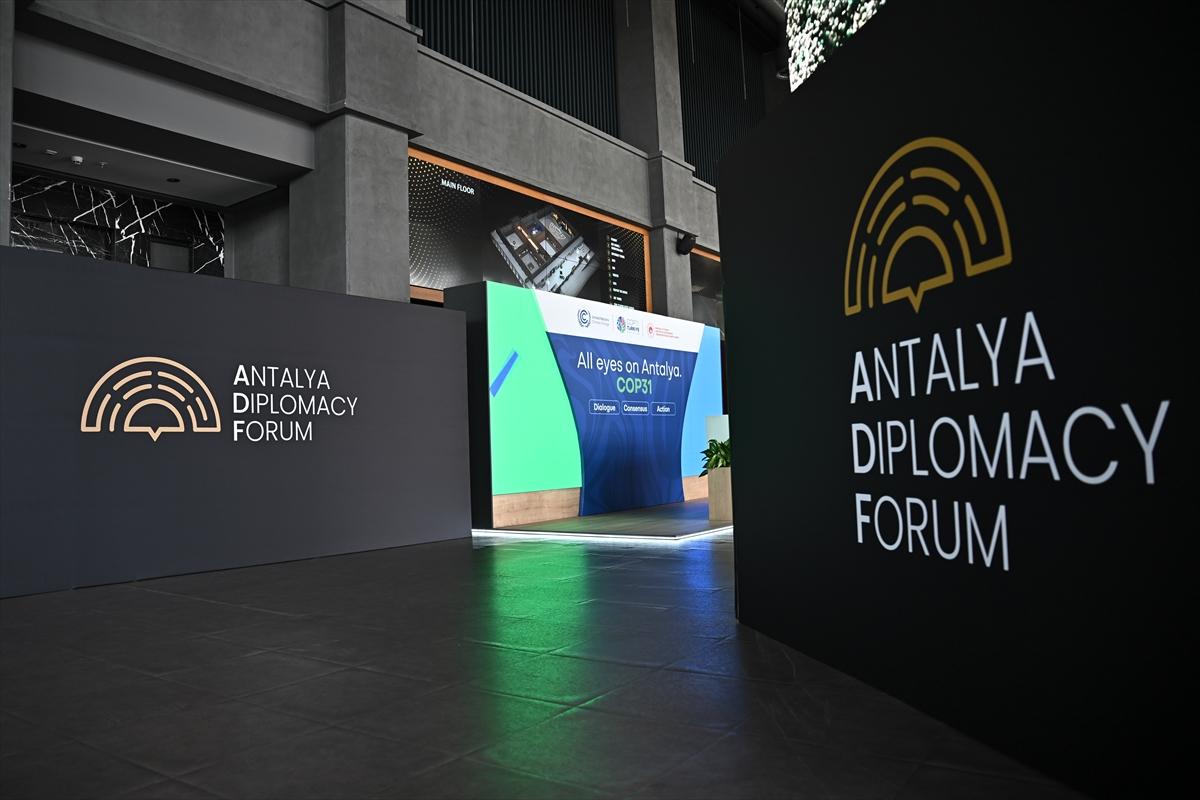
A tunnel featuring digital visuals specially designed for the forum has been created along the center’s corridor. Additionally, a dedicated Palestine pavilion and an Africa Culture House booth have been established, along with special areas promoting the COP31 (UN Framework Convention on Climate Change 31st Conference of the Parties) and Zero Waste initiatives.
The Antalya Diplomacy Forum 2026 will host over 460 high-level participants, including more than 20 heads of state and government from over 150 countries, approximately 15 deputy heads of state or government, more than 40 foreign ministers, and over 50 ministers, including 75 representatives from international organizations. Approximately 5,000 visitors, including academics and students, will also attend the forum.
Geographically, approximately half of the heads of state and government participants are from Africa and Europe. Around 40 percent of foreign ministers are from Africa, 35 percent from Europe, and 22 percent from Asia.
Participants include heads of state and government, government representatives, foreign ministers, and representatives of international organizations. Notable names include:
Day One (17 April 2026, Friday): The forum is scheduled to open at 10:00 with a panel titled “The Security-Development Nexus: Priorities for West Africa.” The official opening will take place at 14:30 with addresses by Türkiye’s Minister of Foreign Affairs Hakan Fidan, followed by President Recep Tayyip Erdoğan. The remainder of the day will feature sessions in the formats of Leaders Panels, ADF Panels, ADF Round, and ADF Talks.
Day Two (18 April 2026, Saturday): Sessions in the formats of ADF Panels, ADF Round, and ADF Talks are planned for both morning and afternoon. A reception and cultural event are scheduled to conclude the day.
Day Three (19 April 2026, Sunday): The forum is scheduled to conclude at 12:30 with a press conference hosted by Türkiye’s Minister of Foreign Affairs Hakan Fidan.
The forum is structured around four core session formats:
Several side events are planned, including one to be attended by Türkiye’s Minister of Foreign Affairs Hakan Fidan. These include the Third Meeting of Foreign Ministers of the Balkan Peace Platform, a session on Gaza, the informal meeting of Foreign Ministers of the Organization of Turkic States, and the Türkiye–Pakistan–Saudi Arabia–Egypt quadrilateral meeting.
The main theme of the Antalya Diplomacy Forum 2026 is “Navigating Uncertainty While Designing Tomorrow”. The theme emphasizes the importance of anticipating and effectively addressing global challenges amid rising unpredictability.
In official forum documents, the theme is articulated as follows: “The persistence of unresolved conflicts, deepening polarization, and the proliferation of strategic competition continue to affect millions of people worldwide. Strengthening international cooperation, dialogue, and solidarity is of critical importance to overcome these challenges and move toward a more inclusive, equitable, and effective international system.”
The forum will address a broad range of topics shaped by political, economic, environmental, and technological dynamics. Over 40 panels and events will cover the following key issues:
Anadolu Ajansı. "Antalya Diplomasi Forumu İçin Hazır." Accessed April 17, 2026. https://aa.com.tr/tr/gundem/antalya-diplomasi-forumu-icin-hazir/3907699
Anadolu Ajansı. "World Leaders to Gather in Türkiye for Antalya Diplomacy Forum." Accessed April 17, 2026. https://www.aa.com.tr/en/world/world-leaders-to-gather-in-turkiye-for-antalya-diplomacy-forum/3907450
Antalya Diplomasi Forumu. "ADF 2026 Fact Sheet." Accessed April 17, 2026. https://antalyadf.org/wp-content/uploads/2026/04/ADF2026_FACT_SHEET_TR_2026_02_11-1.pdf
Antalya Diplomasi Forumu. "ADF 2026." Accessed April 17, 2026. https://antalyadf.org/adf-2026/
Antalya Diplomasi Forumu. "Ana Sayfa." Accessed April 17, 2026. https://antalyadf.org/
Antalya Diplomasi Forumu. "Katılımcılar 2026." Accessed April 17, 2026. https://antalyadf.org/katilimcilar-2026/
T.C. İletişim Başkanlığı. "Antalya Diplomasi Forumu (17-19 Nisan 2026, Antalya)." Accessed April 17, 2026. https://www.iletisim.gov.tr/turkce/duyurular/detay/antalya-diplomasi-forumu-17-19-nisan-2026-antalya
Antalya Diplomacy Forum 2026 (ADF2026) is the fifth annual meeting of the international diplomacy and dialogue platform, organized from 17 to 19 April 2026 at the NEST Congress and Fair Center in the Belek district of Antalya, under the patronage of President Recep Tayyip Erdoğan and hosted by the Ministry of Foreign Affairs of Türkiye.
The Forum is a high-level gathering that brings together political leaders, diplomats, ministers, opinion leaders, academics, business representatives, civil society organizations, and media personnel. Designed to address international challenges and foster dialogue, the platform unites regional and global actors from diplomacy, politics, and the business community.
The 2026 Forum’s main theme is “Navigating Uncertainty While Designing Tomorrow”. The theme focuses on managing global unpredictability arising from geopolitical tensions, shifting power balances, rising trade barriers, and pressures on multilateralism. Within this framework, it emphasizes the necessity of preparing for international developments by identifying risks and opportunities, developing strategies, and translating existing knowledge into concrete actions.
The Antalya Diplomacy Forum was launched in 2022 by Mevlüt Çavuşoğlu during his tenure as Minister of Foreign Affairs of Türkiye. Since its inception, the Forum has embodied Türkiye’s role in international diplomacy as a mediator and creator of dialogue platforms.
At the previous Forum in 2025 (ADF2025), participation included 21 heads of state and government from 155 countries, 47 foreign ministers, and a total of 61 ministers and 15 members of parliament. Physical attendance exceeded 4,800, online viewers surpassed 100,000, and the total audience reached 3.5 million.
The Forum is organized by the Ministry of Foreign Affairs of Türkiye and held under the patronage of President Recep Tayyip Erdoğan. Foreign Minister Hakan Fidan serves as host.
The Forum takes place at the NEST Congress and Fair Center, located in Antalya’s Belek Tourism Region. The center is 32 kilometers from Antalya Airport and 45 kilometers from the city center. The two-story facility features 15,000 square meters of indoor space and 5,000 square meters of outdoor space.
A tunnel has been designed along the center’s corridor featuring special digital visuals for the Forum. Additionally, a Palestine hall and an Africa House cultural pavilion have been established, along with dedicated areas promoting the COP31 (31st Conference of the Parties to the UN Framework Convention on Climate Change) and Zero Waste initiatives.
The Antalya Diplomacy Forum 2026 will host over 460 high-level participants, including more than 20 heads of state and government from over 150 countries, approximately 15 deputy heads of state or government, more than 40 foreign ministers, and over 50 ministers, including 75 representatives of international organizations. Approximately 5,000 visitors, including academics and students, will also attend.
Geographically, approximately half of the heads of state and government participants come from Africa and Europe. About 40 percent of foreign ministers are from Africa, 35 percent from Europe, and 22 percent from Asia.
Participants include heads of state and government, government representatives, foreign ministers, and representatives of international organizations from various regions. Notable names include:
Day One (17 April 2026, Friday): The Forum is scheduled to open at 10:00 with a panel titled “The Security-Development Nexus: Priorities for West Africa.” The official opening ceremony is planned for 14:30, featuring addresses by Türkiye’s Minister of Foreign Affairs Hakan Fidan, followed by President Recep Tayyip Erdoğan. The remainder of the day will include sessions in the format of Leaders Panels, ADF Panels, ADF Rounds, and ADF Talks.
Day Two (18 April 2026, Saturday): Sessions in the formats of ADF Panels, ADF Rounds, and ADF Talks are planned throughout the morning and afternoon. A reception and cultural event are scheduled for the evening.
Day Three (19 April 2026, Sunday): The Forum is scheduled to conclude with a press conference at 12:30, hosted by Türkiye’s Minister of Foreign Affairs Hakan Fidan.
The Forum is structured around four core session formats:
Side events are planned, including one attended by Türkiye’s Minister of Foreign Affairs Hakan Fidan. These include the Third Meeting of Foreign Ministers of the Balkan Peace Platform, a session on Gaza, the informal meeting of Foreign Ministers of the Organization of Turkic States, and the Türkiye–Pakistan–Saudi Arabia–Egypt quadrilateral meeting.
The main theme of the Antalya Diplomacy Forum 2026 is “Navigating Uncertainty While Designing Tomorrow”. The theme emphasizes the importance of anticipating and effectively addressing global uncertainties.
In official Forum documents, the theme is articulated as follows: “The persistence of unresolved conflicts, deepening polarization, and the proliferation of strategic competition continue to affect countless critical issues worldwide. Strengthening international cooperation, dialogue, and solidarity is of paramount importance to overcome these challenges and move toward a more inclusive, equitable, and effective international system.”
The Forum is designed to address a broad spectrum of issues shaped by political, economic, environmental, and technological dynamics. Over 40 panels and events will focus on the following key topics:
President Recep Tayyip Erdoğan attended the opening of the Antalya Diplomacy Forum 2026 at the NEST Congress Center in the Belek Tourism Region. In his speech, he noted that Antalya is a city of history, culture, and diplomacy, and expressed his delight at welcoming guests to this uniquely beautiful Mediterranean city.

President Recep Tayyip Erdoğan, speaking at the official opening ceremony of the "Antalya Diplomacy Forum," 17 April 2026 - (Anadolu Agency)
Following the tragic incident in Kahramanmaraş on 15 April, Erdoğan expressed gratitude to everyone who reached out by phone or message to share their condolences, and wished that no individual, family, or society would ever endure similar suffering. Expressing his hope that the 5th Antalya Diplomacy Forum in 2026 would serve as a blessing for the region and the entire world, he stated: “I wish for the discussions, evaluations, and idea exchanges scheduled under the program, as well as the side events and bilateral meetings held during the Forum, to be productive. I congratulate the Ministry of Foreign Affairs, Minister Fidan and his team for successfully organizing the Antalya Diplomacy Forum again this year, and also extend my congratulations to our Member of Parliament from Antalya, Mevlüt Çavuşoğlu, who led the Forum during his tenure.”
Erdoğan emphasized that Türkiye does not confine the Antalya Diplomacy Forum within the narrow boundaries of diplomatic engagement: “We view this initiative as an intellectual platform for deep consultations on where the world is heading, what values can unite humanity, and what new areas of interaction may emerge. We are all acutely aware of one reality: today, diplomacy is no longer merely a field for negotiating problems, conflicts, and interests. Diplomacy also represents the arena where the common future of humanity is shaped by shared principles. Five years ago, we set out to create a global platform to gauge the pulse of diplomacy. Today, we see that the Antalya Diplomacy Forum has become the common podium of global reason, global conscience, and above all, shared hope for the future. I believe that the discussions over the next three days under the theme ‘Designing Tomorrow, Navigating Uncertainty’ will further highlight this unique and distinctive character of the Forum. I am confident that your insightful ideas will contribute to Türkiye’s mission as the key to peace, and I thank each of you in advance.”

President Recep Tayyip Erdoğan, speaking at the official opening ceremony of the "Antalya Diplomacy Forum," 17 April 2026 - (Anadolu Agency)
Erdoğan stressed that for humanity to understand the era it is passing through, it must accurately analyze the process and correctly interpret the dynamics. He noted: “To explain today’s disruptions in the international system solely through shifts in power balances will distance us from the essence of the issue. Yes, power distribution is changing. Yes, new actors are rising. Yes, competition is intensifying, deepening, and becoming more destructive. But all of this does not alter the fact that we are facing a far more severe rupture. Today, alongside a power crisis, the world is also experiencing a direction crisis. We are clearly at a serious and dangerous threshold. The system, which claims to be rules-based, remains silent when rules are violated, while mechanisms tasked with protecting human rights and global security remain ineffective, and often indifferent, in the face of the gravest attacks. The core problem is selective justice, instrumentalized principles, and our shared values reduced to the mercy of power relations. Thus, the crisis in the global system is fundamentally a moral and existential crisis. To grasp the scale of this crisis, one need only look at Gaza after 7 October.”
Erdoğan drew attention to the fact that in the past two and a half years, 73,000 Palestinians have lost their lives in Israeli attacks and over 172,000 have been injured. He continued: “The number of children torn from life as tender saplings has surpassed 21,000. Over 58,000 have been left orphaned and without parents. Even during the ceasefire, 754 Palestinians were martyred and over 2,100 injured. We must accept here that viewing what is happening in Gaza as merely a humanitarian tragedy is inadequate. The genocide in Gaza has clearly shown us what the current order permits, what it ignores, and whom it protects. We must all courageously ask ourselves these questions: If a system cannot protect innocent babies in cribs from bullets, cannot prevent the mass targeting of civilians, and cannot stop oppressors from committing atrocities, is this not structural decay and ontological collapse? Is this not the most glaring manifestation of a moral and legitimacy crisis? I ask: How can we be expected to trust a system that has failed the most basic test of humanity in Syria and Gaza yesterday, and in the West Bank and Lebanon today? Moreover, how can we accept that this system, which affects the future of our brothers, friends, and children, leaves our hands tied during crises?”

President Recep Tayyip Erdoğan, speaking at the official opening ceremony of the "Antalya Diplomacy Forum," 17 April 2026 - (Anadolu Agency)
“The world is bigger than five,” Erdoğan declared, reiterating a slogan he has championed for 13 years, and added: “Without closing the representation gap, neither the system crisis can be resolved nor the construction of a more just world possible.” He continued: “A global system that only upholds the law of the powerful will lead humanity into deeper and greater conflicts and injustices. The war that has engulfed our region for 40 days is the most recent example. We welcome the 15-day ceasefire announced by Pakistan’s Prime Minister, our esteemed brother Sharif. We believe the window opened by the ceasefire must be utilized most effectively to establish lasting peace. No matter how deep the disagreements, the sword must never replace the word, nor bloodshed replace negotiation. Let it be remembered that the shortest path to peace is constructive dialogue and diplomacy. And peace, as our Alliance partner, Minister Devlet Bahçeli, so aptly said, ‘is not a bird with one wing.’ It is essential that the parties act with a conciliatory, patient, and pragmatic understanding to achieve results. At this critical stage, we must remain prepared and vigilant against any attempt by Israel to sabotage the negotiation process.”
Erdoğan clarified his position on the Strait of Hormuz: “One side of Hormuz is Iran, the other is Oman. The Gulf countries’ right of access to open seas must not be restricted. The key is ensuring freedom of navigation based on established rules and keeping Hormuz open to commercial vessels. We see that war is accelerating efforts to find alternative routes for energy resources in neighboring regions to reach international markets. Türkiye, as a country, is open to cooperation with our neighbors in the fields of energy and connectivity through visionary projects such as the Development Corridor.”
Erdoğan expressed sorrow over the destruction and loss of life caused by the war in Ukraine, adding: “We still believe that the war will end through a negotiation process in which both parties are fairly and equally represented. I wish to state here with all sincerity that Türkiye is ready to support every facilitative step toward direct negotiations, including a Leaders Summit, if both parties are willing. Strengthening peace, stability, and normalization in our neighbor Syria is vital for the future of our region. We welcome the progress Syria has made over the past year and a half under the wise leadership of President Al-Sharaa, and I wish to reaffirm that Türkiye will remain by the side of the Syrian people from now on.”
Erdoğan affirmed that peace, stability, and prosperity remain priorities in Türkiye’s Balkan vision, shaped by deep historical ties, and expressed great hope in the Balkan Peace Platform he helped launch. He noted that Türkiye continues to strengthen the Organization of Turkic States as a guarantee of peace and tranquility in Eurasia, and announced that Türkiye will assume the chairmanship of the 13th Turkic World Summit in the last quarter of 2026 from Azerbaijan.

President Recep Tayyip Erdoğan, speaking at the official opening ceremony of the "Antalya Diplomacy Forum," 17 April 2026 - (Anadolu Agency)
Erdoğan stated: “As Türkiye, we pursue peaceful foreign policies in different regions and continents while simultaneously reinforcing our existing alliance ties.” He recalled that Türkiye, as one of the leading countries in NATO, the guarantor of collective security in the Euro-Atlantic region, will host the NATO Leaders Summit in Ankara on 7–8 July 2026, and expressed hope that the Summit will make important decisions to strengthen the alliance for the future, for which the groundwork has already been laid.
President Erdoğan emphasized that, as history, geography, and geopolitics have repeatedly reminded us, Türkiye is an inseparable part of Europe. He added: “The common challenges we face today reaffirm the strategic value of our partnership with Europe. While maintaining our goal of full membership in the European Union, we expect the Union to remain faithful to the vision of its founding leaders and overcome its direction crisis. Next November, we will again host here in Antalya the 31st Conference of the Parties to the United Nations Framework Convention on Climate Change. During our COP31 presidency, we will highlight policies that bring together the environmental agenda with youth priorities, such as the Zero Waste Movement.”
President Erdoğan concluded his speech: “Throughout history, peace, stability, and justice have been achieved not only through power but also through solidarity. As the great thinker Ibn Khaldun indicated, what sustains a society is not its power alone, but the sense of unity, shared destiny, and solidarity that gives meaning to that power. As bearers of conscience, the stronger we make the front of peace and humanity against the fronts of war and genocide, the more securely we can look toward our tomorrows. Therefore, today’s issue is not merely about building new institutions, systems, or orders. The real issue is establishing a new foundation of solidarity. I view your presence at the Antalya Diplomacy Forum as a valuable contribution to the establishment of this solidarity foundation.”
Minister of Foreign Affairs Hakan Fidan addressed participants at the official opening of the Antalya Diplomacy Forum (ADF) 2026. He noted that when the ADF was launched five years ago, the goal was to create an innovative forum that responded to the spirit of the times and offered a unique global contribution by addressing regional issues with a strategic perspective. “Today, thanks to our President, under your leadership, we are pleased to see that our Forum has transformed into a global brand where actors from different continents and political traditions come together,” he said. Fidan highlighted the Forum’s unique power of convergence as one of its distinguishing features, adding: “In this sense, the pulse of diplomacy today beats in Antalya.”

Minister of Foreign Affairs Hakan Fidan, speaking at the official opening ceremony of the "Antalya Diplomacy Forum," 17 April 2026 - (Anadolu Agency)
Fidan described the 2026 theme as “Navigating Uncertainty While Designing Tomorrow”, stating: “In this period of intensifying uncertainty, the central question is how we will shape the future—with what intellect, what will, and what kind of vision? It is precisely for this purpose that global and regional issues will be laid on the table in Antalya in their entirety, and solutions will, God willing, be crafted through collective wisdom.” He emphasized that the world faces simultaneous, multidimensional crises that feed off each other daily, and that “uncertainty and crises have ceased to be temporary malfunctions of the international system and have become the defining characteristics of our age.”
Fidan recalled President Erdoğan’s remarks last year on the same podium, in which he identified the greatest threat to the international system as lawlessness, uncertainty, and unchecked unilateralism, and stressed the urgent need for reason, justice, and effective diplomacy. “Unfortunately, the current crisis in our region painfully confirms the accuracy and relevance of your assessment,” he said.
Fidan noted that in 2025, the Forum’s agenda focused on the ongoing genocide in Gaza and its global repercussions, while in 2026, the war in Iran has been added as a source of global impact. “The severe damage and escalating tensions in the international system have placed our region face to face with one of its most serious challenges in recent history. During this period, humanity has once again painfully learned that war has no victors. Undoubtedly, there are historical lessons to be drawn from this war, especially by regional countries.”
Fidan emphasized that the first and most urgent duty in such times is “to extinguish the fire.” He added: “Our sincere hope is that the ceasefire achieved will be fully implemented on the ground and transformed into lasting peace.”
Fidan thanked all those involved, especially Pakistan’s Prime Minister Shehbaz Sharif, for facilitating the two-week ceasefire between the United States and Iran. He continued: “But this calm must not obscure the root cause of the problem. Israel’s expansionist aggression, which began with the genocide in Gaza three years ago and has since spread to Lebanon and Syria, has become a direct threat to global security. If we desire lasting peace in our region and beyond, the international community must urgently call a halt to this expansionism.”
Fidan stressed that the international community has shown rare unity in demanding an end to the war, and added: “We must make every effort to leverage this precious ground in favor of dialogue and diplomacy. Indeed, this is at the very heart of the Antalya Diplomacy Forum—to revitalize diplomacy.”
Fidan stated: “According to our understanding, diplomacy is the will to stop a fire before it spreads, the capacity to patiently mend broken ties, the courage to remove enmity from the realm of fate, and the art of preserving and expanding the minimal common ground for a shared future. In other words, diplomacy is designing tomorrow.” He identified two pillars of this vision: “The first pillar is institutional reform at the global level. The international governance system must urgently become more inclusive, transparent, and accountable. It is now increasingly clear that crises cannot be managed by institutions with weak representation and eroded legitimacy.”
Fidan recalled how President Erdoğan diagnosed years ago the blockages in international decision-making and the injustice in representation through his justice-centered vision, and said in tribute: “You repeatedly drew attention to the double standards that wound the global conscience. You repeatedly outlined the direction the international system must follow through your call for a fairer world. Today we see that many countries, when crises finally reach their own doors, are arriving precisely at the point you identified.”

Minister of Foreign Affairs Hakan Fidan, speaking at the official opening ceremony of the "Antalya Diplomacy Forum," 17 April 2026 - (Anadolu Agency)
After the heavy toll humanity has paid, Fidan reminded everyone: “An unjust international system cannot resolve crises—it only postpones, deepens, and makes them more destructive. The international community now faces an unavoidable moral reckoning. We must take common steps and adopt the necessary attitudes at the global level. Peace processes must not be left to the mercy of disruptive actors.”
Fidan emphasized that peace processes must be embraced by the international community with strong resolve and not be sabotaged, adding: “The fair redistribution of global economic prosperity is essential. Likewise, artificial intelligence must not become a new instrument of domination in the hands of a few, creating new inequalities. Humanity must benefit from this technological potential together, and no one, no region, must ever be left behind.”
Fidan stressed that we must also confront future challenges, noting that climate change and drought have become existential issues affecting every aspect of human life. “If humanity today fails to establish a shared foundation of responsibility, sharing, and benefit, then in ten years, conflicts will be far more uncontrollable and destructive than they are today,” he said. He added that the second pillar, as vital as global reform, is strategic steps to make lasting peace and prosperity possible in the region.
Fidan continued: “When we conduct a broad geopolitical reading centered on Antalya, we encounter layered, interconnected crisis dynamics. Our geography is unfortunately under pressure from simultaneous crises. The war in Ukraine, now entering its fifth year, has transformed into a structural challenge that deeply shakes European security architecture and global geopolitical balances. In our southeast, Israel’s reckless aggression has long surpassed the borders of Gaza. This escalation line extending to Syria, Lebanon, and finally Iran has dragged our region into a broad vortex of conflict. Further south, developments in the Horn of Africa have become another source of concern. The devastation caused by ongoing civil conflicts in Sudan, alongside inter-state disputes, has left this strategic geography, rich in development potential, exposed to security threats.”

Minister of Foreign Affairs Hakan Fidan, speaking at the official opening ceremony of the "Antalya Diplomacy Forum," 17 April 2026 - (Anadolu Agency)
Fidan pointed out that Türkiye is one of the few countries capable of speaking simultaneously and with trust with all parties on the ground in nearly all of this crisis map, and taking on a mediation role. He stressed that the issue here goes far beyond technical mediation—it is about feeling the weight and pain of these crises in our hearts. He affirmed that Türkiye deeply understands the burden, suffering, and consequences of every crisis, and has always placed its hands under the stones to safeguard the region’s safety, and will continue to do so.
Fidan noted that lasting peace and stability emerge from courageous steps taken at the deepest moments of crisis, and added that today, we are already designing solutions based on collective wisdom and taking steps to implement them. He concluded: “The 5th ADF constitutes one of the most meaningful platforms for this pursuit.”
Anadolu Ajansı. "Bakan Fidan: Kriz Haritasının Tamamında Sahadaki Tüm Taraflarla Konuşabilen Ender Ülkelerden Biri Türkiye’dir." Accessed April 17, 2026. https://www.aa.com.tr/tr/gundem/bakan-fidan-kriz-haritasinin-tamaminda-sahadaki-tum-taraflarla-konusabilen-ender-ulkelerden-biri-turkiyedir/3909616
Anadolu Ajansı. "Cumhurbaşkanı Erdoğan: Müzakerelerin Yerini Kanlı Mücadelenin Almasına İzin Verilmemelidir." Accessed April 17, 2026. https://www.aa.com.tr/tr/gundem/cumhurbaskani-erdogan-muzakerelerin-yerini-kanli-mucadelenin-almasina-izin-verilmemelidir/3909181
Anadolu Ajansı. “Antalya Diplomasi Forumu İçin Hazır.” Accessed April 17, 2026. https://aa.com.tr/tr/gundem/antalya-diplomasi-forumu-icin-hazir/3907699
Anadolu Ajansı. “World Leaders to Gather in Türkiye for Antalya Diplomacy Forum.” Accessed April 17, 2026. https://www.aa.com.tr/en/world/world-leaders-to-gather-in-turkiye-for-antalya-diplomacy-forum/3907450.
Antalya Diplomasi Forumu. "Ana Sayfa." Antalya Diplomasi Forumu. Accessed April 17, 2026. https://antalyadf.org/
Antalya Diplomasi Forumu. “ADF 2026 Fact Sheet.” Accessed April 17, 2026. https://antalyadf.org/wp-content/uploads/2026/04/ADF2026_FACT_SHEET_TR_2026_02_11-1.pdf
Antalya Diplomasi Forumu. “ADF 2026.” Antalya Diplomasi Forumu. Accessed April 17, 2026. https://antalyadf.org/adf-2026/
Antalya Diplomasi Forumu. “Katılımcılar 2026.” Accessed April 17, 2026. https://antalyadf.org/katilimcilar-2026/
T.C. Presidency of Communication. "Antalya Diplomacy Forum (April 17–19, 2026, Antalya)." Presidency of Communication. Accessed April 17, 2026. https://www.iletisim.gov.tr/turkce/duyurular/detay/antalya-diplomasi-forumu-17-19-nisan-2026-antalya
On the second day of the Antalya Diplomacy Forum 2026, a panel titled "Investing in Africa's Future: Strategy, Scale, and Competitiveness" was held at the NEST Conference Center in the Belek Tourism Region. The panel addressed Africa's economic potential, investment needs, and strategies to enhance its competitiveness.
Moderated by TRT World presenter Brenda Achieng Czeda, the panel featured Uganda’s Minister of Foreign Affairs Odongo Jeje Abubakhar, Rwanda’s Minister of Foreign Affairs and International Cooperation Olivier J.P. Nduhungirehe, Zambia’s Minister of Foreign Affairs and International Cooperation Mulambo Haimbe, State Minister for Foreign Affairs, Cooperation and Communities of São Tomé and Príncipe Eliza Maria Amado Vaz, Sudan’s Minister of Foreign Affairs Muhyiddin Salim, Special Representative of the United Nations Secretary-General for Libya and Head of the United Nations Support Mission in Libya (UNSMIL) Hanna Serwaa Tetteh, and General Secretary of the African Continental Free Trade Area (AfCFTA) Secretariat Wamkele Mene.
UNSMIL Head Hanna Serwaa Tetteh highlighted that Africa presents a major opportunity that has yet to be fully recognized, stating, "The establishment of a free trade area and increased investments will transform Africa into a magnet for global capital."
Tetteh emphasized the need for strategic steps to advance the continent’s development, noting that showcasing successful examples would demonstrate the scalability of projects for both public and private sectors. "One of the greatest challenges in enhancing Africa’s competitiveness is long- and medium-term investment," she said, underscoring the importance of creating affordable financing sources.
Sudan’s Minister of Foreign Affairs Muhyiddin Salim stated that the Antalya Diplomacy Forum is an important platform for addressing issues related to Africa. He noted that while Africa is often associated with war and poverty, it possesses immense potential.
Salim emphasized that approximately 60 percent of Africa’s population is young and highlighted Sudan’s significant resources in agriculture, livestock, mining, oil, and gas. He pointed out that one of the main causes of Sudan’s ongoing conflict is the struggle for control over natural resources.
Salim stated, "If African countries move toward economic integration and cooperation, they can create a strong foundation for investment for both regional and international partners."
Salim stressed that effective management of natural resources and the development of a shared understanding are essential for Africa’s development. He highlighted the importance of improving the investment climate and establishing genuine partnerships.
Salim noted that external actors may pursue different agendas in Africa and emphasized the need for African countries to strengthen cooperation among themselves. He also highlighted Sudan’s strategic location and its coastline along the Red Sea, which makes it a vital alternative for regional trade.
Salim stated that Sudan, with its coastline exceeding 800 kilometers, could serve as a crucial gateway for Africa and expressed that once the conflict ends, it will offer vast opportunities for investors.
Rwanda’s Minister of Foreign Affairs and International Cooperation Olivier J.P. Nduhungirehe stated that Africa is a continent rich in natural and human resources but has suffered from a lack of sound decision-making.
Nduhungirehe affirmed that Africa’s human and natural resources, if properly supported by targeted investments, can lead to genuine economic prosperity. He underscored the African Continental Free Trade Area (AfCFTA) as a pivotal milestone in this process.
On the second day of the Antalya Diplomacy Forum 2026, a panel titled "New Opportunities in Connectivity" was held at the NEST Conference Center in the Belek Tourism Region. The panel addressed the development of global trade routes, transportation networks, and infrastructure projects.
Moderated by TRT World correspondent Jaffar Hasnain, the panel included Deputy Minister of Foreign Affairs Ambassador Berris Ekinci, Minister of Foreign Affairs and Foreign Trade of North Macedonia Timço Mucunski, Special Representative of the President of Azerbaijan Elçin Emirbeyov, and Assistant Director for Western Europe at the European External Action Service Emanuele Giaufret.
Deputy Minister of Foreign Affairs Berris Ekinci noted that connectivity has become more critical than ever today. He pointed out that during the COVID-19 pandemic, supply chains suffered major disruptions, and the Russia-Ukraine war deepened these vulnerabilities. He added that the Gulf conflict further heightened awareness of these fragilities.
Ekinci stated that connectivity now occupies the top of the international agenda and cannot be viewed solely through the lens of physical infrastructure. He said, "We must assess connectivity as a multidimensional ecosystem encompassing energy, digitalization, governance, and financing, not just transportation projects."
Ekinci highlighted Turkey’s long-standing prioritization of infrastructure investment and noted that the country’s strategic location has been a major advantage in this process. He pointed out that projects such as the Baku-Tbilisi-Kars railway, the Marmaray Tunnel, the Yavuz Sultan Selim Bridge, and the 1915 Çanakkale Bridge have significantly strengthened land and rail connections.
Minister of Foreign Affairs and Foreign Trade of North Macedonia Timço Mucunski stated that a multidimensional perspective must be adopted in connectivity. He emphasized that focusing solely on roads, railways, energy lines, or electricity infrastructure is insufficient. He said, "It is not enough to focus only on roads, railways, energy lines, or electricity. We must adopt a holistic and integrated approach that encompasses all these areas."
Mucunski recalled how developments in the Middle East have disrupted global shipping systems and stressed that enhancing resilience under current conditions has become unavoidable. He added, "We now recognize the need to build systems more resistant to shocks. This means constructing structures capable of more effectively absorbing the impacts of potential crises."
Special Representative of the President of Azerbaijan Elçin Emirbeyov emphasized the critical importance of implementing the Zangezur Corridor. He noted that the project will not only ensure seamless connectivity between mainland Azerbaijan and the Nakhchivan Autonomous Republic or between Armenia and Azerbaijan but will also create a new trade and transport route between Asia and Europe. He said, "When implemented, this project will not only ensure seamless connectivity between mainland Azerbaijan and the Nakhchivan Autonomous Republic or between Armenia and Azerbaijan but will also establish an alternative and new route for connectivity and trade between Asia and Europe."
Emirbeyov stated that the project offers a win-win outcome not only for regional countries but also for global actors such as the United States and the European Union. He noted that Azerbaijan’s connectivity vision aims to strengthen economic and logistical integration with neighboring countries and beyond. He emphasized that coordination is a decisive factor in project success and highlighted the growing importance of the Organization of Turkic States in this process.
Assistant Director for Western Europe at the European External Action Service Emanuele Giaufret stated that the Middle Corridor is one of the key areas requiring development. He said, "We attach great importance to this project and will continue our efforts to advance it with determination."
Giaufret noted that creating the right conditions is essential for effective implementation of connectivity, emphasizing the need for strong governance, accurate risk analysis, and transparent identification of challenges. He stated that numerous technical issues must be resolved for the process to succeed and underscored the critical role of financing. He said, "To achieve our defined goals, we need strong support from the private sector."
On the second day of the Antalya Diplomacy Forum 2026, Russian Foreign Minister Sergey Lavrov participated as a speaker in the "ADFTalks" panel moderated by Alican Ayanlar of TRT World.
In response to a question regarding the negotiation process on the Ukraine crisis, Lavrov expressed a positive view on the possibility of restarting negotiations in Istanbul. He said, "We welcome the possibility of restarting negotiations in Istanbul."
Lavrov added, "The issue of restarting negotiations is not currently the most important. We have not forced anyone to negotiate. We have always acted as follows: if our partner is ready to negotiate, we are ready too. Moreover, this applies to our Ukrainian counterparts, despite their past regrettable actions."
Lavrov referred to previous negotiations held in Istanbul with Ukraine, noting that in April 2022, Russia largely accepted the proposals presented by Ukrainian negotiators. He claimed that after these talks, Ukraine was discouraged from continuing negotiations and was told to "keep fighting." He said, "We accepted the Ukrainian negotiators’ proposals in principle. Then they were forbidden from proceeding and told to 'keep fighting.'"
Lavrov stated that negotiations continued in Istanbul in subsequent periods, during which Russia proposed raising the level of the Ukrainian delegation and establishing three separate negotiation groups on humanitarian, military, and political issues. However, he noted that Ukraine rejected this proposal.
Lavrov addressed Russia-US relations, noting significant disagreements with the current American administration. He pointed out that sanctions imposed during the presidency of former US President Joe Biden have not been lifted, Russian diplomatic properties have not been returned, and new sanctions have been imposed on Russian companies.
Lavrov drew attention to sanctions imposed by the administration of former US President Donald Trump on Russian energy companies such as Rosneft and Lukoil, stating that the United States clearly aims to dominate global energy markets. He said, "The Americans do not even conceal their goal of dominating global energy markets. Their initiatives in Venezuela and the Persian Gulf are part of this. There are talks about American companies seeking to acquire the European section of the Turkish Stream natural gas pipeline and the pipeline crossing Ukrainian territory. The goal is to establish dominance in energy."
Lavrov stated that the future of economic relations with the United States must be addressed, noting that the Trump administration showed a willingness to maintain dialogue with Russia compared to the Biden administration. He also claimed that the United States aims to gain control over energy routes passing through the Persian Gulf and the Strait of Hormuz through attacks on Iran.
Lavrov stressed the need for greater international attention to developments in the Persian Gulf and the Palestinian issue. He noted that a difficult process continues in Syria and referred to statements by Israeli Prime Minister Benjamin Netanyahu regarding the region.
Lavrov mentioned that some NATO countries have proposed forming a new alliance encompassing the European Union, Türkiye, the United Kingdom, and Ukraine. He said, "For the third time in modern human history, a global threat will originate from Europe. Everything is being done to turn Ukraine into the trigger of a global threat."
Lavrov stated that Russia’s stance in the international system and its red lines cannot be fully understood from outside. He said, "Some may label us as 'paper tigers.' But I advise against such comparisons. We have patience, but at some point patience runs out. It is not a good thing for no one to understand where our red lines lie."
On the second day of the Antalya Diplomacy Forum 2026, a panel titled "Ensuring Peace in the Balkans: Dialogue, Business, and Connectivity" was held at the NEST Conference Center in the Belek Tourism Region. The panel addressed the establishment of peace in the Balkans, regional cooperation, economic integration, and connectivity.
Moderated by Secretary General of the Regional Cooperation Council (RCC) Amer Kapetanovic, the panel included Deputy Minister of Foreign Affairs and Ambassador to the European Union Mehmet Kemal Bozay, Deputy Prime Minister and Minister of Foreign Affairs of Montenegro Ervin Ibrahimovic, Minister of Foreign Affairs of Serbia Marko Duric, Minister of Foreign Affairs and Foreign Trade of North Macedonia Timço Mucunski, Minister of European and Foreign Affairs of Albania Ferit Hoxha, Minister of Foreign Affairs of Bosnia and Herzegovina Elmedin Konakovic, First Deputy Prime Minister and Minister of Foreign Affairs and Diaspora of Kosovo Glauk Konjufca, and State Secretary for Foreign Affairs and European Affairs of Croatia Frano Matusic.
Deputy Minister of Foreign Affairs Mehmet Kemal Bozay highlighted the importance of the Antalya Diplomacy Forum, noting broad participation from various regions of the world and the wide range of topics discussed. He emphasized the significance of the Balkan Peace Platform, stating that the region must more effectively utilize its capacity through projects and joint initiatives.
Deputy Prime Minister and Minister of Foreign Affairs of Montenegro Ervin Ibrahimovic stated that trust, prosperity, and implementation are decisive for peace in the Balkans. He said, "Montenegro attaches importance to three principles: good relations with neighbors, support for regional structures, and the EU accession process. In this context, we hope Montenegro will become an EU member by 2028."
Serbia’s Minister of Foreign Affairs Marko Duric emphasized the importance of implementing concrete projects and highlighted that efforts to prevent brain drain are critical for regional development. He stated that the concept of "Balkanization" must be replaced by cooperation and that the region adopts a collaborative approach to solving problems. He noted that historical processes in the region have often been addressed emotionally and said, "Above all, we must educate our children correctly. I have three daughters, and I teach them to respect every people in the region equally. We all experienced difficult times in the past, but I believe we must look toward the future."
Minister of Foreign Affairs and Foreign Trade of North Macedonia Timço Mucunski highlighted Türkiye’s role in diplomacy and noted that his country is planning a new regional initiative in energy production. He stated that regional countries share common views on energy and digitalization but have different approaches on history and security. He said, "We have different perspectives on history and security in the region. We do not and will not have a shared memory of our common history. But we can and must work together on common projects."
Minister of European and Foreign Affairs of Albania Ferit Hoxha stated that relations in the region must go beyond mere neighborly ties and emphasized the importance of establishing deeper partnership relations. He said, "We do not all have to agree on everything, but we must listen to each other. We must focus on vision rather than tactics. The absence of dialogue leads to insecurity, which we do not want in the region."
Minister of Foreign Affairs of Bosnia and Herzegovina Elmedin Konakovic addressed the impact of past problems on regional relations and stated that the region needs new and courageous leadership. He said, "As you may have noticed recently, talk of war is returning to the Balkans. Therefore, we need leaders who can overcome past problems and build trust."
Konakovic pointed to difficulties in relations with Serbia and stressed that merely discussing problems is insufficient; regional countries must enhance cooperation. He said, "We cannot just sit and talk about problems now. Our people are leaving the countries. Therefore, I believe we must engage in joint cooperation. We do not have to trust each other, but we must show respect." He also emphasized that achieving regional peace requires moving beyond being trapped in the past.
First Deputy Prime Minister and Minister of Foreign Affairs and Diaspora of Kosovo Glauk Konjufca noted that relations in the region operate at different levels, highlighting good relations with Albania, North Macedonia, and Montenegro, medium-level relations with Bosnia and Herzegovina, and problematic relations with Serbia. He stated that as a country that experienced war, Kosovo supports regional peace and stability and noted that the Antalya Diplomacy Forum provides a platform for discussing diverse issues.
State Secretary for Foreign Affairs and European Affairs of Croatia Frano Matusic emphasized that connectivity is a crucial element for the region and stated that dialogue is the fundamental factor in achieving stability in the Balkans.
On the second day of the Antalya Diplomacy Forum 2026, a panel titled "A Middle East Beyond Zero-Sum Politics" was held at the NEST Conference Center in the Belek Tourism Region. The panel addressed conflicts in the Middle East, emphasized the need for diplomatic solutions, and called for cooperation among countries to achieve lasting stability in the region.
Moderated by TRT World presenter Adnan Nawaz, the panel included Jordan’s Minister of Foreign Affairs Eymen es-Safedi, Secretary General of the Gulf Cooperation Council (GCC) Qassim Muhammad Al-Budeywi, and Secretary General of the Arab League Ahmed Abu Gheit.
Jordan’s Minister of Foreign Affairs Eymen es-Safedi expressed satisfaction with the temporary ceasefire between Iran and the United States and affirmed support for diplomatic efforts to make the process permanent. He noted that talks between Iran and the United States are ongoing and highlighted that nuclear weapons and global security have become central topics in negotiations.
Safedi emphasized the importance of communication and dialogue in resolving issues, stating, "For peace and stability in the region, countries must refrain from interfering in each other’s internal affairs and respect each other’s sovereignty." He underscored the necessity of building relations based on mutual respect and stated that no country desires war and that efforts must be made to reduce tensions.
Safedi also addressed the situation in Lebanon, saying, "Lebanon continues to suffer due to Israeli aggression. Lebanon wants to live in peace. The current government is doing everything in its power to maintain its sovereignty and ensure stability." He stressed that the situation in Gaza must not be ignored and highlighted the importance of protecting the rights and freedoms of Palestinians.
Regarding Syria, Safedi said, "The entire world now supports Syria. Syria has begun rebuilding its sovereignty. No one in Syria wants conflict anymore, yet Israel continues its attacks."
Secretary General of the Gulf Cooperation Council Qassim Muhammad Al-Budeywi stated that Gulf countries are actively working to ensure stability in the region. He noted that efforts to normalize relations with Iran have been ongoing for a long time and said that developments in Iran will affect not only the region but the global system as well.
Budeywi stated that the Gulf countries’ priority is lasting peace and stability, saying, "We need Iran’s partnership for the region’s future. We want to sustain peace and stability in the region; this is our approach." He urged the parties in talks between the United States and Iran to adopt a solution-oriented approach, adding, "Israel has long refused to be held accountable for its actions. Without accountability, there can be no peace. Israel must assume responsibility."
Secretary General of the Arab League Ahmed Abu Gheit stated that the region has long been under external pressure and that internal conflicts among Arab countries have deepened this situation. He addressed Israel’s policies in the region and emphasized the need to maintain the Palestinian issue on the international agenda.
Abu Gheit stated that Arab countries aim to create a region free of mass destruction weapons, saying, "One for all and all for one. I am trying to convey this idea to you."
He accused Israel of using regional normalization processes to sideline the Palestinian issue, saying, "They said, 'We will normalize relations with the Arab world. We will deal with Iran. Finally, the Palestinian issue will be forgotten.' The goal here is to push the Palestinians aside. No Arab, no Muslim, no just or moral person can accept this."
On the second day of the Antalya Diplomacy Forum 2026, a session titled "New Emerging Partnerships in International Peace Mediation" was held at the NEST Conference Center in the Belek Tourism Region. The session addressed the role, evolving nature, and function of mediation in the international system, emphasizing the importance of building trust between parties.
Moderated by Janne Taalas, Chief Executive of the Martti Ahtisaari Peace Foundation, the session included Deputy Minister of Foreign Affairs and Ambassador to the European Union Mehmet Kemal Bozay, Senior Advisor on African and Arab Affairs at the US Department of State Massad Boulos, UN Under-Secretary-General for Political and Peacebuilding Affairs Rosemary DiCarlo, State Minister for Foreign Affairs of Qatar Mohammed bin Abdulaziz Al-Huleifi, Chief Advisor to the President of Brazil Celso Luiz Nunes Amorim, Vice President of the International Committee of the Red Cross Jürg Lauber, and Special Representative of the OSCE for Conflict Prevention, Dialogue, and Confidence Building Serge Rumin.
State Minister for Foreign Affairs of Qatar Mohammed bin Abdulaziz Al-Huleifi stated that mediation is one of the most important tools following negotiations in resolving international conflicts. He noted that ceasefires usually constitute the first step but do not guarantee a lasting solution, emphasizing mediation’s critical role at this stage. He underscored that providing trust to the parties is one of the most fundamental elements of the process.
UN Under-Secretary-General for Political and Peacebuilding Affairs Rosemary DiCarlo thanked Türkiye and Finland for their co-chairmanship roles in the UN Mediation Friends Group and highlighted the challenging conditions of the current era. She noted that the UN possesses numerous tools in mediation and emphasized the necessity of cooperation with various institutions and organizations. She pointed out that the involvement of numerous actors can increase complexity and stressed the importance of trust and cooperation. She also emphasized the need to include more women in peace processes.
Senior Advisor on African and Arab Affairs at the US Department of State Massad Boulos stated that the approval of Libya’s first unified budget in 13 years, following an agreement between the House of Representatives and the High State Council, is a significant development. He noted that the absence of armed conflict in Libya presents a unique opportunity and reported that preparations for elections are underway in cooperation with the United Nations.
Boulos highlighted Libya’s strategic location as part of both the African continent and the Mediterranean basin. He stated that progress is being made in small steps and that efforts are underway to develop a shared vision among the parties. He noted that a significant beginning has been made with contributions from Qatar, Türkiye, and other actors.
Chief Advisor to the President of Brazil Celso Luiz Nunes Amorim addressed the role of the United Nations in mediation processes and noted that intensive efforts were undertaken during the tenure of former UN Secretary-General Kofi Annan. He stated that Brazil’s 150-year history without war has enhanced its international credibility. Amorim also referred to past joint mediation initiatives with Türkiye.
Deputy Minister of Foreign Affairs Mehmet Kemal Bozay stated that mediation today has moved beyond traditional actors and methods. He noted that mediation becomes active when conflicts reach an impasse and emphasized the indispensable role of the United Nations in this area. He said Türkiye’s initiatives complement international mechanisms.
Bozay noted that bringing parties together is a difficult process and stressed the need to assess elements beyond their visible positions. He stated that Türkiye understands the sensitivities of countries across different geographies and can build empathy thanks to its historical experience.
Highlighting Türkiye’s geopolitical position, Bozay said, "Türkiye is a Balkan country, a Black Sea country, a Mediterranean country, a Middle Eastern country. We are at the very center of all of Eurasia, in a place where all conflicts are constantly concentrated." He stated that Türkiye leverages this position in its mediation activities and develops understanding toward the parties involved.
Vice President of the International Committee of the Red Cross Jürg Lauber stated that humanitarian aid plays a vital role in peace processes. He noted that humanitarian actors can build trust based on neutrality in divided conflict environments and emphasized that humanitarian access must not be used as a bargaining chip.
Special Representative of the OSCE for Conflict Prevention, Dialogue, and Confidence Building Serge Rumin stated that conflicts must be resolved through dialogue and highlighted the importance of building trust and implementation in mediation processes. He noted that trust must also be established among high-level political actors during negotiations.
On the second day of the Antalya Diplomacy Forum 2026, a panel titled "Strategic Communication in Managing Uncertainties" was held at the NEST Conference Center in the Belek Tourism Region. The panel addressed the role of strategic communication during crises, media narratives, public diplomacy, environmental diplomacy, and the transformation of the global information ecosystem.
Moderated by Senior Correspondent Resul Serdar Ateş of Al Jazeera English, the panel included Serdar Karagöz, Chairman of the Board and General Manager of Anadolu Agency, Ferhat Pirinççi, Deputy Head of the Presidency of Communications, Director of the United Nations Environment Programme New York Office Jamil Ahmad, Visiting Distinguished Professor of Science Diplomacy and Mediation at TÜBİTAK Nancy Snow, and Co-Founder and Co-Editor of Middle East Eye David Hearst.
Serdar Karagöz, Chairman of the Board and General Manager of Anadolu Agency, stated that Anadolu Agency and Al Jazeera have practiced principled journalism during the events in Gaza, a practice that has come at a heavy cost. Karagöz emphasized that the situation in Gaza cannot be described as a mere conflict, saying, "This is more than a conflict; it is an outright genocide."
Karagöz noted that journalists in Gaza have been targeted, stating, "During the Gaza genocide, Anadolu Agency lost two colleagues, and Al Jazeera lost 14. Unfortunately, they were killed by the Netanyahu government. This is an extremely heavy price paid for good journalism." He stated that since October 2023, more than 70,000 people have been killed and approximately 200,000 injured, emphasizing that these numbers represent real people and families. He noted that two-thirds of those killed in Gaza are women and children.
Karagöz highlighted the scale of destruction in Gaza, stating that 88 percent of the area has been damaged, 92 percent of homes have been destroyed, and almost no inhabited area remains standing. He noted that cemeteries have been destroyed and that efforts are underway to erase historical memory.
Karagöz argued that global media coverage of Gaza exhibits a serious imbalance. He said, "This is a clear imbalance. In journalism, imbalance is imbalance." He stated that thousands of reports from outlets such as Le Monde, BBC, Der Spiegel, and The New York Times were examined, revealing that the Israeli narrative dominated overwhelmingly. He noted that between 2023 and 2025, the term "Israelis" appeared approximately 1,900 times in New York Times headlines, while "Palestinians" appeared only about 10 times, calling this an editorial choice.
Karagöz also addressed the strategic use of language, arguing that media language after Israeli attacks often renders the perpetrator invisible. He cited changes in New York Times headlines regarding a hospital attack, noting that the initial headline clearly identified the perpetrator, but subsequent versions removed the actor. He viewed this as an attempt to conceal responsibility, saying, "The headline changed from 'At least 500 dead in Gaza hospital blast' to obscure the perpetrator. This process ultimately means that global media, especially Western media, has completely failed in Gaza. This is an open failure of Western media. Therefore, no one from Western media can teach us about objectivity and neutrality."
Karagöz stated that Anadolu Agency has published three separate books on Gaza. The first, titled "Evidence," contains documentation of war crimes under the Rome Statute. The second, titled "Witness," compiles testimonies from aid workers and journalists. The third, titled "Accused," aims to document those responsible.
Karagöz noted that the "Evidence" book was placed in a time capsule using special chemicals and epoxy. He explained, "We placed this 'Evidence' book in a time capsule using special chemicals and epoxy. Why? Because we wanted to preserve these proofs forever. At least we can preserve this book for 500 years." He stated that the time capsule is planned to be buried in different parts of the world, viewing this as a responsibility to humanity. He added, "If there is a genocide and you are obligated to document it, you cannot remain merely a journalist. Because this is a responsibility to humanity. You must document it and preserve your records forever."
Deputy Head of the Presidency of Communications Ferhat Pirinççi stated that strategic narratives do not have to contradict reality and ethics; rather, they must be pursued together. He said, "As the Presidency of Communications, we strive to defend the truth while simultaneously building a strong, consistent, and proactive strategic communication or narrative. Especially during highly polarized crisis periods, the public becomes more vulnerable and sensitive. Therefore, we strive to make communication more inclusive, balanced, and sensitive for all segments of society."
Pirinççi stated that the most important factor during crises is balancing speed and coordination. He said, "In responding to a crisis, we must be fast but also accurate and precise." He emphasized that coordination becomes essential when multiple institutions are involved simultaneously. He stated that responses must be well-structured, well-coordinated, and pre-planned.
Pirinççi noted that before the US-Israel attack on Iran and during the early phase of the conflict, public anxiety arose in Türkiye regarding a potential refugee influx. He stated that during this period, President Recep Tayyip Erdoğan established a coordination mechanism with relevant ministries and governorates. He noted that over 300 international and Turkish journalists were present at the Van Başkale border crossing and that daily transit data was shared, helping to reduce public concerns.
Pirinççi emphasized that the primary duty of state institutions is not to guide public opinion but to inform it. He stated that information gaps create fertile ground for disinformation and noted that the Presidency of Communications uses standard operating procedures, early warning systems, and AI-supported social media monitoring mechanisms. He said that the impacts of local events are analyzed across cities and the country, leading to a preventive rather than reactive approach.
Pirinççi also announced that the Presidency of Communications will organize a joint event with the Munich Security Conference and SETA. He explained that due to NATO’s decision not to hold a public diplomacy forum this year, an alternative public diplomacy forum will be planned to coincide with the summit. He noted that the Presidency of Communications has prepared various events not only in Türkiye but also in different NATO countries.
Director of the United Nations Environment Programme New York Office Jamil Ahmad emphasized the urgency of combating environmental and climate crises and highlighted the critical importance of effective communication in this area. He stated that the UN conducts its communication efforts within a multi-layered strategic ecosystem that encompasses a broad process from scientific evidence production to policy development and public awareness.
Visiting Distinguished Professor of Science Diplomacy and Mediation at TÜBİTAK Nancy Snow stated that the boundaries between "information," "propaganda," and "reality" have become increasingly complex today. She noted the transformation of the media landscape and emphasized the influence of social media and short-form content on global perceptions. She stated that some young actors have been able to influence traditional political communication patterns through digital platforms. She noted that states have made significant investments in public diplomacy, yet leaders’ direct communications have become dominant in the global information flow, making the production of counter-narratives both easier and transformed.
Co-Founder and Co-Editor of Middle East Eye David Hearst stated that strategic messages have become a "poisonous element" infiltrating public information flows, particularly weakening trust in mainstream media. He said this erosion of trust has played a significant role in diminishing Israel’s influence on the American public.
Hearst stated that Israel’s long-standing narrative of a "moral cause" and a "security state" has weakened in the era of social media and real-time imagery. He noted that this has changed public perception and added that the loss of trust in mainstream media stems not only from political reasons but also from editorial and institutional problems.
On the second day of the Antalya Diplomacy Forum 2026, Foreign Minister Hakan Fidan hosted an informal meeting of the Council of Foreign Ministers of the Organization of Turkic States (OTS) on the sidelines of the forum.
Fidan also hosted the 3rd Balkan Peace Platform meeting within the framework of the forum. The Ministry of Foreign Affairs stated that the meeting was organized within the context of the Antalya Diplomacy Forum.
A meeting on the topic of "Gaza" was also held, and the Ministry of Foreign Affairs stated that it was hosted by Foreign Minister Fidan.
On the sidelines of the Antalya Diplomacy Forum 2026, Foreign Minister Hakan Fidan held bilateral meetings with senior representatives of various countries. According to the Ministry of Foreign Affairs, Fidan met with Russian Foreign Minister Sergey Lavrov.
Fidan also held talks with Turkmenistan’s Minister of Foreign Affairs Rashid Meredov and engaged in contacts with Qatar’s Prime Minister and Minister of Foreign Affairs Mohammed bin Abdulrahman Al Thani.
The Ministry of Foreign Affairs also reported that Fidan met with Switzerland’s Minister of Foreign Affairs Ignazio Cassis during the forum.
On the second day of the Antalya Diplomacy Forum 2026, Foreign Minister Hakan Fidan spoke on a program moderated by TRT World presenter Maria Ramos. Fidan noted that the Antalya Diplomacy Forum is expanding its reach annually, growing in terms of participant numbers and topics discussed, and increasing its impact on global politics.
Fidan stated that the forum particularly aims to focus on regional issues, noting that similar diplomatic platforms worldwide predominantly highlight global and Western-centric topics, while issues related to the Middle East, North Africa, the Balkans, and the Mediterranean region are not addressed with sufficient depth. He emphasized that the Antalya Diplomacy Forum offers a unique opportunity for regional countries to discuss regional problems and develop solutions to them.
Fidan stated that multilateralism and the existing international order are beginning to unravel, and diplomacy is needed more than ever. He said, "We see that multilateralism and the international order are beginning to collapse, and we need far more dialogue and clear rules."
Fidan noted that interstate relations often proceed independently, but during deepening crises, greater cooperation and communication are required. He stated that nation-states have become more prominent in the international system, increasing the importance of state-to-state diplomacy. He said norms established after the Cold War and the post-World War II order have been gradually updated, but since 2010-2011, the system has entered a "free fall."
Fidan warned that expecting the current international structure to function on its own could lead to new wars and destruction. He stated that humanity has always moved in cycles of learning lessons after similar crises and emphasized that breaking this cycle requires more dialogue, asking fundamental questions, and acting rationally.
Fidan emphasized that regional ownership is a crucial concept in Türkiye’s foreign policy. He stated that Türkiye engages intensively with regional partners not only in the Middle East but also in the Caucasus, the Balkans, the Black Sea, and the Mediterranean basin. He noted that in the past, Türkiye’s eastern neighbors expected a hegemonic power to arrive and solve their problems, but such external interventions have generated more problems than solutions. Therefore, he stated that regional countries must take ownership of their own problems and generate solutions themselves.
Fidan addressed the historical development of nation-states in the region, noting that state structures in the Balkans, the Mediterranean, North Africa, and the Middle East in the 1950s lacked today’s maturity, but now these countries have largely developed institutional foundations. He said, "Therefore, we all need to come together and take ownership of our problems in a mature manner. This is the fundamental concept."
Fidan stated that the top foreign policy priorities in the region are preventing new wars and ending ongoing conflicts. He said this can only be achieved by creating the necessary conditions for trade, development, security, and stability; otherwise, conflicts will continue to generate instability, destruction, and suffering.
Fidan stated that more intensive efforts are needed in areas experiencing conflict, including Ukraine, Gaza, Iran, Africa, and potentially the Balkans. In assessing Türkiye’s behind-the-scenes mediation efforts, he noted that the Russia-Ukraine war has experienced fluctuating phases, but the willingness of the parties and mediators to make progress remains crucial. He stated that Türkiye encourages the parties to continue dialogue, reach a ceasefire, and move toward a lasting agreement.
Fidan stated that the war in Iran has affected the international agenda and pushed Russia-Ukraine negotiations into the background. He said, "As you know, the war in Iran has forced us to sideline Russia-Ukraine negotiations. We hope an armistice and peace agreement will be signed in Iran, allowing us to immediately refocus all our attention on Ukraine and continue negotiations there. This is very important." He added that the focus must not shift away from Ukraine, as the war has caused massive destruction for both countries and could have wider regional consequences.
In assessing Israel’s impact on the regional security architecture, Fidan stated that Israel, under the guise of security, has increasingly sought to acquire more territory. He said, "Israel has created an international illusion and is chasing its own security. But it is quite clear that in recent years, under this concept, Israel has actually been chasing more land. This is the truth. Israel is not chasing its own security; it is chasing more land, and Netanyahu is using this as a pretext to acquire more territory."
Fidan stated that Israel has pursued an expansionist policy toward Gaza, the West Bank, East Jerusalem, Lebanon, and Syria, describing this approach as an occupation. He stated that regional peace is only possible if countries respect each other’s territorial integrity and recognize borders, noting that security concerns can be addressed through dialogue, but territorial occupation blocks this process.
Fidan said that the support Israel receives from Europe and the United States has made this situation more complex. He noted that in Europe, especially after the events in Gaza, a more critical distance toward Israel’s policies has begun to emerge, and similar awareness is developing in US politics and society. He said, "Israel is misusing its relationship with the United States. But much more remains to be done."
Fidan described the events in Gaza as a "wake-up call," stating that Israel’s policy has been justified under the rhetoric of security needs and counter-terrorism, but the international community is increasingly becoming aware of this. He noted that a significant portion of EU countries have begun to distance themselves from Israel’s policies, but the EU has not yet developed a strong, unified institutional stance to constrain Israel’s activities.
Fidan recalled Ukrainian President Volodymyr Zelensky’s visit to Istanbul, during which he met with President Recep Tayyip Erdoğan, noting that both the war-related processes and Türkiye-Ukraine relations were discussed. He stated that Ukraine is attempting to broaden its foreign policy axis and is seeking contacts with Gulf countries and the Syrian government.
Fidan stated that Türkiye has always supported constructive bilateral and regional contacts, saying, "We are trying to encourage all countries around us." He emphasized that countries must know each other and develop their contacts, noting that since December 2025, both regional countries and external actors have sought to improve relations with Damascus as part of a new process in Syria, a country not yet recognized by the international community.
In responding to journalists’ questions on Gaza, Fidan stated that Türkiye and many other countries are participating in the Gaza peace plan shaped under US leadership. He said the plan has halted fighting in Gaza and ended Israel’s previous attacks and severe humanitarian situation. He noted that the plan has a phased structure, with the first phase already underway, and that the parties have obligations to fulfill. He added that negotiations are ongoing in Cairo with the participation of Qatari, Egyptian, and Turkish mediators.
Fidan stated that Israel has failed to fulfill its obligations under the first phase, particularly regarding humanitarian aid. He stressed the need for more humanitarian and medical assistance to reach the region and the necessity of meeting people’s shelter needs. He said, "The Palestinian technical committee must be allowed to begin its work in Gaza; so far, it has not been able to start because it has not been permitted to enter Gaza." He noted that the second phase can proceed only after the conditions of the first phase are met, but the humanitarian situation remains unresolved at this stage.
Fidan stated that the United States was the leader of the new world order established after World War II but now believes the system it created no longer fully suits it. He noted that the United States no longer wishes to bear the burdens of the international system as before, which has made the existing order and many regions more vulnerable. He said, "The United States no longer wants to carry the problems of the international system on its shoulders as it once did."
Fidan stated that in response to this change, middle powers in different regions are beginning to come together to represent their regions and seek answers to common questions, calling this an important starting point. He clarified that the United States is not completely withdrawing from the international system; institutions such as the European Union and NATO remain important, but if Washington partially retreats from its role in European security architecture, this must be managed appropriately.
In assessing defense cooperation with the EU, Fidan stated that Türkiye will host the NATO Summit in July and that the summit will provide an important platform. He noted that NATO allies are taking into account the US approach under Donald Trump regarding burdens in NATO and that EU countries and regional actors are beginning to prepare accordingly.
Fidan stated that the European Union acts like a separate club outside NATO and that decisions made within NATO sometimes conflict with those made by the EU through its own mechanisms. He noted that this creates a structural problem and said, "The European Union continues to exist as a fully independent entity. It operates entirely independently of NATO."
Fidan noted that smaller states within the EU share the same concerns as larger ones and that these concerns are reflected in institutional structures. He emphasized the need for more intensive dialogue among major EU countries, the United Kingdom, and Türkiye. He noted that even the United Kingdom has not been fully integrated into the SAFE mechanism and stated that a similar "regional ownership" approach, as applied in the Middle East, must be developed in Europe. He said, "We must implement regional ownership in Europe as we have done in the Middle East, using the same methodology for different issues."
In his assessment of the future, Fidan stated that uncertainty will continue and has become a new reality. He said that dialogue, diplomacy, and communication are more necessary than ever and that countries must remain in constant contact to define their positions.
Fidan stated that the fundamental message of the Antalya Diplomacy Forum is precisely this: people from different regions and countries gather around the same table, and the forum aims to be a platform where everyone’s voice can be heard, not one that promotes the interests of any particular side. He said the forum strives to operate on an objective basis and that the world needs such platforms more than ever.
On the second day of the Antalya Diplomacy Forum 2026, President Recep Tayyip Erdoğan engaged in intensive diplomatic activity. During meetings held within the framework of the forum, bilateral relations and regional and global developments were discussed.
President Erdoğan met with members of the Presidency of Bosnia and Herzegovina, Željka Cvijanović, Denis Bećirović, and Željko Komšić, over a working breakfast at his hotel. The meeting assessed Türkiye-Bosnia and Herzegovina bilateral relations and regional and global developments.
Erdoğan stated that Türkiye supports constructive steps toward Bosnia and Herzegovina’s future, given its pivotal position for stability in the Balkans, and reaffirmed Türkiye’s unconditional support for the country’s territorial integrity and constitutional order. He expressed concern over the rise in separatist and incitement rhetoric targeting the Bosniak people recently and warned that approaches threatening stability in the Balkans could lead to negative consequences. He also emphasized the need to enhance cooperation between Türkiye and Bosnia and Herzegovina in areas such as trade, transportation, and energy.
President Erdoğan held talks with Slovenian President Nataša Pirc Musar. The meeting addressed Türkiye-Slovenia bilateral relations and regional and global issues.
Erdoğan noted that relations between the two countries have developed particularly in trade, economy, and infrastructure. He stated that Türkiye views its goal of full membership in the European Union as strategically important. He highlighted the importance of increasing defense industry cooperation within the framework of NATO alliance and expressed expectations for new decisions to be made at the NATO Ankara Summit on this issue. He welcomed Slovenia’s recognition of the State of Palestine and its initiatives in the United Nations in favor of Palestine.
President Erdoğan, during his meeting with President Azali Assoumani of the Union of the Comoros, addressed issues related to enhancing relations between the two countries. Erdoğan stated that cooperation is targeted in trade, infrastructure, and defense industries and highlighted the importance of solidarity on the Palestinian issue.
During the meeting with President Félix Tshisekedi of the Democratic Republic of the Congo, the two sides discussed increasing bilateral trade and deepening cooperation. Erdoğan stated that Türkiye supports efforts to achieve lasting peace and stability in the Democratic Republic of the Congo.
During his meeting with President Évariste Ndayishimiye of Burundi, Erdoğan emphasized the importance of developing commercial and economic relations and advancing cooperation in the defense industry. He stated that Türkiye continues its efforts to achieve a lasting humanitarian ceasefire in Gaza and commended Burundi’s steps in this direction.
President Erdoğan held talks with Prime Minister Abdulhamid Dbeibeh of Libya’s Government of National Unity, addressing Türkiye-Libya bilateral relations and regional and global issues. Erdoğan emphasized the need to advance Libya’s political process through broad-based consultation and dialogue and stated that Türkiye’s support for the process will continue. He affirmed that cooperation will continue to protect common rights and interests in the Eastern Mediterranean.
During the meeting with President Nechirvan Barzani of the Kurdistan Regional Government of Iraq, regional developments were discussed. Erdoğan stated that developments in the Strait of Hormuz highlight the importance of diversifying energy supply routes and underscored the growing importance of the Development Corridor Project in this context. He also stated that Türkiye continues its diplomatic efforts to end conflicts in the region and achieve lasting peace.
President Erdoğan received the Secretary General of the Organization for Security and Co-operation in Europe, Feridun Sinirlioğlu. The meeting addressed international security and cooperation issues.
During the Antalya Diplomacy Forum, Erdoğan also held meetings with President Ilham Aliyev of Azerbaijan, President Ahmed al-Shara of Syria, President Maia Sandu of Moldova, Emir Sheikh Tamim bin Hamad Al Thani of Qatar, Prime Minister Shehbaz Sharif of Pakistan, and Prime Minister Irakli Kobakhidze of Georgia.
Anadolu Ajansı. "ADF 2026 Kapsamında ‘Bağlantısallıkta Yeni Fırsatlar’ Başlıklı Panel Düzenlendi." Accessed April 19, 2026. https://www.aa.com.tr/tr/gundem/adf-2026-kapsaminda-baglantisallikta-yeni-firsatlar-baslikli-panel-duzenlendi/3910494
Anadolu Ajansı. "Antalya Diplomasi Forumu Kapsamında ‘Belirsizliklerin Yönetilmesinde Stratejik İletişim’ Paneli Düzenlendi." Accessed April 19, 2026. https://www.aa.com.tr/tr/gundem/antalya-diplomasi-forumu-kapsaminda-belirsizliklerin-yonetilmesinde-stratejik-iletisim-paneli-duzenlendi/3910958
Anadolu Ajansı. "Bakan Fidan, ADF Marjında Toplantılara Ev Sahipliği Yaptı." Accessed April 19, 2026. https://www.aa.com.tr/tr/gundem/bakan-fidan-adf-marjinda-toplantilara-ev-sahipligi-yapti/3910531
Anadolu Ajansı. "Bakan Fidan: Çok Daha Fazla Diyaloğa İhtiyacımız Var." Accessed April 19, 2026. https://www.aa.com.tr/tr/gundem/bakan-fidan-cok-daha-fazla-diyaloga-ihtiyacimiz-var/3910372
Anadolu Ajansı. "Cumhurbaşkanı Erdoğan'dan Antalya Diplomasi Forumu'nda Yoğun Diplomasi Trafiği." Accessed April 19, 2026. https://www.aa.com.tr/tr/gundem/cumhurbaskani-erdogandan-antalya-diplomasi-forumunda-yogun-diplomasi-trafigi/3911000
Anadolu Ajansı. "Cumhurbaşkanı Erdoğan'ın Antalya'da Diplomasi Trafiği Sürüyor." Accessed April 19, 2026. https://www.aa.com.tr/tr/gundem/cumhurbaskani-erdoganin-antalyada-diplomasi-trafigi-suruyor/3910441
Anadolu Ajansı. "Dışişleri Bakan Yardımcısı Büyükelçi Bozay: Türkiye, Bütün Çatışmaların Sürekli Konsantre Olduğu Bir Yerde." Accessed April 19, 2026. https://www.aa.com.tr/tr/gundem/disisleri-bakan-yardimcisi-buyukelci-bozay-turkiye-butun-catismalarin-surekli-konsantre-oldugu-bir-yerde/3910895
Anadolu Ajansı. "Dışişleri Bakanı Fidan, ADF Marjında Görüşmeler Gerçekleştiriyor." Accessed April 19, 2026. https://www.aa.com.tr/tr/gundem/disisleri-bakani-fidan-adf-marjinda-gorusmeler-gerceklestiriyor/3910493
Anadolu Ajansı. "Fidan, ADF Marjında TDT Dışişleri Bakanları Konseyi Gayriresmi Toplantısına Ev Sahipliği Yaptı." Accessed April 19, 2026. https://www.aa.com.tr/tr/gundem/fidan-adf-marjinda-tdt-disisleri-bakanlari-konseyi-gayriresmi-toplantisina-ev-sahipligi-yapti/3910765
Anadolu Ajansı. "Kuzey Makedonya Dışişleri Bakanı Mucunski: Farklı Yaklaşımlarımız Var Ama Ortak Projeler İçin Çalışmalar Yapabiliriz." Accessed April 19, 2026. https://www.aa.com.tr/tr/gundem/kuzey-makedonya-disisleri-bakani-mucunski-farkli-yaklasimlarimiz-var-ama-ortak-projeler-icin-calismalar-yapabiliriz/3910685
Anadolu Ajansı. "PAB 152. Genel Kurulunda Çatışma Sonrası Kalıcı Barışın Sağlanmasına İlişkin Taslak Karar Kabul Edildi." Accessed April 19, 2026. https://www.aa.com.tr/tr/gundem/pab-152-genel-kurulunda-catisma-sonrasi-kalici-barisin-saglanmasina-iliskin-taslak-karar-kabul-edildi/3910709
Anadolu Ajansı. "Rusya Dışişleri Bakanı Lavrov: Müzakerelerin İstanbul'da Yeniden Başlatılması Olasılığını Olumlu Karşılıyoruz." Accessed April 19, 2026. https://www.aa.com.tr/tr/gundem/-rusya-disisleri-bakani-lavrov-muzakerelerin-istanbul-da-yeniden-baslatilmasi-olasiligini-olumlu-karsiliyoruz/3910678
Anadolu Ajansı. "UNSMIL Başkanı Tetteh: Afrika'nın Rekabet Gücünü Artırmada En Büyük Zorluklardan Biri Orta ve Uzun Vadeli Yatırımlardır." Accessed April 19, 2026. https://www.aa.com.tr/tr/gundem/unsmil-baskani-tetteh-afrikanin-rekabet-gucunu-artirmada-en-buyuk-zorluklardan-biri-orta-ve-uzun-vadeli-yatirimlardir/3910192
Anadolu Ajansı. "Ürdün Dışişleri Bakanı Eymen es-Safedi: Suriye'yi Artık Bütün Dünya Destekliyor." Accessed April 19, 2026. https://www.aa.com.tr/tr/gundem/urdun-disisleri-bakani-eymen-es-safedi-suriyeyi-artik-butun-dunya-destekliyor/3910814
As part of the Antalya Diplomacy Forum 2026, the third and final day featured a panel titled “Cultural Diplomacy: Bridging Divisions, Building Trust”. The panel was moderated by Brenda Achieng Czeda, reporter and presenter at TRT World.
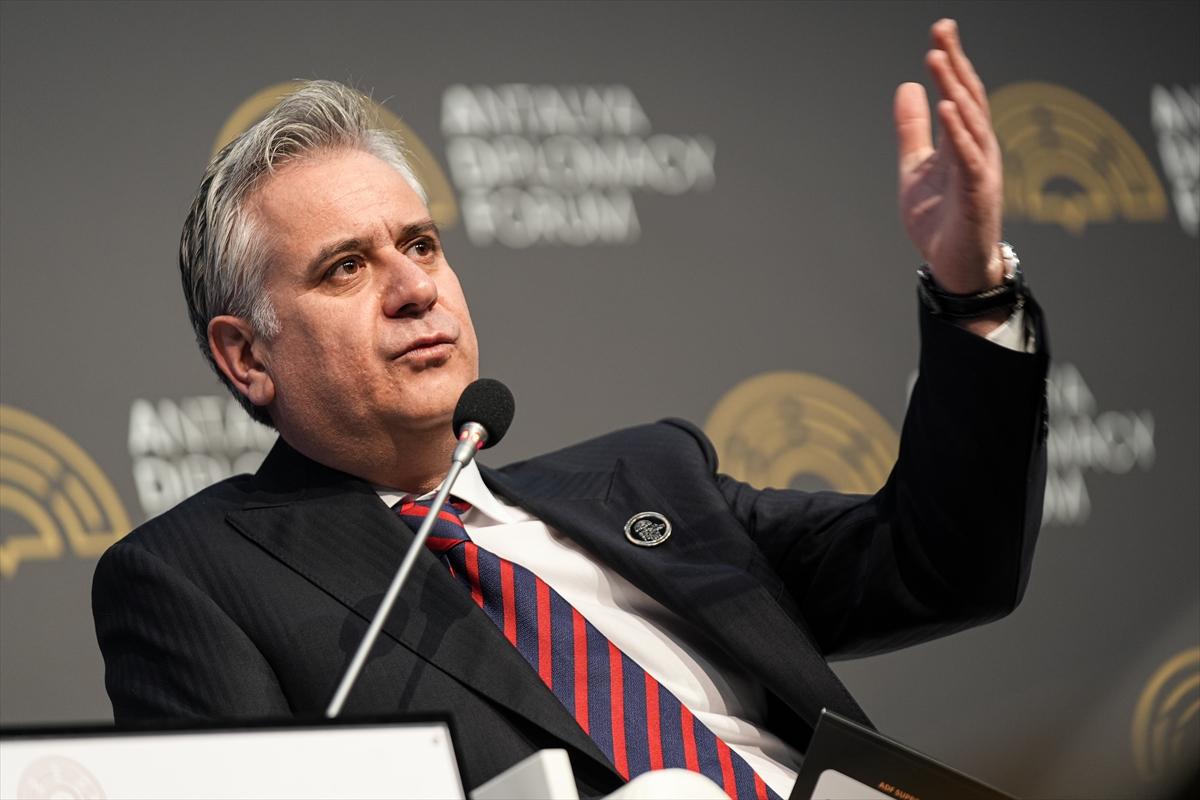
“Cultural Diplomacy: Bridging Divisions, Building Trust” panel, 19 April 2026 – (Anadolu Agency)
Participants included Hasan Basri Yalçın, Deputy Chairman and Head of Human Rights at the AK Party, Rym Ali, President of the Anna Lindh Foundation, Akiko Horiba, Director of the Sasakawa Peace Foundation’s Center for Peace Mediation, and Valeria Giannotta, Coordinator of the CeSPI Turkey Observation Center.
Hasan Basri Yalçın noted that in recent years, weapons have replaced discourse in international politics. He emphasized that during this period of intensifying global crises, new alternatives are being sought, diplomacy is not easily accessible in such times, and efforts are being made to increase diplomatic traffic in search of solutions.
Yalçın stated, “Cultural connections can help build easier and better bridges between nations and countries,” and continued: “At the beginning of the 21st century, there was debate over whether culture was important or not. Institutions such as the European Union and NATO, as well as international organizations, actually create environments that foster cultural connections and offer opportunities for friendly and cooperative interaction rather than hostility.”
Yalçın stressed the need for an optimistic approach to culture-based solutions: “If we can define each other in friendly terms, this will itself serve as mediation in resolving conflicts peacefully through diplomacy. Optimism is difficult in such times. We must speak more, but some narratives create problems. For example, NATO was long criticized for being composed primarily of countries with similar cultural identities. Some even argued that NATO was never truly tested under difficult conditions. But now new testing grounds have emerged. Will the EU survive this period of uncertainty? Will NATO endure? Can the cultural identities of certain states be preserved? These questions have now been clearly raised.”
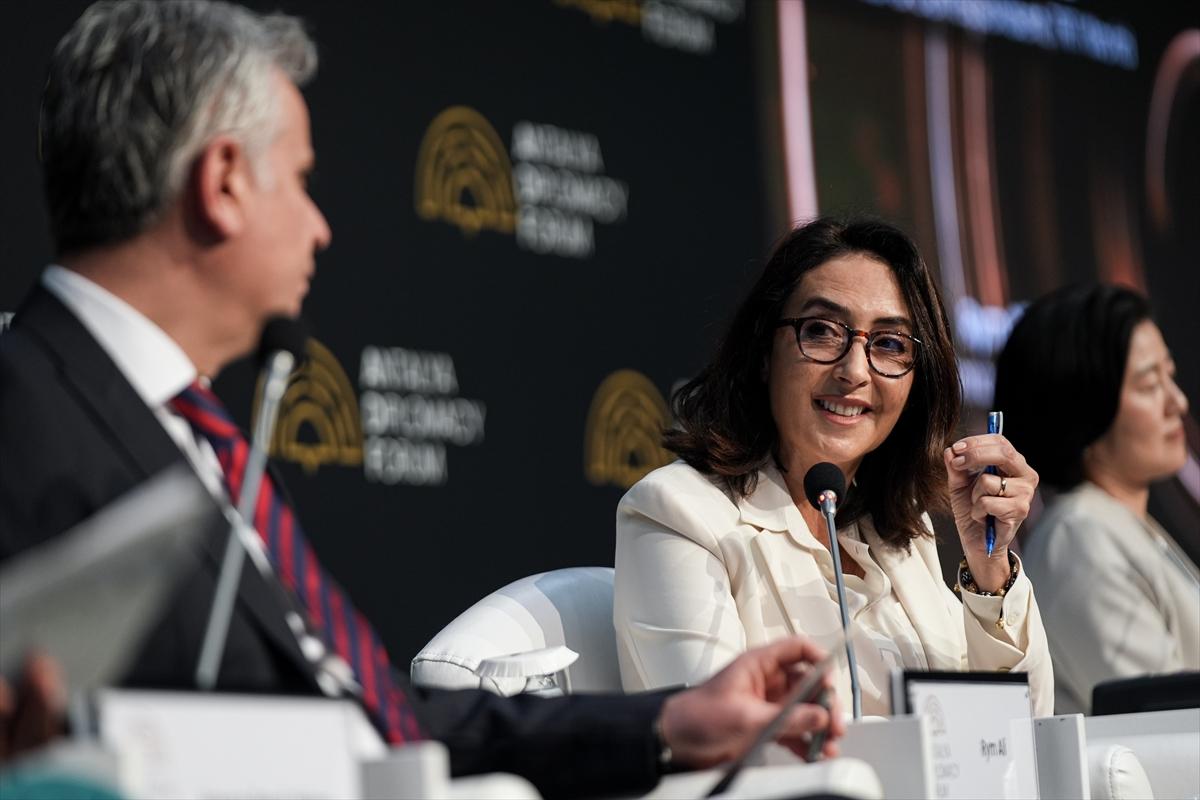
“Cultural Diplomacy: Bridging Divisions, Building Trust” panel, 19 April 2026 – (Anadolu Agency)
Yalçın pointed out that cultural connections do not always ensure harmony and emphasized the importance of long-term relationships: “If we want such harmony, we must initiate long-term relationships between countries. We know from Iran and other examples that while we expect cultural identities to serve as bridges, they can also be used as instruments of opposition.”
Yalçın asserted that cultural diplomacy must begin at the societal level: “Cultural connections do not always need to be implemented through strategic alignment, adjustment, or formal arrangements. We must begin at the societal level. Social-level changes, the development of inter-nation dialogue, and the resulting relationships must be used as final decisions. Cultural diplomacy can remain somewhat limited. When we look at developments in the Middle East, culture may have no benefit at all. We are currently in a phase where nations that should define each other as friends and brothers instead define each other as enemies and adversaries. This is a difficult situation.”
Referring to mutual cultural exchanges between Spain and Türkiye, Yalçın highlighted culture’s role in uniting societies and stated: “A genocide is taking place in Gaza. In some cases, state leaders and presidents do not even wish to speak about what is happening in Gaza due to fear of Israel or for other reasons. About two and a half years ago, Israel was forced into a ceasefire due to the power and pressure of these communities. Thus, public pressure had a serious impact on governments. If these communities and societies had not established relationships with each other, this pressure might never have been created.”
In response to a question regarding Türkiye’s message to the Middle East, Yalçın replied: “Türkiye does not wish to be part of any international war or conflict. Türkiye does not wish to support any war and will not support any conflict in the Middle East. We must think and act in the name of humanity. We stand with the oppressed in Gaza. If there is war in Iran, we stand with the just. If there is occupation in Ukraine and it is unjust, we do not support it. Our foreign policy is imbued with humanitarian values. This is the mindset of the AK Party. The AK Party has always stood with the people. We are always on the side of humanity. We strive to be on the right side of history. If a genocide is being committed in Israel, we cannot be its supporter or ally. This is our stance. This is our soft power stance.”
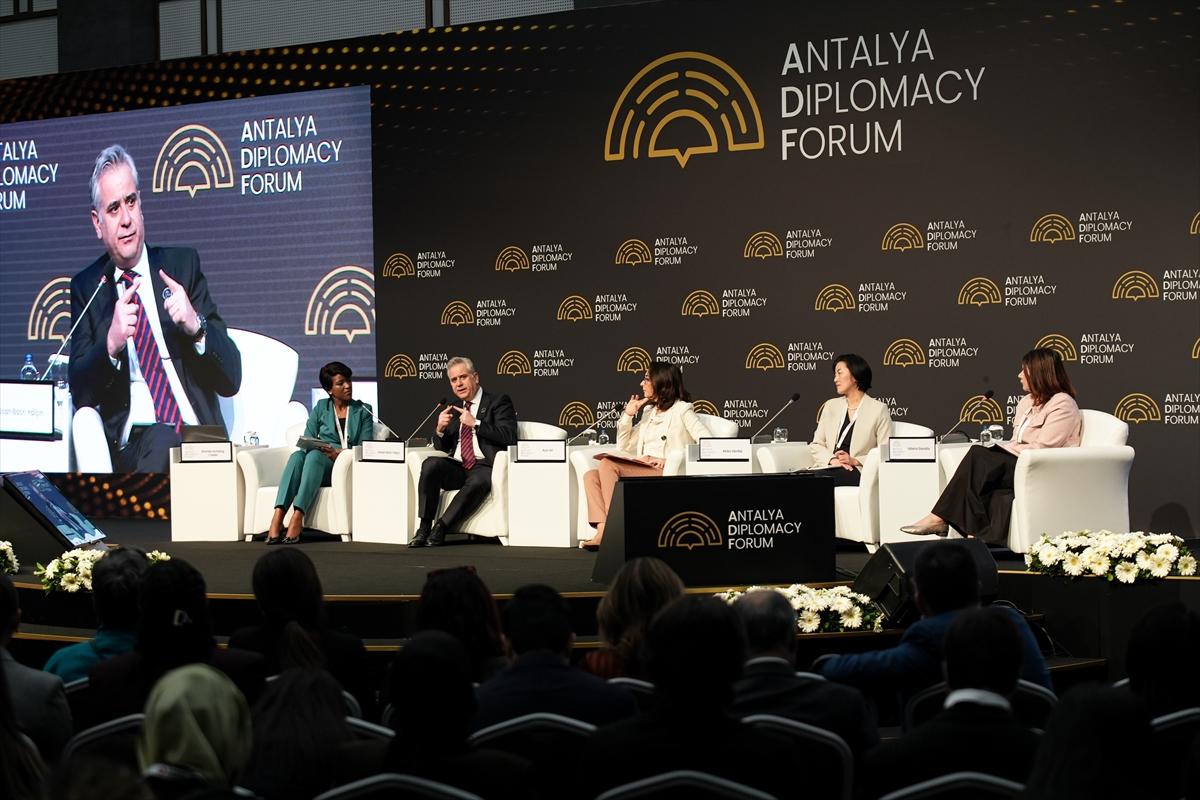
“Cultural Diplomacy: Bridging Divisions, Building Trust” panel, 19 April 2026 – (Anadolu Agency)
Valeria Giannotta highlighted the differences between cultural diplomacy and traditional diplomacy, noting that cultural diplomacy involves diverse social layers in the process. She emphasized the need for a cooperative framework and stated that cultural diplomacy offers an alternative space to traditional diplomacy.
Giannotta cited Israel’s attacks on Gaza as an example of how social media and Türkiye’s initiatives have influenced public opinion, stressing that structural problems must be addressed globally to build peace. Addressing young people, she said: “When you live for a short time in another place, you come to understand that experience. Never forget the sense of brotherhood and friendship. Work hard not just for high grades but for your own development.”
Rym Ali emphasized the importance of conducting cultural diplomacy during crises and noted that civil society participation strengthens relationships. She stated that cultural ties create a foundation for shared responses over time.
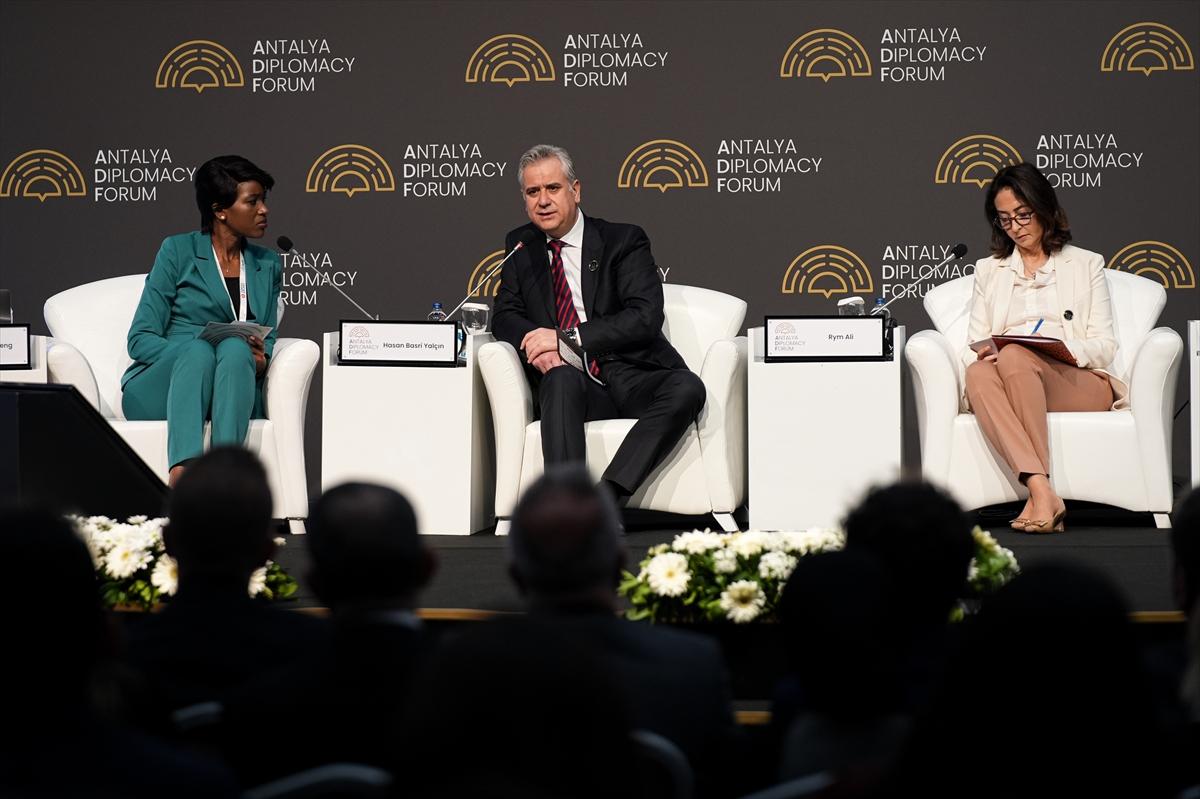
“Cultural Diplomacy: Bridging Divisions, Building Trust” panel, 19 April 2026 – (Anadolu Agency)
Ali emphasized equality and responsibility in cultural diplomacy, stating: “A cultural cleansing is taking place, particularly in Palestine. Therefore, we must use our existing relationships to put an end to it.” She further added: “When a genocide occurs, intervention is a necessity, and the importance of culture lies in reminding us all that we are human.”
Akiko Horiba stated that cultural diplomacy facilitates communication between parties and plays a vital role in building trust. She warned that neglecting cultural diplomacy could lead to increased violence: “If we forget cultural diplomacy, much greater violence will follow.”
Horiba emphasized that every country has its own unique culture and that trust must be built on mutual respect among these cultures. She also stressed that culture must not be turned into a tool of propaganda.
As part of the Antalya Diplomacy Forum 2026, a panel titled “A Century of Language and Identity: From the Baku Turkology Congress to Turkish Integration” was held. The panel assessed the legacy of the 1926 Baku Turkology Congress and examined cooperation in language, cultural identity, and contemporary institutional integration efforts within the Turkic world.
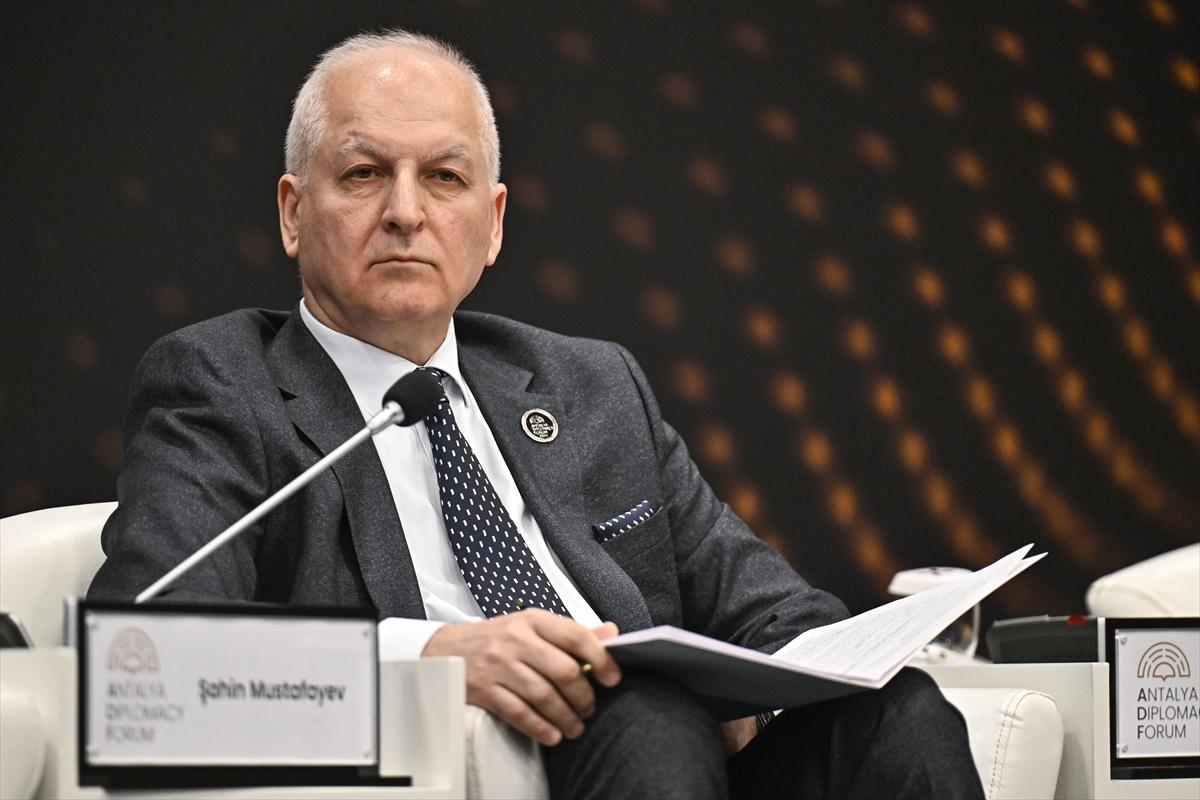
“A Century of Language and Identity: From the Baku Turkology Congress to Turkish Integration” panel, 19 April 2026 – (Anadolu Agency)
The panel was moderated by Fırat Purtaş from Hacı Bayram Veli University. Participants included Kubanychbek Omuraliev, General Secretary of the Organization of Turkic States, Şahin Mustafayev, President of the Turkish Academy, Aktoty Raimkulova, President of the Turkish Culture and Heritage Foundation, Sultan Raev, General Secretary of the International Organization of Turkic Culture, Ramil Hasan, General Secretary of the Parliamentary Assembly of Turkic States, and Osman Mert, President of the Turkish Language Association.
Kubanychbek Omuraliev, General Secretary of the Organization of Turkic States, noted that the 1926 Baku Turkology Congress was a pivotal moment that laid the foundations for the unity of the Turkic world. He stated that the congress was among the first platforms to promote the principle of unity at both scientific and practical levels.
Omuraliev highlighted that while the principle of unity in thought and action was accepted, historical and political conditions delayed its implementation for a long time. He noted that the congress established the beginning of a tradition of regular high-level dialogue among Turkic states and said: “These ideas continue to vividly reflect the growing cooperation and integration process among Turkic states and carry the vision of the past into the present.”
Şahin Mustafayev, President of the Turkish Academy, stated that Turkish intellectuals of the era welcomed the congress with great enthusiasm and hope. He noted that representatives of Turkic peoples across Eurasia gathered in Baku to exchange views on shared culture, language, history, and future.
Mustafayev assessed the congress as the logical culmination of the modernization movement that began in the Turkic world. He emphasized that the 1926 gathering made a significant contribution to the development of Turkology as an academic discipline.
It was noted that the congress helped transform Turkology into a more holistic field of study and played a key role in shaping cultural awareness among Turkic peoples. Mustafayev emphasized that many topics currently discussed in Turkology today were first laid out at this congress.
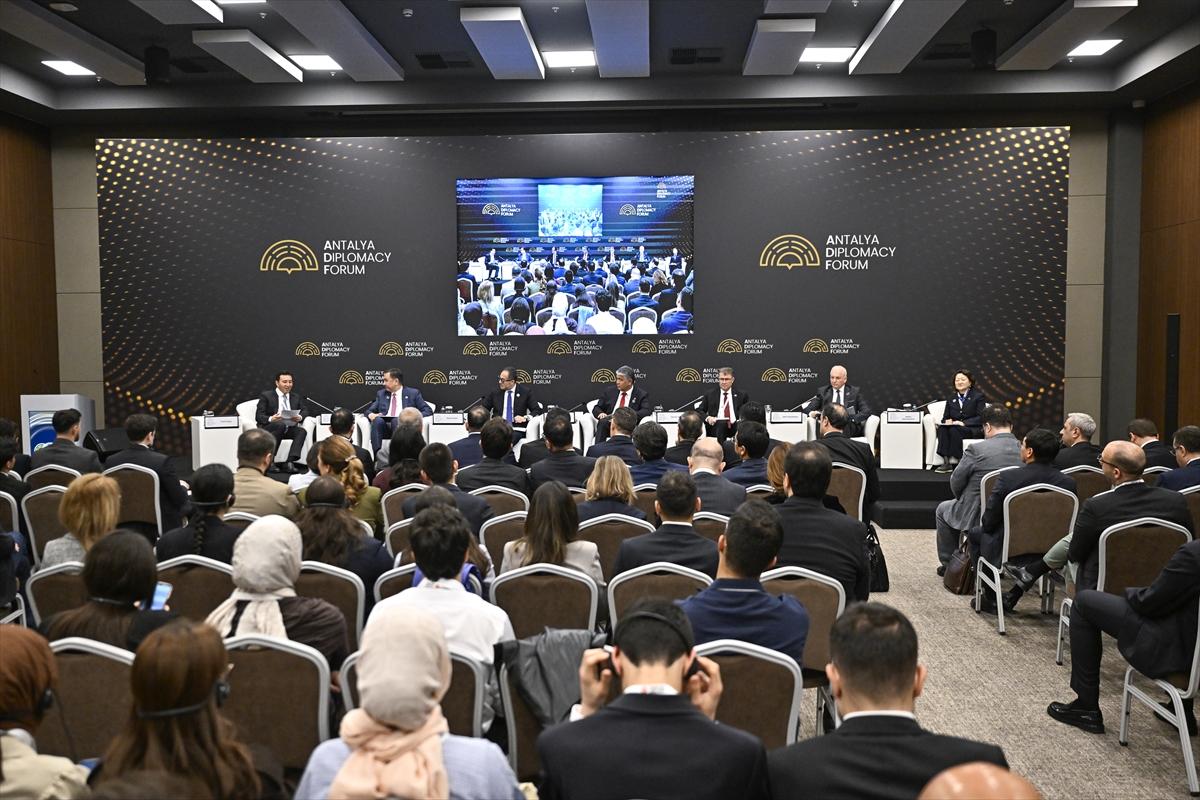
“A Century of Language and Identity: From the Baku Turkology Congress to Turkish Integration” panel, 19 April 2026 – (Anadolu Agency)
Aktoty Raimkulova, President of the Turkish Culture and Heritage Foundation, noted that the foundation was established under the initiative of the Azerbaijani government. She stated that UNESCO’s declaration of December 15 as World Day of the Turkic Language Family was a significant step.
This development, she said, has increased global recognition of the Turkic language and heritage. Raimkulova explained that the foundation’s activities aim to introduce the rich heritage of the Turkic world and added: “Because every initiative and project we undertake is a milestone reflecting decisions made across the Turkic world.”
Sultan Raev, General Secretary of TÜRKSOY, highlighted the importance of language as cultural memory. Raev stated: “Language is our cultural memory. It is a chest that preserves our customs, traditions, and practices.”
Raev emphasized the need to strengthen existing common roots rather than seeking new closeness within the Turkic world. He stressed the necessity of making the shared language and cultural heritage more visible.
It was noted that the Turkic world has experienced economic growth and that the step taken in Baku a century ago represents the collective will to build a shared future through language.
Ramil Hasan, General Secretary of TÜRKPA, stated that the Antalya Diplomacy Forum serves as a platform bringing together the Turkic world. Recalling that many intellectuals who attended the 1926 congress lost their lives, he said: “We are not children of different nations; we are children of the same nation—we are all Turks.”
Hasan noted that Turkic states were not independent at the time and that intellectuals gathered under difficult conditions. He stated that recent developments in shared alphabets and cultural cooperation represent an important milestone.
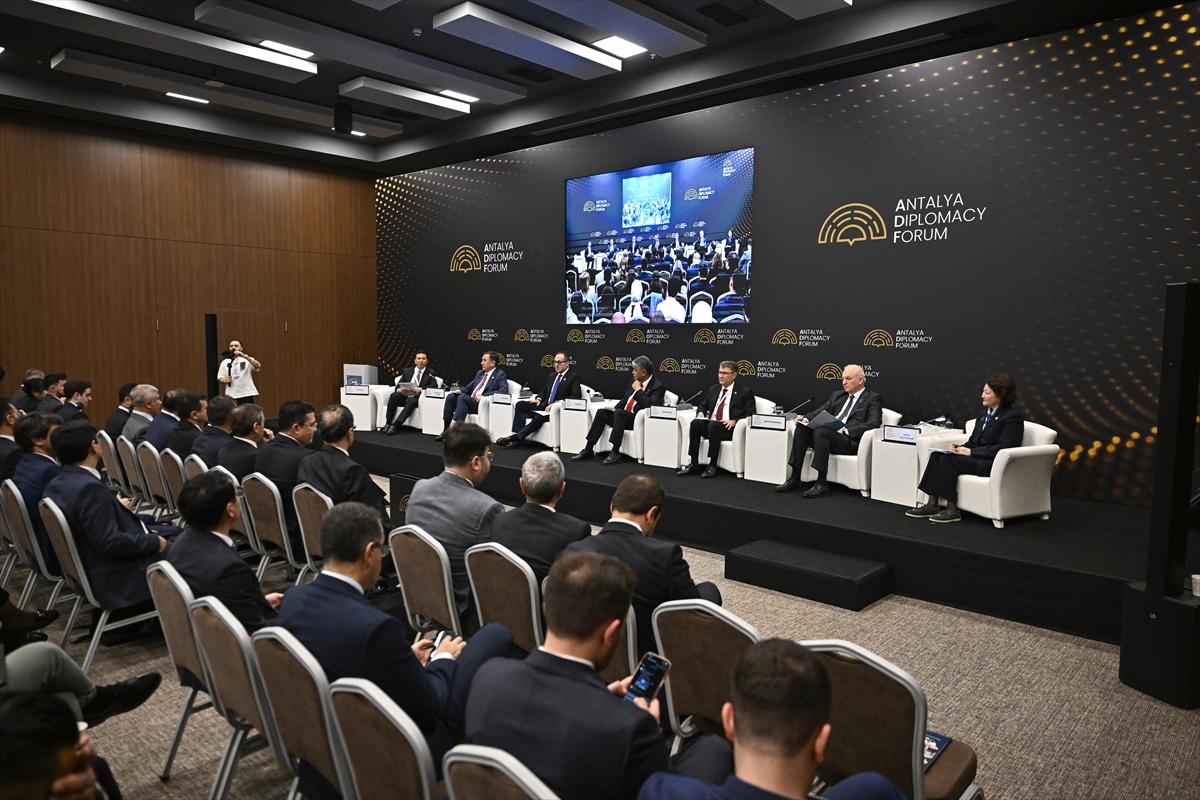
“A Century of Language and Identity: From the Baku Turkology Congress to Turkish Integration” panel, 19 April 2026 – (Anadolu Agency)
Osman Mert, President of the Turkish Language Association, stated that one of the fundamental conditions of cultural unity is script unity. He noted that Türkiye’s 1928 alphabet reform was a pivotal moment in this context. Mert emphasized that the Latin alphabet is widely used in digital environments and that younger generations can unite the Turkic world on digital platforms.
At the end of the panel, Ruhi Ersoy from Hacı Bayram Veli University spoke. He noted that teaching Turkology solely within the frameworks of language, literature, and folklore is insufficient. He emphasized that the Turkology curriculum must be revised to reflect current developments in the Turkic world.
As part of the Antalya Diplomacy Forum 2026, the current state and growth potential of commercial relations between Türkiye and North Macedonia were discussed at a working dinner held in Antalya. The event was organized by the Türkiye–North Macedonia Business Council of the Council of Foreign Economic Relations.
Attendees included North Macedonia’s Minister of Foreign Affairs and Foreign Trade Timço Mucunski and his delegation, Turkish Ministry of Foreign Affairs Director General for the Balkans and Central Europe Ambassador Yağmur Ahmet Güldere, North Macedonia’s Ambassador to Ankara Jovan Manasijevski, Chairman of the DEİK Türkiye–North Macedonia Business Council Bilal Kara, and Turkish business leaders.
Meeting on Türkiye–North Macedonia Commercial Relations, 19 April 2026 – (Anadolu Agency)
Bilal Kara, Chairman of the DEİK Türkiye–North Macedonia Business Council, highlighted the importance of translating strong political relations between the two countries into concrete economic outcomes. He stated that cooperation between Türkiye and North Macedonia could be elevated to higher levels through active involvement of the business community.
Kara stated: “As the business community, we are ready to take the initiative, accelerate investment processes, and generate sustainable economic value.”
Discussions addressed the goal of increasing bilateral trade volume to $2 billion through an updated Free Trade Agreement. The Business Council’s future activity plan and strategic roadmap were also evaluated. The meeting comprehensively examined the current state and growth potential of commercial relations between Türkiye and North Macedonia, with particular focus on cooperation opportunities in priority sectors including infrastructure, healthcare, tourism, and energy.
As part of the Antalya Diplomacy Forum 2026, the “COP31 High-Level Climate Champions Meeting” was held in the Serik district of Antalya. The meeting addressed climate action, zero-waste policies, and multilateral climate diplomacy.
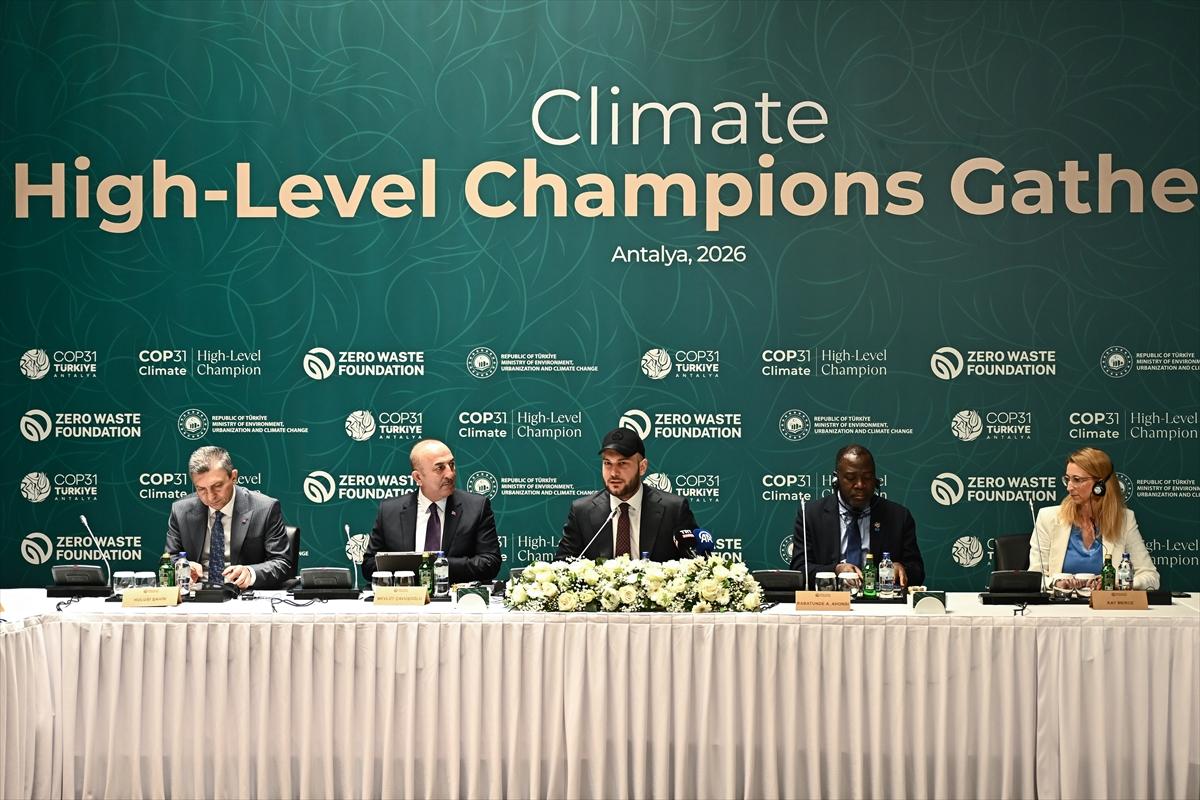
COP31 High-Level Climate Champions Meeting, 19 April 2026 – (Anadolu Agency)
Attendees included Mevlüt Çavuşoğlu, Chairman of the Turkish Delegation to the NATO Parliamentary Assembly and AK Party Member of Parliament for Antalya, Antalya Governor Hulusi Şahin, President of the Zero Waste Foundation Samed Ağırbaş, Climate Ambassador Advisor to COP31 Ömer Tayyip Erdoğan, UNICEF Representative in Türkiye Paolo Marchi, and United Nations Resident Coordinator in Türkiye Babatunde Ahonsi, along with officials from various countries.
In his opening remarks, Mevlüt Çavuşoğlu stated that climate action is one of the fundamental issues shaping humanity’s shared future. He drew attention to the fact that over two billion tons of waste are produced globally each year and noted that this situation reveals not only environmental but also social and economic inequalities. Çavuşoğlu said:
“The climate crisis recognizes no borders. Solutions cannot be confined by national boundaries. Trust-based, inclusive, and effective climate diplomacy is the strongest tool for uniting countries with different conditions around common goals. Multilateralism is not a choice for the future—it is a necessity, because only together can we protect our shared home. Türkiye responds to this global challenge with a conscience-driven approach. We do not forget that we are responsible not only to each other but also to the world. Under the patronage of the esteemed Mrs. Emine Erdoğan, the zero-waste movement launched in 2017 is a concrete reflection of this understanding. Within a short time, it transformed from a national initiative into a global awareness movement. In a very short period, we recovered 90 million tons of waste, contributing 365 billion Turkish lira to our economy, prevented the cutting of 613 million trees, halted 180 million tons of greenhouse gas emissions, and saved two trillion liters of water.”
Çavuşoğlu stated that the International Zero Waste Day, proclaimed by the United Nations General Assembly with the support of 105 countries under Türkiye’s leadership, is a significant outcome of global climate diplomacy. He emphasized that zero waste and circular economy approaches are prioritized within COP31 and added: “In this context, strengthening climate diplomacy, building bridges between countries, and developing concrete cooperation are among our key priorities. Our COP31 action agenda covers a broad spectrum from clean energy to sustainable agriculture, from climate-resilient cities to green industry. We advocate for an inclusive and just climate governance that leaves no one behind. We believe that climate diplomacy must also advance on this foundation of justice.”
Antalya Governor Hulusi Şahin noted that Antalya welcomes millions of tourists annually and emphasized the importance of waste management and the preservation of air and sea cleanliness for the city’s sustainability.
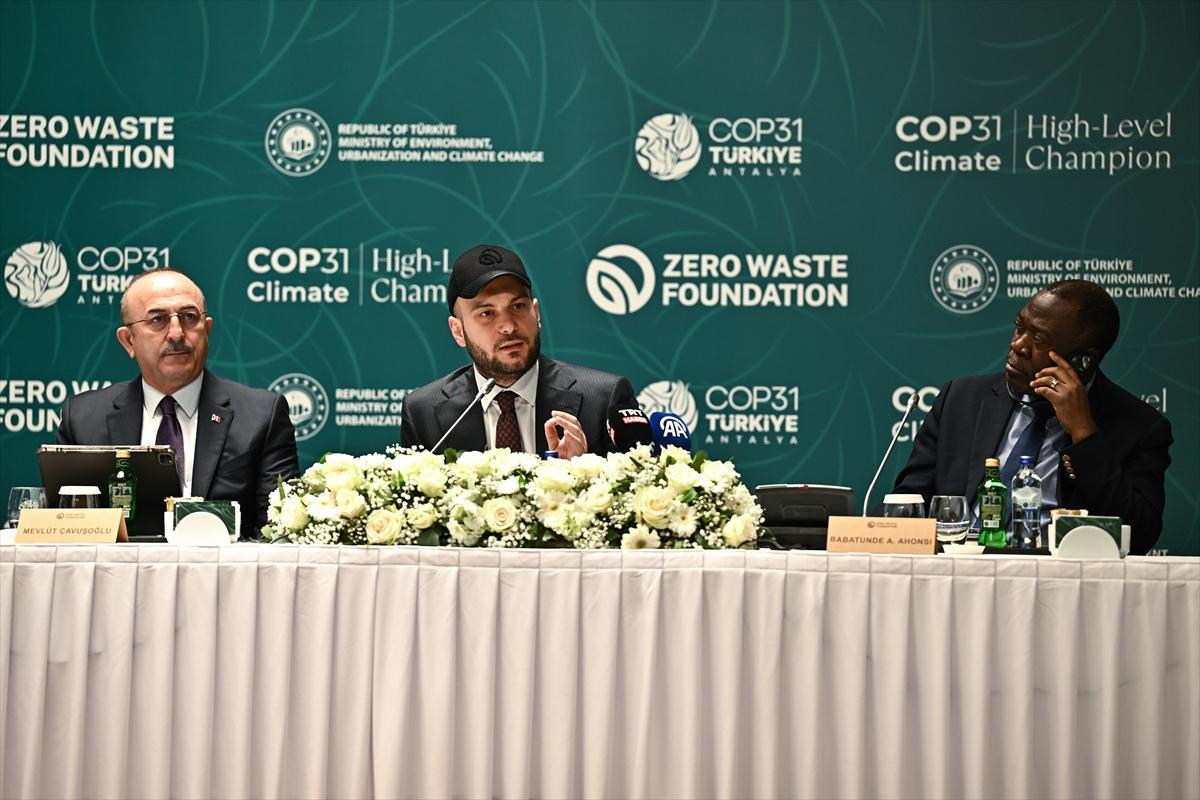
COP31 High-Level Climate Champions Meeting, 19 April 2026 – (Anadolu Agency)
Samed Ağırbaş, President of the Zero Waste Foundation, stated that the zero-waste movement has gained global momentum. He noted that coordinated efforts are being carried out with United Nations offices in Türkiye through working groups established by the foundation.
Ağırbaş confirmed that Türkiye will host COP31 and stated that the process will continue beyond this event. He also announced that the second Zero Waste Forum will be held from June 5 to 7 and that over 150 countries have confirmed participation: “Look, in the world we have come to, unfortunately, international environmental organizations do not speak about the environmental damage caused by bombs. We are still drowning in minor issues, yet there is immense injustice and inequality in our world. At every meeting we attend, regardless of the outcome, we will not hesitate to voice global injustices. The Zero Waste Forum is a common gathering for everyone who feels free and wishes to produce discourse on the environment and the world.”
Ömer Tayyip Erdoğan, Climate Ambassador Advisor to COP31, stated that the meeting was organized not only to address environmental issues but also to examine the role of the younger generation.
Erdoğan noted that the climate crisis and resource depletion have moved beyond technical challenges and acquired social and economic dimensions. He emphasized the need for young people to assume active roles in this process.
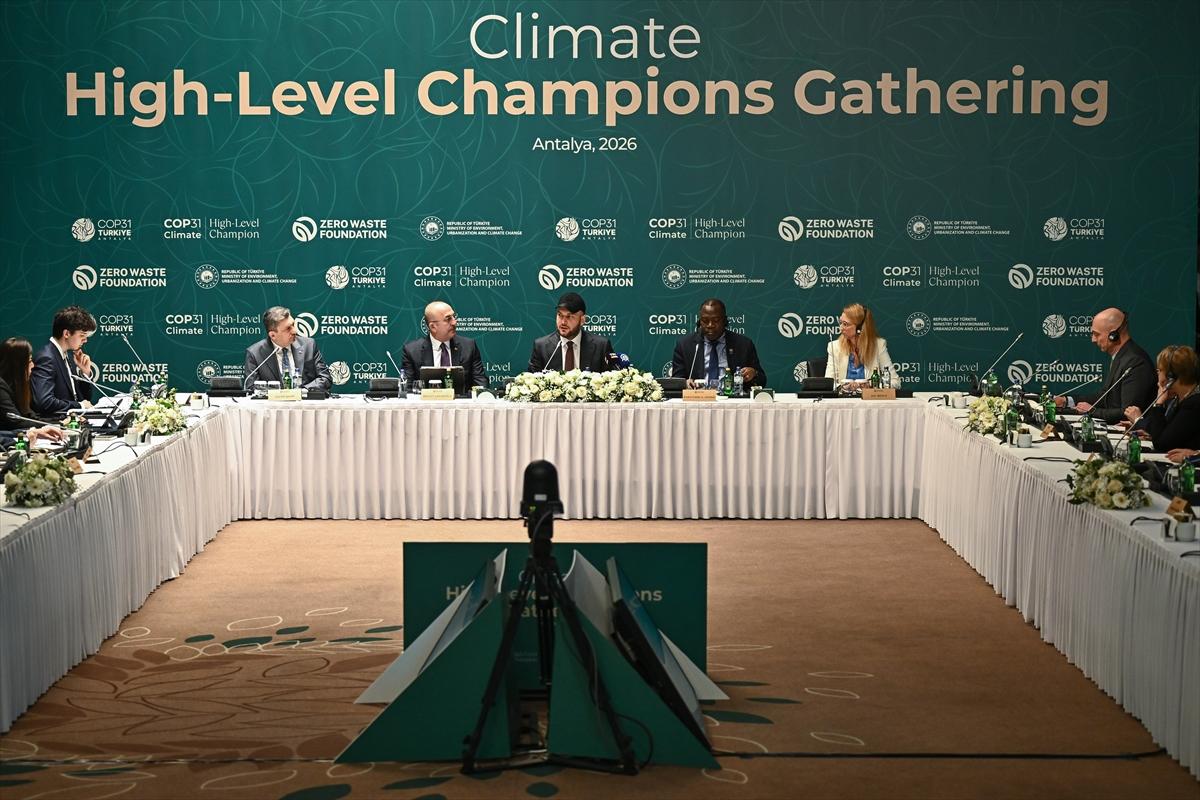
COP31 High-Level Climate Champions Meeting, 19 April 2026 – (Anadolu Agency)
Erdoğan stated: “From our data and field experiences, it is clear that young people around the world are developing highly creative ideas in the fields of zero waste and circular economy. However, most of these ideas remain at the conceptual stage due to the lack of structured support mechanisms required for implementation. This is why we are transforming the zero-waste approach from a policy framework into a genuine youth movement. In this context, we are launching a new initiative jointly with the Youth Diplomacy Association under the umbrella of the Zero Waste Forum. We are establishing a new Zero Waste Youth Forum that will not only bring young people together as participants but will also position them as decision-makers, designers, and implementers. In cooperation with the Youth Diplomacy Association, we are elevating this initiative to the global level through concrete steps. I am pleased to announce that we will organize an international youth forum aimed at strengthening the role of young people in zero waste and climate action.”
COP31 High-Level Climate Champions Meeting, 19 April 2026 – (Anadolu Agency)
Erdoğan stated that education, technical support, and financial opportunities will be provided to young people under this initiative. Projects developed will be showcased globally under COP31. It was noted that this youth-centered approach will help turn zero-waste policies into a way of life and create a transformation process aligned with sustainable development goals.
Anadolu Ajansı. "ADF 2026 Kapsamında ‘Bir Asırlık Dil ve Kimlik: Bakü Türkoloji Kongresi’nden Türk Entegrasyonuna’ Paneli Düzenlendi." Accessed April 20, 2026. https://www.aa.com.tr/tr/gundem/adf-2026-kapsaminda-bir-asirlik-dil-ve-kimlik-baku-turkoloji-kongresinden-turk-entegrasyonuna-paneli-duzenlendi/3911287
Anadolu Ajansı. "Antalya Diplomasi Forumu Kapsamında Kültürel Diplomasi Paneli Düzenlendi." Accessed April 20, 2026. https://www.aa.com.tr/tr/gundem/antalya-diplomasi-forumu-kapsaminda-kulturel-diplomasi-paneli-duzenlendi-/3911199
Anadolu Ajansı. "Antalya’da COP31 Yüksek Düzeyli İklim Şampiyonları Toplantısı Düzenlendi." Accessed April 20, 2026. https://www.aa.com.tr/tr/gundem/antalyada-cop31-yuksek-duzeyli-iklim-sampiyonlari-toplantisi-duzenlendi/3911528
Anadolu Ajansı. "Türkiye-Kuzey Makedonya Ticari İlişkileri ADF Kapsamında Görüşüldü." Accessed April 20, 2026. https://www.aa.com.tr/tr/dunya/turkiye-kuzey-makedonya-ticari-iliskileri-adf-kapsaminda-gorusuldu/3911175

As part of the 5th Antalya Diplomacy Forum to be held in Belek Antalya from 17 to 19 April 2026 under the hostship of Türkiye, numerous panels and meetings will be conducted with the participation of heads of state ministers and representatives of international organizations from around the world. Topics such as geopolitical tensions security economics and multilateralism will be addressed under the theme “Managing Uncertainties While Designing the Future”.
No Discussion Added Yet
Start discussion for "2026 Antalya Diplomacy Forum" article
April 17, 2026
Historical Background
April 17, 2026
Organization
April 17, 2026
Participant Profile
April 17, 2026
Program and Session Formats
April 17, 2026
Agenda and Thematic Focus
April 17, 2026
Historical Background
April 17, 2026
Organization
April 17, 2026
Participant Profile
April 17, 2026
Program and Session Formats
April 17, 2026
Agenda and Thematic Focus
April 17, 2026
Opening Addresses
April 19, 2026
5. Antalya Diplomacy Forum - Day 2
April 19, 2026
Day 2 Panels and Sessions
April 19, 2026
"Ensuring Peace in the Balkans: Dialogue, Business, and Connectivity"
April 19, 2026
Statements, Multilateral Meetings, and Bilateral Diplomatic Contacts by Foreign Minister Hakan Fidan at the Antalya Diplomacy Forum
April 19, 2026
President Recep Tayyip Erdoğan’s Contacts on Day Two
April 20, 2026
5. Antalya Diplomacy Forum – Day 3
April 20, 2026
Day 3 Panels and Sessions
April 20, 2026
Day 3 Meetings