

This article was automatically translated from the original Turkish version.
2026 Bulgaria General Elections
Vote Shares | Vızrajdane: %4.3 HÖH: %7.1 PP-DB: %12.6 GERB-SDS (Borisov): %13.4 Progressive Bulgaria (Radev): %44.6 | ||||||||
|---|---|---|---|---|---|---|---|---|---|
Voter Turnout Rate | ~%48–49 | ||||||||
Number of Seats in Parliament | 240 seats | ||||||||
Election Type | Parliament (National Assembly) | ||||||||
History | 19 April 2026 | ||||||||
2026 Bulgarian Parliamentary Elections, held on 19 April 2026, were the eighth general election in the last five years for Bulgaria’s 240-seat National Assembly. In this election, the Progressive Bulgaria coalition led by former President Rumen Radev came in first place with approximately 44.6–44.7 percent of the vote. This result marked the first time since 1997 that a single political force achieved an absolute majority in Bulgaria’s parliament.

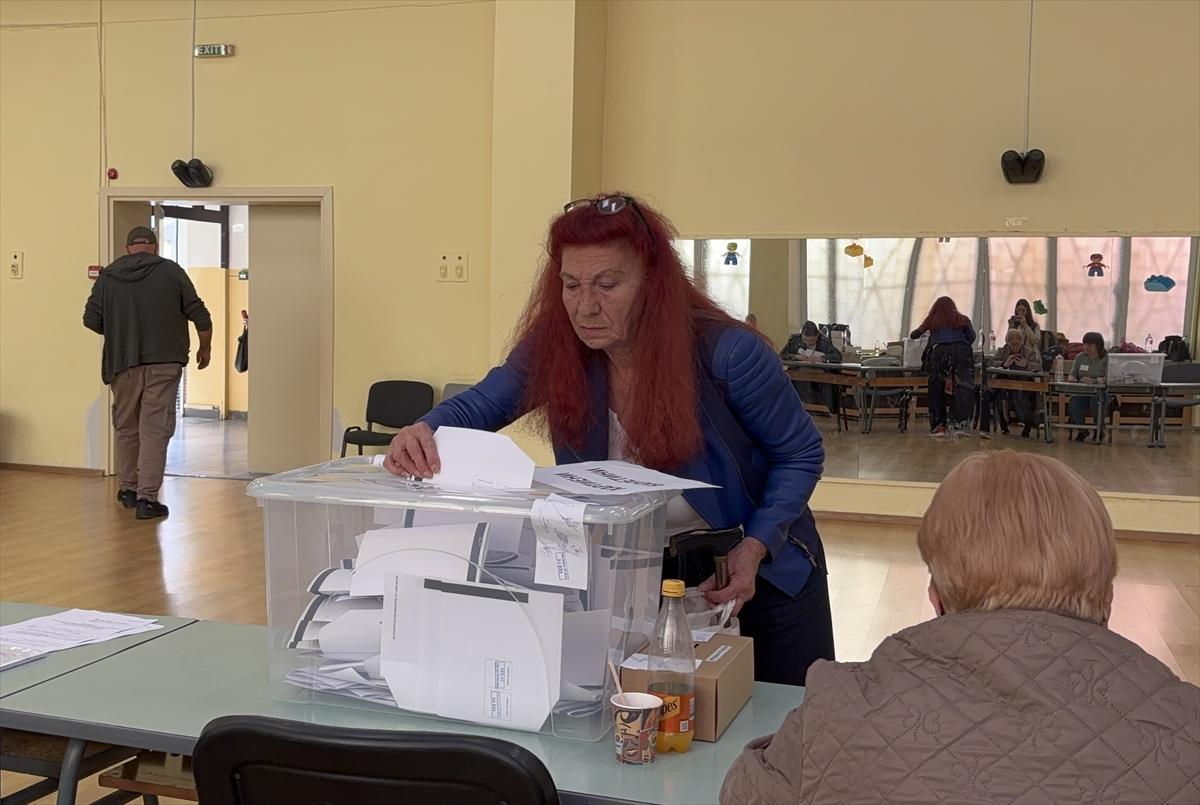
Bulgarian voters at a polling station on 19 April 2026 – (Anadolu Agency)
The election process was shaped by deepening political instability following protests against the government in December 2025 and the subsequent resignation of Prime Minister Rosen Zhelyazkov’s cabinet.
Under the election results, the Citizens for European Development of Bulgaria (GERB) party, led by former Prime Minister Boyko Borisov, received approximately 13 percent of the vote.
Between 2021 and 2026, Bulgaria experienced prolonged political instability due to frequent elections and short-lived governments. During this period, the country held eight general elections in five years.
The chronological sequence of these eight elections is as follows: April 2021 (GERB failed to form a government), July 2021 (ITN failed to form a government), November 2021 (PP formed a coalition), October 2022 (GERB failed to form a government), April 2023 (GERB formed a coalition), June 2024 (GERB failed to form a government), October 2024 (GERB formed a coalition), and April 2026.
In December 2025, Prime Minister Rosen Zhelyazkov announced the resignation of his cabinet following mass protests against a controversial budget that proposed tax increases and higher social security contributions. At the time, Radev, who was serving as president, actively supported these protests.

Former Bulgarian President Rumen Radev casting his vote in the general elections, 19 April 2026 – (Anadolu Agency)
Rumen Radev decided to run in the parliamentary elections after stepping down from his presidency in January 2026, following nearly a decade in office. Just one month before the election, in March 2026, he founded the Progressive Bulgaria movement.
Rumen Radev was born in Dimitrovgrad in 1963. He rose through the military ranks to become a colonel general and served as Commander of the Air Force before entering politics as one of the country’s most experienced jet pilots. Radev was elected president in 2016 with the support of the Bulgarian Socialist Party and re-elected for a second term in 2021.

Former Bulgarian President Rumen Radev casting his vote in the general elections, 19 April 2026 – (Anadolu Agency)
Progressive Bulgaria occupies a center-left political position, combining a pro-European stance with stronger state intervention and a more conciliatory approach toward Russia compared to mainstream EU liberal parties. Its campaign was built around reducing poverty, combating inflation, and dismantling oligarchic political structures. Prior to the election, Radev stated at a rally that he would “remove the corruption system and the oligarchic model of governance from political power.”
Radev’s foreign policy stance has been controversial. He condemned Russia’s 2022 invasion of Ukraine but opposed military aid to Ukraine and advocated for “practical relations with Russia based on mutual respect and equality.” He criticized European Union policies, particularly in energy and relations with Russia, calling for a more pragmatic approach. He also opposed the long-term defense agreement signed between Bulgaria and Ukraine. On the other hand, Radev has rejected accusations of being pro-Russian.
GERB (Citizens for European Development of Bulgaria), led by former Prime Minister Boyko Borisov, has been one of the most influential actors in Bulgarian politics since 2008. The April 2026 election marked a significant decline for GERB, which received only around 13 percent of the vote, far below its performance in previous elections.
On election night, Borisov congratulated Radev but added that “winning the election is one thing; governing is another. Elections decide who comes first; negotiations will decide who governs.”
The pro-EU reformist PP-DB coalition led the anti-government protests at the end of 2025. In the election results, it came in third place.

Bulgarian voters at a polling station on 19 April 2026 – (Anadolu Agency)
Voting in Bulgaria began at 07:00 local time on 19 April and ended at 20:00. According to the Central Election Commission (CEC), approximately 12,721 polling stations were set up domestically and 493 abroad across 55 countries. The election featured 14 political parties and 10 coalitions among approximately 6.5 million registered voters.
A change in electoral law limited the number of polling stations that could be established outside the European Union. This regulation caused congestion at polling stations in Turkey, resulting in long queues in Istanbul districts (Esenyurt, Avcılar), Bursa districts (Görükle, Nilüfer), and Izmir district (Menderes).
Georgi Kandev, Secretary General of Bulgaria’s Ministry of Interior, announced that as of 16:30 on election day, 328 reports of electoral violations had been filed and 26 investigations had been launched. Kandev also reported that irregularities were detected at some polling centers and that three suspects had been taken into custody.

Bulgarian voters at a polling station on 19 April 2026 – (Anadolu Agency)
Interim Prime Minister Andrey Gyurov also disclosed to the public that 50 individuals with immunity and listed on candidate lists were under surveillance for suspected vote buying. Several individuals had been arrested in pre-election operations linked to vote-buying allegations, and over one million euros in cash had been seized.
Turnout figures announced on election day showed an increase compared to previous elections. At 16:00, voter turnout was reported at 34.63 percent, compared to 26.25 percent at the same time during the October 2024 elections.
To gain a vote of confidence in the 240-seat parliament, a party or coalition needs at least 121 seats. According to unofficial results, Progressive Bulgaria won approximately 130 to 135 seats, indicating that it has secured an absolute majority sufficient to form a government alone.
This election result is recorded as the first instance since 1997 in which a single political force has achieved an absolute majority in Bulgaria’s parliament. In the 1997 elections, the United Democratic Forces (UDF) led by Ivan Kostov won 137 seats, achieving a similar majority.
The 2026 election also marked a significant decline in vote share for GERB, a party that had long dominated Bulgaria’s political scene, as well as the failure of several traditional parties to enter parliament.
Al Jazeera. “Bulgaria’s Former President Radev Wins Election: All You Need to Know.” Al Jazeera. Accessed April 20, 2026. https://www.aljazeera.com/news/2026/4/20/bulgarias-former-president-radev-wins-election-all-you-need-to-know
Anadolu Ajansı. “Bulgaristan Seçimleri İnfografik.” Anadolu Ajansı İnfografik. Accessed April 20, 2026. https://www.aa.com.tr/tr/info/infografik/51507
Anadolu Ajansı. “Bulgaristan’da Eski Cumhurbaşkanı Radev Genel Seçimi Büyük Farkla Birinci Tamamladı.” Accessed April 20, 2026. https://www.aa.com.tr/tr/dunya/bulgaristanda-eski-cumhurbaskani-radev-genel-secimi-buyuk-farkla-birinci-tamamladi/3911091
Anadolu Ajansı. “Bulgaristan’da İlk Sonuçlar Eski Cumhurbaşkanı Radev’in Tek Başına Hükümet Kurabileceğini Gösteriyor.” Accessed April 20, 2026. https://www.aa.com.tr/tr/dunya/bulgaristanda-ilk-sonuclar-eski-cumhurbaskani-radevin-tek-basina-hukumet-kurabilecegini-gosteriyor/3911859
Anadolu Ajansı. “Uzmanlara Göre Son 5 Yılda 8’inci Kez Seçime Giden Bulgaristan’da Siyasi Denge Yeniden Şekilleniyor.” Accessed April 20, 2026. https://www.aa.com.tr/tr/dunya/uzmanlara-gore-son-5-yilda-8inci-kez-secime-giden-bulgaristanda-siyasi-denge-yeniden-sekilleniyor/3908962
BBC News. “Rumen Radev's Party Wins Bulgarian Election.” BBC News. Accessed April 20, 2026. https://www.bbc.com/news/articles/cm2kgm1zpgro
Balkan Insight. “Ex-President Rumen Radev Claims Parliamentary Majority in Bulgarian Election.” Balkan Insight. Accessed April 20, 2026. https://balkaninsight.com/2026/04/20/ex-president-rumen-radev-claims-parliamentary-majority-in-bulgarian-election/bi/
Politico Europe. "Russia-Aligned Rumen Radev Wins Landslide in Bulgaria." Politico. Accessed April 20, 2026. https://www.politico.eu/article/bulgaria-election-russia-rumen-radev-win-exit-poll/
RTÉ News. “Bulgaria Election Win for Radev Welcomed by EU, Kremlin.” Accessed April 20, 2026. https://www.rte.ie/news/world/2026/0420/1569104-bulgaria-election/#
Reuters. “Bulgaria’s Pro-Russian Former President Set for Landslide Election Win, Exit Polls Show.” Accessed April 20, 2026. https://www.reuters.com/world/europe/bulgaria-votes-pro-russian-former-president-leads-polls-2026-04-19/

2026 Bulgaria General Elections
Vote Shares | Vızrajdane: %4.3 HÖH: %7.1 PP-DB: %12.6 GERB-SDS (Borisov): %13.4 Progressive Bulgaria (Radev): %44.6 | ||||||||
|---|---|---|---|---|---|---|---|---|---|
Voter Turnout Rate | ~%48–49 | ||||||||
Number of Seats in Parliament | 240 seats | ||||||||
Election Type | Parliament (National Assembly) | ||||||||
History | 19 April 2026 | ||||||||
No Discussion Added Yet
Start discussion for "2026 Bulgaria General Elections" article
Background and Political Context
Five Years of Political Instability
Path to the Election
Major Political Actors
Rumen Radev and Progressive Bulgaria (PB)
Boyko Borisov and GERB (Citizens for European Development of Bulgaria)
PP-DB (Continue the Change – Democratic Bulgaria)
Election Process
Election Results
Vote Share (%98.3)
Seat Allocation
Historical Significance