


This article was automatically translated from the original Turkish version.
Colombian Congressional Elections (2026) are the national elections held in Colombia on 8 March 2026 to elect members of the country’s bicameral legislature, the Senate and the Chamber of Representatives. The elections were held concurrently with intra-party primary elections through which political parties and coalitions selected their candidates for the presidential election scheduled for 31 May 2026.
Approximately 41.2 million registered voters in Colombia were eligible to vote, with over 3,000 candidates competing for the 103 Senate seats and 182 Chamber of Representatives seats.
According to preliminary results, the ruling coalition Historical Pact (Pacto Histórico) emerged as the political group with the most seats.【1】
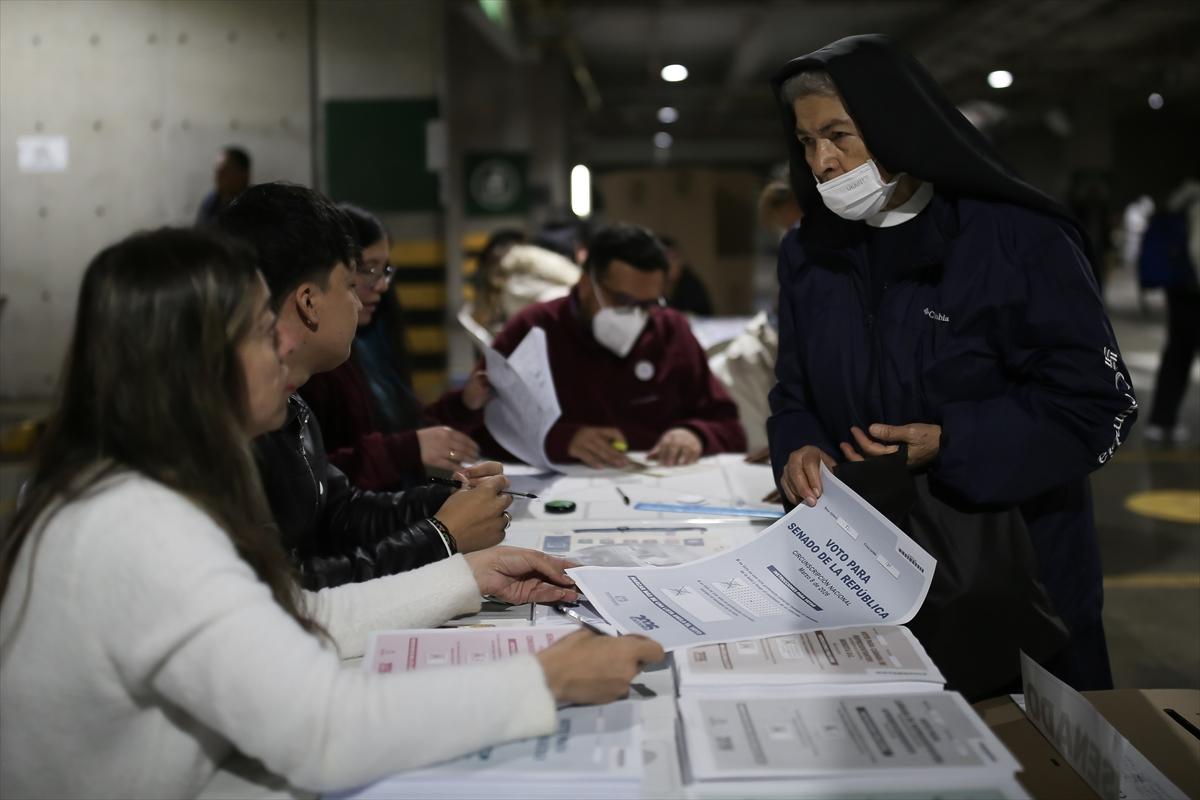
Colombian parliamentary elections, 8 March 2026 - (Anadolu Ajansı)
The elections were held nationwide on 8 March 2026. Voters participated on the same day in both the election of members to both chambers of the Colombian Congress and the primary elections to determine the presidential candidates of political coalitions.
According to unofficial data released by Colombia’s National Registry, the majority of votes across the country were counted within a short time after polling closed.
The election process proceeded largely normally across the country, with only isolated reports of irregularities. Voter turnout was officially announced at approximately 47%.【2】It was announced that the official inauguration of the newly elected Congress will take place on 20 July.
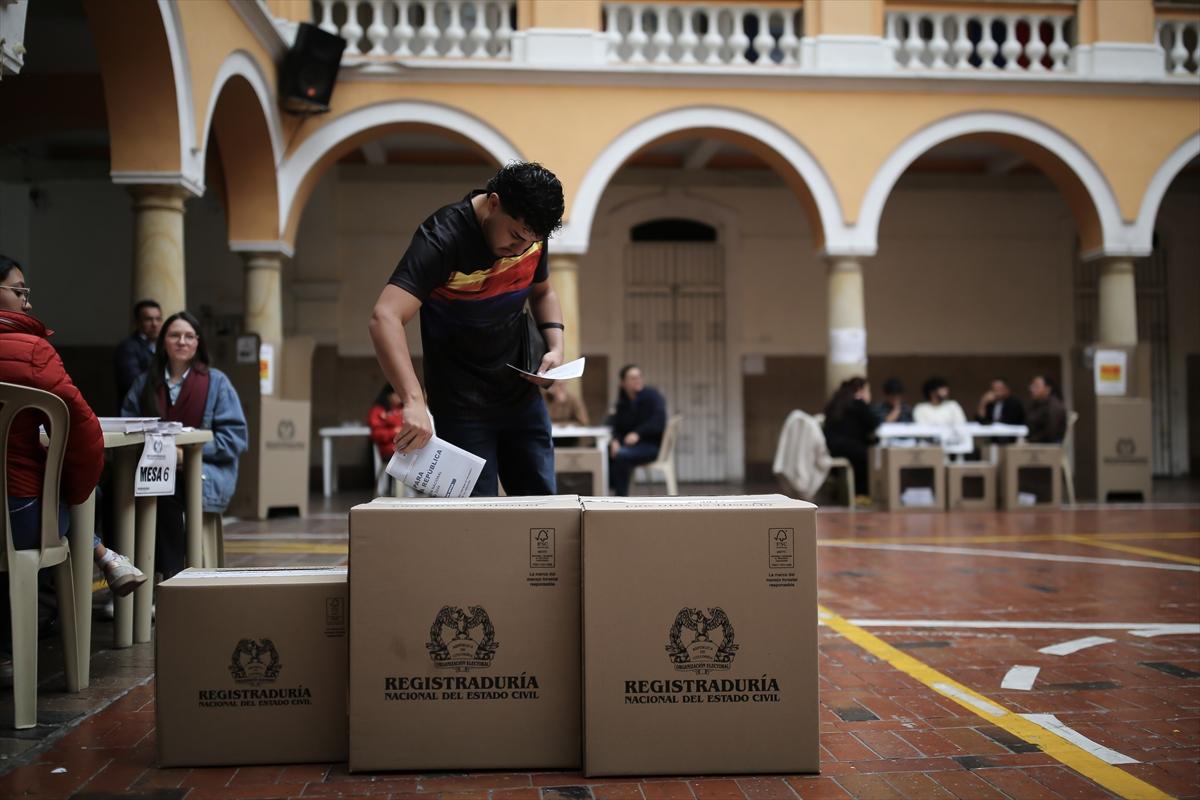
Colombian parliamentary elections, 8 March 2026 - (Anadolu Ajansı)
The Colombian Senate consists of a total of 103 members. On 8 March 2026, parties competed for these seats.
According to official results, the seat distribution in the Senate after the elections was as follows:
According to these results, the Historical Pact became the political group with the most seats in the Senate. However, as an absolute majority of 52 seats is required to control the 103-seat Senate, no single party achieved a majority.
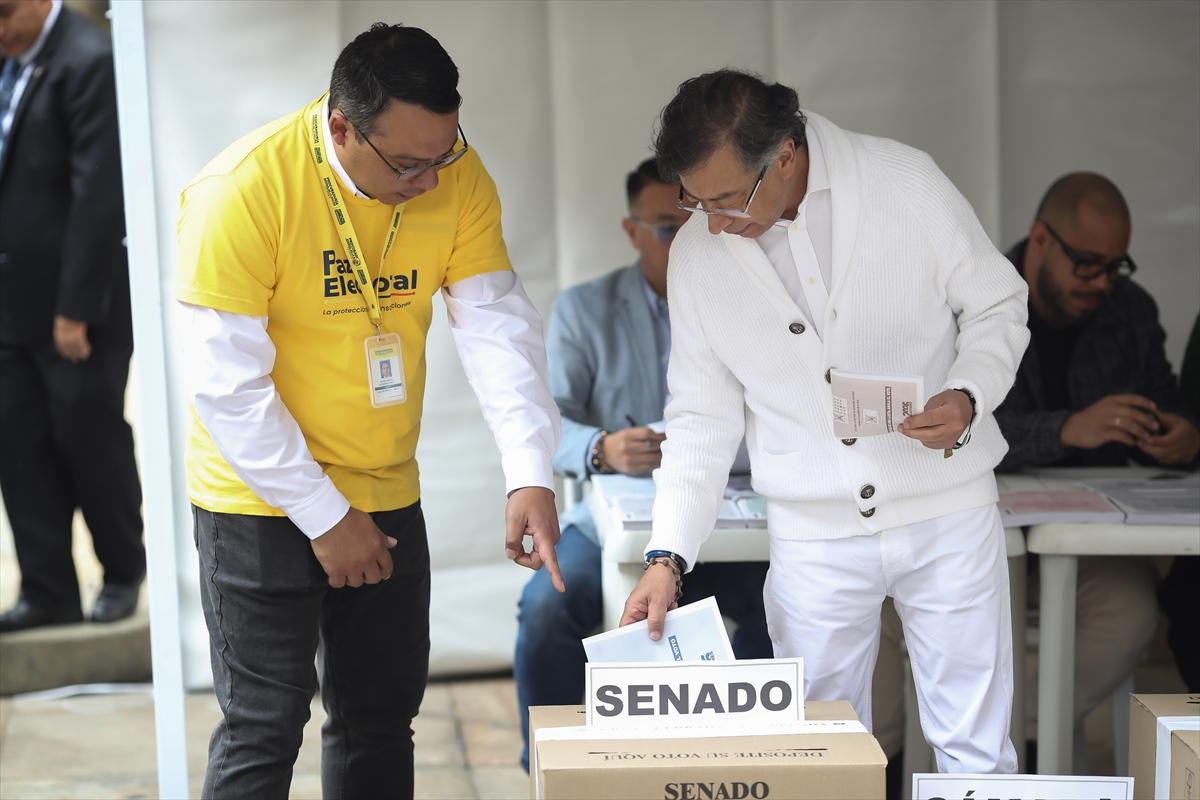
Colombian President Gustavo Petro voting in the Colombian parliamentary elections, 8 March 2026 - (Anadolu Ajansı)
The Chamber of Representatives, the lower house of the Colombian Congress, consists of a total of 183 members. Of these seats, 161 are elected from regional constituencies, 16 from special districts allocated to victims of conflict under the peace agreement, 2 from Afro-Colombian communities, 1 from the Raizal community of San Andrés and Providencia, and 1 from a constituency representing Colombians living abroad.
According to the results announced after the elections, the seat distribution in the Chamber of Representatives was as follows:
The remaining seats were distributed among various smaller parties, regional political movements, and candidates elected through special representation quotas.
According to these results, the political party with the most seats in the Chamber of Representatives is the Democratic Center. However, the seat distribution reflects a fragmented structure, and no single party secured an outright majority.
The 2026 congressional elections were held concurrently with intra-coalition consultation votes through which major political alliances selected their presidential candidates. These votes were conducted to determine the candidates of political blocs ahead of the presidential election scheduled for May 2026.
The elections were organized by Colombia’s three main political blocs: left, center, and right. In the primary election held within the Great Colombia Alliance (La Gran Consulta por Colombia), a coalition of right and center-right parties, Paloma Valencia received 45.70% of the vote and came in first.【5】
In the center bloc’s vote, Claudia López, former mayor of Bogotá received the highest share of votes and was designated as the bloc’s presidential candidate.
In the primary election of the Life Front (Frente por la Vida), the platform formed by left-wing and social democratic parties, Roy Barreras emerged victorious over Medellín’s former mayor Daniel Quintero and became the platform’s presidential candidate.
As a result of this process, Paloma Valencia, Claudia López, and Roy Barreras have secured the right to compete in the first round of the presidential election on 31 May 2026.
Following the announcement of the election results, Iván Cepeda, the Historical Pact’s presidential candidate described the legislative election outcomes as a “clear victory” and stated that his party had become the strongest political force in Congress.
However, analyses have noted that the Senate has a highly fragmented composition, suggesting that the legislative process may become more difficult in the new term.
Green Alliance senator Ariel Ávila highlighted the fragmented nature of Congress, stating that “a strong division exists among different political parties.” Ávila added that “regardless of the political orientation of the president, passing legislation in Congress will be challenging in the new term.”
United Nations Secretary-General Antonio Guterres, in a statement following the congressional elections, congratulated the Colombian people for participating peacefully in the vote. He also commended Colombian authorities for their efforts in ensuring a secure electoral environment.
The United Nations statement emphasized that the newly elected Congress will play a critical role in advancing the peace process in Colombia. It also highlighted the significance of the 16 representatives elected from peace zones established under the 2016 peace agreement between the Colombian government and the FARC-EP guerrilla group.
The United Nations also condemned attacks on the democratic process during the elections and called on authorities to ensure that the upcoming presidential elections are held in a safe and free environment.
The initial results announced after the congressional elections are based on rapid count data. These data, released by election authorities, have been explicitly stated to be not legally binding. The rapid count results provided the first indication of the likely composition of the new Congress.
The official certification of election results will be carried out after verification of ballots and review of electoral challenges. Election authorities have stated that final results will be officially declared once ballot verification and the evaluation of all challenges have been completed.
Al Jazeera. “Colombia Elects Congress, Chooses Presidential Candidates Amid US Tensions.” Accessed March 10, 2026. https://www.aljazeera.com/news/2026/3/8/colombia-elects-congress-chooses-presidential-candidates-amid-us-tensions.
Anadolu Ajansı. "Kolombiya’da Kongre Seçimlerini İktidar Partisi Kazandı." Accessed March 10, 2026. https://www.aa.com.tr/tr/dunya/kolombiyada-kongre-secimlerini-iktidar-partisi-kazandi/3855786.
Anadolu Ajansı. "Ruling Historical Pact Alliance Wins Colombia’s Congressional Elections." Accessed March 10, 2026. https://www.aa.com.tr/en/americas/ruling-historical-pact-alliance-wins-colombia-s-congressional-elections/3855989.
Anadolu Ajansı. "UN Chief Congratulates Colombia on Peaceful Congressional Elections." Accessed March 10, 2026. https://www.aa.com.tr/en/americas/un-chief-congratulates-colombia-on-peaceful-congressional-elections/3857460.
BBC Mundo. "Quiénes son los ganadores y perdedores tras los resultados de las elecciones del domingo en Colombia." BBC Mundo, 2026. Accessed March 10, 2026. https://www.bbc.com/mundo/articles/cx2jx8gn472o
Colombia One. "Colombia Results: Inter-Party Consultations." Accessed March 10, 2026. https://colombiaone.com/2026/03/08/colombia-results-inter-party-consultations/
Colombia One. “Colombia Results: Congressional Elections.” March 8, 2026. Accessed March 10, 2026. https://colombiaone.com/2026/03/08/colombia-results-congressional-elections/
El País. "Resultados Elecciones Legislativas Colombia 2026, en Vivo." Accessed March 10, 2026. https://elpais.com/america-colombia/elecciones-presidenciales/2026-03-09/resultados-elecciones-legislativas-colombia-2026-en-vivo.html.
RTVC Noticias. "Resultados Elecciones 2026 en Vivo." Accessed March 12, 2026. https://www.rtvcnoticias.com/resultados-elecciones-2026-en-vivo.
Reuters. “Colombia’s Ruling Party to Be Top Force in Senate Without Majority.” Accessed March 10, 2026. https://www.reuters.com/world/americas/colombias-ruling-party-be-top-force-senate-without-majority-2026-03-09/
The Washington Post. “Colombia's President Petro wins in congressional election, but lacks majority to advance reforms.” Accessed March 10, 2026. https://www.washingtonpost.com/world/2026/03/09/colombia-election-petro-party/4a4c21a2-1bf6-11f1-a29c-fd43da9a479a_story.html.
[1]
Anadolu Ajansı. “Ruling Historical Pact Alliance Wins Colombia’s Congressional Elections” Anadolu Ajansı. Access 10 March 2026. https://www.aa.com.tr/en/americas/ruling-historical-pact-alliance-wins-colombia-s-congressional-elections/3855989
[2]
Colombia One “Results of the Colombian Congressional Elections.” Colombia One. Access 10 March 2026. https://colombiaone.com/2026/03/08/colombia-results-congressional-elections/
[3]
Reuters. “Colombia's Ruling Party to Be Top Force in Senate, but Without Majority” Reuters. Access 10 March 2026. https://www.reuters.com/world/americas/colombias-ruling-party-be-top-force-senate-without-majority-2026-03-09/
[5]
Anadolu Ajansı. “Ruling Historical Pact Alliance Wins Colombia’s Congressional Elections” Anadolu Ajansı. Access 10 March 2026. https://www.aa.com.tr/en/americas/ruling-historical-pact-alliance-wins-colombia-s-congressional-elections/3855989

No Discussion Added Yet
Start discussion for "2026 Colombia Congressional Elections" article
Election Process and Voting
Senate Election Results
Chamber of Representatives Election Results
Presidential Primary Elections
Political Assessments and Analysis
International Reactions
Official Certification of Election Results