

This article was automatically translated from the original Turkish version.
2026 Colombian Presidential Election is the election held on 31 May 2026 to determine the president who will serve during the 2026–2030 term. In accordance with constitutional provisions, the successor to the incumbent president, Gustavo Petro, who is ineligible for re-election, will be chosen in this vote. In the first round, fourteen candidates competed, but none received more than fifty percent of the votes; therefore, the two candidates with the highest vote counts, Abelardo De La Espriella and Iván Cepeda Castro, advanced to a second round to be held on 21 June 2026.
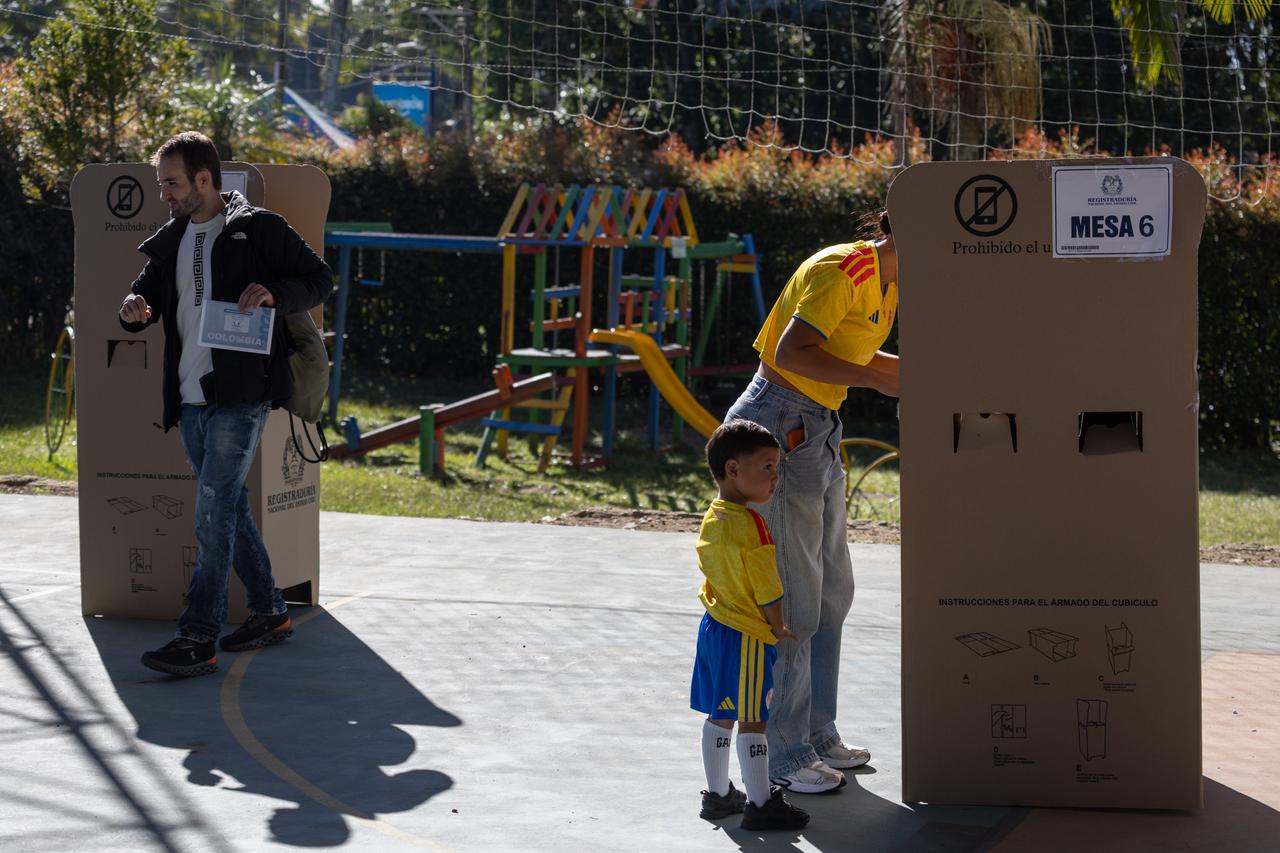
2026 Colombian Presidential Election, 31 May 2026 - (Anadolu Ajansı)
The 2026 presidential election in Colombia was triggered by the end of the term of President Gustavo Petro, who assumed office in 2022. In line with constitutional rules, Petro’s ineligibility for re-election initiated the electoral process. During Petro’s administration, various reform initiatives were introduced in health, education, and taxation, but some of these failed to secure sufficient legislative support.
The main issue on the campaign agenda has been the country’s more than six decades of internal conflict and rising criminal organization activity. Prior to the election, presidential candidate Miguel Uribe Turbay was fatally wounded in an armed attack during a campaign event in Bogotá on 11 August 2025.
Prior to the presidential election, legislative elections were held on 8 March 2026 to elect members of the Senate and the Chamber of Representatives. Concurrently, preliminary elections were organized by various political alliances and party blocs to select their presidential candidates.
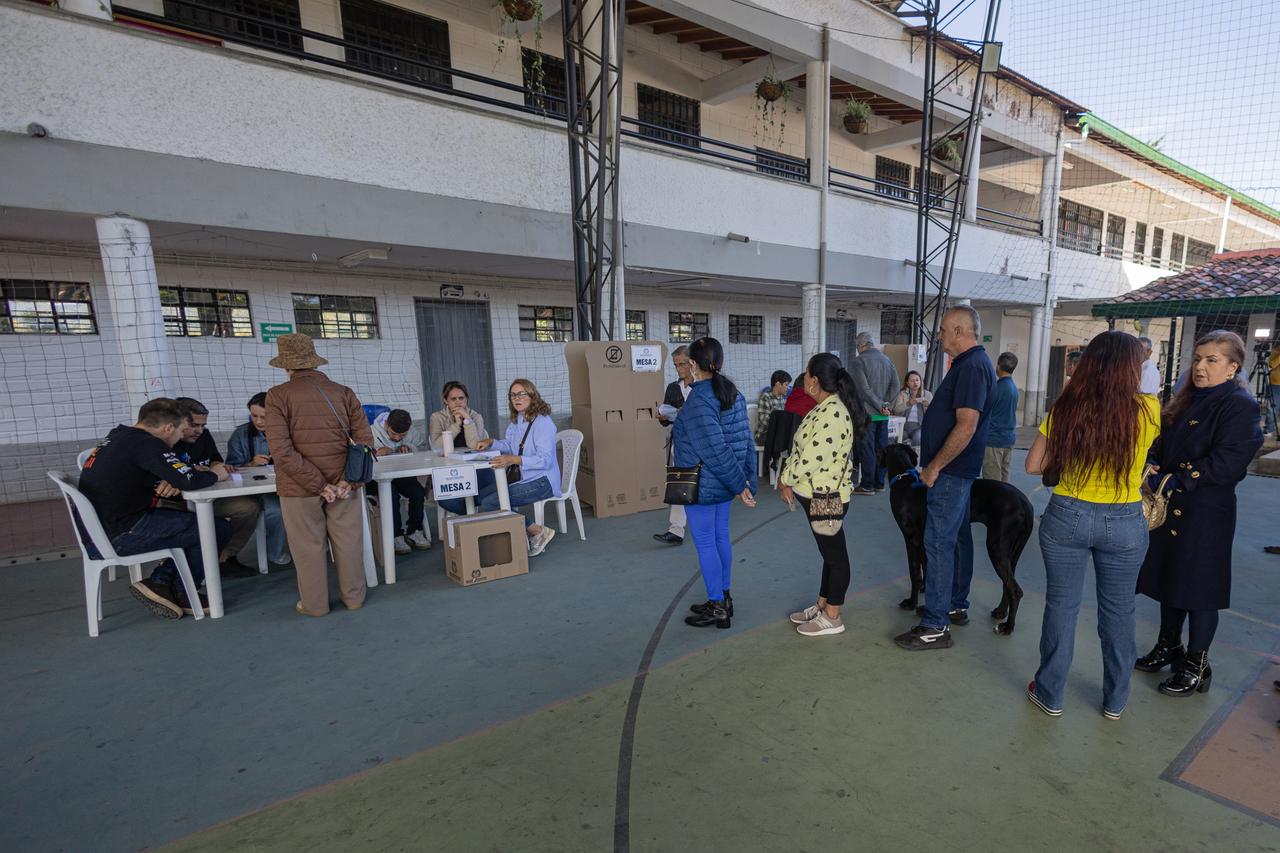
2026 Colombian Presidential Election, 31 May 2026 - (Anadolu Ajansı)
The Colombian Senate consists of a total of 103 seats. According to the announced results, the Pacto Histórico won the most seats with 25. This was followed by Centro Democrático with 17 seats, Partido Liberal with 13, Partido Conservador and Alianza por Colombia each with 10, Partido de la U with 9, Cambio Radical with 7, Ahora Colombia with 5, and Salvación Nacional with 4. Lists representing indigenous communities secured 2 seats, and the reserved quota for the official opposition won 1 seat. The Comunes Party, founded by former FARC members, failed to gain representation in the Senate.
In the Chamber of Representatives elections, Pacto Histórico won 43 seats and Centro Democrático won 28. No single political party or coalition secured an outright majority in either chamber.
On 8 March 2026, alongside the legislative elections, preliminary elections were held by various political blocs to select their presidential candidates. In the center-right bloc’s preliminary vote, Paloma Valencia received the highest number of votes, with Juan Manuel Oviedo placing second. Following these results, Valencia was designated as Centro Democrático’s presidential candidate.
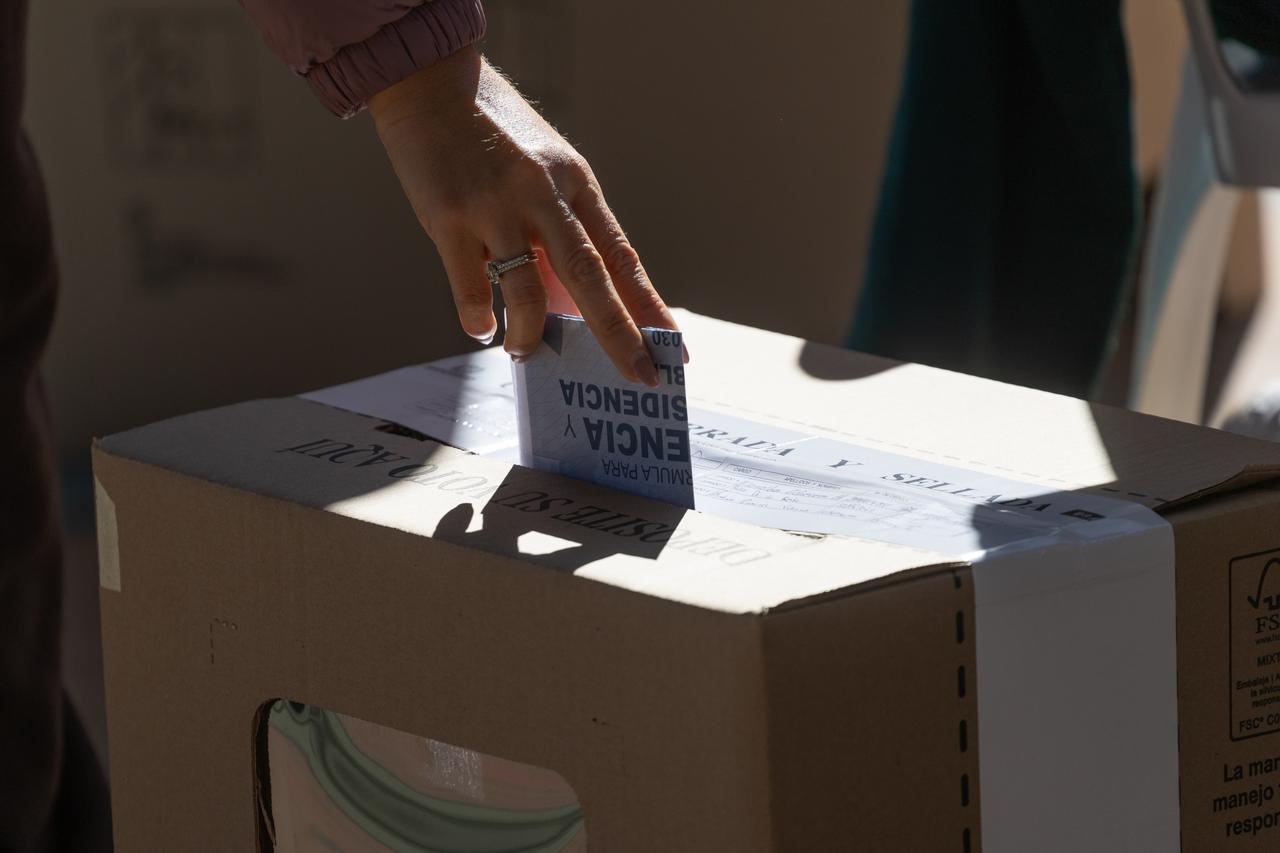
2026 Colombian Presidential Election, 31 May 2026 - (Anadolu Ajansı)
Abelardo De La Espriella (born 1979) is known as a lawyer and businessman and has never held elected office prior to this election. He ran as the candidate of the political movement Defensores de la Patria (Defenders of the Homeland). De La Espriella declined support from any political party and campaigned as an independent candidate. He is also known to hold citizenship in the United States and Italy.

Defenders of the Homeland Movement candidate Abelardo de la Espriella, 1 June 2026 - (Anadolu Ajansı)
De La Espriella’s platform is centered on security, public order, and economic policy. He pledged to implement security measures against criminal organizations and armed groups, construct ten mega-prisons, terminate the Petro administration’s “Paz Total” (Total Peace) policy, strengthen security cooperation with the United States and Israel, introduce tax cuts, and expand activities in the energy sector. His program also included aerial operations and the aerial spraying of coca cultivation areas in the fight against drug trafficking. During the campaign, he disclosed receiving death threats and conducted some rallies behind bulletproof glass.

Defenders of the Homeland Movement candidate Abelardo de la Espriella, 1 June 2026 - (Anadolu Ajansı)
Iván Cepeda Castro (born 1963) was nominated as the presidential candidate by Pacto Histórico (Historic Pact). Cepeda, who has served as a senator since 2014, is known for his work in human rights and his participation in peace negotiations. His father, Manuel Cepeda Vargas, a politician and senator affiliated with the Colombian Communist Party, was assassinated in 1994.
Cepeda emphasized continuing the social reforms initiated under Petro, sustaining the “Total Peace” strategy, combating corruption, implementing tax reform, and promoting rural development. He selected former senator and indigenous representative Aida Quilcué as his vice-presidential candidate. Legal proceedings have long existed between Cepeda and former President Álvaro Uribe; these cases concluded with acquittals issued against Uribe.
Paloma Valencia Laserna ran as the candidate of the Centro Democrático (Democratic Center) party, founded by former President Álvaro Uribe. As a senator, Valencia became the first woman to win her party’s presidential nomination. She is also the granddaughter of former President Guillermo León Valencia.
Valencia’s campaign platform included strengthening security policies against armed groups, cooperating with the United States and European countries against drug trafficking, implementing a new security and cooperation program called “Plan Colombia 2.0”, limiting public spending, and increasing investment in mining and oil sectors. She selected economist and former head of the national statistics agency Juan Carlos Oviedo as her vice-presidential candidate.
A total of fourteen candidates competed in the election. Other candidates included Sergio Fajardo Valderrama, Claudia López, Raúl Santiago Botero Jaramillo, Óscar Mauricio Lizcano Arango, Sondra Macollins Garvin Pinto, Roy Leonardo Barreras Montealegre, Luis Gilberto Murillo Urrutia, Carlos Eduardo Caicedo Omar, Miguel Uribe Londoño, and Gustavo Matamoros Camacho.
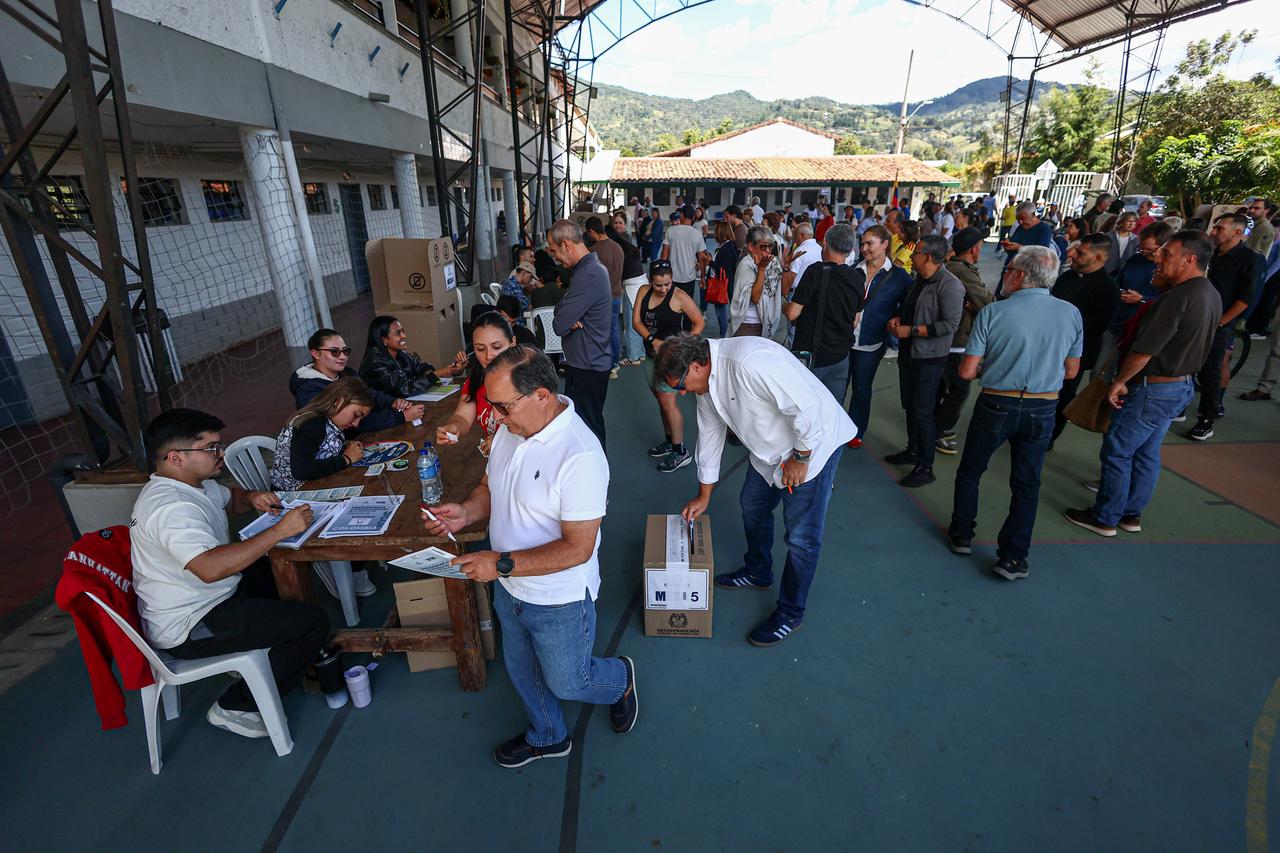
The first round of Colombia’s presidential election took place on 31 May 2026 between 08:00 and 16:00 local time. A total of 13,489 voting centers were established nationwide. The number of registered voters was announced as exceeding 40 million. To ensure election security in a country with a population exceeding 53 million, more than 246,000 soldiers and police officers were deployed. The process was also monitored by over 1,200 international observers from more than 100 countries. In accordance with regulations in force on election day, the sale and consumption of alcohol in public areas were temporarily prohibited.
National Civil Registry (Registraduría Nacional del Estado Civil) announced that the vote count was completed for all 122,020 ballot boxes. The number of votes and vote percentages received by candidates were as follows:【1】
More than 23.6 million voters cast ballots. The count revealed that 245,342 ballots were invalid and 406,830 ballots were blank.
In the first round, no candidate received more than 50 percent of valid votes. Therefore, under Colombia’s two-round electoral system as stipulated in the Constitution, the election proceeded to a second round. The candidate who placed first in the first round, Abelardo De La Espriella, and the candidate who placed second, Iván Cepeda Castro, have qualified to compete in the second round on 21 June 2026.
Following the first-round results, Abelardo De La Espriella addressed supporters at his campaign headquarters in Barranquilla. In his speech evaluating the advance to the second round, he said, “We have reached the second round thanks to over ten million Colombians who answered the call. In twenty-one days, we will write history.”
De La Espriella also posted on social media: “We will defeat tyranny and absolutism.” In his Barranquilla speech, he made various remarks targeting President Gustavo Petro and his rival Iván Cepeda Castro.
Iván Cepeda Castro, speaking to supporters in Bogotá on election night, noted that despite leading in public opinion polls, he finished second in the first round.
Cepeda referred to statements made by President Petro regarding preliminary vote counts and asserted that discrepancies in the preliminary data must be clarified.
Cepeda called for investigations into allegations of vote buying and announced his intention to continue campaigning for the second round. He concluded his speech by appealing for voter support.
Finishing third in the first round, Paloma Valencia Laserna announced her support for Abelardo De La Espriella in the second round. In her statement, she assessed Colombia’s political direction and confirmed her endorsement of De La Espriella.
President Gustavo Petro shared various objections to the preliminary vote counts announced on election night via his social media account. Petro made allegations regarding companies involved in election logistics and preliminary counting, arguing that an investigation into the electoral system is necessary.
In his statement, Petro emphasized that “the preliminary counts must be clearly distinguished from the official count,” and declared that he would accept only the results officially announced after the process has been verified by the electoral court.
During the 2026 presidential election campaign, the future of Colombia’s relations with the United States emerged as a key issue. During the presidency of Gustavo Petro, disagreements arose between the two countries, particularly regarding migration, security, and counter-narcotics policy.
In September 2025, the U.S. administration imposed certain sanctions on Petro, citing Colombia’s insufficient fulfillment of its counter-narcotics obligations. Following Petro’s visit to Washington in February 2026, new steps toward cooperation in combating drug trafficking were taken.
The presidential candidates’ approaches to U.S. policy differed. Iván Cepeda Castro criticized existing international counter-narcotics policies and advocated for a more independent foreign policy. Abelardo De La Espriella and Paloma Valencia Laserna both supported strengthening security and economic ties with the United States.
Al Jazeera. “Cepeda, de la Espriella Advance in Colombia’s Presidential Election.” Al Jazeera, May 31, 2026. Accessed June 2, 2026. https://www.aljazeera.com/news/2026/5/31/cepeda-de-la-espriella-advance-in-colombias-presidential-election
Al Jazeera. “Colombians Head to the Polls to Choose President Gustavo Petro’s Successor.” Al Jazeera, May 31, 2026. Accessed June 2, 2026. https://www.aljazeera.com/news/2026/5/31/colombians-head-to-the-polls-to-choose-president-gustavo-petros-successor
Anadolu Ajansı. “Kolombiya’da Cumhurbaşkanı Seçimi İkinci Tura Kaldı.” Anadolu Ajansı. Accessed June 2, 2026. https://www.aa.com.tr/tr/dunya/kolombiyada-cumhurbaskani-secimi-ikinci-tura-kaldi/3952583
Anadolu Ajansı. “Kolombiya’da Halk Cumhurbaşkanı Seçimi İçin Sandık Başında.” Anadolu Ajansı. Accessed June 2, 2026. https://www.aa.com.tr/tr/dunya/kolombiyada-halk-cumhurbaskani-secimi-icin-sandik-basinda/3952368
Anadolu Ajansı. “Kolombiya’da Halk Yarın Cumhurbaşkanı Seçimi İçin Sandık Başına Gidiyor.” Accessed June 2, 2026. https://www.aa.com.tr/tr/dunya/kolombiyada-halk-yarin-cumhurbaskani-secimi-icin-sandik-basina-gidiyor/3951681
CNN en Español. “Colombia ya Eligió a su Nuevo Congreso: ¿Qué Significa para el Próximo Presidente y Sucesor de Petro?” CNN en Español, March 9, 2026. Accessed June 2, 2026. https://cnnespanol.cnn.com/2026/03/09/colombia/elecciones-legislativas-congreso-presidente-petro-orix
CNN. “Colombian Presidency Goes to Runoff Election That Could Redefine Relations with the US.” CNN, May 31, 2026. Accessed June 2, 2026. https://edition.cnn.com/2026/05/31/americas/colombia-runoff-espriella-cepeda-latam-intl
Congressional Research Service. “Colombia’s 2026 Presidential Election.” Congressional Research Service, 2026. Accessed June 2, 2026. https://www.congress.gov/crs-product/IN12689
EFE. “Colombia Entra Este 2026 en un Crucial Año Electoral que Definirá su Futuro Político.” EFE, January 2, 2026. Accessed June 2, 2026. https://efe.com/mundo/2026-01-02/colombia-electoral-2026/
El País. “Resultados de las Elecciones en Colombia 2026, en Vivo | De la Espriella, al Presidente de Honduras: ‘Requerimos el Apoyo de la Comunidad Internacional’.” El País, May 31, 2026. Accessed June 2, 2026. https://elpais.com/america-colombia/elecciones-presidenciales/2026-05-31/resultados-de-las-elecciones-colombia-2026-en-vivo.html
Registraduría Nacional del Estado Civil. "Resultados Elecciones Presidenciales Colombia 2026." Registraduría Nacional del Estado Civil. Accessed June 2, 2026. https://resultados.registraduria.gov.co/resultados/0/00
[1]
Registraduría Nacional del Estado Civil, “Resultados electorales,” accessed 2 June 2026, https://resultados.registraduria.gov.co/resultados/0/00.

No Discussion Added Yet
Start discussion for "2026 Colombian Presidential Election" article
Background to the Election Process
Legislative Elections of 8 March 2026
Senate Composition (2026–2030)
Internal Party Preliminary Elections
Presidential Candidates
Abelardo De La Espriella
Iván Cepeda Castro
Paloma Valencia Laserna
Other Candidates
First Round of Elections (31 May 2026)
First Round Election Results
Advance to the Second Round
Post-Election Statements
De La Espriella’s Statement
Cepeda’s Statement
Valencia’s Statement
President Petro’s Response
Foreign Policy Dimension
Relations with the United States