


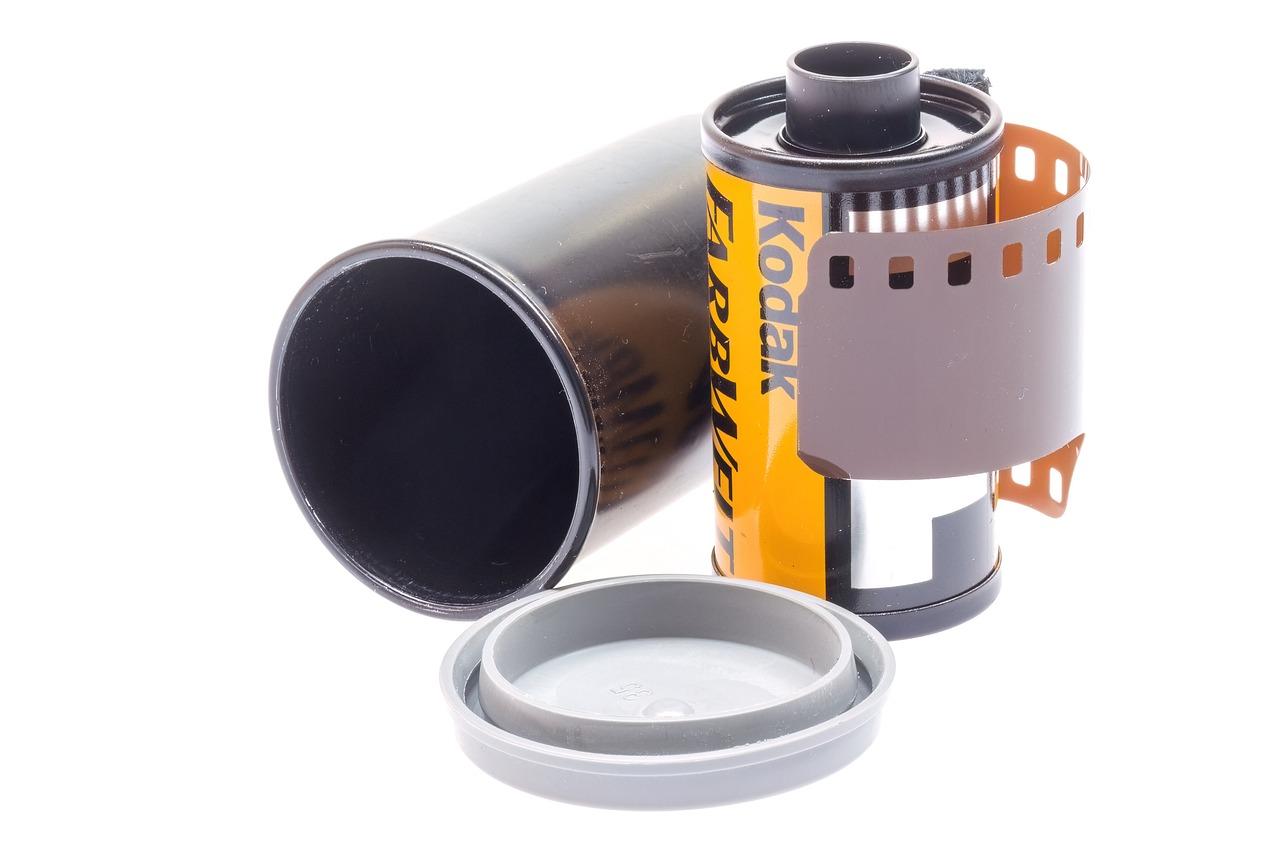
35mm Film
First Developed Date | 1892 | ||||||||
|---|---|---|---|---|---|---|---|---|---|
Key Figures | William Kennedy Laurie Dickson Thomas Edison George Eastman | ||||||||
35mm film is one of the most widely used film formats in the history of cinema and photography. First introduced in the late 19th century, this format was a favorite among amateur and professional users for many decades. Despite advancements in digital technology, 35mm film continues to hold its popularity as a nostalgic and artistic medium.
The 35mm film format emerged as a groundbreaking standard in the late 19th century, revolutionizing cinema and photography. The foundation for this format was laid in 1889 when George Eastman introduced cellulose nitrate-based flexible film strips. This new material was a lighter, more portable, and easier-to-produce alternative to glass plates previously used in photography and filmmaking.
In 1892, Thomas Edison and his collaborator William Kennedy Laurie Dickson began working on a motion picture system that utilized this flexible film. Dickson designed a 35mm-wide film strip with regular perforations (holes) along both edges for Edison's Kinetoscope system. These perforations allowed mechanical systems to advance the film at a consistent rate. The primary reasons for choosing the 35mm width were its sufficient optical resolution and physical durability, making it well-suited for use with machinery.
The commercialization and standardization of 35mm film were driven by Kodak, which began producing 35mm film in 1896 to fit Edison’s specifications. These film rolls, with their standardized dimensions, played a pivotal role in shaping the history of cinema. The frame size of a single image on 35mm film was set at 24x36 mm, a specification that remained unchanged for decades.

35mm Film (Source)
By the early 20th century, 35mm film had become the driving force behind the rapid growth of the film industry. In the 1920s, Hollywood’s widespread adoption of this format helped establish cinematographic standards. In 1909, the Society of Motion Picture and Television Engineers (SMPTE) officially recognized 35mm as the standard format for motion pictures. During this period, films were silent, and part of the film strip was later adapted for optical sound recordings, which further solidified its utility.
35mm film was not only a technical standard but also a medium that transformed storytelling and visual language. The transition from silent films to sound films occurred in 1927 with The Jazz Singer, and once again, 35mm was the format of choice during this cinematic revolution.
The adoption of 35mm film in photography was not as immediate as in cinema. Photography for many years relied on large glass negatives or wider film formats. However, in 1925, the introduction of the first portable 35mm camera by Germany’s Leitz Camera (Leica) changed the landscape of photography.
Leica’s compact camera adapted 35mm film strips, originally designed for motion pictures, into single-frame exposures for photography. This innovation was revolutionary in terms of portability and practicality. 35mm film quickly gained popularity, especially among photojournalists, street photographers, and amateur users. Its small size and affordability made it accessible to a broad audience.
By the 1930s, advancements in chemical emulsions made 35mm film suitable for both black-and-white and color photography. Major film manufacturers such as Kodak, Agfa, and Fujifilm began offering a wide range of 35mm films for both photography and cinema. Innovative products like Kodachrome (1935), one of the earliest color film emulsions, further solidified the format’s prominence in the photography world.
In the 1950s, when digital technology was non-existent, the 35mm format was regarded as the gold standard for everything from documentaries to big-budget Hollywood productions.

35mm Film Rolls (Source)
The rise of digital technologies, especially since the 2000s, has significantly reduced the commercial use of 35mm film. However, this format has not disappeared entirely. Today, many photographers and filmmakers embrace 35mm film as a medium for artistic expression and nostalgia. The use of analog film offers a creative process that contrasts with the instant results of digital technology, providing a deeper connection to the medium.
Analog photography communities continue to thrive, using film cameras and 35mm film to preserve the aesthetic and tactile qualities of this classic format. These communities often share their experiences through social media and other platforms, inspiring younger generations to explore analog techniques. Among young photographers, the unique textures and color tones of the film provide an alternative to the perceived perfection of digital images.
In the industry, major manufacturers such as Kodak, Ilford, and Fujifilm still produce 35mm film, albeit on a smaller scale. In addition, boutique film manufacturers are entering the market, offering innovative emulsions to cater to the renewed interest in analog photography.
In cinema, directors such as Christopher Nolan, Quentin Tarantino, and Paul Thomas Anderson remain loyal to the format, shooting their films on 35mm to preserve their cinematic legacy. Film laboratories continue to provide services for both developing film and restoring old footage.
Today, 35mm film is not merely a recording technology but also a symbol of analog aesthetics. It stands as a living tradition, maintaining its relevance in the digital age.
Eastman Museum Archives. Early Film Formats and Their Evolution. Rochester: George Eastman Museum, 2015.
Jones, Sarah. "35mm Film: From Standardization to Art." In Film Formats Through the Ages, edited by Michael Green, 87–105. New York: Routledge, 2018.
Kodak. "Why Film Matters: A Look at 35mm." Accessed January 10, 2025. https://www.kodak.com/en/motion/why-film-matters.
Kodak. The Essential Guide to Film Photography: Techniques, History, and Formats. Rochester: Eastman Kodak Company, 1998.
Smith, John. "The Legacy of 35mm Film in Modern Cinematography." Journal of Film Studies 12, no. 3 (2021): 145–168.

35mm Film
First Developed Date | 1892 | ||||||||
|---|---|---|---|---|---|---|---|---|---|
Key Figures | William Kennedy Laurie Dickson Thomas Edison George Eastman | ||||||||
No Discussion Added Yet
Start discussion for "35mm Film (English)" article
History
Standardization in the Film Industry
The Rise of 35mm in Photography
Development and Standardization
Technical Specifications
Applications
35mm Film Today