


This article was automatically translated from the original Turkish version.

Bosnia and Herzegovina became for me not merely a physical journey, but also an inward intellectual voyage. Before traveling to this country, I read Alija Izetbegović’s work Islam Between East and West, which prompted me to question the relationship between Islamic thought and modernity. Engaging with the intellectual and social analyses in the book while observing them within Bosnia’s historical fabric was a unique experience.
As I walked along Sarajevo’s stone streets, every mosque, bridge, caravanserai, and stone building laid bare the profound cultural legacy of the Ottoman Empire. These structures were not merely historical relics; they were emotional imprints.
The fact that most mosques were closed except for the five daily prayers, ostensibly for post-war security reasons, led me to profound reflections on freedom of belief and cultural continuity. This silence in Bosnia carried both the weight of the past and the sensitivities of the present.
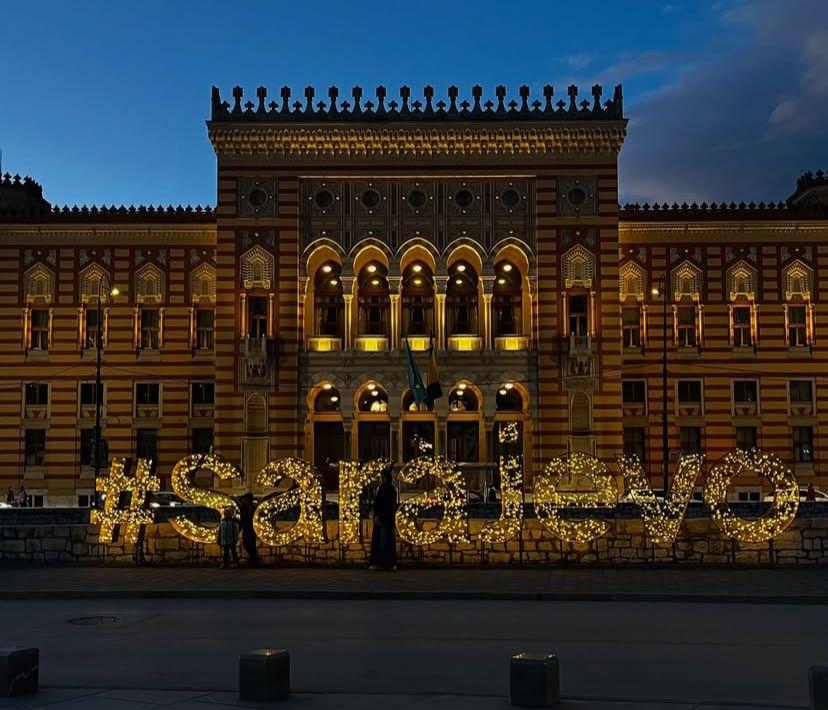
(Photo: Berranur Öksüzömer)
The shock I felt upon encountering a massive cross carved into the high mountains found meaning in this phrase echoing in my mind:
“You may place as many crosses on the mountains as you wish, but every time you look to the sky, you will see the crescent.”
This sentence captured, in its most concise form, Bosnia’s resilience and its identity steeped in faith. These lands, shaped by war, held not only the traces of history but also the struggle of memory in the present.
Bosnia, in one sense, resembles an incomplete story—a landscape that has endured through pain yet remains standing with hope.
This is not merely a land that preserves the Ottoman heritage, but one that carries it forward with the spirit of the present.
For every descendant of the Ottomans, Bosnia is not just a place to be visited, but a place to be felt.
Among the things that made my journey through Bosnia unforgettable, foremost was the sincerity of the local people.
Nermina, who welcomed us warmly upon our return home, was the first embodiment of cultural connection.
Fadıla, whom I met on the street, exemplified the living tradition of hospitality by guiding us to a local pastry shop.
And of course, meeting the legendary “Tea Uncle Hüseyin”... His smiling face and conversations summed up the warmth of the Bosnian people.
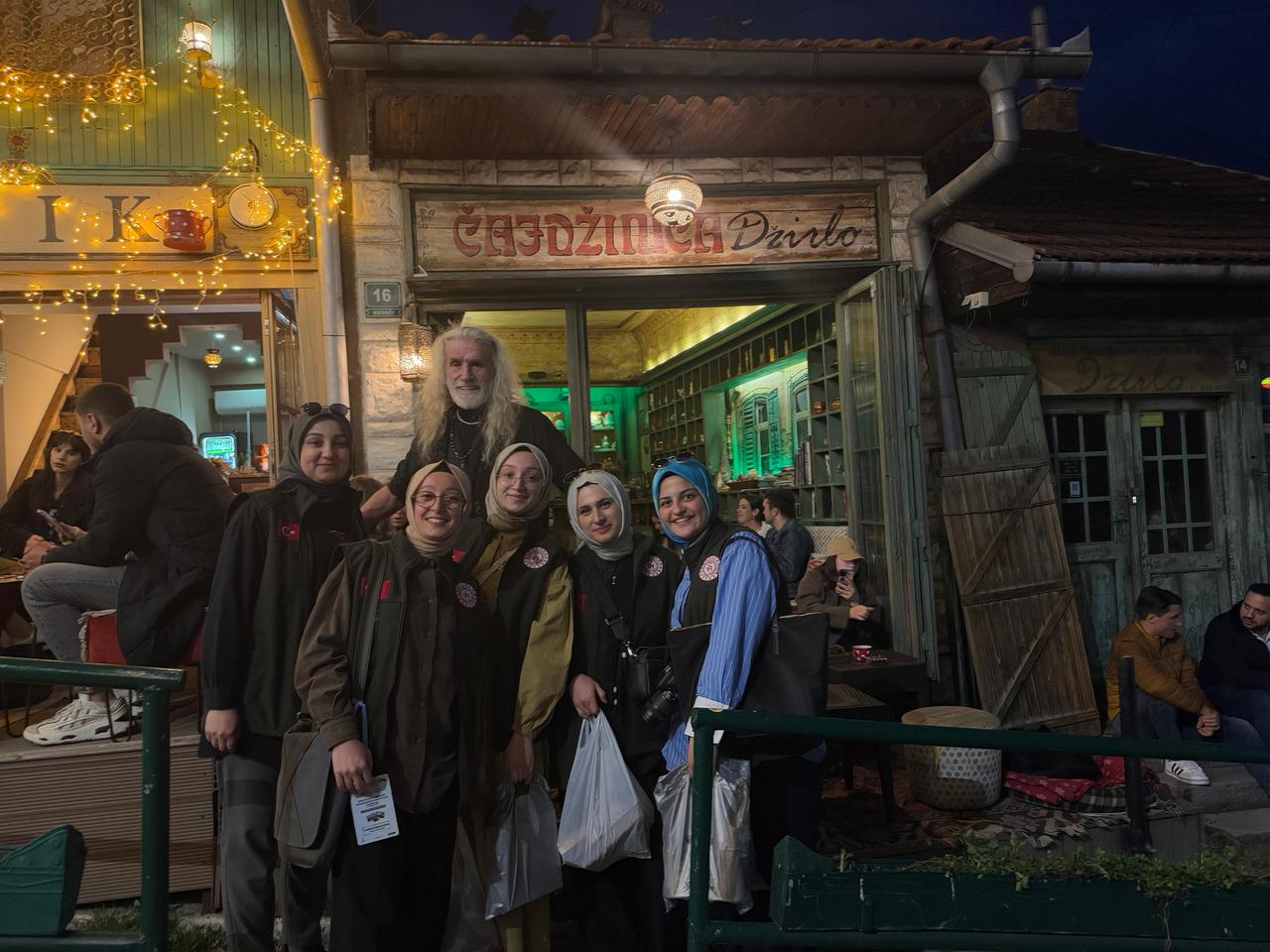
(Photo: Berranur Öksüzömer)
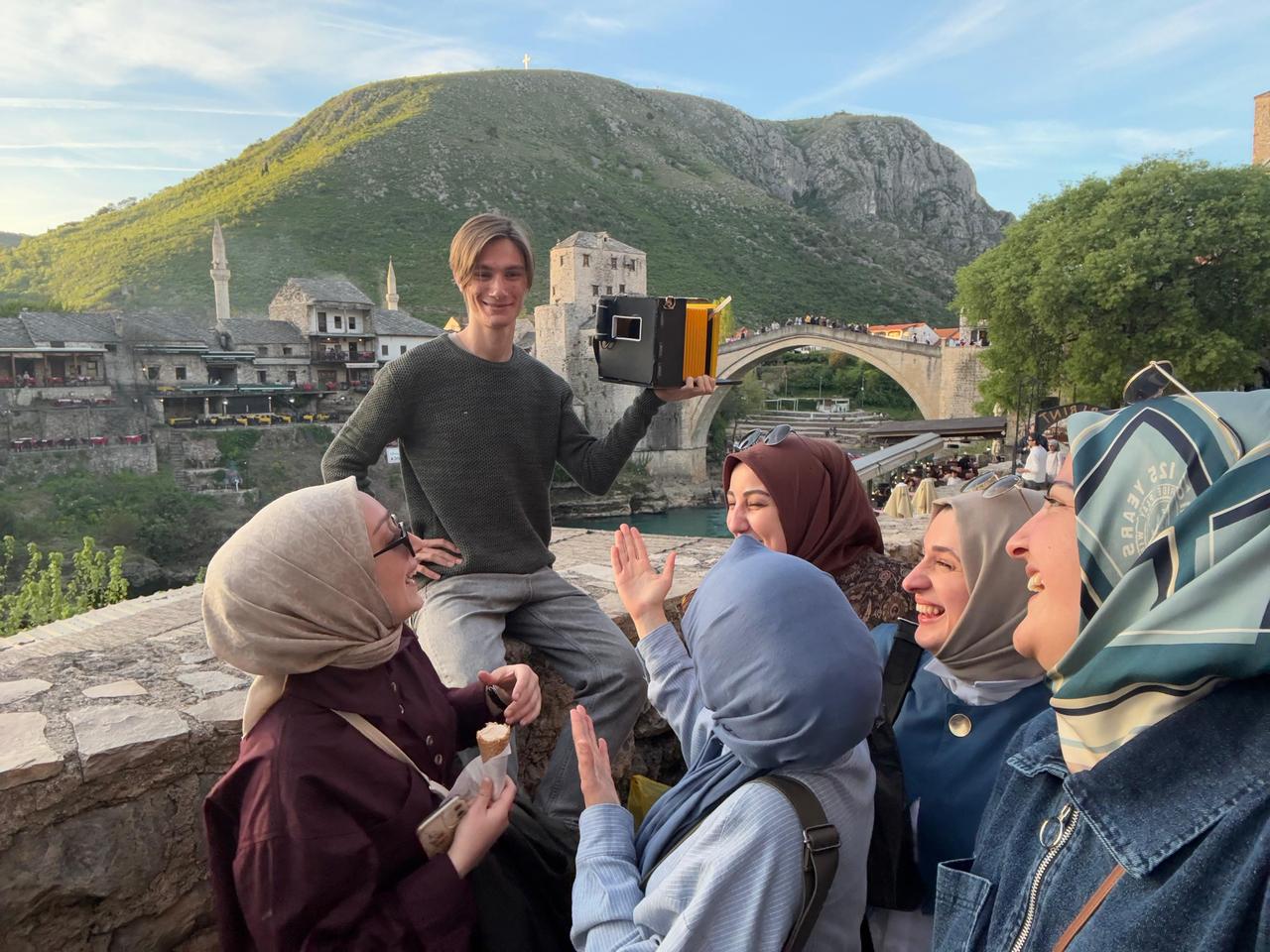
(Photo: Berranur Öksüzömer)
Bosnia’s cultural richness was not confined to architecture and human relationships—it was also embedded in its cuisine.
The Bosnian burek, manti, and dessert hurmašica represented the aspect of this culture that could be tasted.
Each bite carried the history, suffering, and hope of these lands.
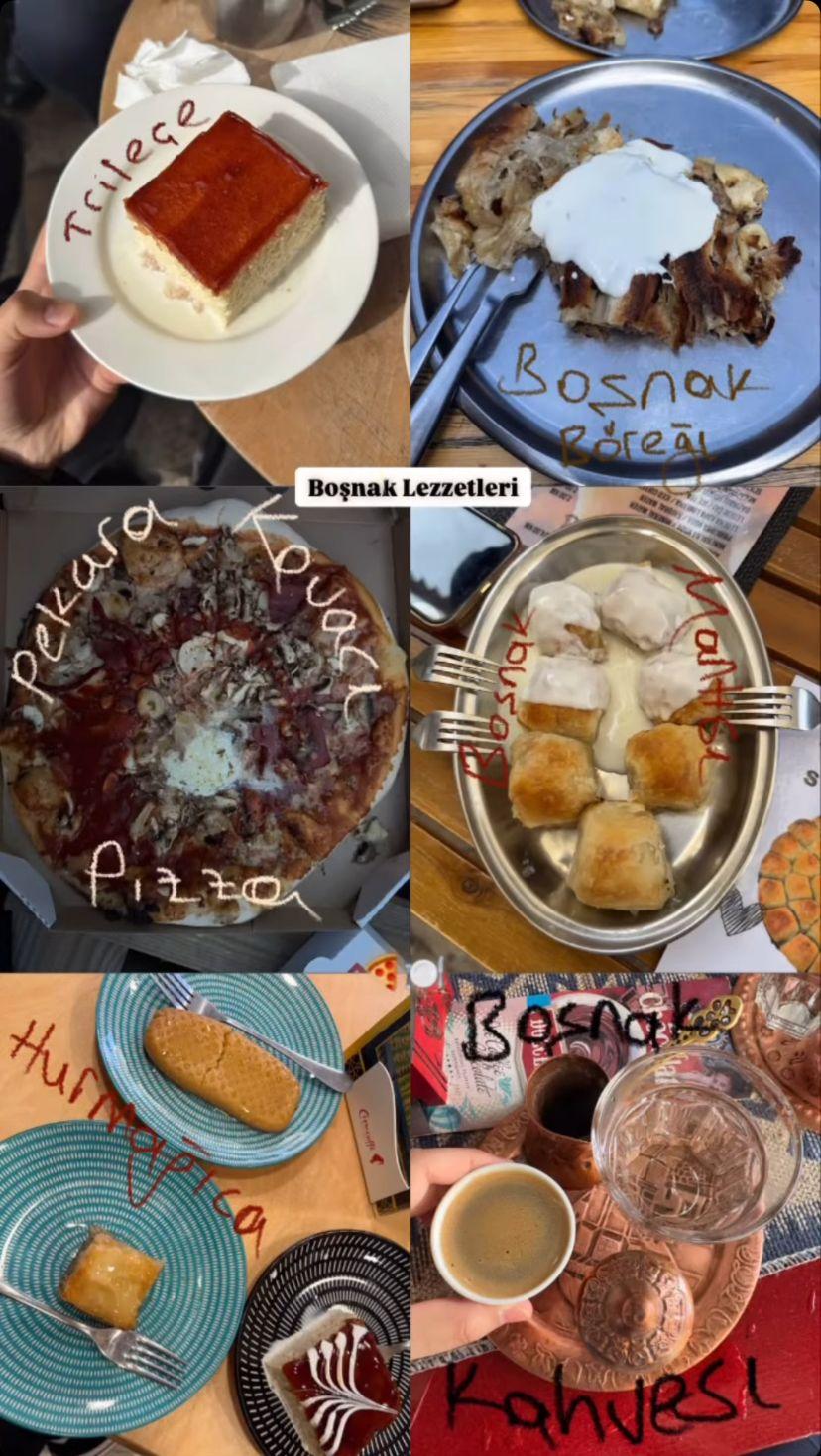
(Photo: Berranur Öksüzömer)
Bosnia and Herzegovina is far more than a destination on a travel itinerary—it is its history, its people, and its culture.
This is a place to be contemplated, to be experienced with feeling.
And in my view, it is a heritage landscape that every descendant of the Ottomans must see.
Confronting the Past in the Streets
Crescent in the Mountains, Resistance in the Sky
Bosnia, a Story Left Incomplete
Warm People, Unforgettable Memories
A Place Where Culture Meets Flavor
Final Words: Bosnia Is Not a Place to Visit, But to Live