

This article was automatically translated from the original Turkish version.
Barış Manço is an original artist who actively used music as a vehicle for conveying messages, interpreting traditional sources in an original form—not only through his music but also through his lifestyle and appearance.
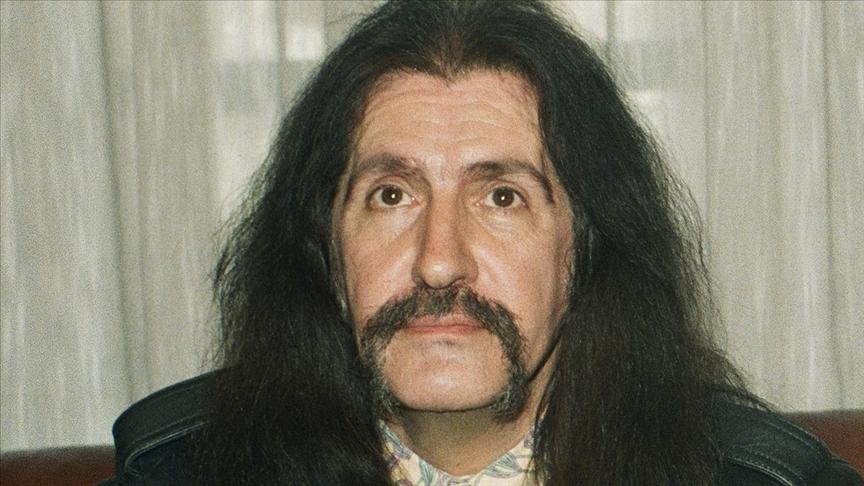
Barış Manço (AA)
The transmission and preservation of cultural heritage, which constitutes a society’s material and spiritual existence as well as its written and oral values, through language and cultural education holds vital importance for the development of individuals and societies.
Barış Manço produced works nourished by Turkish cultural life, employing proverbs, idioms, and folk expressions that conveyed the essence and values of the Turkish nation. The artist believed that Turkish, with its immense flexibility, was the world’s finest medium of expression, and throughout his artistic career he sought to narrate “what belonged to me”—without severing ties to his language, faith, or people. In this way, Barış Manço offered a model that served character formation by selecting melodies that were character-building, inspirational, and aligned with moral values.
His art is a synthesis of what may be called “Turkish music,” rooted in Dede Korkut, Pir Sultan Abdal, and Nasrettin Hoca, and this synthesis has been embraced by broad segments of society without regard to any ideological division.
Barış Manço’s songs contain numerous mystical themes and symbols drawn from Anatolian belief systems, particularly Turkish-Islamic Sufism. The artist reconfigured these symbols within popular culture, ensuring the continued vitality of collective memory.
Barış Manço - Dört Kapı (barismancotv)
The detailed Sufi symbols used in his songs are as follows:
By bringing these mystical and Sufi codes into popular music, Barış Manço pointed toward the philosophical and spiritual depth of human existence.
Barış Manço - Olmaya Devlet Cihan'da Bir Nefes Sihhat Gibi (barismancotv)
When viewed through the lens of “value education,” Barış Manço’s songs prominently feature themes of respect for cultural heritage, religious values, and reverence for Turkish and familial elders. In songs such as “Bebek” and “Nenni Bebek,” emphasis is placed on lullabies as part of cultural heritage, while “Bugün Bayram” explores respect for family elders and the values of holidays.
The value of sensitivity appears in his songs through sub-themes of awareness toward social events, historical heritage, and the natural environment. In “Bal Sultan,” the tragedy of girls married at a young age is portrayed; in “Dut Ağacı,” attention is drawn to distorted urbanization and environmental destruction. Themes of love are intensely explored through patriotism, the flag, and affection for animals; the song “Arkadaşım Eşek” instilled love for animals in children. The value of loyalty is conveyed in works such as “Can Bedenden Çıkmayınca” and “Süper Babaanne” through the concepts of fidelity and devotion. The value of propriety is addressed in songs like “Ayı” and “Nane Limon Kabuğu,” within the framework of social norms and politeness.
Barış Manço did not merely articulate these values theoretically; he reinforced them in his songs through attitudes and behaviors such as earning a lawful livelihood, greeting others respectfully, refraining from violating others’ rights, and expressing gratitude. His preference for positive language is evidenced by his use of the word “kötü” only once and his complete avoidance of the word “çirkin.”
The artist naturally incorporated religious references as cultural elements in his transmission of values. In the song “Halil İbrahim Sofrası,” virtues such as knowing one’s limits, avoiding harmful speech, mastering the self, and abstaining from greed for wealth are conveyed through the metaphor of a table.
Barış Manço - Halil İbrahim Sofrası (barismancotv)
In “Sarı Çizmeli Mehmet Ağa,” the feeding of the poor, the comforting of orphans, and the transience of worldly possessions are emphasized, while the phrase “five meters of cloth” serves as a reminder of death. In “Kazma,” the importance of lawful labor and contentment is highlighted, alongside references to religious concepts such as Zamzam water and the balance between this world and the hereafter.
In “Dıral Dede’nin Düdüğü,” the importance of sharing and avoiding the violation of others’ rights are addressed, urging listeners to avoid selfishness. Manço’s song “Eğri Büğrü” teaches that one must not stray from the path one knows to be right. “Olmaya Devlet Cihanda” reminds listeners that health surpasses all worldly possessions and that truthfulness will be accounted for on the Day of Judgment.
Manço crafted his didactic language in such a way that it would not disturb his audience, while also including himself in the process, asking: “Does Barış himself take a lesson when he speaks?” He first called upon his own self, then others, and his sincere style ensured that religious and moral messages were easily accepted by all segments of society.
The song “Dört Kapı,” featured in Barış Manço’s 1985 album “24 Ayar,”【2】 is the most concrete manifestation of his profound interest in Turkish-Islamic Sufism and the station of the Perfect Human.
Barış Manço - Sarı Çizmeli Mehmet Ağa (Emre Müzik Offical)
The song reinterprets the Sufi concepts of Sharia, Tariqa, Ma’rifa, and Haqiqa as “four gates,” transporting the philosophy of sages such as Yunus Emre and Hacı Bektaş Veli into the realm of modern music. Concepts such as “the right of salt and bread,” “sustenance,” “hırka,” and “lokma” are not merely conveyed through their literal meanings but are enriched with their ontological depth. The line “Forty patched hırka is enough, I will wear the one Idris sewed” references Prophet Idris (the master of tailors), while simultaneously alluding to the Sufi tradition of asceticism and renunciation of worldly goods.
The saying attributed to Hz. Ali (may God be pleased with him), “I will be the servant of anyone who teaches me a single letter,” is rephrased in the song as “Teach me one letter, I will serve you for forty years,” underscoring the vital importance of knowledge and education on the path to becoming a Perfect Human.【3】
When we examine these layers of meaning, we see that Manço transformed his songs from mere musical pieces into sources of spiritual insight, each listening revealing a new door of wisdom.
Barış Manço - Unutamadım (Emre Müzik Offical)
Throughout his artistic life, Barış Manço consciously pursued the mission of preserving social values and transmitting them to new generations, leaving behind “a sweet echo that endures under this dome.”
He viewed children as “Children Who Will Become Men,” instilling in them not only habits such as drinking milk and brushing teeth, but also fundamental human values such as honesty, sharing, and respect. His works possess the quality to meet the affective needs of modern education systems—educating students without overwhelming them while awakening national consciousness.
The virtuous human model embodied in Barış Manço’s songs is one who earns a lawful livelihood, acts with integrity, remains faithful to tradition, yet is also well-versed in the knowledge of the age. This musical form of education, which he tested and successfully realized, must be revived today at all levels of formal and informal education and integrated as a vital component of value transmission.
Barış Manço became a carrier and transmitter of Turkish culture in the 20th century, establishing an unshakable bridge from the past to the future through his works. The artist, who has secured an indelible place in the collective memory of society, is not merely a singer but a modern minstrel, a philosopher, and above all, the enduring “Big Brother Barış” of all Türkiye.
May he rest in peace.
Emre Müzik Offical. "Barış Manço - Sarı Çizmeli Mehmet Ağa." YouTube. Accessed June 14, 2026. https://www.youtube.com/watch?v=GeUAKFWQMMY
Emre Müzik Offical. "Barış Manço - Unutamadım." YouTube. Accessed June 14, 2026. https://www.youtube.com/watch?v=KMu5OfRUqFc
Erdoğan, Göktürk. “Barış Manço Örneğinden Hareketle Müziğin Ahlak Eğitimindeki Önemi ve İşlevi.” *Eğitim ve Öğretim Araştırmaları Dergisi (Journal of Research in Education and Teaching)* 4, no. 1 (February 2015): 117–124. Accessed June 13, 2026. http://www.jret.org/FileUpload/ks281142/File/12.erdogan.pdf
Yılmaz, Oğuzhan. “Barış Manço’nun ‘Dört Kapı’ Adlı Eserinin Metinlerarasılık Bağlamında İncelenmesi.” Asya Studies: Akademik Sosyal Araştırmalar 10 (Winter 2019): 13–24. Accessed June 10, 2026. https://dergipark.org.tr/en/download/article-file/913643
barismancotv. "Barış Manço - Dört Kapı HD Klip." YouTube. Accessed June 14, 2026. https://www.youtube.com/watch?v=FkJ8LwYuW40
barismancotv. "Olmaya Devlet Cihan'da Bir Nefes Sıhhat Gibi." YouTube. Accessed June 14, 2026. https://www.youtube.com/watch?v=mMemWlpRnMQ
[1]
Oğuzhan Yılmaz, “Barış Manço’nun ‘Dört Kapı’ Adlı Eserinin Metinlerarasılık Bağlamında İncelenmesi,” Asya Studies: Akademik Sosyal Araştırmalar 10 (Kış 2019): 19, Erişim Tarihi 13 Haziran 2026. https://dergipark.org.tr/en/download/article-file/913643
[2]
Oğuzhan Yılmaz, “Barış Manço’nun ‘Dört Kapı’ Adlı Eserinin Metinlerarasılık Bağlamında İncelenmesi,” Asya Studies: Akademik Sosyal Araştırmalar 10 (Kış 2019): 15, Erişim Tarihi 13 Haziran 2026. https://dergipark.org.tr/en/download/article-file/913643
[3]
Oğuzhan Yılmaz, “Barış Manço’nun ‘Dört Kapı’ Adlı Eserinin Metinlerarasılık Bağlamında İncelenmesi,” Asya Studies: Akademik Sosyal Araştırmalar 10 (Kış 2019): 20, Erişim Tarihi 13 Haziran 2026. https://dergipark.org.tr/en/download/article-file/913643
Barış Manço’s Artistic Identity
Sufi Symbols in His Songs
A Model in Value Education: Barış Manço
Transmitting Religious and Moral Values Through Music
The Philosophy of “Dört Kapı”
Yad-ı Cemil
