This article was automatically translated from the original Turkish version.
+1 More
Author(s) | Jairus Banaji | ||||||||
|---|---|---|---|---|---|---|---|---|---|
Prepared by | Dergâh Yayınları | ||||||||
Translator(s) | Muhammed Murtaza Özeren | ||||||||
Number of Pages | 200 | ||||||||
Type(s) | Economy | ||||||||
Series | History | ||||||||
Year of Publication | May 2023 (2nd edition April 2024) | ||||||||
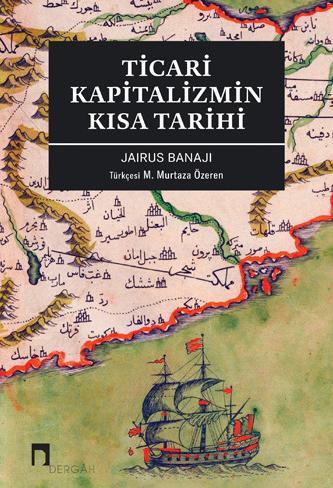
A Short History of Commercial Capitalism, written by economist Jairus Banaji and translated by Muhammed Murtaza Özeren, was published in 2023 by Dergâh Yayınları. The book focuses on the period of commercial capitalism that emerged before the industrial capitalism of the 18th century. Banaji re-examines this era beyond the conventional Eurocentric perspective, through the lens of global trade networks and economic actors across diverse geographies.
The book examines developments in pre-modern trade from the 8th century onward, using a chronological and structural approach. Actors such as Muslim merchants in Guangzhou, European merchants in Alexandria in 1216, and communities including Genoese, Venetian, and Spanish Jews are analyzed. Banaji discusses the interactions within this multi-centered structure that strengthened state power and contributed to the transition to industrial capitalism. He interprets Europe’s cultural and economic dominance not as the result of a “genius” but as the product of commercial capitalism deeply intertwined with state institutions.
The central aim of the book is to reconstruct the structural evolution of commercial capitalism through a global historical perspective. Banaji analyzes this system not merely as a Eurocentric phenomenon but as an economic model shaped by interactions with actors in Asia, Africa, and the Mediterranean region. In doing so, he presents an interdisciplinary study where taxation, diplomacy, logistics, and trade policies intersect.
Banaji’s style combines historical narrative with theoretical analysis in an academic tone. The language focuses on explaining structural relationships while incorporating dense conceptual analysis. The narrative progresses through documents and historical evidence rather than fictional constructs, elevating the text to the format of a scholarly study. Instead of a unilateral perspective, the book adopts a broad geographical and cultural framework.
Banaji, Jairus. *Ticari Kapitalizmin Kısa Tarihi*. Trans. Muhammed Murtaza Özeren. İstanbul: Dergâh Yayınları, 2023. https://www.dergah.com.tr/kitaplar/ticari-kapitalizmin-kisa-tarihi

Author(s) | Jairus Banaji | ||||||||
|---|---|---|---|---|---|---|---|---|---|
Prepared by | Dergâh Yayınları | ||||||||
Translator(s) | Muhammed Murtaza Özeren | ||||||||
Number of Pages | 200 | ||||||||
Type(s) | Economy | ||||||||
Series | History | ||||||||
Year of Publication | May 2023 (2nd edition April 2024) | ||||||||
No Discussion Added Yet
Start discussion for "A Short History of Commercial Capitalism (Book)" article
Summary
Subject
Themes
Style and Narrative