


This article was automatically translated from the original Turkish version.
+1 More
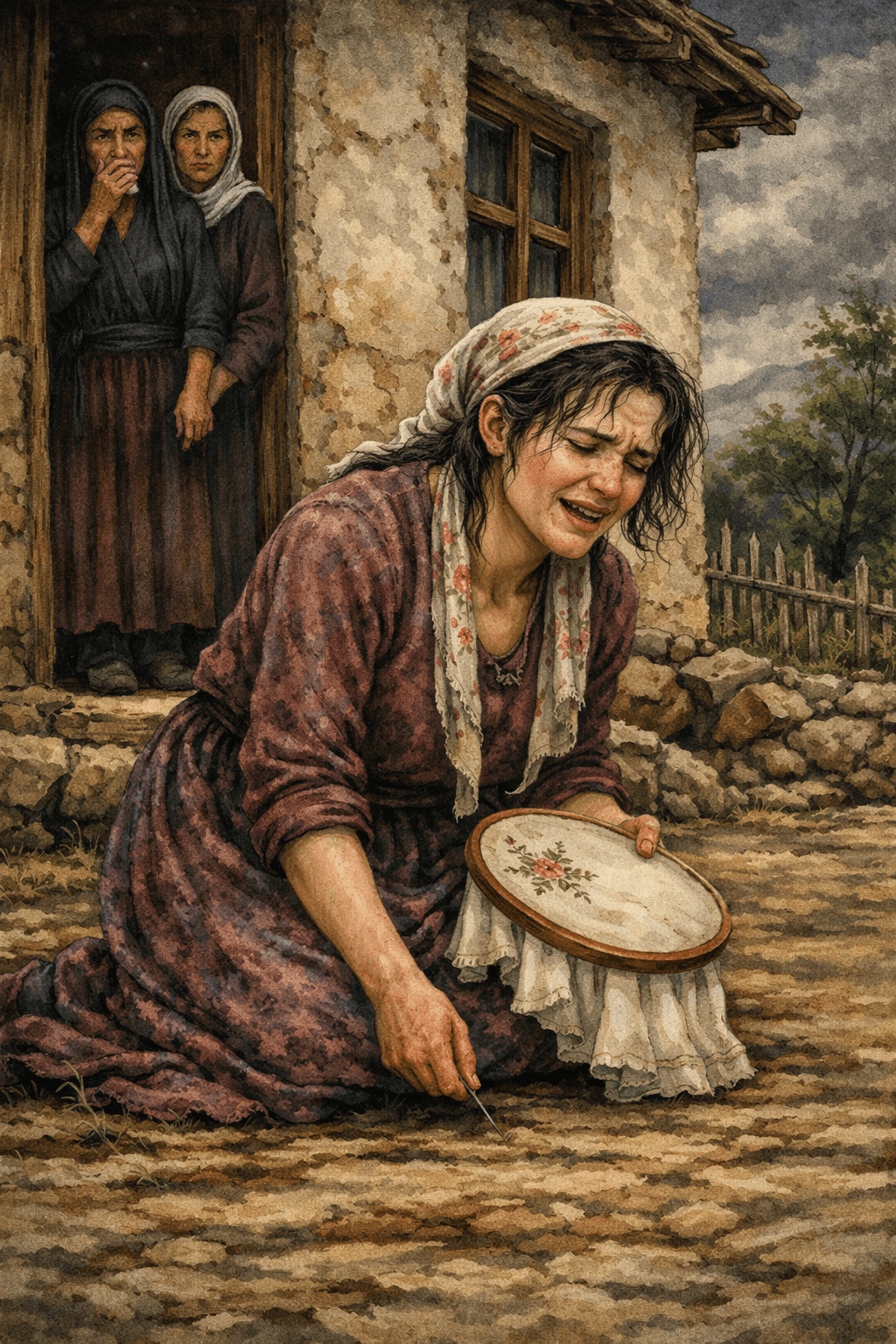
Yapay Zeka ile Oluşturulmuştur
A Tobacco Smoke Rising at the Top of the Pine Grove (Folk Song)
Type(s) | Ağıt | ||||||||
|---|---|---|---|---|---|---|---|---|---|
Modal Sequence | Kürdi | ||||||||
Recorder | Nida Tüfekçi | ||||||||
Collector | Nida Tüfekçi | ||||||||
Source Person | Nida Tüfekçi | ||||||||
District - Village | Akdağmadeni | ||||||||
Region - Province | Yozgat | ||||||||
Repertory Number | 2479 | ||||||||
A Cigarette Smokes at the Top of the Juniper Tree, also known as “Ziya’s Lament,” “Ziya’s Ballad,” “Ziya’s Horse,” and “They Plucked the Unripe Fruit from the Branch,” is an anonymous folk song and lament from the Yozgat region. After the young Ziya’s death, his fiancée Fikriye composed this lament, which over time was adopted by the public and performed as a folk ballad.
They Plucked the Unripe Fruit from the Branch (Kubat)
The tragic events that gave rise to this work are based on accounts from Ziya and Fikriye’s family members and living witnesses on the scene. There are numerous different variants circulating orally in the region regarding the cause of Ziya’s death and the events that transpired.
Ziya (Çalışkan), one of seven children of Ömer and Hatice, lived in the village of Karacalar, under the district center of Yozgat. Ziya’s sister Tekmile Yıldırım describes him as follows:
"Ziya was a brave young man from Karacalar Village… his eyes were as sharp as leeches… he was very handsome, tall and well-built… he was deeply admired by everyone around him. There was hardly anyone in the area who did not know him. He rode horses exceptionally well and was an expert at javelin throwing."【1】
Fikriye (Çevik) is a relative of Ziya through their mothers. Her father, a respected religious figure known locally as “Imam Ali Hoca.” Tekmile Yıldırım describes Fikriye as follows:
"Fikriye was very beautiful… tall and well-built, with long hair… she and Ziya deeply loved each other. Fikriye had a beautiful, rich voice… she could move even the divine."【2】
When Ali Hoca was appointed imam of Kızıltepe village that year and moved there with his family, the two young lovers, with the consent of both families, became engaged. However, an illness intervened and prevented them from being reunited.
Due to traditional norms discouraging frequent meetings between engaged couples and the local youth of Kızıltepe village’s resistance to accepting an outsider as a suitor, the couple had little opportunity to meet during their engagement. After Ziya’s illness and death, researchers in the region collected various claims and oral variants:
Ultimately, Ziya Bey lay unconscious in bed for a week and died young without ever seeing his fiancée again. The beating and its hidden details only emerged decades later.
Fikriye Hanım (Repertükül)
An evening visitor from Karacalar village arrived at Fikriye’s home, unaware of Ziya’s death. When Fikriye’s father, Ali Hoca, inquired about Ziya’s health, the visitor revealed that Ziya had died and been buried several days earlier. At that moment, Fikriye, who was sewing with a needle in the corner of the room, dropped her needle into her finger and lost her thread upon hearing the sudden news. Overcome with grief, she rushed outside and began singing the lament.
Years later, Fikriye Hanım described her emotional state at that moment as follows:
"In an instant, everything changed. They say grief makes one weep and love makes one sing—I wept and sang. At night I lie in bed, but where is sleep? My Lord, You fill my heart with things I have never seen or heard. I have never seen the sea or a ship in my life, yet these lines pour from my lips: 'The masts of ships grow long / Mothers’ hearts burn with grief.' These are the blessings of my Lord."【3】
Fikriye Hanım later murmured these heartfelt words while weaving on the traditional loom with the village girls in the mornings. Her companions and the villagers working in the fields memorized parts of the lyrics and sang them in different places, spreading the song throughout the community. The piece was collected by Yozgat folk music artist and compiler Nida Tüfekçi and performed on TRT radio under the title “Ziya’m,” entering the official repertoire. When Fikriye Hanım heard the song on the radio, she expressed her sorrow as follows:
Çamlığın Başında - Nida Tüfekçi- 1963 (Kaynak Kişi) (Coşkun Plak)
"One day on the radio, Nida Tüfekçi’s collected Yozgat folk song was announced as 'Ziya’m.' I listened with tears streaming down my face, every vein in my heart trembling. I was deeply saddened that my song was taken without permission and performed publicly. Do not speak to me too much—I am grieving, I am heartbroken."【4】
Some time after Ziya’s death, Fikriye was married to Mustafa Demir, a teacher and tax collector, at the insistence of Hasan Ağa, a respected elder of the village. She bore him six children, two of whom survived her. Due to her husband’s extreme jealousy, Fikriye could never speak of Ziya, yet she kept his hair, comb, and mirror.
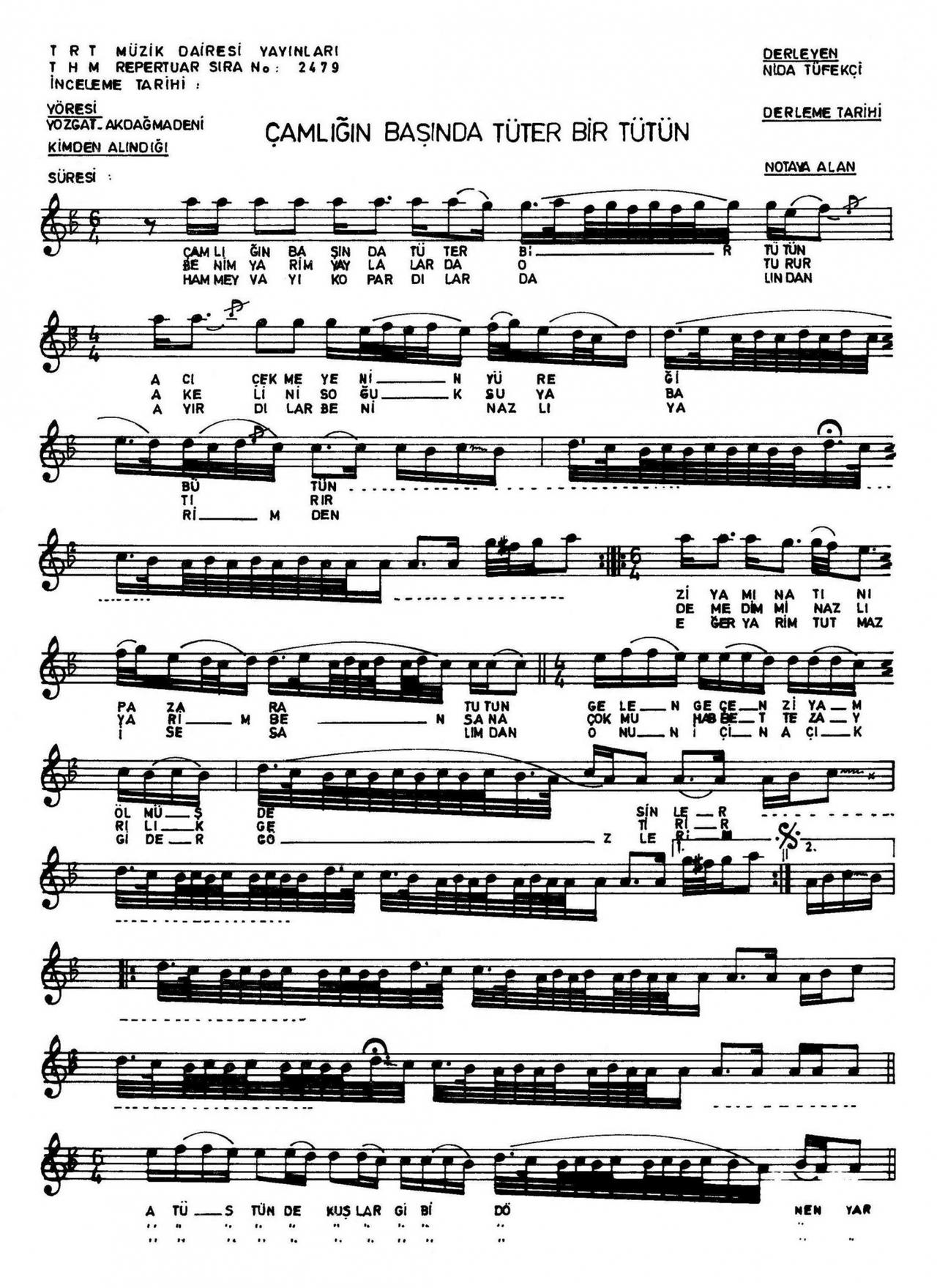
Nota Bilgileri (Repertükül)
A cigarette smokes at the top of the juniper tree
The heart of one who has never suffered is whole
Take Ziya’s horse to the market
Let those who pass by say Ziya is dead
My beloved sits on the highlands
He dips his white hands in cold water
Didn’t I tell you, my tender beloved
Too much affection brings swift separation
They plucked the unripe fruit from the branch
They tore me away from my tender beloved
If my beloved does not hold me on the bier
My eyes will remain open
The masts of ships grow long
Mothers’ hearts burn with grief
Neither did you become a bride, nor did I become a bride’s companion
That is why my eyes will not close
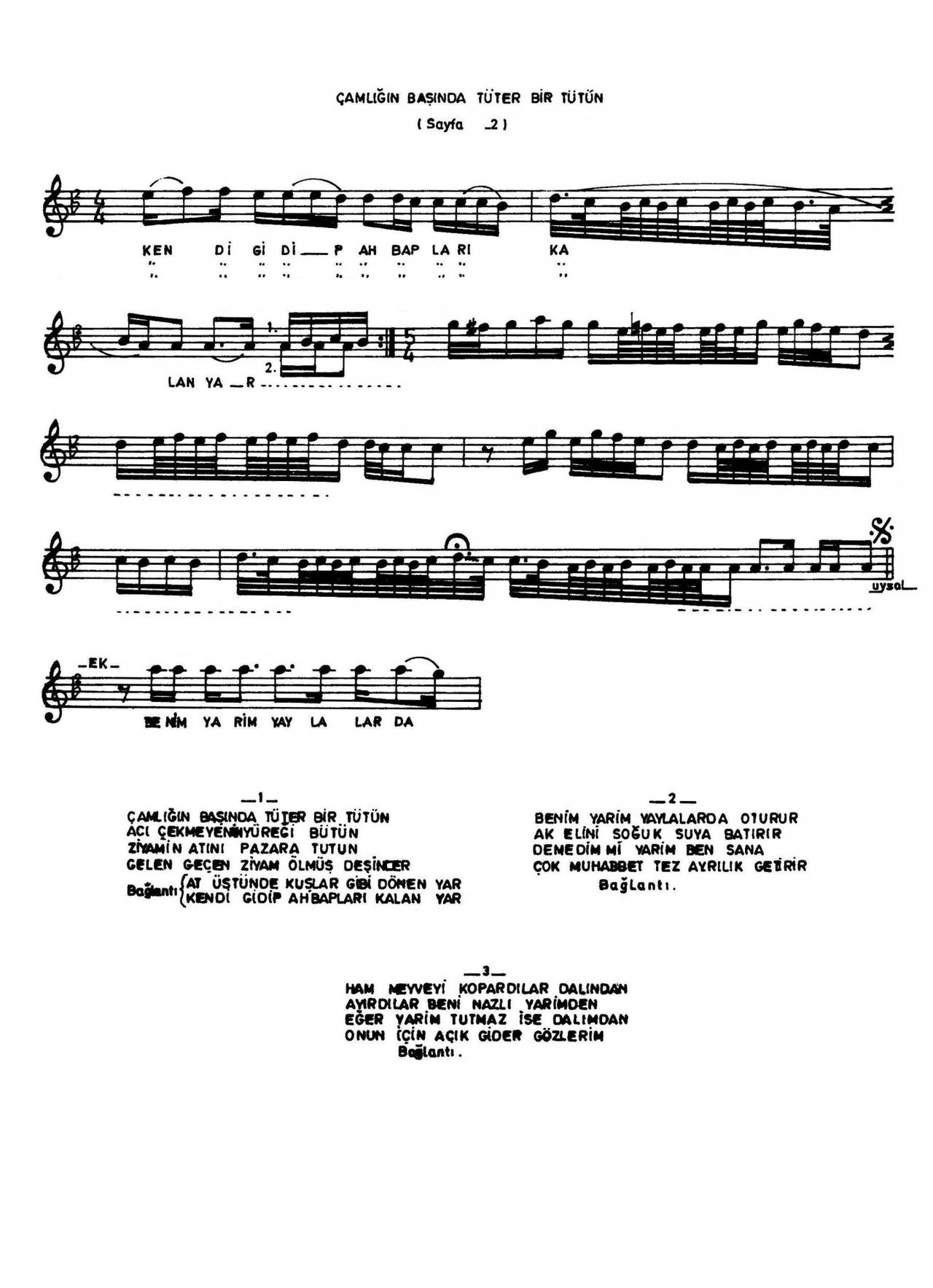
Nota Bilgileri (Repertükül)
Connection:
My beloved spins like birds on horseback
He went away, leaving his friends behind
Recorded in the Turkish Folk Music Repertoire as No. 2479, the piece originates from the Yozgat-Akdağmadeni region. It was collected and notated by Nida Tüfekçi. Its modal structure is Kürdi, with the final and tonic note being “La.” The lament, with a vocal range of eight notes, is performed in 6/4 and 4/4 time signatures.
The following concepts are prominent in the lament’s text:
Researcher Necati Şahin, based on his interview with Fikriye Hanım, noted that even after 60 years had passed since the events, Fikriye still became emotional and tearful when recounting the lament’s story, demonstrating the enduring psychological impact of the tragedy. Şahin describes this as a “lived but unspoken” narrative and emphasizes the intense emotional weight carried by the piece.
Another significant piece of evidence, from a literary and structural perspective, is a letter Fikriye Hanım wrote to the late President Turgut Özal, which was never sent due to his death. According to her personal testimony in this letter, the original version of the lament, now known only by a few stanzas in public memory, consists of 30 verses. The piece, beyond its personal tragedy, carries documentary value for Anatolian folk literature and cultural memory studies through its written records and oral transmissions.
Coşkun Plak. "Nida Tüfekçi - Çamlığın Başında (1963)." YouTube, November 21, 2019. Accessed May 20, 2026. https://www.youtube.com/watch?v=_cRuQsEziJM
Kaya, Naciye. "Ziya'nın Ağıdı Üzerine." *Bozok Üniversitesi İlahiyat Fakültesi Dergisi* 2, no. 2 (2016): 139–50. Accessed May 20, 2026. https://dergipark.org.tr/tr/pub/bozifder/article/240229
Kubat. "Ham Meyvayı Kopardılar Dalından." YouTube, March 15, 2017. Accessed May 20, 2026. https://www.youtube.com/watch?v=eFr8s3D5eUg
Repertükül. "Çamlığın Başında Tüter Bir Tütün (Ham Meyvayı Kopardılar Dalından)." Türküpedia. Accessed May 20, 2026. https://www.repertukul.com/CAMLIGIN-BASINDA-TUTER-BIR-TUTUN-Ham-Meyvayi-Kopardilar-Dalindan-2479
Uslu, Mustafa. "Çamlık'ın Başında Tüter Bir Tütün veya Bilinmeyen Şekliyle Ziya'nınki Türküsü ve Hikayesi." *Millî Folklor Dergisi*, no. 26: 101–104. Accessed May 20, 2026. https://www.millifolklordergisi.com/PdfViewer.aspx?Sayi=26&Sayfa=101
[1]
Mustafa Uslu, "Çamlık'ın Başında Tüter Bir Tütün veya Bilinmeyen Şekliyle Ziya'nınki Türküsü ve Hikayesi," Millî Folklor Dergisi, no. 26: 102, erişim tarihi 20 Mayıs 2026,https://www.millifolklordergisi.com/PdfViewer.aspx?Sayi=26&Sayfa=101.
[2]
Mustafa Uslu, "Çamlık'ın Başında Tüter Bir Tütün veya Bilinmeyen Şekliyle Ziya'nınki Türküsü ve Hikayesi," Millî Folklor Dergisi, no. 26: 102, erişim tarihi 20 Mayıs 2026,https://www.millifolklordergisi.com/PdfViewer.aspx?Sayi=26&Sayfa=101.
[3]
Naciye Kaya, "Ziya'nın Ağıdı Üzerine," Bozok Üniversitesi İlahiyat Fakültesi Dergisi 2, no. 2 (2016): 144, erişim tarihi 20 Mayıs 2026,https://dergipark.org.tr/tr/pub/bozifder/article/240229
[4]
Naciye Kaya, "Ziya'nın Ağıdı Üzerine," Bozok Üniversitesi İlahiyat Fakültesi Dergisi 2, no. 2 (2016): 144, erişim tarihi 20 Mayıs 2026,https://dergipark.org.tr/tr/pub/bozifder/article/240229

Yapay Zeka ile Oluşturulmuştur
A Tobacco Smoke Rising at the Top of the Pine Grove (Folk Song)
Type(s) | Ağıt | ||||||||
|---|---|---|---|---|---|---|---|---|---|
Modal Sequence | Kürdi | ||||||||
Recorder | Nida Tüfekçi | ||||||||
Collector | Nida Tüfekçi | ||||||||
Source Person | Nida Tüfekçi | ||||||||
District - Village | Akdağmadeni | ||||||||
Region - Province | Yozgat | ||||||||
Repertory Number | 2479 | ||||||||
No Discussion Added Yet
Start discussion for "A Tobacco Smoke Rising at the Top of the Pine Grove (Folk Song)" article
The Story of the Ballad
Characters and Background
Different Accounts of the Cause of Death
Origin of the Lament and Its Entry into Literature
The Lyrics of the Ballad
Musical Features and Regional Concepts
Social Impact and Written Testimonies