
Important Films | Dangal (2016) – Female athletes and social gender roles 3 Idiots (2009) – Higher education and exam pressure Taare Zameen Par (2007) – Education and individual awareness (Director) Lagaan (2001) – Social solidarity and justice Qayamat Se Qayamat Tak (1988) – Romantic drama | ||||||||
|---|---|---|---|---|---|---|---|---|---|
Profession(s) | director producer Actor | ||||||||
Awards Received | National Film Awards, Filmfare Awards, international nominations (Lagaan – Academy Awards) | ||||||||
Production | Productions such as Lagaan, Delhi Belly, and Dangal through Aamir Khan Productions | ||||||||
Date and Place of Birth | March 14, 1965, Mumbai, India | ||||||||
Mohammed Aamir Hussain Khan was born on 14 March 1965 in Mumbai, India. He works as an actor, producer and director in the Indian film industry. He began his career as a child actor and developed a multifaceted approach to film production during his adult years. His filmography prominently features themes such as the education system, social structure, individual development, family relationships and cultural norms. Films in which Khan has appeared have been the subject of academic studies both within mainstream cinema and in the context of education and social awareness. His film choices demonstrate a systematic approach to conveying social messages and providing pedagogical content.
Aamir Khan is the son of film producer Tahir Hussain and Zeenat Hussain. His siblings include Faisal Khan, Nikhat Khan and Farhat Khan. Growing up in a family directly connected to the film industry, he was immersed from an early age in film sets, with actors and production processes. Due to his father’s production activities, he had the opportunity to closely observe studio environments during childhood and experienced the entire process from script development to filming at an early age.
This environment contributed to Khan’s understanding of cinema not merely as an acting domain but also as a technical and creative production process. The artistic and cultural atmosphere within his family played a key role in shaping his performance discipline and professional approach.
He appeared as a child actor in the 1973 film Yaadon Ki Baaraat. This experience is regarded as his first professional step in front of the camera. Subsequently, during his adolescence, he continued to pursue interests in theatre and cinema, gaining practical experience in stage and screen performance at an early age. This period laid the foundation for the acting style he would later develop.
His first prominent appearance as an adult actor came with the 1988 film Qayamat Se Qayamat Tak. A romantic drama, the film established Khan’s recognition among a broad audience. During this period, he strengthened his career by taking roles in family-oriented and romantic films in Indian cinema.
During the 1990s, Khan appeared in romantic dramas and family-themed films. Notable productions include:
From the 2000s onward, Khan has appeared in films combining commercial and social themes. Notable films and their thematic frameworks include:
Aamir Khan has appeared in both mainstream and socially conscious films within the Mumbai-based Bollywood film industry. Bollywood is characterized by high-budget productions, melodramatic storytelling and heavy use of musical elements. Khan has established a position within the industry that balances commercial success with thematic depth. Particularly in his projects after 2000, his educational and socially oriented films stand in contrast to Bollywood’s conventional narrative patterns.
He has continued his production activities through his company Aamir Khan Productions.
He took on the role of director for the 2007 film Taare Zameen Par. The film presents a pedagogical narrative centered on a child’s educational journey and his relationships with family and teachers.
Education, social structure, family relationships and individual development are central themes in Khan’s filmography:
In 2012, he hosted the television program Satyamev Jayate, which addressed social issues such as women’s rights, children’s rights, health and justice, aiming to raise public awareness【3】.
Throughout his career, Khan has participated in international film festivals and cultural events. The 2001 film Lagaan represented India in the 74th Academy Awards in the category of Best Foreign Language Film.
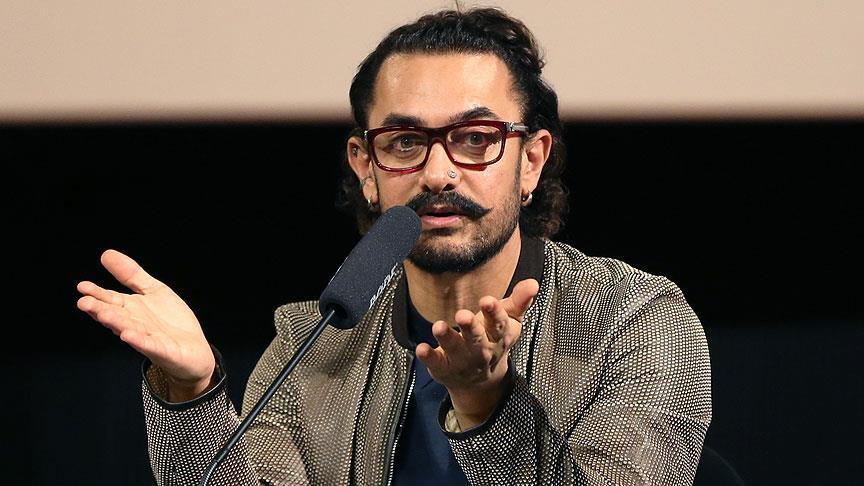
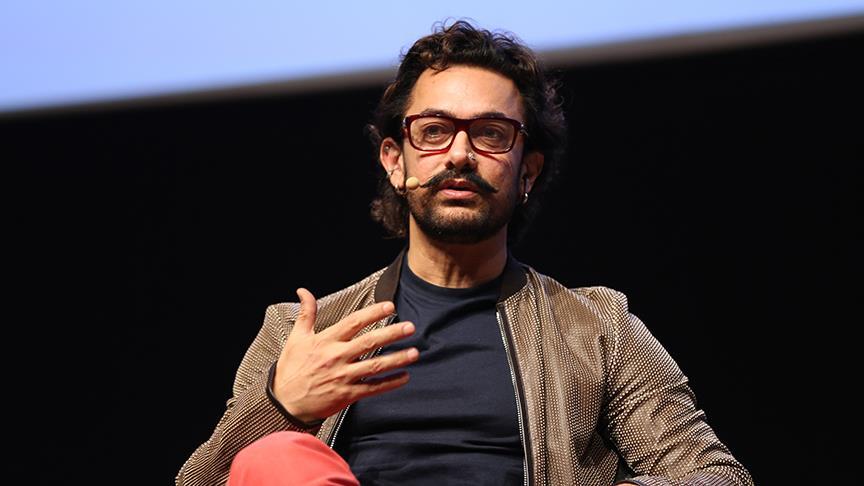
At an event held in Türkiye in 2017, he articulated his goals of promoting social sensitivity in film production and inspiring hope in audiences. Khan’s participation in global events positions him not merely as an actor and producer but as a figure conveying social and cultural messages.
Throughout his career in the Indian film industry, Aamir Khan has received numerous national and international awards and nominations. These honors reflect his contributions in acting, producing and directing.
Khan has demonstrated a changing attitude toward the prestige and significance of award ceremonies, choosing in later stages of his career to abstain from attending certain events. His cinematic works have been widely discussed in both commercial and theoretical contexts by the public and academic circles.
Aamir Khan married Reena Dutta in 1986 and had two children (Ira Khan and Junaid Khan); the couple divorced in 2002. In 2005, he married Kiran Rao and their son Azad Rao Khan was born.
His personal life has also drawn attention due to his engagement with social sensitivity and responsibility. Through the program Satyamev Jayate, he brought social issues to public attention and sought to foster social awareness. In this context, his personal life is directly linked to family and child education as well as social participation.
Aamir Khan has demonstrated a multifaceted production practice in Indian cinema as an actor, producer and director. Education, social structure, individual development and social norms are central themes in his filmography. His presence in projects that combine commercial success with thematic depth distinguishes his career.
Alcan, Musa. "Aamir Khan: Amacım İnsanlara Umut Aşılamak." Anadolu Ajansı, October 5, 2017. Accessed February 26, 2026. https://www.aa.com.tr/tr/kultur-sanat/aamir-khan-amacim-insanlara-umut-asilamak/927796
Biyografiler.com. "Aamir Khan Kimdir?" Accessed February 26, 2026. https://www.biyografiler.com/kimdir/aamir-khan
Dural, Murat. "Aamir Khan Filmlerinde Dinî Öğeler." Master's thesis, İzmir KâtipÇelebi Üniversitesi Institute of Social Sciences, 2019. Accessed February 26, 2026. https://www.academia.edu/41575627/
Yıldırım, Nail, Emel Yar, and Veda Yar Yıldırım. "Aamir Khan Filmlerinin Eğitimsel Açıdan İncelenmesi: 3 Idiots (3 Aptal) ve Taare Zameen Par (Her Çocuk Özeldir) Üzerine Nitel Bir Değerlendirme." Atatürk Üniversitesi Güzel Sanatlar Enstitüsü Dergisi (GSED), no. 36 (2016): 210-244. Accessed February 26, 2026. https://dergipark.org.tr/tr/download/article-file/224241
Çelebioğlu, Sena. "Aamir Khan Kimdir, Kaç Yaşında? Aamir Khan Neden Gündem Oldu?" TGRT Haber, March 11, 2025. Accessed February 26, 2026. https://www.tgrthaber.com/mavikadin/aamir-khan-kimdir-kac-yasinda-aamir-khan-neden-gundem-oldu/
[1]
Yıldırım, Nail, Emel Yar ve Veda Yar Yıldırım. "Aamir Khan Filmlerinin Eğitimsel Açıdan İncelenmesi: 3 Idiots (3 Aptal) ve Taare Zameen Par (Her Çocuk Özeldir) Üzerine Nitel Bir Değerlendirme." Atatürk Üniversitesi Güzel Sanatlar Enstitüsü Dergisi (GSED), sayı 36 (2016): 215. Erişim Tarihi: 26 Şubat 2026. https://dergipark.org.tr/tr/download/article-file/224241
[2]
Dural, Murat. "Aamir Khan Filmlerinde Dinî Öğeler." Yüksek lisans tezi, İzmir Kâtip Çelebi Üniversitesi Sosyal Bilimler Enstitüsü, (2019): 55 Erişim Tarihi: 26 Şubat 2026. https://www.academia.edu/41575627/
[3]
Musa Alcan, "Aamir Khan: Amacım İnsanlara Umut Aşılamak," Anadolu Ajansı, 5 Ekim 2017, Erişim Tarihi 26 Şubat 2026. https://www.aa.com.tr/tr/kultur-sanat/aamir-khan-amacim-insanlara-umut-asilamak/927796

Important Films | Dangal (2016) – Female athletes and social gender roles 3 Idiots (2009) – Higher education and exam pressure Taare Zameen Par (2007) – Education and individual awareness (Director) Lagaan (2001) – Social solidarity and justice Qayamat Se Qayamat Tak (1988) – Romantic drama | ||||||||
|---|---|---|---|---|---|---|---|---|---|
Profession(s) | director producer Actor | ||||||||
Awards Received | National Film Awards, Filmfare Awards, international nominations (Lagaan – Academy Awards) | ||||||||
Production | Productions such as Lagaan, Delhi Belly, and Dangal through Aamir Khan Productions | ||||||||
Date and Place of Birth | March 14, 1965, Mumbai, India | ||||||||
Family and Early Life
Professional Acting Career
1990–1999 Period
Post-2000
Position within Bollywood
Production Activities
Directorial Work
Educational and Social Themes
International Activities and Global Engagement
Awards and Nominations
National Film Awards
Filmfare Awards
International Awards and Nominations
Attitude Toward Awards Culture
Personal Life