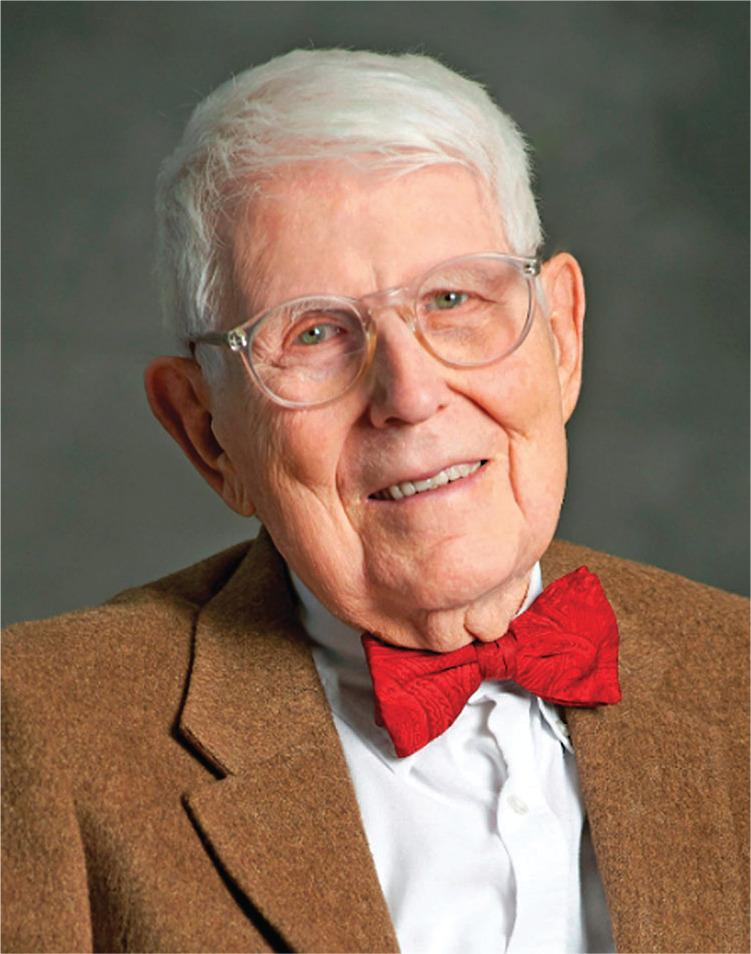
Aaron T. Beck
Full Name | Aaron Temkin Beck | ||||||||
|---|---|---|---|---|---|---|---|---|---|
Year of Birth | 1921 | ||||||||
Year of Death | 2021 | ||||||||
Profession(s) | Psychiatrist Researcher Psychotherapist | ||||||||
Most Famous Work | Founder of Cognitive Therapy | ||||||||
The personal and academic development of Aaron T. Beck, who played a major role in shaping modern psychotherapy, laid the foundation for his theoretical contributions. Born in 1921 in the state of Rhode Island, United States of America, Beck attracted attention from an early age through his academic achievements and established a strong educational foundation. He graduated with honors from Brown University with a double major in English Language and Political Science, and subsequently received his medical education at Yale University School of Medicine. Although he initially intended to specialize in neurology, his growing interest in psychiatric disorders eventually became dominant, leading him to shift his career toward psychiatry. The knowledge and experience he acquired during this period formed the basis for the theories he would later develop.
Aaron Temkin Beck is an American psychiatrist and psychotherapist. He is widely recognized in the history of modern psychotherapy as the pioneer of cognitive therapy. He was born on 18 July 1921 in the city of Providence, Rhode Island. He graduated with honors from Brown University with a degree in English Language and Political Science, and received his medical degree from Yale University School of Medicine in 1946. Initially, he aimed to specialize in neurology, but due to his growing interest in psychiatry, he turned his focus to this field.
In the early years of his professional life, Beck received training in psychoanalysis. However, he developed a critical stance toward this approach because its core assumptions regarding the treatment of depression and similar mental disorders were not scientifically or empirically testable. Through clinical observations and experimental research, he determined that the foundation of depression lies not in unconscious processes but in cognitive distortions.
In this direction, Beck proposed that negative thought patterns individuals develop about themselves, their environment, and their future are central to depression, and he explained this model through the concept of the cognitive triad. This model describes the cognitive structures in which a person views themselves as worthless, their environment as threatening, and their future as hopeless. These findings formed the foundation of the cognitive therapy theory Beck developed in the 1960s.
Cognitive therapy is defined as a structured, short-term, and goal-oriented therapeutic model. This approach aims to identify dysfunctional thoughts in individuals and replace them with more realistic and functional ones. Beck’s 1979 publication, Cognitive Therapy of Depression: A Treatment Manual, is among the first works to systematically introduce and translate the cognitive therapy approach into clinical practice.
Beck did not limit himself to theoretical contributions; he also developed scientific measurement tools. Among these are the Beck Depression Inventory, the Beck Anxiety Inventory, the Beck Hopelessness Scale, and the Beck Scale for Suicidal Ideation, all of which are widely used today in both research and clinical settings.
Beck’s work was not confined to depression; over time, it was adapted to numerous psychopathological conditions, including anxiety disorders, obsessive-compulsive disorder, panic disorder, post-traumatic stress disorder, personality disorders, and psychotic disorders. During this process, his approach was integrated with techniques from behavioral therapies, giving rise to a broader framework known as Cognitive Behavioral Therapy (CBT).
In 1994, Beck retired from active academic duties. In 1996, together with his daughter Judith S. Beck, he founded the independent educational and research center Beck Institute for Cognitive Behavior Therapy. This institute plays a vital role globally in training, disseminating, and supporting the scientific foundations of cognitive behavioral therapy.
Beck received numerous national and international awards for his scientific contributions. He was honored with various achievement awards by the American Psychiatric Association (APA) and the American Psychological Association (APA), and in 2006 he received the Albert Lasker Clinical Medical Research Award. Additionally, in an evaluation published in the journal American Psychologist, he was described as “one of the five most influential psychotherapists of all time.”
Throughout his life, Beck published over 450 scientific articles and 17 books, continuing his research into advanced age. He conducted studies on the applicability of CBT in treating various psychiatric disorders, particularly depression, anxiety, and schizophrenia. He published 370 articles after the age of 50 and maintained his scientific productivity well into his 90s.
Aaron T. Beck passed away on 1 November 2021 at the age of 100 in his home in Pennsylvania. He left behind a profound and enduring legacy in psychiatry and psychotherapy through his theory, clinical applications, and educational efforts. The cognitive therapy approach he developed is now recognized as one of the most widely used and evidence-based psychotherapeutic methods in the field of psychological treatment.
Beck, Aaron T. “Beck Proposes an Integrative Theory of Depression.” *Psychological Science Observer*. Association for Psychological Science. Accessed June 20, 2025. https://www.psychologicalscience.org/observer/beck-proposes-an-integrative-theory-of-depression.
Dinç, Mehmet. “Aaron Temkin BECK: Eleştirel Düşüncenin Peşinden Yaratıcı Bir Psikoterapi Kuramına.” *JCBPR*, Fatih Üniversitesi Psikoloji Bölümü, Klinik Psikolog. Accessed June 20, 2025. https://jcbpr.org/storage/upload/pdfs/1708433433-tr.pdf.
“Beck Proposes an Integrative Theory of Depression.” *Psychological Science Observer*. Association for Psychological Science. Accessed June 20, 2025. https://www.psychologicalscience.org/observer/beck-proposes-an-integrative-theory-of-depression.
“Challenging Freud, Starting a Revolution.” *Yale Medicine Magazine*. Yale School of Medicine. Accessed June 20, 2025. https://medicine.yale.edu/news/yale-medicine-magazine/article/challenging-freud-starting-a-revolution.
“Figure: Aaron T. Beck Looking at the First Edition of His Book Depression: Clinical.” ResearchGate. Accessed June 20, 2025. https://www.researchgate.net/figure/Aaron-T-Beck-looking-at-the-first-edition-of-his-book-Depression-Clinical_fig1_273194258.
“PMC9169475.” *PMC*. National Center for Biotechnology Information. Accessed June 20, 2025. https://pmc.ncbi.nlm.nih.gov/articles/PMC9169475.

Aaron T. Beck
Full Name | Aaron Temkin Beck | ||||||||
|---|---|---|---|---|---|---|---|---|---|
Year of Birth | 1921 | ||||||||
Year of Death | 2021 | ||||||||
Profession(s) | Psychiatrist Researcher Psychotherapist | ||||||||
Most Famous Work | Founder of Cognitive Therapy | ||||||||
Early Life and Education
Departure from Psychoanalysis and Critical Approach
The Cognitive Triad and Theoretical Development
Characteristics and Applications of Cognitive Therapy
Measurement Tools and Scientific Contributions
Cognitive Behavioral Therapy and Its Expansion
Beck Institute and Educational Efforts
Awards, Honors, and Academic Legacy
Death and Legacy