


This article was automatically translated from the original Turkish version.
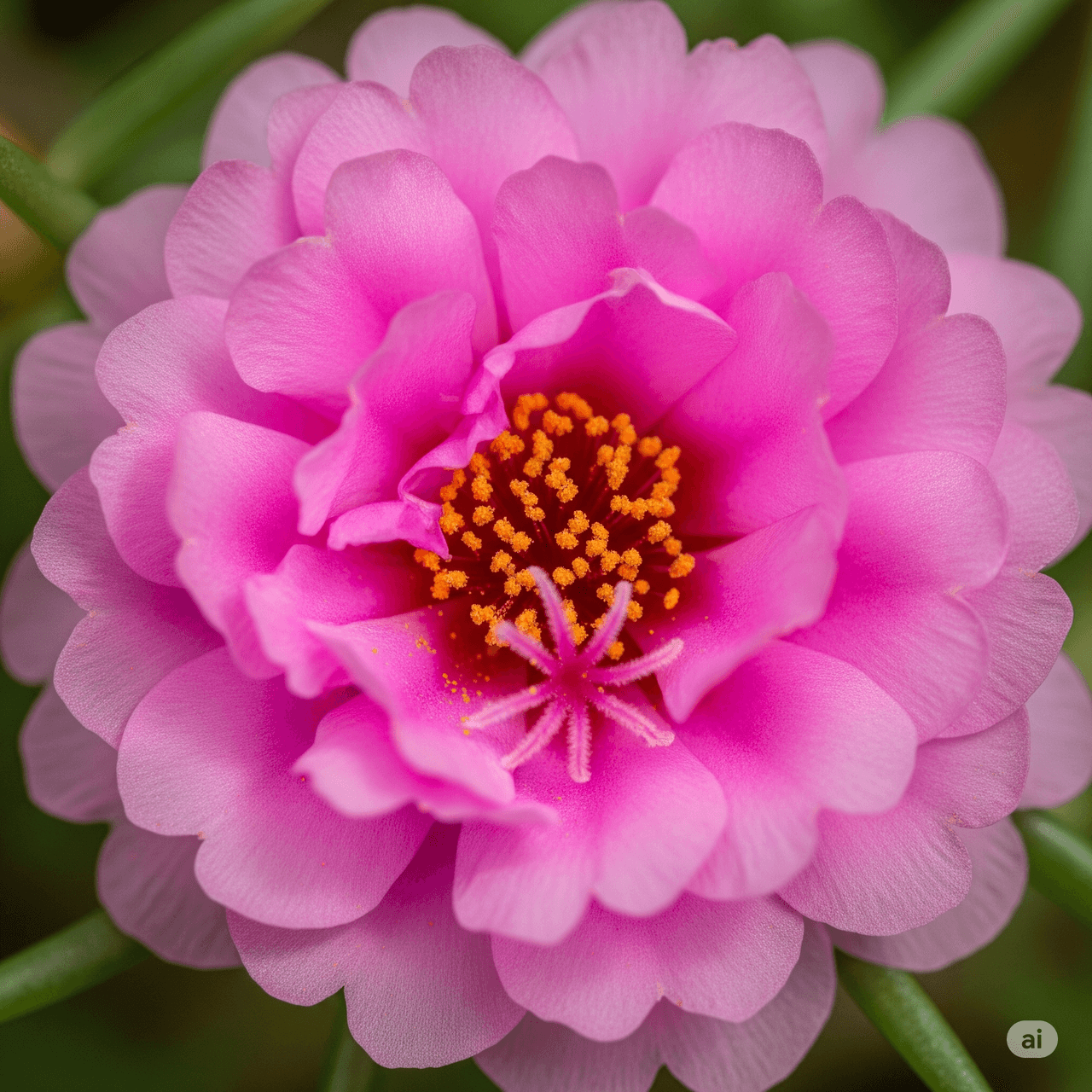
Acem Carpet Flower
Scientific Name(s) | Drosanthemum Floribundum | ||||||||
|---|---|---|---|---|---|---|---|---|---|
Family | Aizoaceae (Ice Flowers) | ||||||||
Native Range | South Africa (Cape Province) | ||||||||
Leaf Structure | Cylindrical or triangular cross-section, fleshy, light green | ||||||||
Flower Colors | Pink, purple, white | ||||||||
Flowering Period | Spring and summer | ||||||||
Soil Preference | Well-drained, sandy or gravelly soil | ||||||||
Irrigation | Low; should be adjusted according to soil moisture | ||||||||
Area(s) of Use | Green roofs Erosion control Landscaping | ||||||||
Acem Halısı Flower (Drosanthemum floribundum), commonly known as Acem Halısı, is a succulent species native to South Africa and belonging to the Aizoaceae family. This plant is particularly favored in landscape design in arid and semi-arid regions. With its distinctive morphological, ecological, and cultivation characteristics, the Acem Halısı flower has also naturalized in various areas and established itself among invasive species.
The Acem Halısı flower is a low-growing, spreading succulent. Its stems extend horizontally across the ground and develop adventitious roots at points of contact with the soil, enabling it to colonize large areas. The leaves are cylindrical or triangular in cross-section, fleshy, and light green in color. Crystalline papillae on the leaf surface give the plant a shimmering appearance. The flowers are typically pink, purple, or white and can reach up to 2.5 cm in diameter. Flowering occurs during spring and summer months.

Acem Halısı Flower Seed Structure (generated by artificial intelligence)
Native to the Cape Province of South Africa, the Acem Halısı flower has adapted well to arid and semi-arid climatic conditions. Thanks to this adaptability, it is also successfully cultivated in regions with a Mediterranean climate. The plant thrives at elevations up to 100 meters above sea level, particularly along coastal areas. It has naturalized in various regions including Germany, France, Spain, Portugal, Australia, and California in the United States, and is classified as an invasive species in some locations.

Acem Halısı Flower (generated by artificial intelligence)
The Acem Halısı flower is known for its low maintenance needs and drought tolerance. It exhibits optimal growth in full sun. Regarding soil preference, it favors well-drained sandy or gravelly soils. Overwatering can lead to root rot, so irrigation should be adjusted according to soil moisture levels. This plant is widely used in landscape design, especially for erosion control and ground cover. It is also favored in sustainable architecture projects such as green roofs.
Demir, Eren. “Acem Halısı Bitkisi Bakımı ve Özellikleri.” *Evim Dergisi*, February 2025. Accessed May 22, 2025. https://www.evimdergisi.com.tr/acem-halisi-ciceginin-bakimi-ve-sulamasi-nasil-yapilir
Ian Oliver. “Drosanthemum floribundum.” PlantZAfrica. Accessed May 22, 2025. https://pza.sanbi.org/drosanthemum-floribundum
Liede-Schumann, S., Grimm, G. W., Nürk, N. M., Potts, A. J., Meve, U., & Hartmann, H. E. (2020). "Phylogenetic Relationships in the Southern African Genus Drosanthemum (Ruschioideae, Aizoaceae)." *PeerJ* 8, e8999. Accessed May 22, 2025. https://doi.org/10.7717/peerj.8999

Acem Carpet Flower
Scientific Name(s) | Drosanthemum Floribundum | ||||||||
|---|---|---|---|---|---|---|---|---|---|
Family | Aizoaceae (Ice Flowers) | ||||||||
Native Range | South Africa (Cape Province) | ||||||||
Leaf Structure | Cylindrical or triangular cross-section, fleshy, light green | ||||||||
Flower Colors | Pink, purple, white | ||||||||
Flowering Period | Spring and summer | ||||||||
Soil Preference | Well-drained, sandy or gravelly soil | ||||||||
Irrigation | Low; should be adjusted according to soil moisture | ||||||||
Area(s) of Use | Green roofs Erosion control Landscaping | ||||||||
Morphological Characteristics
Ecological and Geographic Distribution
Cultivation and Care Requirements