


This article was automatically translated from the original Turkish version.
Published in 1986 by Lebanese author author Amin Maalouf, the novel recounts the identity quest of African Leo historical and the arduous journeys experienced between different civilizations. Drawing on the life of the historical figure Hasan el-Vezzan, it explores the political religious and cultural transformations of the 16th century. Through the life of Hasan known as Leo Africanus Maalouf delves deeply into the relationship conflict and mutual influences between Islamic and West civilizations. The novel is not merely a historical narrative but also a profound exploration of identity affiliation and the human condition on through a thought lens.
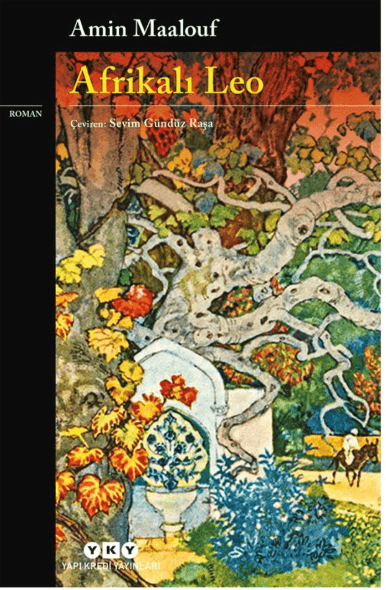
Afrikalı Leo
The novel begins in late 15th century Granada. Hasan born into a Muslim family is forced with his family to flee to together Morocco following the Christian expulsion of Muslims from Spain. These early experiences mark Hasan’s first major transformations. From his youth onward Hasan encounters many diverse cultures around the Mediterranean as a scholar diplomat and merchant. Maalouf uses these journeys to examine in detail the religious political and economic structures of various societies.
Hasan’s life unfolds amid the intense struggles between the Islamic world and Christian Europe. Political tensions between the Ottoman Empire North African city states and Europe kingdoms form the historical backdrop of the novel. Maalouf conveys this era through the character’s personal experiences emphasizing how historical events shape individual lives. Hasan sees himself as a bridge between the two civilizations embodying a role of mediation.
One of the most pivotal moments in Hasan’s life is his capture and transport to Rome by the Pope. There adopting the name Leo Africanus Hasan struggles to adapt to Western thought while questioning his own identity. In this section Maalouf interrogates the significance of identity and belonging in an individual’s life and examines the tensions arising from religious and cultural differences.
The novel takes shape as a story of Hasan’s efforts to understand diverse cultures and forge a balance among them. Maalouf portrays the character as a representative of multiple civilizations highlighting the importance of tolerance and intercultural dialogue. In this context the novel offers a significant discussion on cultural encounters and conflicts spanning from the 16th century to the present day.
The hardships and transformations Hasan endures throughout his life provoke a profound reflection on humanity and universal values. Maalouf underscores the possibility of bridging the divide between civilizations through personal inner transformation suggesting that such change carries hope for humanity as a whole.
Amin Maalouf. Afrikalı Leo. Çevirmen: Sevim Raşa, Yapı Kredi Yayınları, 2019.
Deveci, Nur Yağmur. *Yolların Oğlu Afrikalı Leo.* Young Academia, July 22, 2023. https://youngacademia.com/blog/2023/07/22/yollarin-oglu-afrikali-leo/

Leo’s Identity Quest and Journeys
Conflicts Between Civilizations
Rome and Hasan’s Transformation
Intercultural Dialogue and the Search for Meaning
Humanity and Universal Values