

This article was automatically translated from the original Turkish version.
Realm | Animalia | ||||||||
|---|---|---|---|---|---|---|---|---|---|
Branch | Chordata | ||||||||
Class | Reptilia | ||||||||
Team | Squamata | ||||||||
Subteam | Serpentes | ||||||||
Family | Pythonidae | ||||||||
Genus | Python | ||||||||
Species | Python sebae | ||||||||
Distribution Area | Sub-Saharan Africa | ||||||||
Average Size | 3–5 m | ||||||||
Conservation Status | CITES Appendix II | ||||||||
The African rock python (Python sebae) is a snake species belonging to the Boidae family and is widely distributed across Sub-Saharan Africa. It inhabits a vast geographic range extending from a northern line stretching from Senegal to Ethiopia and Somalia, down to the Cape of Good Hope in the south. Two main subspecies are recognized: Python sebae sebae, found in North and West Africa and generally larger in size, and Python sebae natalensis, which inhabits East and Southern Africa. Some scientific approaches consider these two subspecies as entirely separate species. These animals avoid the driest deserts and coldest mountainous regions, preferring moist areas near water sources.
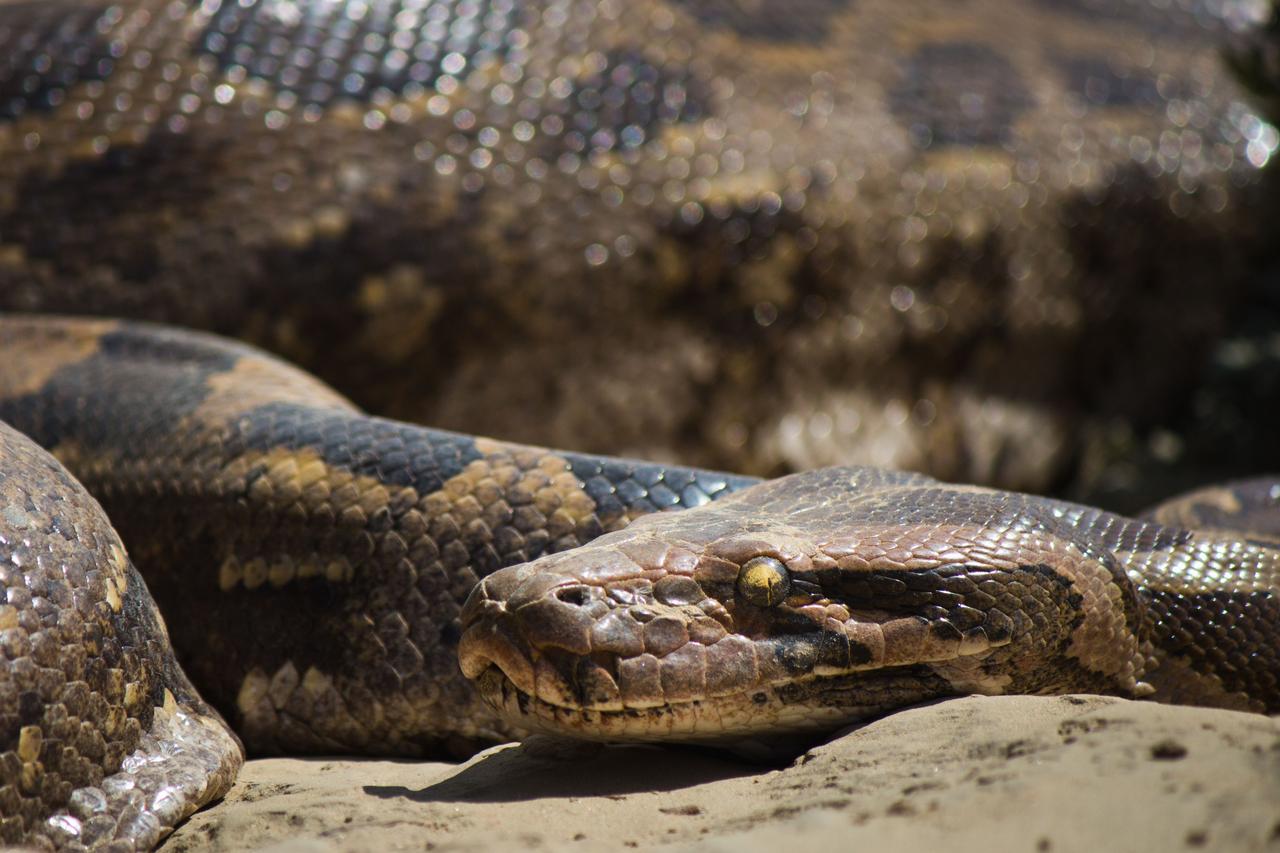
As the largest snake on the African continent, Python sebae typically reaches lengths of 3 to 5 meters. Exceptional recorded specimens have been reported to reach up to 7.5 meters, and in disputed cases even 9.8 meters. Adult individuals usually weigh between 44 and 55 kilograms, with rare cases exceeding 91 kilograms.【1】 Their body coloration ranges from yellowish, gray-brown to gray-green tones, with dark blotches forming a ladder-like pattern along the back. The head is relatively small and triangular, characterized by two light-colored bands resembling spearheads that extend from the snout to behind the eyes. Additionally, specialized heat-sensing pits located along the lips enable the snake to detect the body heat of nearby animals.
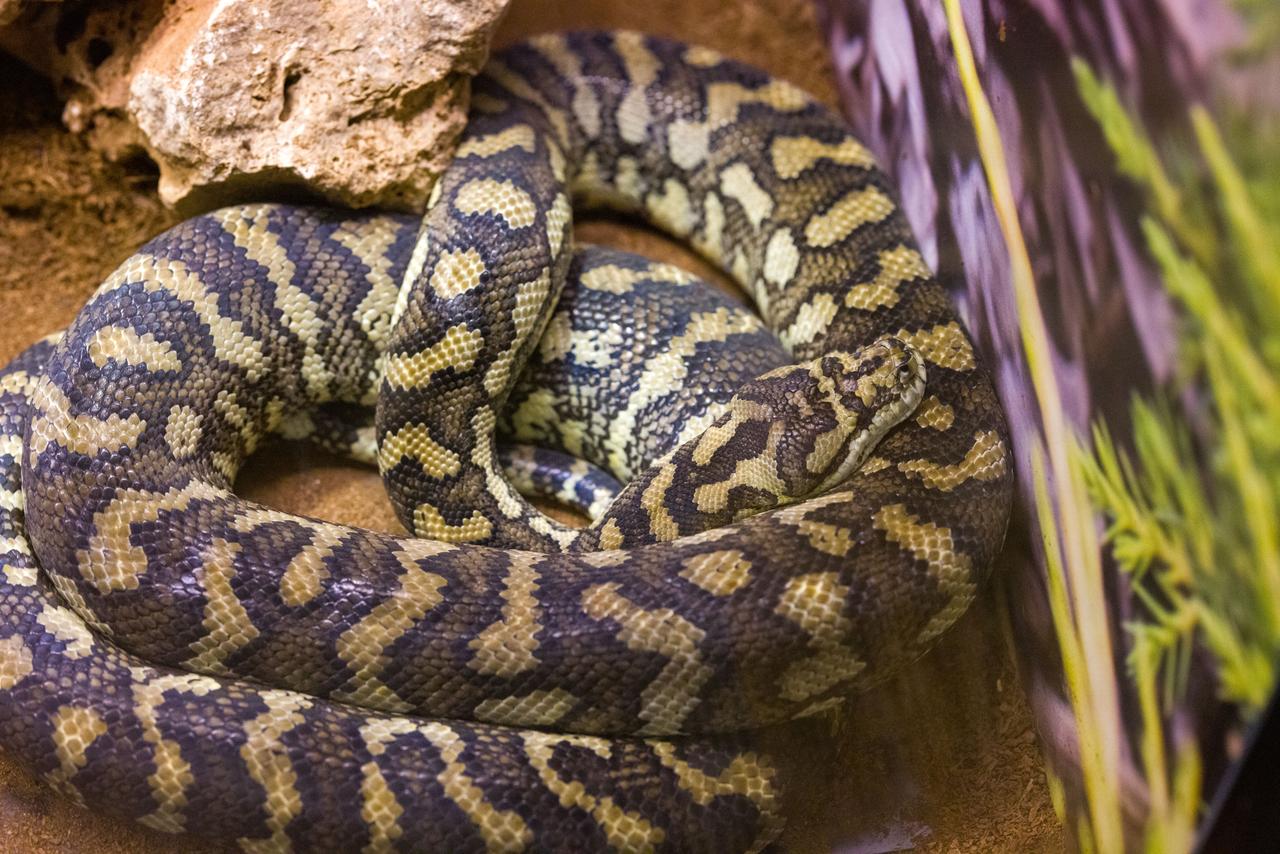
African Rock Python (Pexels)
Rock pythons consistently prefer habitats such as evergreen forests, moist savannas, and areas near water bodies. Their frequent presence along river and lake shores highlights their close association with water. Although they can be observed at elevations up to 2300 meters above sea level, they are most commonly found at lower altitudes. They use rock crevices or abandoned dens of other mammals for shelter. Adults are primarily nocturnal but may be seen basking in the sun during the day to regulate their body temperature. Their excellent swimming ability allows them to remain submerged for extended periods when escaping danger.
These entirely carnivorous animals primarily feed on vertebrates. Juveniles typically prey on small mammals such as rodents, while adults can consume large prey including monkeys, crocodiles, large lizards, and antelopes. Hunting usually begins at twilight using heat-sensing organs; the python either slowly approaches its prey or lies in ambush waiting for the optimal moment. Upon capturing prey, it grips with its rearward-curving sharp teeth and rapidly coils its body around the victim. Contrary to common belief, it does not kill by breaking bones but by constricting the chest cavity to prevent breathing or inducing cardiac arrest through shock. Its flexible jaw structure, absence of a sternum, and expandable skin allow it to swallow prey much larger than its own body diameter whole. After a large meal, its slow metabolism enables it to survive for long periods without feeding.
Rock pythons reach sexual maturity between the ages of 3 and 5 years. The breeding season typically occurs between November and March, coinciding with changes in temperature and daylight. Females lay clutches of 20 to 100 large eggs approximately three months after mating, depositing them in tree hollows or abandoned dens. During incubation, the female coils around the eggs to protect them from external threats and to maintain an optimal temperature of around 31 to 32 degrees Celsius. During this period, the female ceases feeding entirely. After an incubation period of approximately 65 to 80 days, hatchlings emerge with lengths of 45 to 60 centimeters and immediately become independent. Individuals in captivity have been observed to live up to 30 years.【2】
Generally solitary, this species only comes together during the breeding season. Rock pythons are known for their aggressive defensive and feeding responses; when unable to escape a threat, they strike with considerable force and constrict. Their bites, caused by long recurved teeth, can result in serious injuries and, if untreated, lead to infections. In their natural habitats, they may be preyed upon by hyenas and wild dogs, particularly during periods of reduced mobility such as digestion.
African rock pythons are experiencing population declines due to habitat loss and overhunting for their skin and meat. As a result, the species has been listed on Appendix II of CITES, which regulates trade in endangered species, and has gained protected status in many countries. Individuals living near human settlements may come into conflict with local communities when they prey on domestic or small livestock. Although attacks on humans are rare, incidents resulting in death have been recorded, often due to defensive behavior or mistaken identity during hunting. Nevertheless, it is recognized that they contribute naturally to pest control by regulating rodent populations in agricultural areas.
Branch, W. R. and W. D. Hacke. "A Fatal Attack on a Young Boy by an African Rock Python Python sebae." Journal of Herpetology 14, no. 3 (1980): 305–7. Accessed June 14, 2026. https://doi.org/10.2307/1563557
Kiberu, E. Richard, and B. Makanga. "Environmental Nature Note: African Rock Python and Thomson’s Gazelle." *Environmental Conservation* 9, no. 4 (1982): 354–55. Accessed June 14, 2026. https://doi.org/10.1017/S0376892900020981
Pexels. "Doğa Hayvan Tehlikeli Kahverengi." Pexels, July 5, 2019. Accessed June 14, 2026. https://www.pexels.com/tr-tr/fotograf/doga-hayvan-tehlikeli-kahverengi-2561673/
Pexels. "Hayvan Rock Kaya Sürüngen." Pexels, March 31, 2021. Accessed June 14, 2026. https://www.pexels.com/tr-tr/fotograf/hayvan-rock-kaya-surungen-7098993/
Sherman, P. "Python sebae." Animal Diversity Web. 2006. Accessed June 14, 2026. https://animaldiversity.org/accounts/Python_sebae/
[1]
P. Sherman, "Python sebae," Animal Diversity Web, 2006, access date: 14 June 2026, https://animaldiversity.org/accounts/Python_sebae/
[2]
P. Sherman, "Python sebae," Animal Diversity Web, 2006, access date: 14 June 2026, https://animaldiversity.org/accounts/Python_sebae/

Realm | Animalia | ||||||||
|---|---|---|---|---|---|---|---|---|---|
Branch | Chordata | ||||||||
Class | Reptilia | ||||||||
Team | Squamata | ||||||||
Subteam | Serpentes | ||||||||
Family | Pythonidae | ||||||||
Genus | Python | ||||||||
Species | Python sebae | ||||||||
Distribution Area | Sub-Saharan Africa | ||||||||
Average Size | 3–5 m | ||||||||
Conservation Status | CITES Appendix II | ||||||||
No Discussion Added Yet
Start discussion for "African Rock Python (Python sebae)" article
Physical Characteristics and Morphological Structure
Habitats and Ecological Preferences
Feeding Habits and Hunting Strategies
Reproductive Cycle and Developmental Processes
Behavioral Patterns and Defense Mechanisms
Conservation Status and Human Interactions