


This article was automatically translated from the original Turkish version.
+2 More
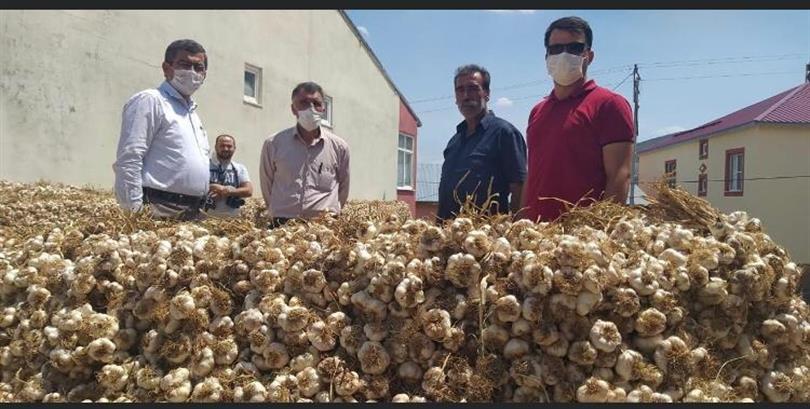
Afşin Koçovası Garlic
Product / Product Group(s) | Processed and unprocessed fruits and mushrooms vegetables | ||||||||
|---|---|---|---|---|---|---|---|---|---|
Applicant/Registrant(s) | Afşin District Directorate of Agriculture and Forestry | ||||||||
Registration Date | 28.06.2021 | ||||||||
File Number | C2020/057 | ||||||||
Registration Number | 787 | ||||||||
Afşin Koçovası Garlic is an agricultural product cultivated within the geographical boundaries of Afşin district, Kahramanmaraş Province, and belongs to the species Allium sativum L. The product has been registered as a “Geographical Indication” under the Industrial Property Law No. 6769 by the Turkish Patent and Trademark Office and has been granted geographical indication protection as of 28 June 2021.
Afşin Koçovası Garlic is propagated using cloves selected by producers from the previous harvest as seed material. The garlic is typically marketed in bundled or tied form after drying. The geographical area where it is grown, characterized by permeable low-moisture sandy-loamy soil and continental climatic conditions, contributes to its distinctive structure: purple-skinned large bulbs with densely arranged cloves.
Its mineral content includes primarily potassium (K), magnesium (Mg), phosphorus (P), and calcium (Ca), as well as varying amounts of iron (Fe), zinc (Zn), selenium (Se), and manganese (Mn).

Afşin Koçovası Garlic (DOOGA)
Producers use cloves selected from the previous year’s harvest as seed material.
Deep tillage is carried out using a plow, disk harrow, and harrow. Rows are then marked out.
Planting activities take place between September and November.
Four to five irrigation sessions are carried out during the growing season depending on climatic conditions. Sprinkler irrigation is preferred.
An integrated pest management program using fungicides and herbicides is applied. Weed control is supported by manual weeding.
Harvesting occurs between late June and July. It is performed manually or mechanically. After harvest, the product is left to dry in the field for four to five days.

Harvest of Koçovası Garlic (DOOGA)
After drying, the bulbs are trimmed, bundled, tied, and hung. The product is stored in cool and dry conditions. It is delivered to the final consumer in bundled or tied form.
The geographical boundary is limited to Afşin district of Kahramanmaraş Province.
Monitoring reports are submitted annually to the Turkish Patent and Trademark Office. In cases of non-compliance, appropriate measures are formally communicated to the relevant individual or institution.
DOĞAKA. "Afşin Koçovası Sarımsağı DOĞAKA Desteğiyle Coğrafi İşaret Tesciline Kavuştu." Accessed May 27, 2025. https://www.dogaka.gov.tr/haber/afsin-kocovasi-sarimsagi-dogaka-destegiyle-cografi-isaret-tescili-ne-kavustu/1966
T.C.Kahramanmaraş İl Directorate of Agriculture and Forestry. “Afşin Koçovası Sarımsağı İlgi Odağı Olmaya Devam Ediyor.” Accessed May 27, 2025. https://kahramanmaras.tarimorman.gov.tr/Haber/715
TRT Haber. “Afşin’de Yetiştirilen Koçovası Sarımsağı Coğrafi İşaret Olarak Tescillendi.” Accessed May 27, 2025. https://www.trthaber.com/haber/guncel/afsinde-yetistirilen-kocovasi-sarimsagi-cografi-isaret-olarak-tescillendi-595728.html
Turkish Patent and Trademark Office. "Afşin Koçovası Sarımsağı." Geographical Indication Registration Certificate No: 787. Accessed May 27, 2025.

Afşin Koçovası Garlic
Product / Product Group(s) | Processed and unprocessed fruits and mushrooms vegetables | ||||||||
|---|---|---|---|---|---|---|---|---|---|
Applicant/Registrant(s) | Afşin District Directorate of Agriculture and Forestry | ||||||||
Registration Date | 28.06.2021 | ||||||||
File Number | C2020/057 | ||||||||
Registration Number | 787 | ||||||||
No Discussion Added Yet
Start discussion for "Afşin Koçovası Sarımsağı" article
Product Description and Distinguishing Characteristics
Botanical and Physical Characteristics
Production Method
Seed Material
Soil Preparation
Planting
Irrigation
Integrated Pest Management
Harvest
Final Processing and Storage
Geographical Boundary and Monitoring
Geographical Boundary
Monitoring Scope