


This article was automatically translated from the original Turkish version.
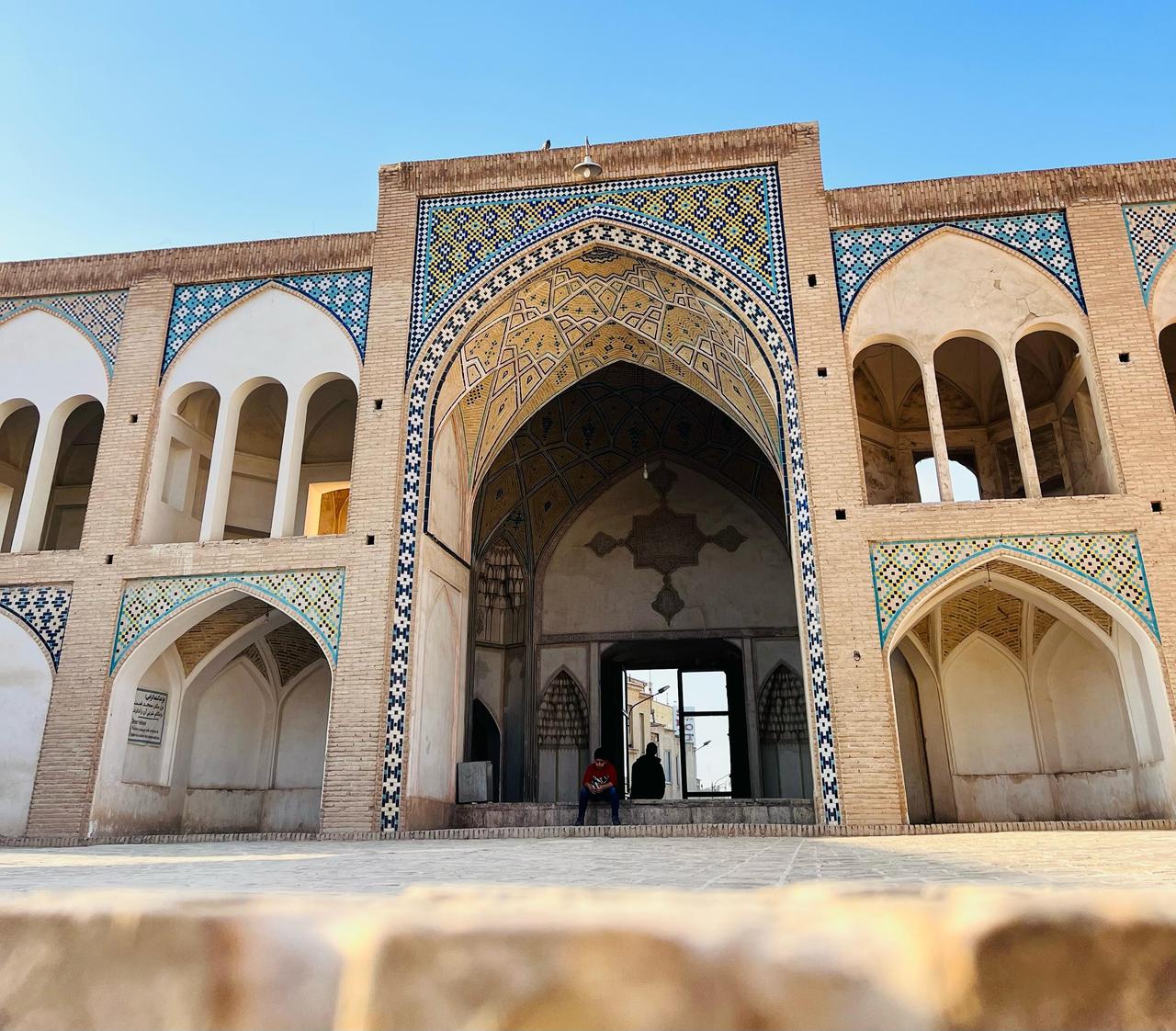
Ağa Bozorg Mosque and Madrasa is a religious complex located in the center of Kashan, Iran, dating from the 19th-century Qajar period. The complex was designed to accommodate both worship and educational activities. Its patron was Hajji Muhammad Taqi Hanban, who commissioned the structure to provide a madrasa and mosque for his son-in-law, the prominent Islamic scholar Mulla Mehdi Naraki.
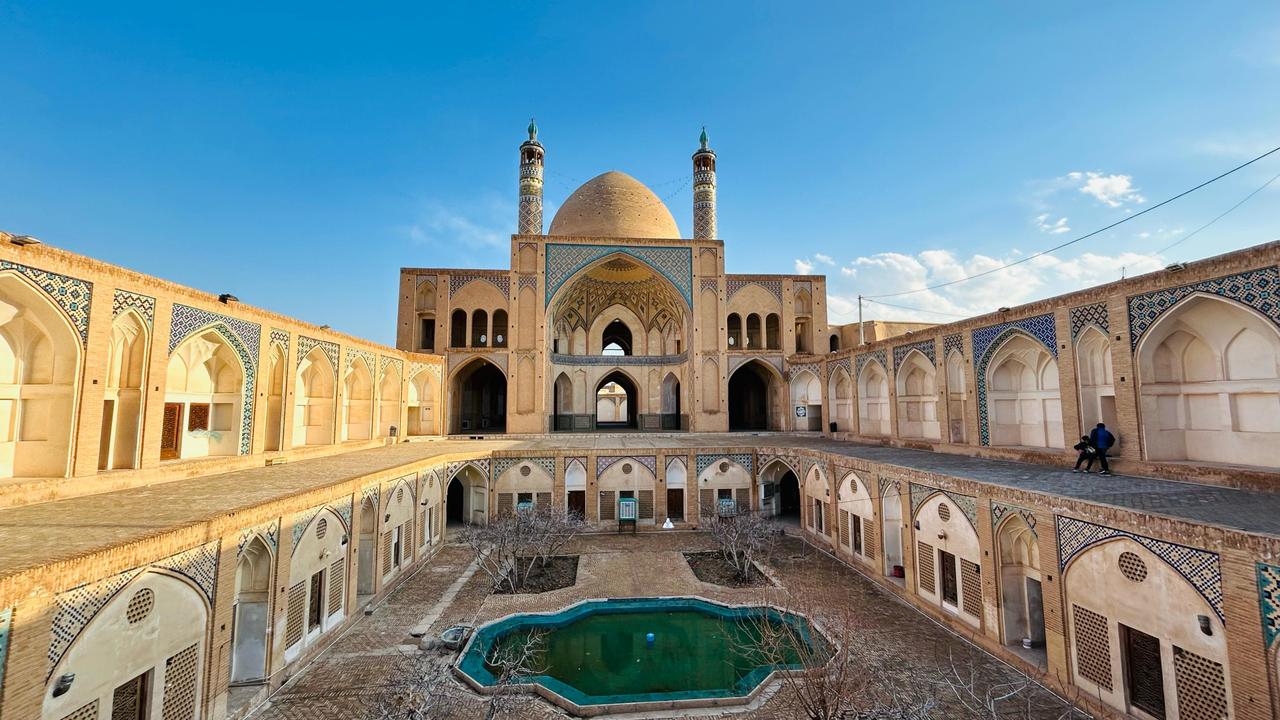
General View of the Building (Photograph: Duygu Şahinler)
Construction of the Ağa Bozorg Mosque and Madrasa began in 1256 AH (1839 CE) and was completed eight years later in 1264 AH (1848 CE). Inscriptions on various parts of the building record dates corresponding to 1263, 1264 and 1268 AH, indicating that decorative and restoration work continued after the main structure was finished.
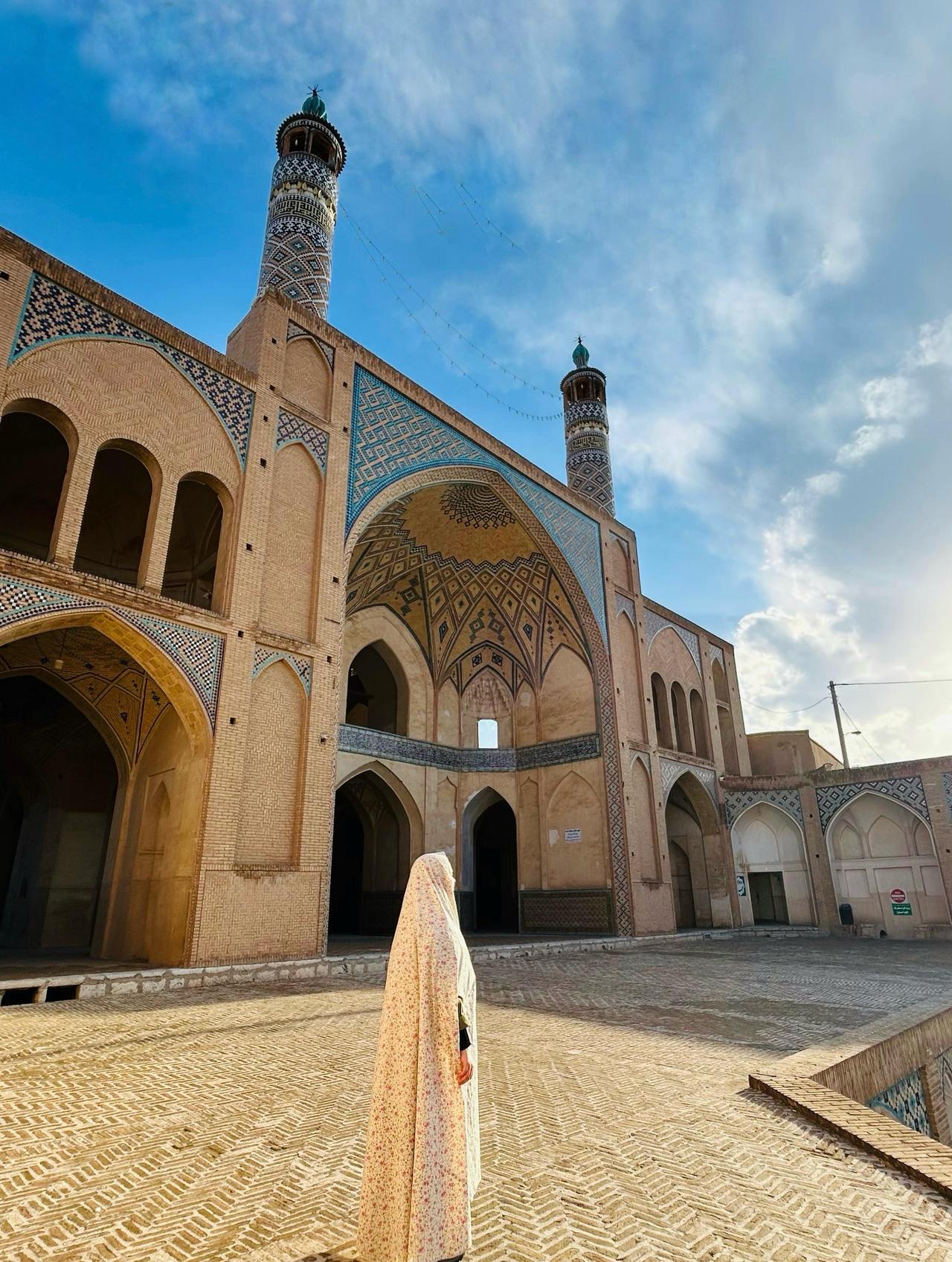
View from Within the Building (Photograph: Duygu Şahinler)
The complex features a multi-layered plan layout. The sunken courtyard system, known locally as “gudal baghche,” is a distinctive architectural feature characteristic of Kashan.
Surdar and Main Entrance: The portal is notable for its intricate muqarnas ornamentation and colorful tilework. Above the entrance, a qasida is inscribed in white nastaliq script on a ceramic mosaic. These inscriptions provide both historical context and information about the building’s religious significance.
Courtyard and Gudal Baghche: The sunken courtyard on the ground level was designed to adapt to local climatic conditions. The cells surrounding the courtyard served as living and study quarters for students.
Main Iwan and Dome: The main iwan is located on the southern side of the building and opens into a massive dome. The dome is double-shelled and rests on an octagonal base. The transition between the interior space and the exterior façade is achieved through geometric elements.
Shabistan: The shabistans on the northern and western sides were designed with distinct thermal conditions in mind to accommodate use during both summer and winter months.
Plan and Organization: The multi-centered planning concept symbolizes the Islamic doctrine of tawhid. The axial arrangement of courtyard, iwan and dome strengthens the spiritual connection between the various spaces.
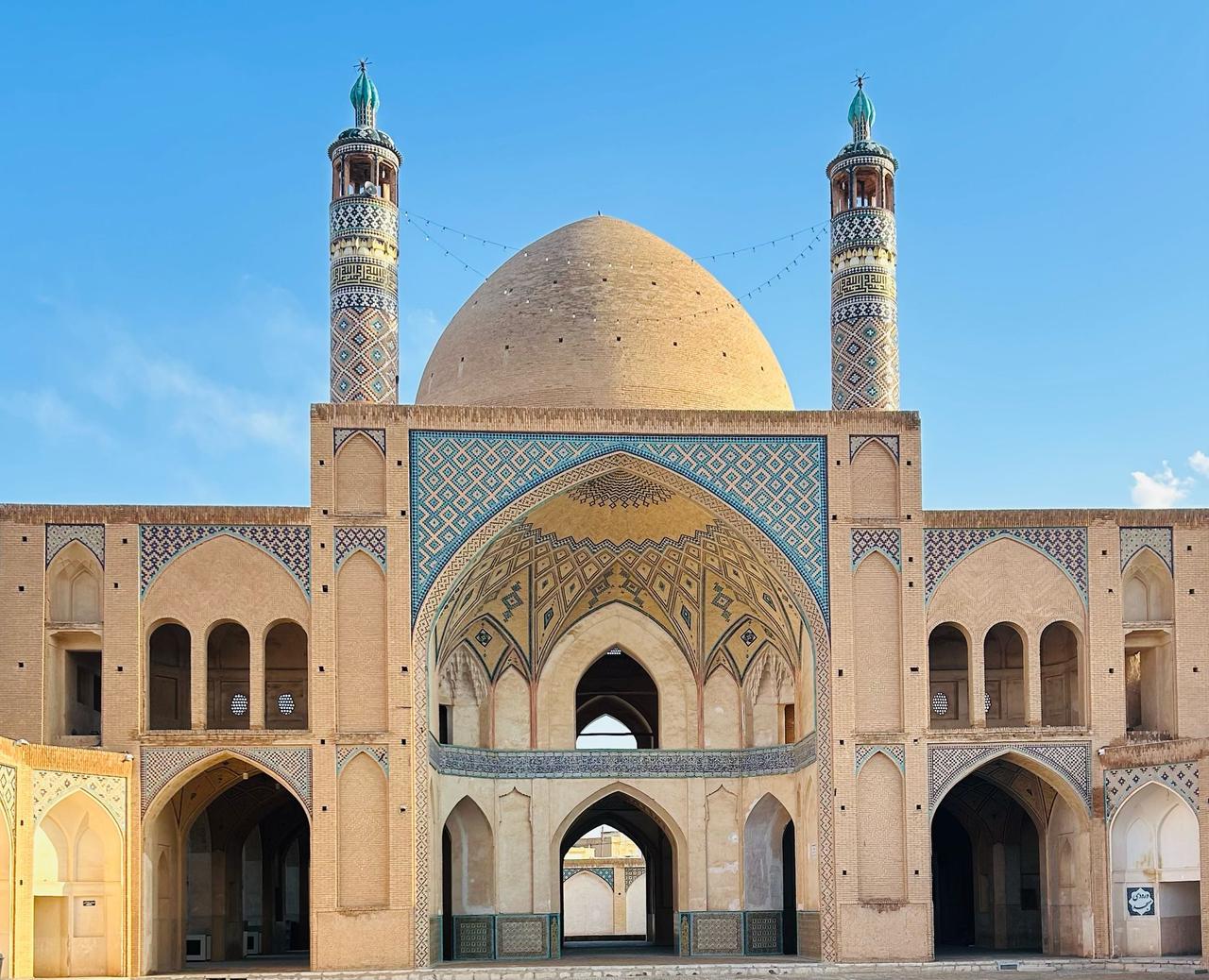
View from Within the Building (Photograph: Duygu Şahinler)
The building showcases advanced examples of Iranian tilework. Decorative elements predominantly feature blue, turquoise, white and gold colors. Muqarnas ceiling ornaments, ceramic mosaics and stone carvings contribute to the visual depth of the structure. The interior surface of the main dome is adorned with an integration of geometric patterns and calligraphy.
The qasida at the main entrance was composed by a poet using the pen name “Hasret.” This poem highlights the name of Nasereddin Shah, the patron Hajji Muhammad Taqi, and the religious values associated with the building. The inscriptions also include the construction date.
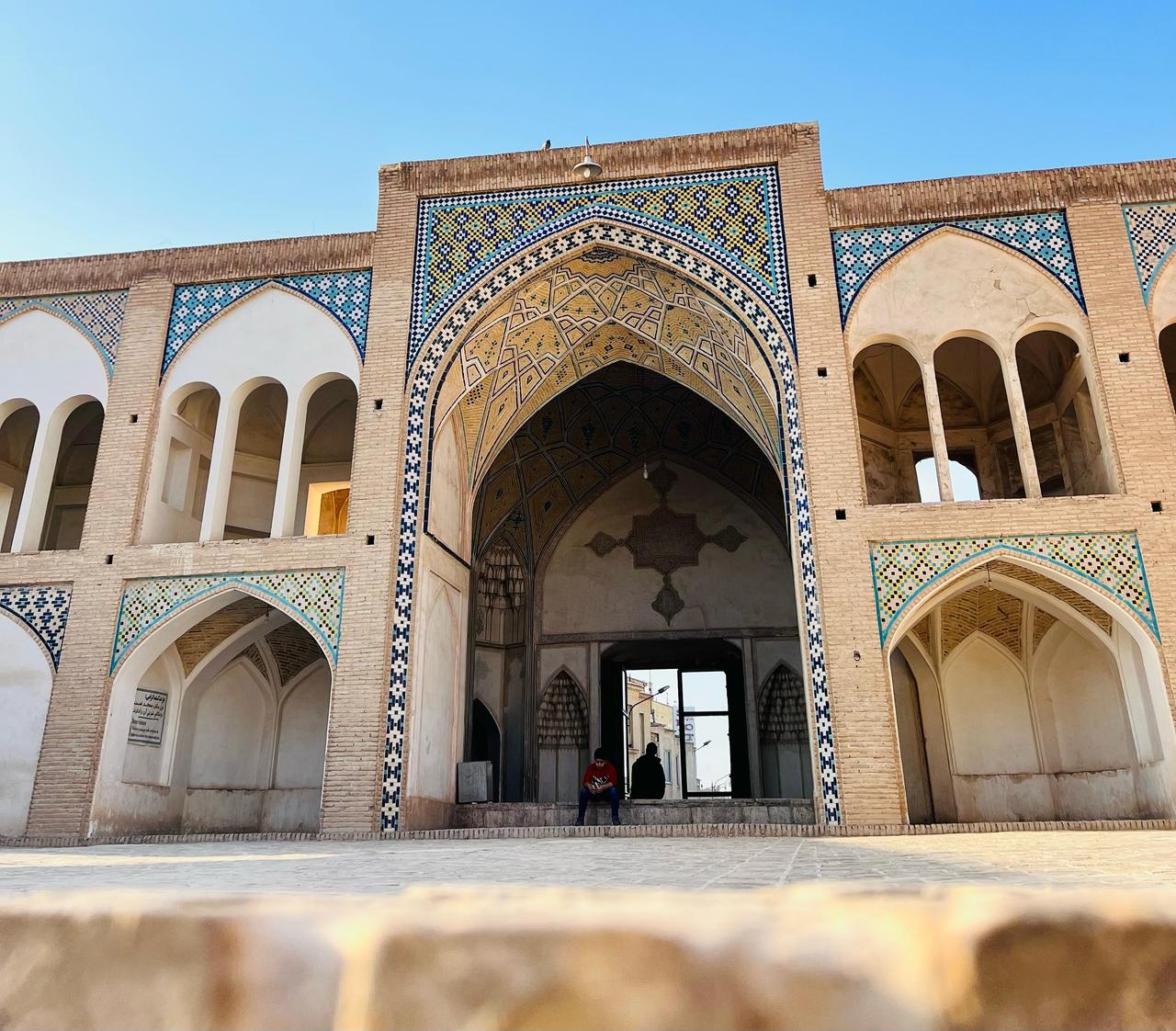
Entrance Portal of the Building (Photograph: Duygu Şahinler)
The building seeks to express fundamental Islamic concepts—such as the oneness of God, life after death and social justice—through its physical architecture. Symmetry, order and Islamic aesthetic principles have been consciously applied throughout the architectural composition.
Today, the Ağa Bozorg Mosque and Madrasa is visited as one of Kashan’s most important historical monuments. Its architectural structure and artistic decorations serve as subjects of scholarly study and constitute a key reference for research in Islamic architecture and art history.
Heydari, Ali Akbar, Yaghoub Peyvastgar, and Fardin Yazdani. "تحقق پذیری تأویل اعتقادات و تفکرات اسلامی در معماری مسجد و مدرسه آقابزرگ کاشان." Nashriye-ye Andisheh-e Honar va Memari, no. 6, Spring and Summer 1397: 15–28. Accessed April 27, 2025. https://www.noormags.ir/view/fa/articlepage/1462604
Zolfaghari, Dariush. "بازبینی کتیبه و تاریخ سردر مسجد مدرسۀ آقابزرگ." نشریه هنر و معماری اسلامی, no. 18, Summer 1397: 55–62. Accessed April 27, 2025. https://www.noormags.ir/view/fa/articlepage/1814410

No Discussion Added Yet
Start discussion for "Ağa Bozorg Mosque and Madrasa" article
History
Architectural Structure and Design
Decorations and Artistic Elements
Inscriptions and Texts
Artistic Significance