


This article was automatically translated from the original Turkish version.

Cahit Sıtkı Tarancı, one of the most significant poets of Turkish literature, is particularly known for his exploration of individual existential themes. The poem "Thirty-Five Years" is among his most representative works in this regard. In the poem, the individual’s confrontation with aging and the inevitable progression of time are central. Tarancı powerfully expresses the inner conflicts of the individual through emotions such as loneliness and fear of death.
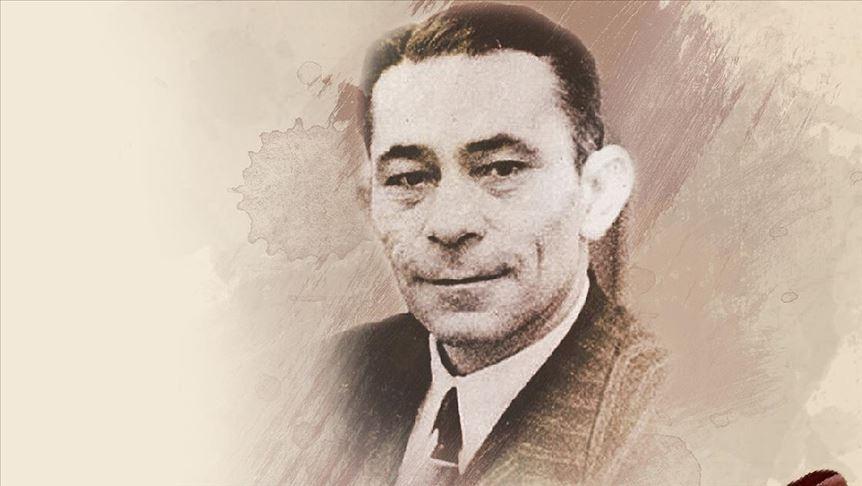
Cahit Sıtkı Tarancı (AA)
The poet senses that as youth fades, uncertainty and anxiety come to the fore. Time, portrayed in the poem as an inevitable force, shapes the individual’s life and draws him closer to death. Beyond personal experience, the poem reflects a universal truth: the struggle against time, the fractures experienced in the transition from youth to maturity, and the inescapability of death.
The central theme of the poem "Thirty-Five Years" is the passage of time and the effects of aging. It captures the feeling of a person reaching the "middle of the road" of life. This turning point symbolizes a moment of inner reckoning, when the individual reflects on the past. The loss of youthful enthusiasm and its replacement by more mature and complex perspectives, along with the rapid passage of time and the sense of alienation felt by the aging self, come to the forefront. The poet laments the fading vitality of youth, the growing sense of loneliness, and the distancing of memories.

Pathway at the Halfway Point (Generated by Artificial Intelligence)
Tarancı also treats loneliness as a key theme, emphasizing how friendships diminish over time and the individual becomes isolated. This solitude is a consequence of life’s transience and the swift passage of time. The poet notes that mirrors symbolize aging; white hair and wrinkled skin reflect both physical and inner transformation.
The theme of death is also prominent in the poem; Tarancı accepts the impermanence of life and the inevitability of death. The line "The reign of prayer will come" underscores that death is the final destiny for all. The phrase "You slept, you did not wake; what then?" expresses the inevitability and uncertainty of death. Death is conveyed through the metaphor of sleep, an image that invites the reader to recognize the fleeting nature of life and appreciate the present moment. Tarancı directs readers to question the meaning of life.
Overall, in "Thirty-Five Years," Cahit Sıtkı Tarancı creates an unforgettable work in Turkish literature by treating universal themes such as life, death, time, and transience with profound emotion and powerful imagery.
Anadolu Ajansı. “Türk Edebiyatında Kült Şiirlerin Yazarı Cahit Sıtkı Tarancı.” Anadolu Ajansı. Accessed May 16, 2025. https://www.aa.com.tr/tr/kultur/turk-edebiyatinda-kult-siirlerin-yazari-cahit-sitki-taranci/3359767.
Başlı, Şeyda. “Otuz Beş Yaş Şiiri Üzerine Bir İnceleme.” TÜBAR. Accessed May 16, 2025. https://dergipark.org.tr/tr/download/article-file/203828.
Gülmüş, Engin. “Otuz Beş Yaş Şiiri İncelemesi.” Net İnceleme, October 2020. Accessed May 16, 2025. https://www.netinceleme.com/2020/10/cahit-stk-taranc-otuz-bes-yas-siir.html.
Kara, Süleyman. “Otuz Beş Yaş Şiirinin İncelenmesi.” *Edebiyat Sultani*. Accessed May 16, 2025. https://edebiyatsultani.com/otuz-bes-yas-siirinin-incelenmesi/#google_vignette.