This article was automatically translated from the original Turkish version.
+1 More
Location | Agra city India Uttar Pradesh | ||||||||
|---|---|---|---|---|---|---|---|---|---|
Construction | 1565, Mughal Emperor Akbar | ||||||||
Usage | Residence and administrative center of the Mughal sultans until the mid-17th century | ||||||||
Musamman Burj | Tower with a view of the Taj Mahal where Shah Jahan was imprisoned | ||||||||
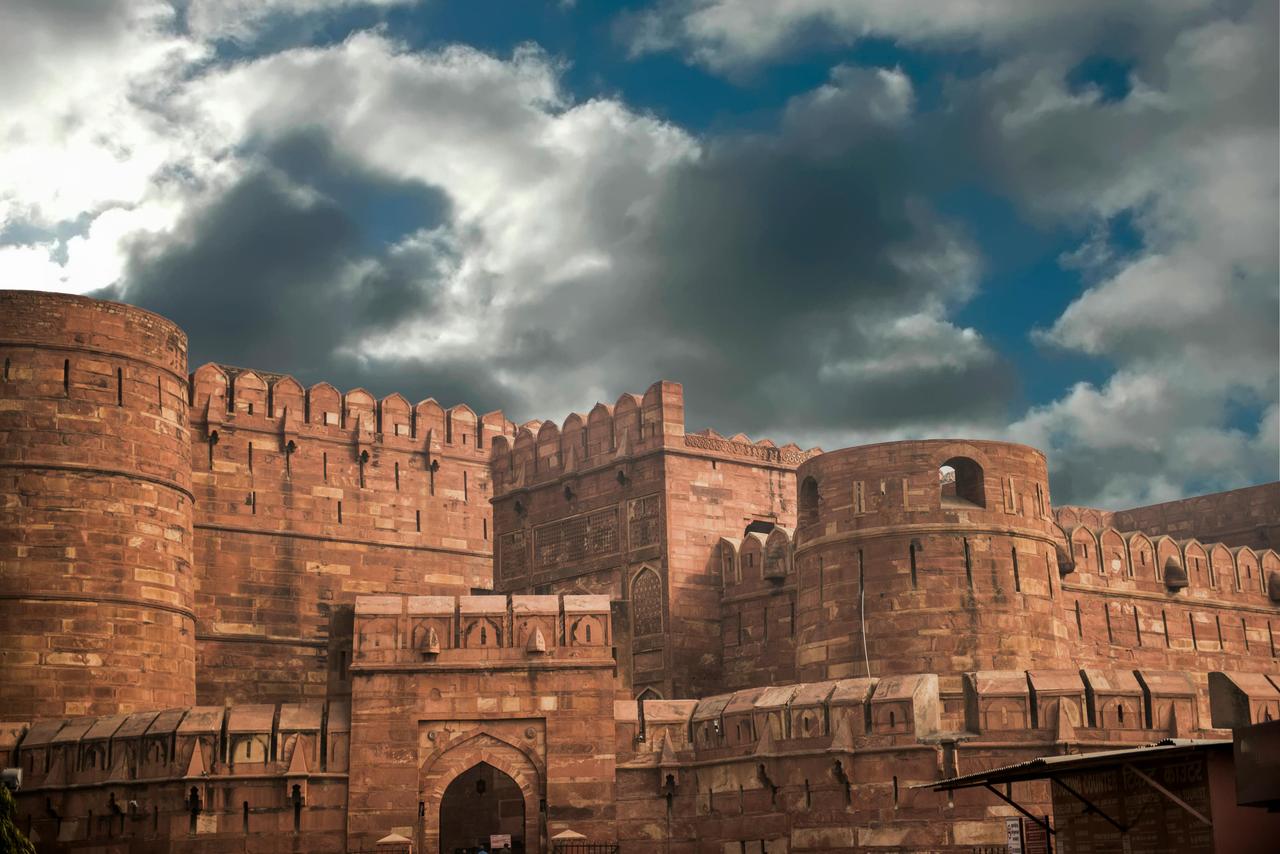
Agra Fort is a historical palace and defensive complex located in the city of Agra, in the Uttar Pradesh state of northern India. Constructed during the Mughal Empire, the fort served both as an administrative center and a military headquarters. Its strategic location along the Yamuna River enabled it to protect the city and control trade along the river route. Due to its proximity of approximately 2.5 kilometers to the Taj Mahal, it is also referred to as the “brother of the Taj Mahal.”
Construction of Agra Fort began in 1565 during the reign of Emperor Akbar of the Mughal Empire and was completed after approximately eight years. More than 4,000 workers were employed in its construction, with extensive use of red sandstone and stone masonry.
The fort functioned as the residence and administrative center of the Mughal sultans until the mid-17th century. During the reign of Shah Jahan, certain sections, particularly the Musamman Burj, were renovated using white marble and intricate decorative elements. The Musamman Burj holds historical significance as the tower where Shah Jahan was imprisoned by his son Aurangzeb and from which he could view the Taj Mahal.
Agra Fort was constructed as a political and cultural symbol of the Mughal era, representing the power, prestige and central authority of the emperors.

Agra Fort (Laura Barragan, Pexels)
Agra Fort is built on a composite plan combining military defense and ceremonial grandeur. Encircled by red sandstone walls approximately 2.5 kilometers in length, the fort contains inner courtyards, palaces, mosques and observation towers.
Musamman Burj: This tower, where Shah Jahan was imprisoned, offers a view of the Taj Mahal. Its location and design symbolize both surveillance and the emperor’s captivity.
Palace Complex: The palaces within the fort are adorned with white marble and fine stone carvings reflecting the aesthetic sensibilities of the Mughal period. Courtyards and gateways are arranged according to a central axis and symmetry.
Mosques: The Moti Masjid and other religious structures were designed to serve both worship and the expression of imperial prestige. The use of white marble and detailed stone craftsmanship are characteristic features of Mughal architecture.
Defensive Elements: The surrounding walls, moats and gates provided protection against external attacks and ensured control over the city.
Agra Fort is not merely an architectural structure but also the political center of power for the Mughal emperors. The imprisonment of Shah Jahan by his son Aurangzeb significantly reinforced the fort’s political symbolism. The view of the Taj Mahal from the Musamman Burj symbolizes both the emperor’s confinement and the dramatic history of the Mughal era.
Agra Fort is one of the best-preserved examples of Mughal architecture. The complex maintains a visual and spatial relationship with the Taj Mahal. The use of white marble and red sandstone, the intricacy of stone carving, and the layout of courtyards and palaces reflect the aesthetic principles of the Mughal period.
The fort represents the legacy of the Mughal Empire both as a military and administrative center and through its cultural and artistic value. Its inclusion in the UNESCO World Heritage List has reinforced its universal significance.
Today, Agra Fort is listed on the UNESCO World Heritage List and welcomes visitors as a major tourist attraction. Its proximity to the Taj Mahal has made it a key destination for international tourists. Museum exhibits and guided tours provide comprehensive information on the history and architecture of the Mughal period.
Barragan, Laura. “Gökyüzü, Ağaçlar ve Mimari Duvarlar.” Photograph. Pexels. Accessed August 21, 2025. https://www.pexels.com/tr-tr/fotograf/gokyuzu-agaclar-mimari-duvarlar-12446384/
Baysal, Ali Fuat. 2017. “XVII. Yüzyılda Agra Yapılarında Çiçek Üslubu.” *Mütefekkir* 4, no. 8: 391–406. Accessed August 21, 2025. https://dergipark.org.tr/tr/download/article-file/399405
GZT. "Tac Mahal’in kardeşi: Agra Kalesi." GZT Jurnalist, Accessed August 21, 2025. https://www.gzt.com/mecra/tac-mahalin-kardesi-agra-kalesi-3511281
Heerden, Frans Van. “Bulutların Altında Kale.” Photograph. Pexels. Accessed August 21, 2025. https://www.pexels.com/tr-tr/fotograf/bulutlarin-altinda-kale-fotografi-1022698/
UNESCO. "Agra Kalesi." UNESCO World Heritage Centre. Accessed August 21, 2025. https://whc.unesco.org/en/list/251/
Özler Kaya, Fadime. 2022. “Agra Kalesi’nden Tac Mahal’e Seyir: Müsemmen Burç ve Sarayı.” *Art-Sanat* 18 (2022): 219–241. Accessed August 21, 2025. Erişim Adresi.

Location | Agra city India Uttar Pradesh | ||||||||
|---|---|---|---|---|---|---|---|---|---|
Construction | 1565, Mughal Emperor Akbar | ||||||||
Usage | Residence and administrative center of the Mughal sultans until the mid-17th century | ||||||||
Musamman Burj | Tower with a view of the Taj Mahal where Shah Jahan was imprisoned | ||||||||
History and Construction
Architectural Layout and Structural Features
Historical Events and Political Role
Cultural and Artistic Significance
Current Status and Touristic Importance