

This article was automatically translated from the original Turkish version.
+2 More
Ahlat Sahil Kalesi is a significant military and architectural structure from the Ottoman period, located on the shore of Lake Van in the Ahlat district of Bitlis. The castle’s history extends back to the Urartian period; however, its current form was constructed by the Ottomans in the 16th century. It holds a notable place in regional history due to its combination of military and civilian structures.
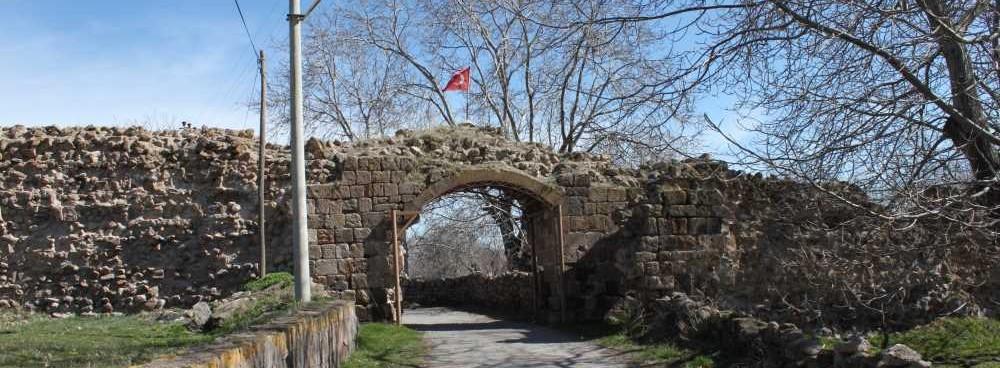
Ahlat Sahil Kalesi Entrance Gate (Türkiye Culture Portal)
The earliest construction phase of Ahlat Sahil Kalesi dates back to the Urartian period, but this initial structure was destroyed by a severe earthquake in 1224. According to Ottoman sources, the castle was rebuilt after Sultan Selim I’s 1514 campaign at Çaldıran to protect Ahlat from potential attacks coming from Lake Van.
Later, during his return from the Iranian campaign in 1556 (H.965), Kanuni Sultan Süleyman visited Ahlat and ordered Zal Paşa and Mimar Sinan to construct the castle in its present form to promote regional development. Today, the area within the boundaries of the Ottoman Castle is included in the Urban and Archaeological Site Area.
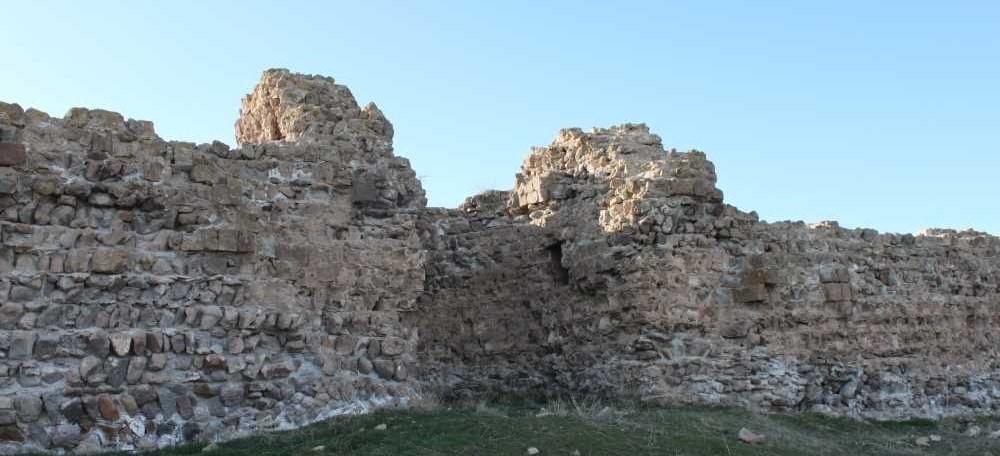
The castle has a rectangular plan with a perimeter of approximately 3000 steps. The structure is surrounded by walls, some of which have survived partially over time. The facade facing the lake features three-story robust iron gates. The walls are high and thick, and although the moat is not deep, it is quite wide.
In the center of the castle stands a small inner fortress known as the “davulhane,” which is separated from the main castle by walls on three sides. This internal layout gives the castle a dual defensive function from a military architecture perspective.
According to historical sources, during the Ottoman period the castle contained a mosque, a bathhouse, a caravanserai, around twenty shops, and approximately 350 dwellings. This indicates that the castle functioned not only as a military installation but also as a settlement where daily life took place. Today, only the castle ruins remain, but traces of the internal structures can still be observed in various places.
Located on the shore of Lake Van, the castle was constructed for defensive purposes against attacks from the lake. Security from the lake side was ensured by war boats housed in a boat house along the shoreline. In this regard, the castle played a significant role in the Ottoman defense of its eastern frontier. It is also believed that the castle may have served as a logistical and military base during Ottoman campaigns directed toward Iran.
Today, only the outer structure of Ahlat Sahil Kalesi remains standing, as many of its internal buildings have been destroyed over time. Nevertheless, the castle’s architectural traces and historical fabric are still observable. The area in which it is located is protected under the Urban and Archaeological Site Area designation.
Ahlat Sahil Kalesi is a destination that attracts attention not only for its historical past but also for its views of Lake Van and natural surroundings. Integrated with Ahlat’s stonemasonry, Seljuk tombstones, and cultural fabric, the castle continues to serve as an important historical site for both local and international visitors.

History
Architectural Features
Internal Structures and Civil Architecture
Strategic Location and Defensive Function
Protection Status and Current Condition
Touristic and Cultural Significance