

This article was automatically translated from the original Turkish version.
+1 More
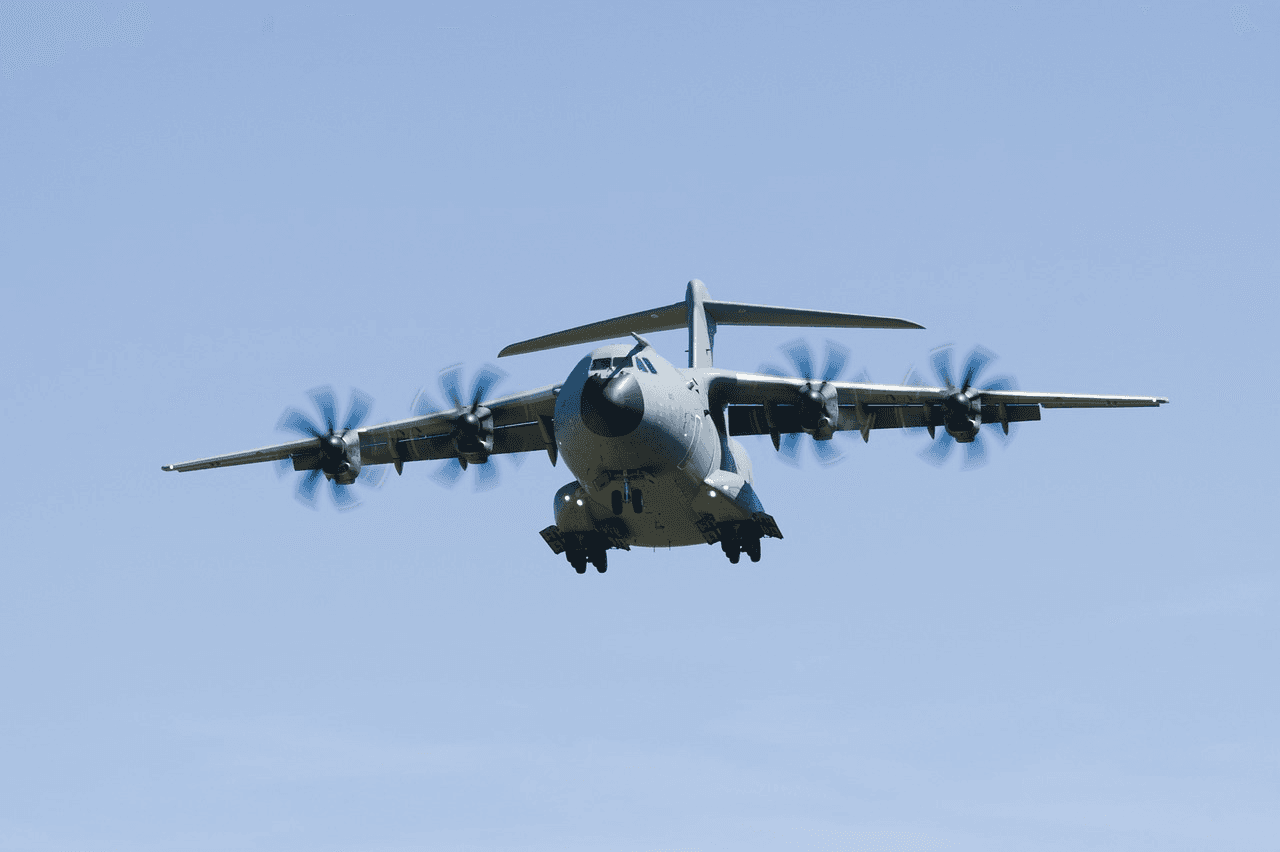
Airbus A400M Atlas
Entry into Service(Text) | 2013 (French Air Force) | ||||||||
|---|---|---|---|---|---|---|---|---|---|
Aircraft Type(s) | Four-engine turboprop tactical and strategic transport aircraft | ||||||||
Producer(s) | Airbus Defence and Space | ||||||||
First Flight(s)(Text) | 11 December 2009 | ||||||||
Competitors | It is a medium and large scale military transport aircraft such as the Lockheed Martin C-130J Super Hercules, Embraer C-390 Millennium, Kawasaki C-2 and Antonov An-70 (in development) | ||||||||
Airframe Structure | Highly aluminum alloys, composite materials | ||||||||
Models | A400M-180 | ||||||||
Airbus The A400M Atlas, designed, developed and manufactured by Europe aviation giant Airbus Defence and Space, is a four-engine, turboprop, multi-role military transport aircraft. The A400M stands out for its high payload capacity, long range, ability to operate under diverse operational conditions and in-flight refuelling capability, making it suitable for both tactical and strategic missions. With these features, it provides a significant enhancement to Europe’s military transport capabilities. In Türkiye, it is known as “Great Yusuf”.
The A400M project emerged in the early 1980s as a response to the need for a new, more capable platform to replace the aging C-130 Hercules and C-160 Transall transport aircraft of European nations (particularly France and Germany), under the name “Future International Military Airlifter” (FIMA). Later, Spain, the United Kingdom, and Luxembourg also joined the project. Launched in 2003 by Airbus Military (later Airbus Defence and Space), the A400M programme is one of Europe’s largest military aviation projects, developed through the cooperation of multiple European countries. During its development, the goal was to create a platform capable of performing both tactical and strategic missions, operating from short, soft and unprepared runways, and equipped with in-flight refuelling capability.
Airbus A400M Atlas (Source: YouTube - Haci Productions)

Airbus A400M Atlas (Source: Pixabay)
The A400M is operated by Germany, France, Spain, the United Kingdom, Türkiye, Belgium, Luxembourg and Malaysia like. Aircraft has been used in a variety of missions including military transport, humanitarian aid operations, in-flight refuelling, medical evacuation and personnel airdrops. It plays a vital role in tasks such as transporting humanitarian supplies during natural disasters and moving personnel and equipment during military operations.
Airbus continues to enhance the capabilities of the A400M. Future plans include increasing the aircraft’s electronic warfare capabilities, integrating more advanced self-protection systems and developing interoperability with unmanned aerial vehicles (UAV). Additionally, integration of specialized mission systems for alternative roles—such as fire fire suppression and submarine electronic warfare—is under consideration.
Air Power. "Airbus A400M." Accessed April 16, 2025. https://www.airpower.gv.at/airbus_a400m/?lang=en.
Airbus. "A400M." Accessed April 16, 2025. https://www.airbus.com/en/products-services/defence/military-aircraft/a400m.
Airbus. "Airbus A400M Atlas celebrates 10 years of service with RAF." Accessed April 16, 2025. https://www.airbus.com/en/newsroom/stories/2024-11-airbus-a400m-atlas-celebrates-10-years-of-service-with-raf.
Bundeswehr. "A400M." Accessed April 16, 2025. https://www.bundeswehr.de/en/organization/german-air-force/a400m.
Military Factory. "Airbus A400M Atlas." Accessed April 16, 2025. https://www.militaryfactory.com/aircraft/detail.php?aircraft_id=820.
RAF. "Atlas C1 (A400M)." Accessed April 16, 2025. https://www.raf.mod.uk/aircraft/current-aircraft/atlas-c1-a400m/.
Royal Air Tattoo. "Airbus A400M Atlas." Accessed April 16, 2025. https://www.airtattoo.com/the-airshow/aircraft-and-pilots/aircraft-updates/aircraft-2025/airbus-a400m-atlas/.

Airbus A400M Atlas
Entry into Service(Text) | 2013 (French Air Force) | ||||||||
|---|---|---|---|---|---|---|---|---|---|
Aircraft Type(s) | Four-engine turboprop tactical and strategic transport aircraft | ||||||||
Producer(s) | Airbus Defence and Space | ||||||||
First Flight(s)(Text) | 11 December 2009 | ||||||||
Competitors | It is a medium and large scale military transport aircraft such as the Lockheed Martin C-130J Super Hercules, Embraer C-390 Millennium, Kawasaki C-2 and Antonov An-70 (in development) | ||||||||
Airframe Structure | Highly aluminum alloys, composite materials | ||||||||
Models | A400M-180 | ||||||||
Design and Development
Technical Specifications
Features and Capabilities
Usage
Future Plans
