This article was automatically translated from the original Turkish version.
+1 More
Also Known as | Şekerpınarı Köprüsü | ||||||||
|---|---|---|---|---|---|---|---|---|---|
Location | Horoz Village Adana–Niğde provincial border Şekerpınarı Locality | ||||||||
Dating | Middle Ages (estimated to have been built before 833 CE) | ||||||||
Length(s) | 83 metres | ||||||||
Width | 5.70 metres | ||||||||
Ak Köprü is located within the boundaries of Niğde Province, in the Şekerpınarı locality of Horoz Village. Due to its proximity to the Şekerpınarı spring, it is also commonly known as Şekerpınarı Köprüsü.

Ak Köprü (Ulukışla District Governorship)
The exact construction date of Ak Köprü, a medieval bridge, is unknown. The medieval period encompasses a broad timeframe extending from the Roman era to the reign of Fatih Sultan Mehmet. Historical sources indicate that the Abbasid Caliph Mamun used this bridge during his campaign against the Byzantines in the 9th century (833). This confirms that the bridge was constructed at least prior to 833.
In the 14th century, during the rule of the Karamanids, the bridge served as an important customs checkpoint in the region. During the same century, under the governance of Koca Mehmet Paşa, repairs were carried out on the structure.
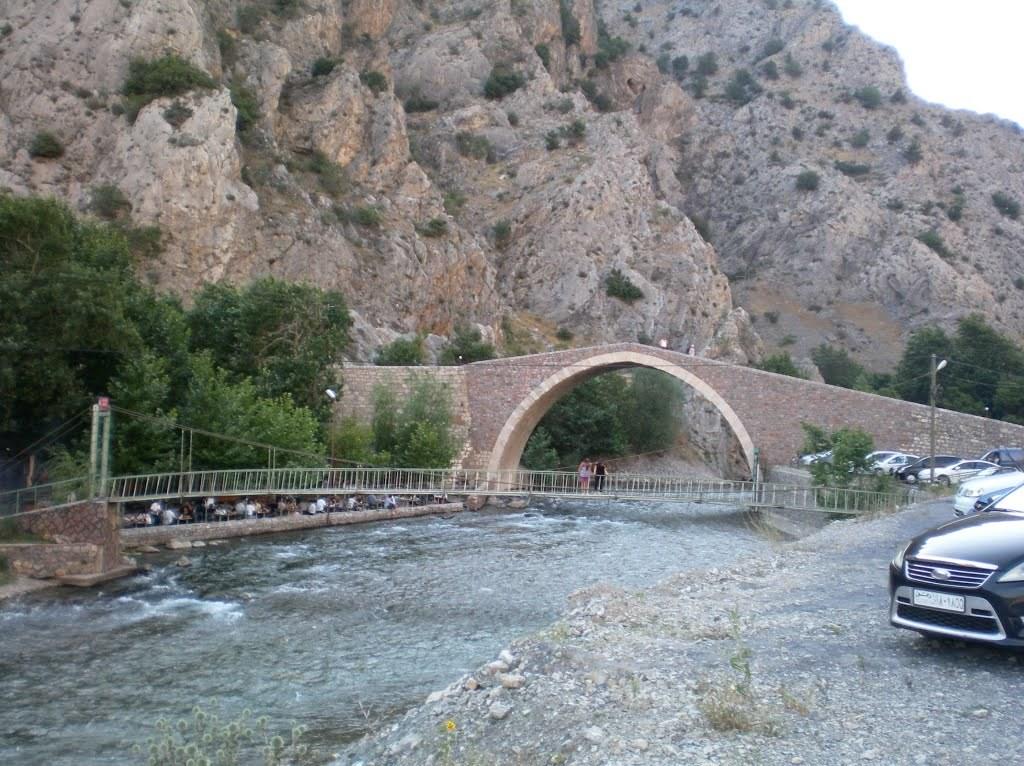
The bridge is a single-arch structure built of stone. It measures 83 metres in length, 5.70 metres in width, and has an arch span of 10.35 metres. It is constructed from cut stone of a yellowish hue. The bridge has a slight incline from both banks toward the central pier.

Ak Köprü (Ulukışla Subdistrict Governorship)
In the 19th century, repairs were carried out on the bridge by Ibrahim Pasha of Egypt. These repairs contributed significantly to the bridge’s longevity.
In the 1980s, various damages occurred to the bridge, particularly affecting the buffer walls on the eastern side. In 1984, repairs involved raising the buffer walls and installing white stone balustrades. However, in 1985 these interventions were reversed, and the bridge was restored to a form closely resembling its original state. It was then closed to vehicular traffic and opened exclusively for pedestrian use.
Following severe flooding in October 1991, the bridge suffered extensive damage and large portions collapsed. After remaining in a damaged state for several years, the bridge was surveyed, restored, and reconstructed based on projects approved by the Adana Council for the Protection of Cultural and Natural Heritage in 1999. Comprehensive restoration work was completed between 2000 and 2001.
T.C.Pozantı Kaymakamlığı Governorship. "İlçemizdeki Tescilli Tarihi Eserler." T.C. Pozantı District Governorship Website. Accessed June 22, 2025. http://www.pozanti.gov.tr/kultur-ve-tarihi-eserler1
T.C.Ulukışla Kaymakamlığı Governorship. "Ak Köprü." T.C. Ulukışla District Governorship Website. Accessed June 22, 2025. http://www.ulukisla.gov.tr/ak-kopru

Also Known as | Şekerpınarı Köprüsü | ||||||||
|---|---|---|---|---|---|---|---|---|---|
Location | Horoz Village Adana–Niğde provincial border Şekerpınarı Locality | ||||||||
Dating | Middle Ages (estimated to have been built before 833 CE) | ||||||||
Length(s) | 83 metres | ||||||||
Width | 5.70 metres | ||||||||
History
Architectural Features
Restoration Efforts