


This article was automatically translated from the original Turkish version.
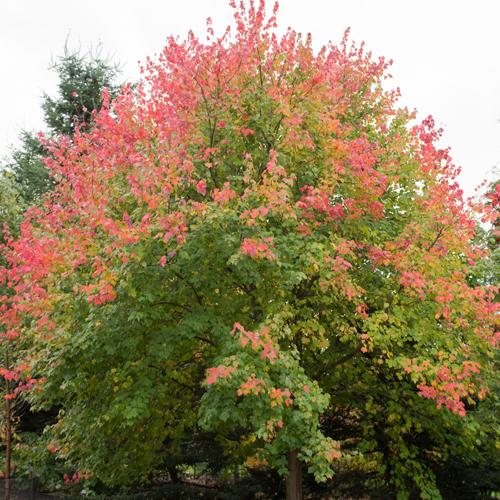
Akçaağaç
Type(s) | Akçaağaç (Acer) | ||||||||
|---|---|---|---|---|---|---|---|---|---|
Family | Sapindaceae | ||||||||
Average Height | 10-40 metres | ||||||||
Leaves | Wide, deeply lobed, sharp-edged | ||||||||
Climate of Growth | Cold and temperate climates | ||||||||
Natural Habitat | Moist and well-drained soils | ||||||||
Growth Areas in Türkiye | Black Sea, Marmara, Central Anatolia Regions | ||||||||
Akçaağaç (Acer) is a genus of plants naturally occurring in the temperate zones of the Northern Hemisphere, primarily appearing as deciduous trees or shrubs. This genus comprises over 150 species and is especially widespread in North America, Europe, and Asia. In Türkiye, notable native species include Acer campestre (field maple), Acer monspessulanum (Montpellier maple), Acer tataricum (Tatar maple), and Acer hyrcanum (Caspian maple). These species are found across various ecological regions of the country, typically in forested areas, along stream banks, and at the foot of mountains.
Their leaves are usually five-lobed and turn striking shades of red, orange, and yellow in autumn. Flowers are generally pale yellow-green, with insects playing a significant role as pollinators. Fruits are two-winged “samaras” dispersed by wind. Akçaağaç trees are particularly known for their shade tolerance; they grow slowly but are long-lived.

AI-generated visual representation of Akçaağaç.
Akçaağaç species are most common in the Black Sea and Marmara regions of Türkiye but can also be found in certain parts of Central and Eastern Anatolia. They prefer sandy and loamy soils and thrive in well-drained conditions. They grow most vigorously in temperate climates, in cool, moist areas with limited direct sunlight. Some species are frost-tolerant and exhibit partial resistance to drought.
Akçaağaç is frequently chosen as an ornamental plant due to its aesthetic leaf shape and seasonal color changes. It is widely used in landscape architecture for parks and gardens. Its wood is hard and durable, making it valuable in the production of furniture, flooring, and musical instruments. Additionally, the sap of certain species is processed into maple syrup, a significant food product in some countries, notably Canada.
Maple syrup is primarily obtained from the sap of the sugar maple (Acer saccharum). Although this species does not grow naturally in Türkiye, it is abundant in eastern Canadian provinces such as Quebec, Ontario, and New Brunswick in North America. Syrup production in Canada relies on traditional methods practiced for centuries. Canada accounts for approximately 70 percent of global maple syrup production, making this product strategically important in the country’s agricultural exports.
In this context, the Akçaağaç is not only part of Canada’s natural flora but also an integral element of its national identity. The red maple leaf featured on Canada’s flag, adopted in 1965, symbolizes the country’s ten provinces and three territories. The maple leaf is more than a decorative motif; it is a cultural symbol representing Canada’s values of love for nature, resilience, and unity.
Akçaağaç contributes to ecosystems by serving as an important resource for bees and other pollinators. Its broad leaves help maintain air quality and support urban microclimate balance. Additionally, it plays a beneficial role in erosion control and carbon sequestration.
"Akçaağaç Nasıl Yetişir?" Hürriyet. Accessed https://www.hurriyet.com.tr/mahmure/akcaagac-nasil-yetisir-akcaagac-turkiyede-en-cok-ve-en-iyi-nerede-yetisir-ve-nasil-yetistirilir-41740910.
"Akçaağaç Özellikleri ve Şurubu Hakkında Bilgiler," Doga Dergisi. Accessed https://www.dogadergisi.com/akcaagac-ozellikleri-ve-surubu-hakkinda-bilgiler/?amp=1.
"Akçaağaç," AOC. Accessed https://www.aoc.gov.tr/Portal/BitkiselUretimler/akcaagac/82.
"Akçaağaç," Open Course,Ankara Üniversitesi. Accessed https://acikders.ankara.edu.tr/mod/resource/view.php?id=1929.
"Akçaağaç," Orman Genel Müdürlüğü. Accessed https://www.ogm.gov.tr/tr/yararli-bilgiler/haftanin-agaci/akcaagac.
"Canadian Flag and Maple Leaf Symbolism," CC-Canada Education. https://www.cc-kanadadaegitim.com/post/kanada-bayragi.
“Canadian Maple Syrup Farms: A Sweet Discovery.” Canadasfer. https://canadasfer.com/kanada-akcaagac-surubu-ciftlikleri-tatli-bir-kesif/.
“Türkiye’de Yetişen 12 Acer Akçaağaç Türü ve Özellikleri.” Peyzax. Accessed [insert date if provided]. https://www.peyzax.com/turkiyede-yetisen-12-acer-akcaagac-turu-ve-ozellikleri/.

Akçaağaç
Type(s) | Akçaağaç (Acer) | ||||||||
|---|---|---|---|---|---|---|---|---|---|
Family | Sapindaceae | ||||||||
Average Height | 10-40 metres | ||||||||
Leaves | Wide, deeply lobed, sharp-edged | ||||||||
Climate of Growth | Cold and temperate climates | ||||||||
Natural Habitat | Moist and well-drained soils | ||||||||
Growth Areas in Türkiye | Black Sea, Marmara, Central Anatolia Regions | ||||||||
Akçaağaç (Acer spp.)
Growth Conditions in Türkiye
Uses
Maple Syrup and Its Connection to Canada
Ecological and Cultural Value