


This article was automatically translated from the original Turkish version.
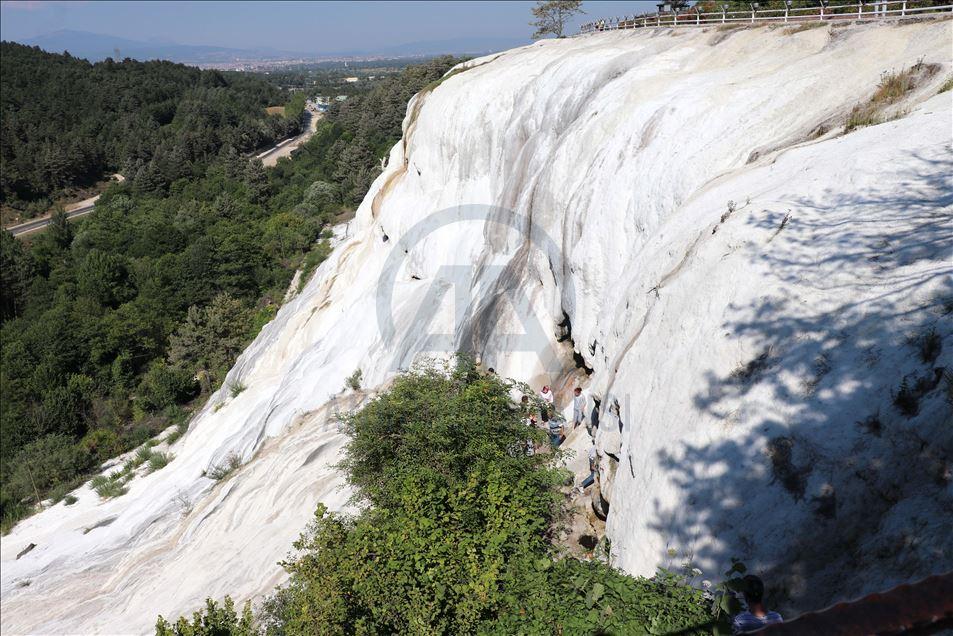
Akkaya Travertines are natural carbonate deposits formed by hot spring sources associated with the North Anatolia Fault Line, located near Çepni Village in the southwestern part of Bolu Province, place area. Region attracts attention due to its geomorphological structure and tourism potential, and is also known as “the Pamukkale of Bolu”. It was declared the first Degree natural seating area by Decision No. 5466 dated 24 October 1997.
The Akkaya Travertines cover an area of approximately 7.5 hectares and are situated along the banks of the Mudurnu Creek Valley. In addition to travertines, the site also contains tufas and speleothems (cave deposits). The region has formed due to calcium carbonate precipitation from hot springs emerging along fault lines.
Travertine: Fine-layered, low-porosity carbonate deposits that typically accumulate around hot spring outlets.
Tufa: High-porosity carbonate deposits formed in cold spring sources or riverbeds, often containing plant and organic materials.
Speleothem: Carbonate formations that have precipitated inside caves.
The area, leased for 49 years in 2012 by the Bolu Provincial Special Administration to a private company, has been opened for tourism. As part of infrastructure improvements, swimming pools and walking paths were constructed. However, these interventions, which disrupted natural processes, have led to the drying up of some waterfalls and darkening of the travertines.

The climate of the region exhibits a transitional character between the humid-temperate climate of the Black Sea coast and the continental climate of Central Anatolia. The annual average temperature is 10.2°C and the annual average precipitation is 536.4 mm. In the Research area, black pine, juniper, oak like trees, as well as mosses and lichens, are common.
Various recommendations have been proposed to preserve the natural structure of the Akkaya Travertines and promote sustainable tourism:

Geological and Geomorphological Features
Difference Between Travertine and Tufa
Tourism Use
Ecological and Climatic Characteristics
Conservation and Sustainability